• Skip to main content
  • Skip to primary sidebar
  • Skip to footer
  • Home
  • About Us
  • Copyright Report
  • Submit Content
  • Terms
  • Privacy Policy
  • Legal Disclaimer

Hasan Jasim

Hasan Jasim is a place where you may get entertainment, viral videos, trending material, and breaking news. For a social generation, we are the largest community on the planet.

Desert Lions Spotted Going to the Beach to Prey on Marine Life

by Hasan Jasim Editorial Team Leave a Comment

ShareTweet

Lions in the sea? Yes.

According to a new study, researchers studying lion prides living along the coast of Namibia have discovered something unusual: the lions have developed a taste for “seafood”.
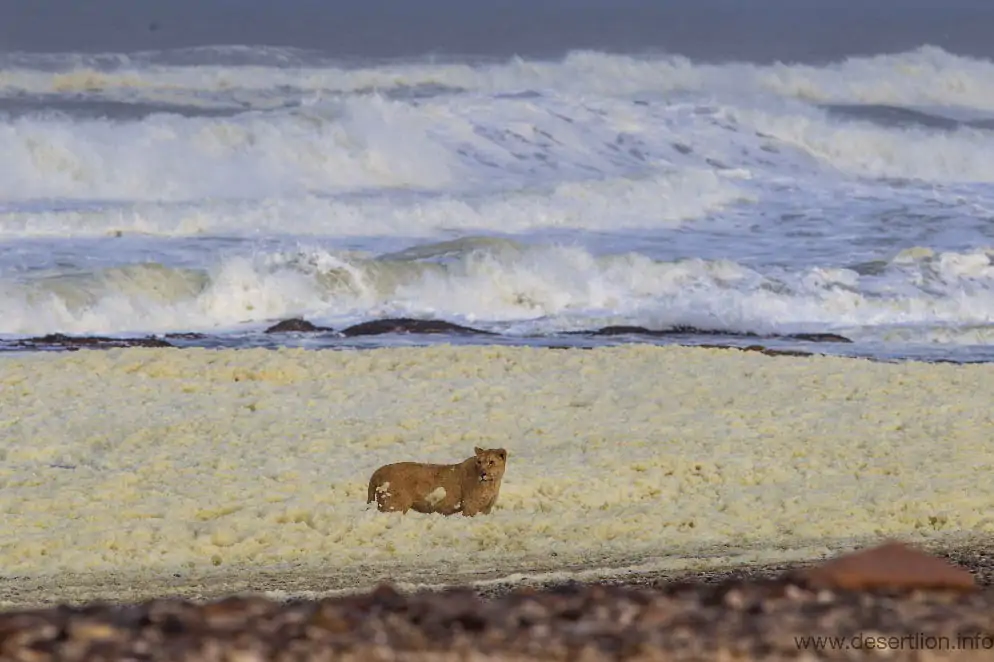
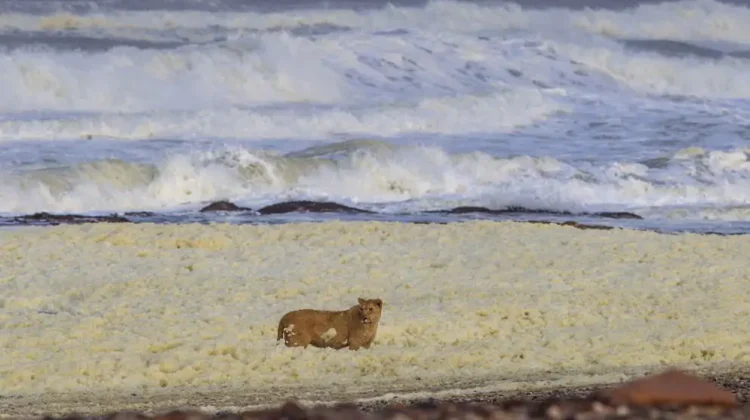
Lioness hunting in the sea. Courtesy of The Namibian Journal of Environment

Found exclusively within the country’s hyper-arid Skeleton Coast region – which Portuguese sailors once called “The Gates of Hell” – desert lions are the only lions known to target marine life. The scientists observed two prides in the Skeleton Coast National Park that have adapted to a marine-based diet, almost exclusively made up of fur seals, flamingos and sea cormorants.
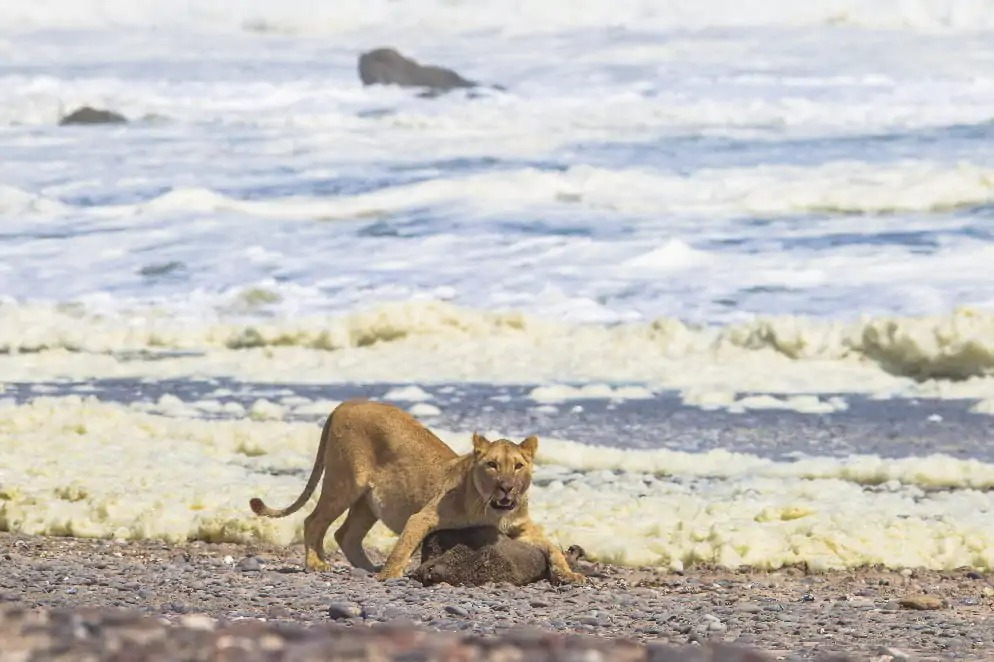
The same lioness with her dinner: an orphaned fur seal. Courtesy of The Namibian Journal of Environment

The Namibian Journal of Environment reports that this marine-based diet made up around 86 percent of the biomass eaten by the two prides over a period of 18 months between 2017-2018. Altogether, that includes at least two greater flamingos, 60 cormorants and 18 seals.

Beach-going lions have also been seen around the intertidal zones of the Namibian coast, suggesting to researchers that they may have also learned to snack on shellfish, crabs and sea turtles. However, this is yet to be officially documented.
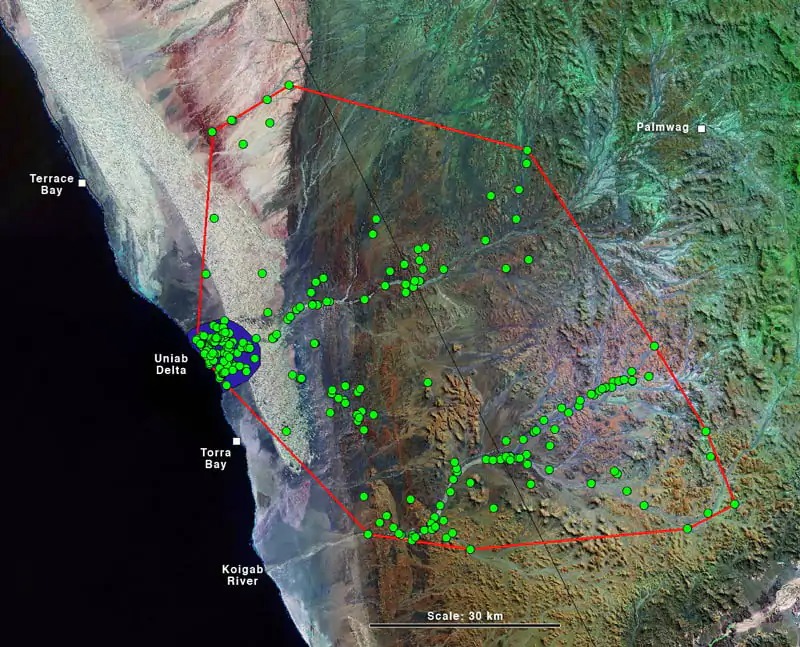
The Skeleton Coast area is a harsh place for big cats to live. Apart from its extremely arid climate, large swaths of the wilderness were caught up in the Namibian struggle for independence that lasted from 1966 to 1989.

On top of it all, the 1980s witnessed intense competition between farmers and lions, resulting in a near total collapse of the desert lion population in the Skeleton Coast for over a decade. Similarly to increasingly fragmented lion populations elsewhere in Africa, they also have to fight against human activity, climate change, and loss of habitat.

By 2002, however, lion populations started to rise from the ashes and recover. They were first spotted eating seals in 2006, which researchers initially assumed was an opportunistic last resort for the lions, whose usual dinners of ostriches and oryx were off the menu. But, apparently, this marine diet has proved to be a rich and long-standing source of energy for the population.
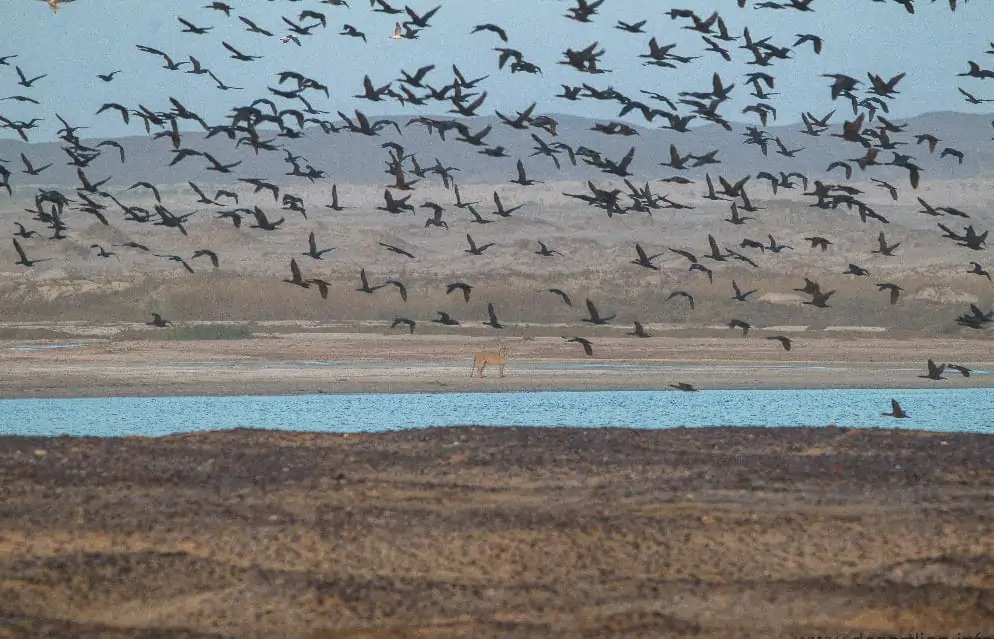
According to conservationist Flip Stander, the author of the study, the discovery shows that the big cats have learned diet adaptability is key to survival in this unforgiving terrain. He also notes that, outside of Namibia, polar bears are the only other large land-dwelling carnivores that have evere been documented eating seals. This suggests that this unusual desert lion diet arose because of the unique conditions along the Namibian coastline where seals breed on a continent, not an island, that happens to be also inhabited by the big cats.

That said, adopting a marine-based diet in tough times is not completely unheard of in the wider animal kingdom. For instance, coyotes in the arid corners of Baja California have also been recorded eating marine mammals, seabirds and turtles.
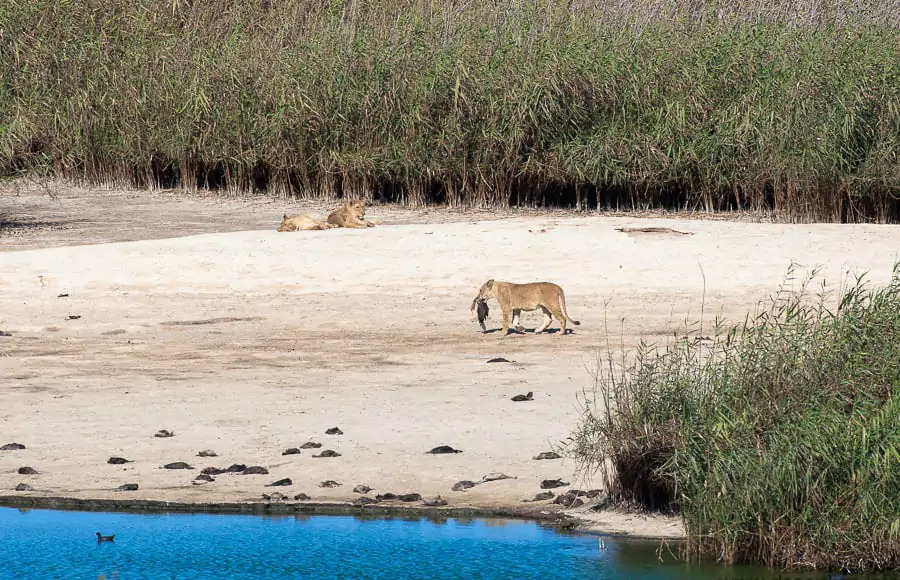
A Lionesses foraging along the Namibian coastline and catching cormorants on a small island. Courtesy of The Namibian Journal of Environment

Since the drought in this region of Namibia is expected to only grow with climate change, the lion’s share of these lions’ diet will probably remain seafood for a long time to come.

Filed Under: Trends Worldwide Tagged With: beach, desert, going, life, lions, marine, prey, SPOTTED, trends, worldwide

Reader Interactions

Leave a Reply Cancel reply

Your email address will not be published. Required fields are marked *

Primary Sidebar

More to See

Wildlife Photographer Of The Year Award goes to a Touching Moment Between Two Lions

By Hasan Jasim Editorial Team

Having a Pet Can Help Reduce Your Child’s Allergy Risk

By Hasan Jasim Editorial Team

The United States Just Grew By 1 Million Square Kilometers In Size

By Hasan Jasim Editorial Team

Social media star Peanut the Squirrel has been euthanized after being seized from NY home

By Hasan Jasim Editorial Team

Widowed Goose Refuses To Leave Shopping Mall Where He Last Saw His Mate

By Hasan Jasim Editorial Team

Vietnam’s Nighttime Dragon Fruit Spectacle: Illuminating Farming Innovation Near Ho Chi Minh

By Hasan Jasim Editorial Team

Adorable Photos of Tiny Harvest Mice Joyfully Playing in Nature

By Hasan Jasim Editorial Team

Footer

ABOUT HASANJASIM.ONLINE

Hasanjasim.online is a digital platform dedicated to publishing well-researched articles about the animal kingdom, nature, and the environment. Our editorial team works to source stories from credible outlets, scientific research, and verified reports, aiming to inform as much as we entertain. From wildlife conservation and animal behavior to natural wonders and environmental science, we cover the topics that help readers better understand and appreciate the natural world. Whether you're a lifelong nature lover or simply curious about the planet we share, Hasanjasim.online aims to be a trustworthy destination for stories worth reading — and worth citing.

Recent

  • Scientists Deliver Their “Starkest Warning Yet” on the Profound Changes Sweeping the World’s Oceans
  • Switzerland’s Glaciers Lost 2.2 Trillion Liters of Water in Just Three Months
  • Creature who looked like a ‘pile of rags’ makes stunning transformation
  • I know this sounds made up — off the coast of Canada, there are reefs made of glass
  • A 1-In-100-Million ‘Ghost’ Lobster Just Joined A Maine University’s Genetics Study
  • This 14-Year-Old Photographer Chased A Hummingbird For Years — Then Got The Shot In A Split Second
  • A 700-Pound Sea Lion Was Found Shot At Least A Dozen Times In A Seattle River — And Investigators Still Don’t Know Why

Search