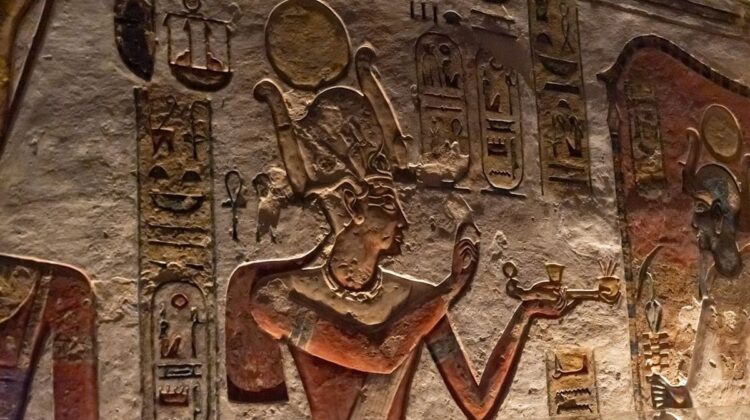
Deep in the Egyptian desert, archaeologists have uncovered a 4,000-year-old tomb built for a powerful official — complete with a door that was never meant to be opened by anyone still living.
An Official Buried At Saqqara
The tomb belongs to Sekhentyu-Ptah, a high-ranking figure from ancient Egypt’s Old Kingdom, discovered by an Egyptian archaeological mission excavating Sector A, west of the Bubasteion necropolis at Saqqara — part of the sprawling burial grounds serving Memphis, ancient Egypt’s capital. Saqqara is a UNESCO World Heritage Site and has been used for burials from the Old Kingdom, roughly 2700 to 2200 B.C.E., all the way through the Roman era.
The Bubasteion takes its name from a temple complex later built there for the cult of the cat goddess Bastet. Though that temple postdates Sekhentyu-Ptah’s burial by centuries, evidence suggests reverence for Bastet in her feline and lioness forms already existed during the Old Kingdom, based on vessels found at the nearby Step Pyramid of Djoser.
A Door Built For The Dead, Not The Living
Inside the remains of the tomb’s funerary chapel, archaeologists found a false door still standing in its original position — a carved, symbolic doorway found throughout ancient Egyptian tombs. For years, some assumed these doors were meant to confuse or deter tomb robbers. In reality, they served a very different purpose: ancient Egyptians believed the deceased’s spirit could pass freely between the world of the living and the afterlife through exactly this kind of door — one that, by design, no living person could actually open.
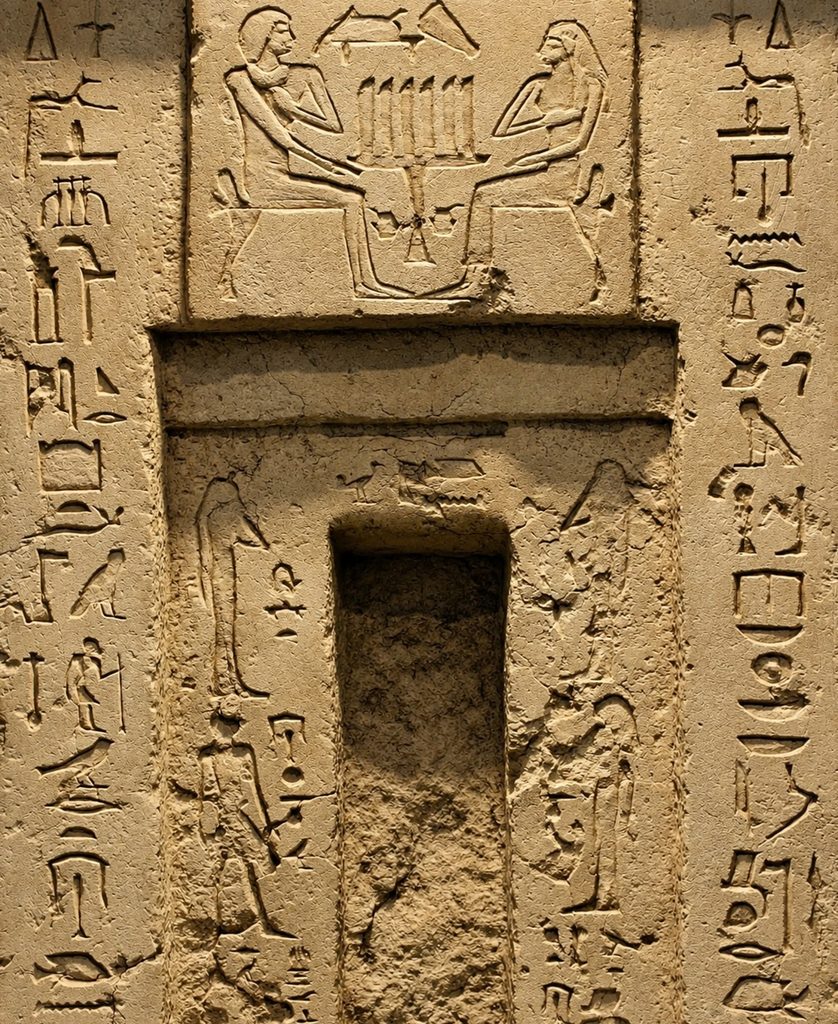
Positioned directly in front of the false door, the team found a complete set of alabaster ritual objects left largely undisturbed in their original spots: an offering table, an offering disk, a purification basin, and a ewer. Hieroglyphic inscriptions across these objects and the false door itself recorded Sekhentyu-Ptah’s name along with an unusually long list of titles — Royal Chamberlain, Overseer of All the King’s Works, Overseer of Royal Documents, Keeper of the Secrets of Royal Commands, Overseer of the Scribes, and Priest of Ma’at, the goddess of truth and cosmic balance.
A Judge In Life, Judged Again In Death
As a priest of Ma’at, Sekhentyu-Ptah would have served in a role resembling a judge, working to resolve disputes according to principles of truth and balance that every Egyptian was expected to uphold — a set of moral expectations rather than a strict legal code, in which dishonesty carried real weight.
That role likely mattered to him in the afterlife too. Ancient Egyptians believed the heart of the deceased was weighed against the feather of Ma’at herself; a heart burdened by wrongdoing that outweighed the feather would be cast to Ammit, a fearsome underworld creature described as part crocodile, part lion, and part hippopotamus. To help guard against this outcome, embalmers sometimes placed a protective amulet in the shape of a scarab over the heart during mummification, symbolically shielding it from testifying against its owner.
More Than One Burial, Across Centuries
The excavation didn’t stop at Sekhentyu-Ptah’s tomb. Nearby, archaeologists uncovered an interconnected network of burial shafts that had also been looted in antiquity, yet still contained human remains, painted cartonnage fragments, and funerary objects — along with more than 100 faience ushabti figurines. These small statues were designed to serve as stand-ins for the deceased, performing labor in the afterlife on their behalf. Originally reserved for royalty as a more humane substitute for sacrificing real servants, ushabtis eventually became accessible to a much wider swath of Egyptian society once artisans found ways to mass-produce them from faience — an earthenware material typically finished in blue, green, or turquoise glaze.
Researchers say evidence suggests the tomb complex was reused for later burials, a common practice throughout ancient Egyptian history, meaning some of the objects found there may date from long after Sekhentyu-Ptah’s own burial.
A Site Built For Ongoing Discovery
Saqqara continues to draw both researchers and visitors. This past summer, the Egyptian government launched an initiative to improve infrastructure at the site — upgrading roads, services, and visitor facilities, including reinforced walking paths between monuments — as tourism to the necropolis continues to grow.
According to Egypt’s Ministry of Tourism and Antiquities, the excavation team plans to continue analyzing the finds from Sekhentyu-Ptah’s tomb, with hopes that further study will shed additional light on burial practices and the long, layered history of the Saqqara necropolis.
Frequently Asked Questions
What is a “false door” in an ancient Egyptian tomb? It’s a carved, non-functional doorway built into a tomb’s wall, symbolizing a threshold between the world of the living and the afterlife. Ancient Egyptians believed the spirit of the deceased could pass through it freely, even though no living person could physically open it.
Who was Sekhentyu-Ptah? He was a high-ranking Old Kingdom official who held numerous senior titles, including Royal Chamberlain, Overseer of All the King’s Works, and Priest of the goddess Ma’at, placing him in a prominent position within Egypt’s royal administration roughly 4,000 years ago.
Was the tomb found intact? The tomb had been looted in antiquity, like many others at Saqqara, but the false door and a complete set of alabaster ritual objects were found preserved in their original positions, offering rare insight into Old Kingdom funerary practices.
What are ushabti figurines, and why were so many found nearby? Ushabtis were small servant figurines placed in tombs to perform labor for the deceased in the afterlife. More than 100 were found in burial shafts near Sekhentyu-Ptah’s tomb, though researchers believe many may date to later burials that reused the same complex.
Why is Saqqara historically significant? Saqqara is a UNESCO World Heritage Site that served as a burial ground from Egypt’s Old Kingdom through the Roman era, making it one of the richest and longest continuously used necropolises in ancient Egypt.
Sources: Smithsonian Magazine, Live Science, Ahram Online, The Jerusalem Post, and Gulf News, cited above.
Leave a Reply