
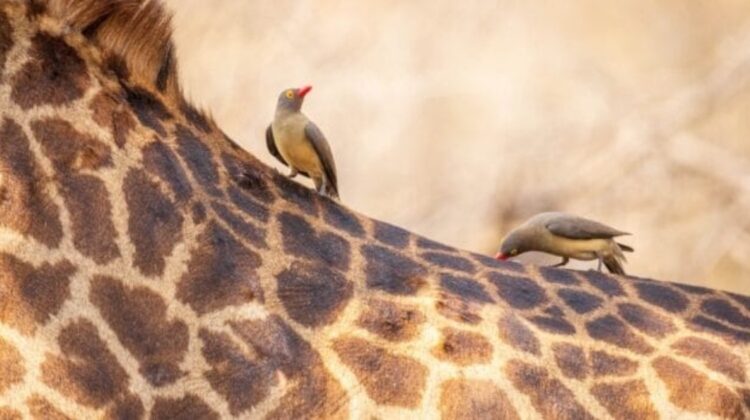
Many couples celebrating 40 years together choose quiet beaches or luxury cruises. For Marius and Michelle Nortje, however, there was only one place that truly felt right: the wild heart of South Africa.
Their anniversary trip to Kruger National Park was meant to be another familiar escape — something they had done many times before. But on this occasion, nature had something unforgettable waiting for them.
“We visit at least once a year, sometimes even four times,” Marius told The Citizen. As a seasoned wildlife photographer, Kruger had rarely surprised him anymore. Until that day.
A Routine Drive Turns Extraordinary
While searching unsuccessfully for lions on a tar road, the couple turned onto a gravel path. That’s when they spotted movement in the bush — first one giraffe, then a second.
When the third giraffe stepped into view, everything changed.
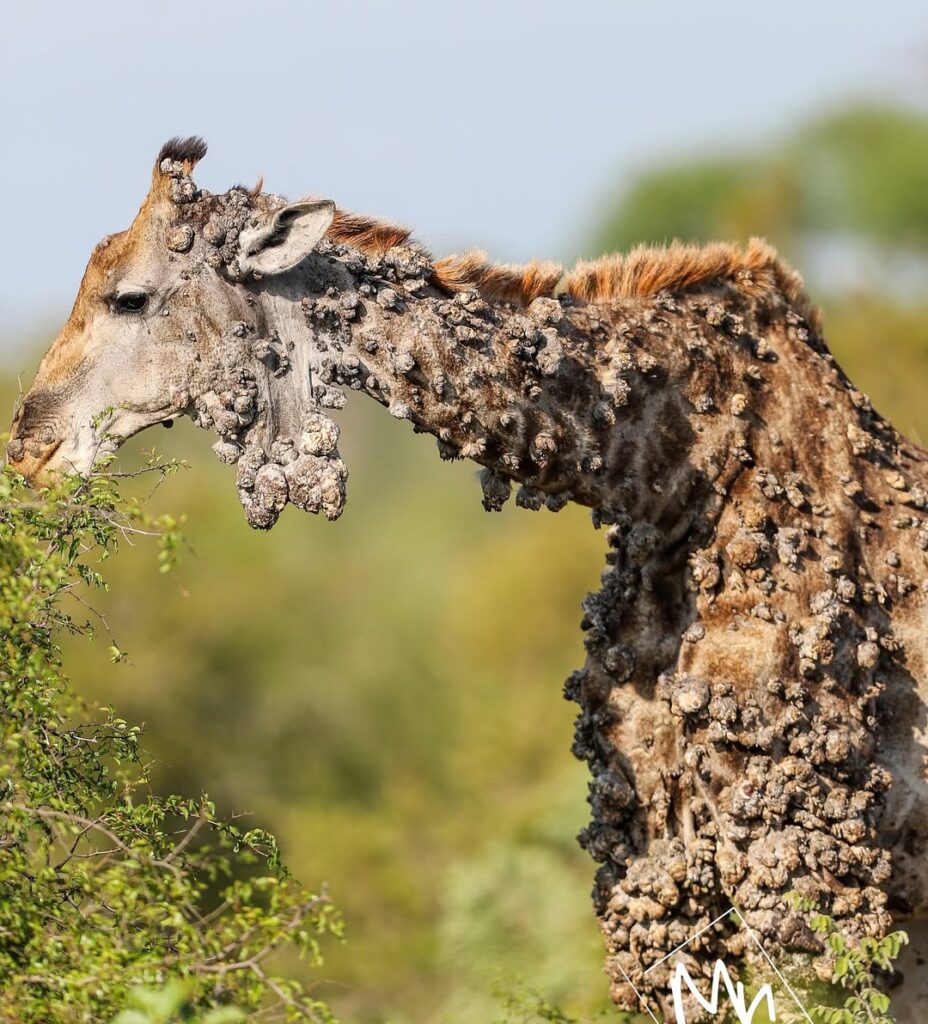
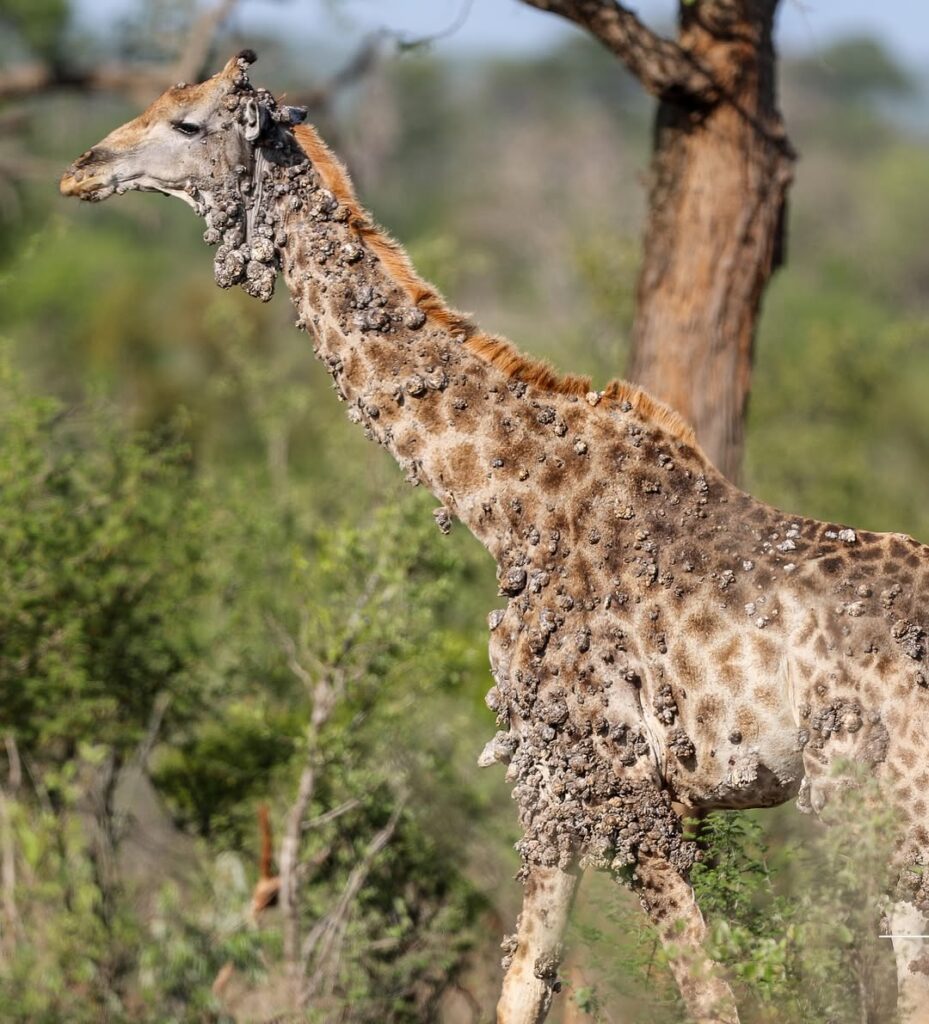
“She had strange growths all over her body,” Marius recalled. “I had never seen anything like it.”
Instinctively, he reached for his camera. The giraffe stood grazing calmly, despite the alarming appearance of her skin. The images were striking — unsettling, beautiful, and deeply confusing all at once.
After sharing the photos on Facebook, questions poured in. Was she suffering? Was she dying? Was this a known disease?
To raise awareness, Marius tagged South African National Parks (SANParks), hoping experts would investigate.
A Rare and Disturbing Condition
The images soon caught the attention of Worldwide Vets, an international animal welfare organization. According to Dr. Gemma Campling, founder and director, the giraffe was suffering from a condition linked to papillomavirus.
“There are many types of papillomavirus, each affecting specific species,” Dr. Campling explained. “In this case, it is believed to be the bovine form — Bovine Papillomavirus (BPV) — affecting the giraffe.”
The virus is thought to spread through direct contact, most likely carried by oxpecker birds. These birds commonly land on giraffes to feed on parasites, unintentionally transmitting the virus from one animal to another.
Notably, only one giraffe in the herd was affected — a pattern consistent with previous cases.
Not Fatal — But Not Painless
While the disease looks shocking, experts confirmed it is not life-threatening.
“Many cases of BPV are self-limiting and may resolve over time,” Dr. Campling said. “There is no treatment available for giraffes, but wildlife veterinarians monitor such cases closely.”
Importantly, the virus cannot be transmitted to humans.
However, Dr. Campling added a sobering note:
“Although it is not fatal, it almost certainly causes discomfort — especially when the growths become this advanced.”
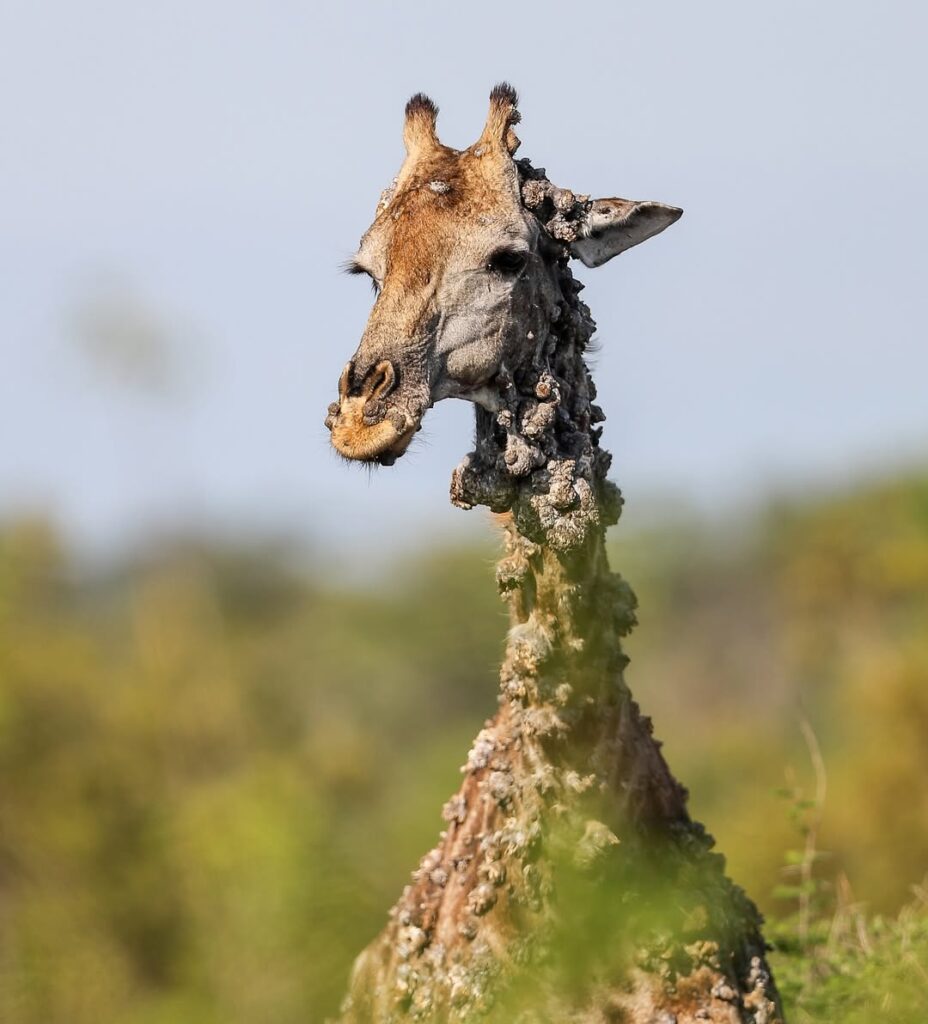
Despite this, the giraffe appeared calm, feeding normally and moving with her herd. That quiet resilience is what made the images so emotionally powerful — a reminder that animals often endure suffering silently.
A Moment That Changed Everything
For thousands who saw the photos online, the giraffe became a symbol of both strength and vulnerability. For Marius and Michelle, it reinforced why they keep returning to the wild year after year.
Nature doesn’t always reveal itself in postcard-perfect moments. Sometimes, it shows us truth — raw, uncomfortable, and deeply moving.
And sometimes, it takes the careful eye of one passionate observer to remind the world that wildlife is not just majestic — it is fragile, resilient, and deserving of our protection.
Leave a Reply