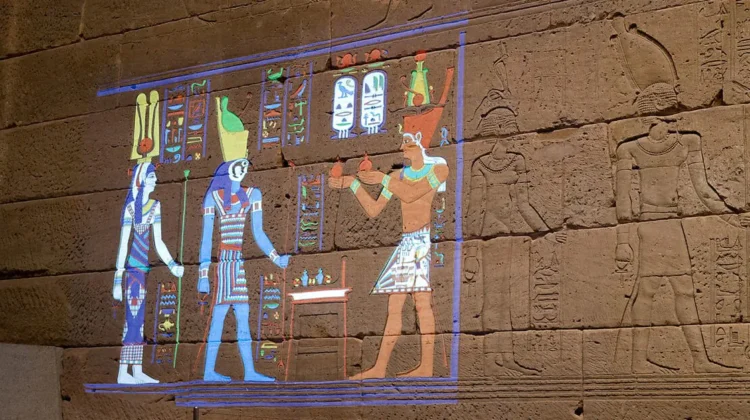
When you picture the ancient temples of Egypt, what colors come to mind? If you’re like most people, you likely envision sandy beige stone reliefs worn from centuries of exposure to the elements. However, new technology is now allowing us to revisit these archaeological wonders in a whole new light – literally.
It may come as a surprise, but those same monochromatic temple walls and statues were once vibrantly painted in dazzling hues. The ancient Egyptians took great care to adorn their sacred temples with intricate polychromatic light patterns. Unfortunately, the original pigments have faded almost beyond recognition over the millennia.
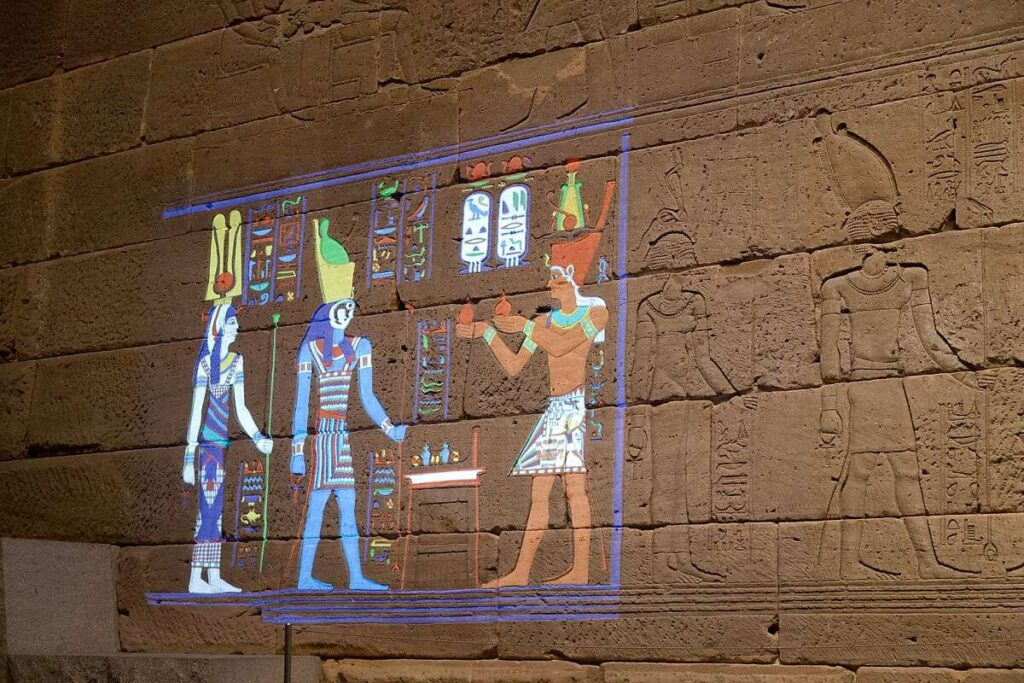
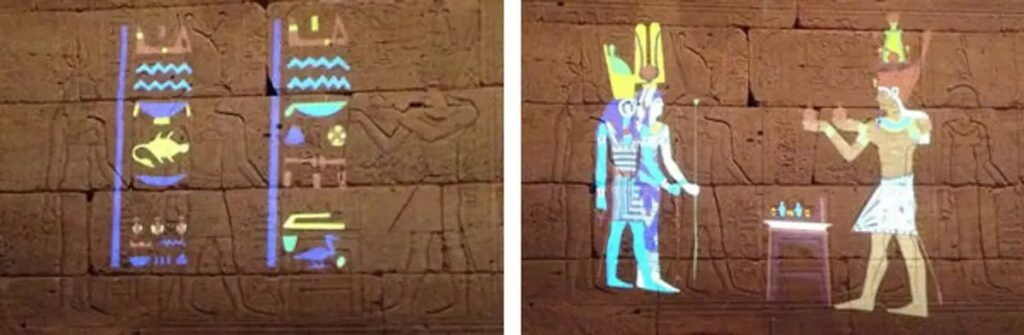
That is, until recently. Thanks to modern light projection mapping, it’s now possible to digitally “reapply” these lost colors and patterns to recreate the striking appearance these temples likely had in antiquity. One stunning example is the Metropolitan Museum of Art’s installation Color the Temple, which celebrated the 50th anniversary of the arrival of the Temple of Dendur at the museum.
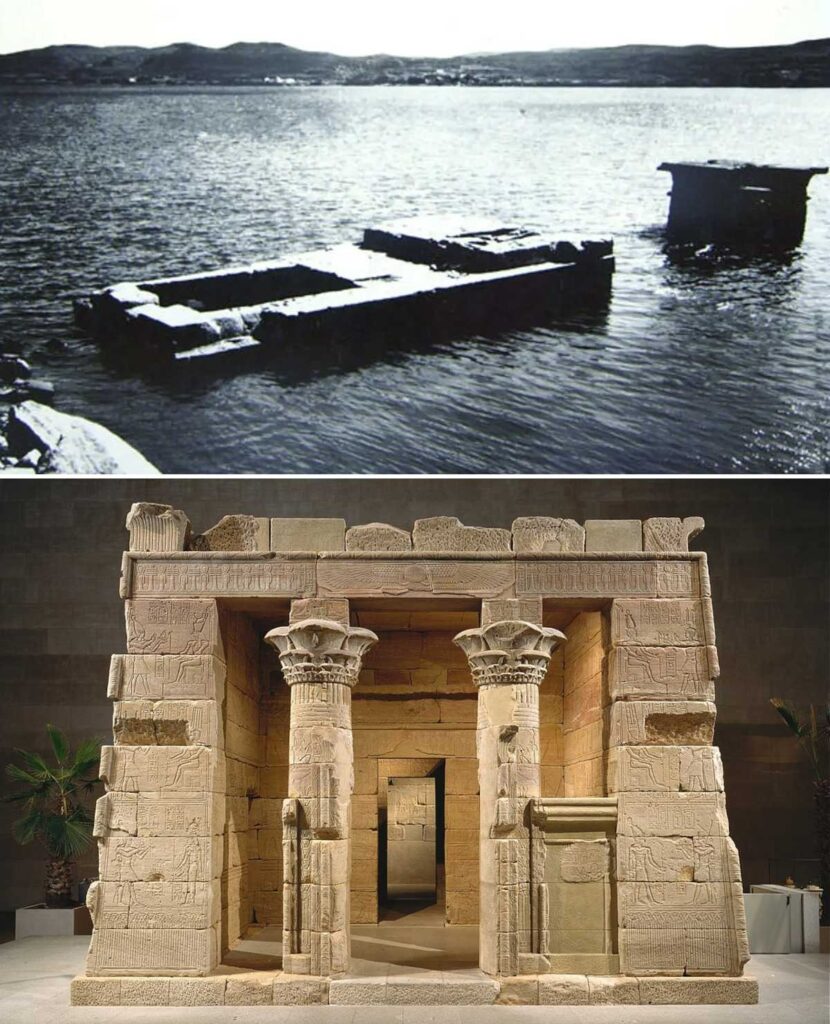
Commissioned by Emperor Augustus during Egypt’s Roman period, the 2,000-year-old Temple of Dendur was originally located in Tuzis (later Dendur), Nubia, near the border of Egypt and Sudan, about 80 kilometers (50 miles) south of modern Aswan. Threatened by flooding from the construction of the Aswan Dam in the 1960s, it was disassembled and relocated to the Met, where it has been reassembled in the museum’s Sackler Wing since 1978.

While the sandstone temple is an awe-inspiring sight on its own, the Color the Temple display provides a glimpse into its former polychromatic glory. Using high-tech projection mapping, the exhibit bathes a section of the temple’s exterior in vivid projected light, illuminating the carved reliefs in what historians believe were their original paint colors and patterns based on evidence from this and other ancient Egyptian sites.
The multidisciplinary team of museum staff, Egyptologists, and new media creators led by Matt Felsen, Erin Peters, and Maria Saba spent months meticulously researching archaeological sources to approximate the authentic color palette and designs that once adorned the Temple of Dendur reliefs. They analyzed remaining pigment traces, studied wall paintings at similar archaeological sites like the Temples of Hathor and Isis, and referenced historical records that documented the original colors.
The result is a breathtaking visual recreation, with the temple
’s carved scenes brought to life in brilliant blues, vibrant reds, rich yellows, and earthy tones. Hieroglyphs and texts appear to leap off the stone surface, while figures of pharaohs, gods, and goddesses regain their sense of depth with carefully shaded pigments. Decorative patterns that would have been painted on clothing, jewelry, and other objects are also vividly projected in intricate detail.
Of course, this illuminated projection is an interpretation based on the available evidence. However, it provides a much more historically accurate vision of how these sacred temples dazzled the ancient Egyptians with their polychromatic adornments, commemorating religious beliefs, symbolic meanings, and narratives.
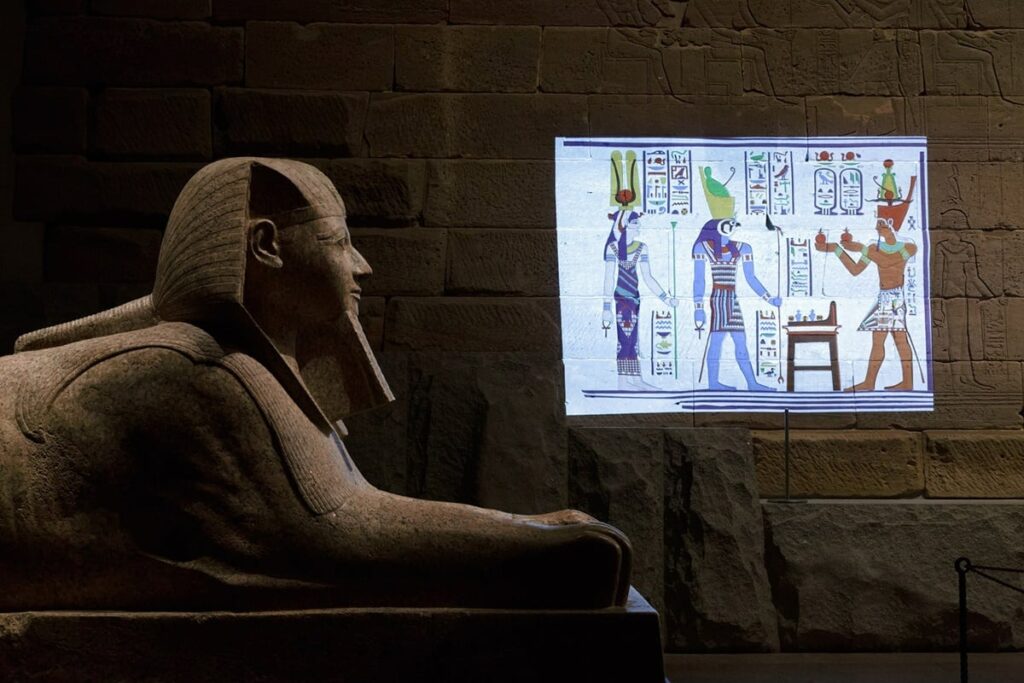
Visitors who experience Color the Temple during its evening displays are undoubtedly left with a newfound appreciation for these archaeological marvels, transcending the typical monochrome perspective. Imagine the sense of awe that priests, rulers, and worshippers felt when surrounded by such vividly decorated sacred spaces specifically constructed to honor their gods.
While nothing can truly replicate the firsthand experience of these temples during their time, projection mapping provides a compelling approximation that bridges the gap between archaeological evidence and our modern imagination. Light shows like Color the Temple offer a fresh look at age-old masterpieces we thought we knew. The sacred spaces of the ancient world are being reimagined in all their vibrant, polychromatic glory – and it’s truly a sight to behold.
Leave a Reply