
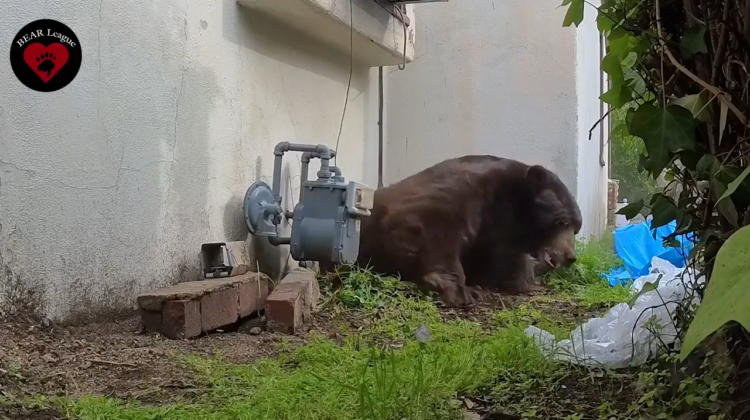
For more than a month, a California homeowner lived with an unexpected and dangerous tenant — a 550-pound male black bear that had made itself at home beneath his house.
The bear had wedged itself into the crawl space under Ken Johnson’s home in Altadena, repeatedly entering and exiting through a small opening since late November. Surveillance footage showed the animal calmly navigating the space as if it were a natural den.
But the situation was anything but harmless.
Johnson reported severe structural damage costing tens of thousands of dollars. Even more alarming, the bear had been twisting gas lines beneath the home, creating a life-threatening hazard that forced Johnson to shut off utilities entirely.

Coming after surviving the Eaton Fire and losing his job shortly afterward, the ordeal pushed the homeowner into a prolonged crisis.
Multiple attempts by California wildlife officials to remove the bear failed. Bait, noise deterrents, and even a trap — which ended up capturing the wrong bear — proved ineffective. The animal simply refused to leave.
A Last-Resort Call for Help
Desperate for a solution, Johnson contacted the BEAR League, a wildlife organization based in Lake Tahoe with decades of experience handling bear emergencies.
Within hours of arrival, their team employed an unconventional but effective strategy.
One experienced responder crawled beneath the house — fully aware the bear was still inside — and fired paintballs filled with vegetable oil at the bear’s hindquarters. The method was designed to be uncomfortable without causing injury, motivating the bear to retreat rather than confront.

The entire eviction took less than 20 minutes.
The bear exited the crawl space and fled the property.
Preventing the Bear’s Return

To ensure the bear wouldn’t reclaim the space, the BEAR League installed electric “unwelcome mats” at the crawl space entrance. When the bear attempted to return, footage showed it immediately retreating, the deterrent working exactly as intended.
The organization emphasized that unsecured crawl spaces are among the most common reasons bears den beneath homes, particularly during colder months.
In regions where humans and wildlife overlap, prevention often matters more than removal.
A Larger Lesson in Coexistence
The BEAR League stressed that simple steps — sealing crawl spaces, securing food sources, and reinforcing vulnerable areas — can prevent these conflicts altogether.
For 30 years, the group has helped homeowners coexist with bears without relocating or harming the animals, demonstrating that solutions don’t have to be violent to be effective.
In this case, a month-long standoff ended not with force, but with experience, precision, and respect for wildlife.
Why This Matters
As wild habitats shrink and urban areas expand, encounters like this are becoming more common. Long-term solutions depend on education, home design, and proactive wildlife management — not just emergency response after damage is done.
Coexistence isn’t optional anymore. It’s inevitable.
Leave a Reply