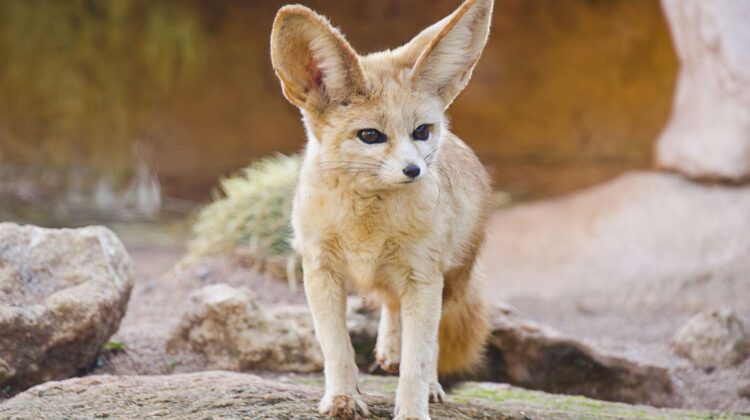
There’s more to this iconic fox species than those adorable ears.
The fennec fox is a standout among fox species — firstly, because it’s much more petite than its more bountiful red fox cousin and secondly, because of its objectively enormous ears. Its characteristically small stature and notably large auditory apparatuses have adapted specially to desert dwelling, as the twilight creeper known scientifically as Vulpes zerda is native to the Sahara Desert of North Africa, found as far east as Kuwait. Meet the widely adored fox species and learn about how it thrives in one of the planet’s harshest environments.
1. The Fennec Fox Is the World’s Smallest Fox

Whereas the red fox — the fennec fox’s more prevalent and widely distributed relative — is typically about 3 feet long, 2 feet tall, and weighs between 6 and 30 pounds in adulthood, the average fennec fox stands only 8 inches tall and weighs just 2 to 3 pounds. That, in comparison, is shorter than the average house cat and a fraction of the weight.
Thus, it holds the title of the world’s smallest fox species, but don’t be fooled by its dainty size. This little fox can jump 2 feet high and 4 feet forward when springing to catch prey or evade a predator. They are tough to catch, which means they have few predators; humans and eagle owls are its two primary threats.
2. It Has Multipurpose Ears

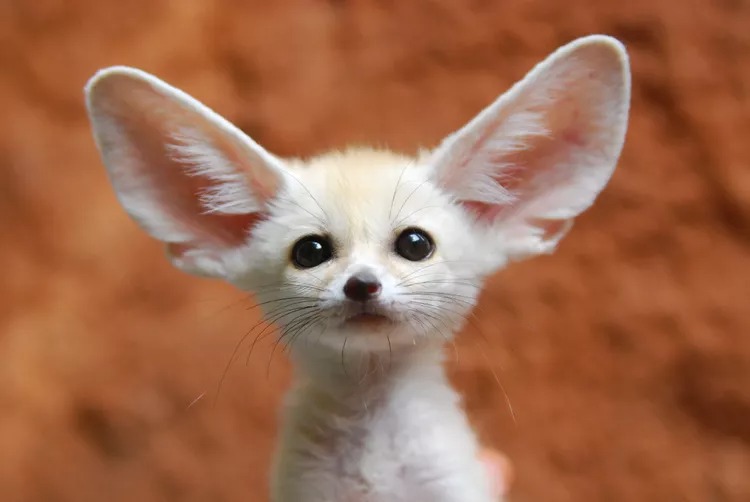
In addition to being the smallest fox, the Vulpes zerda also has the largest ears (sometimes half as long as its body), beating out even the bat-eared fox. Its 6-inch-long, upward-pointing extremities come in handy when listening for prey underground, the San Diego Zoo says, and they also help the fox stay cool, as it loses a lot of heat through its ears.1 This is one of many adaptations the fox has developed for surviving such harsh desert environments.
3. It Has Extra Fur on Its Feet
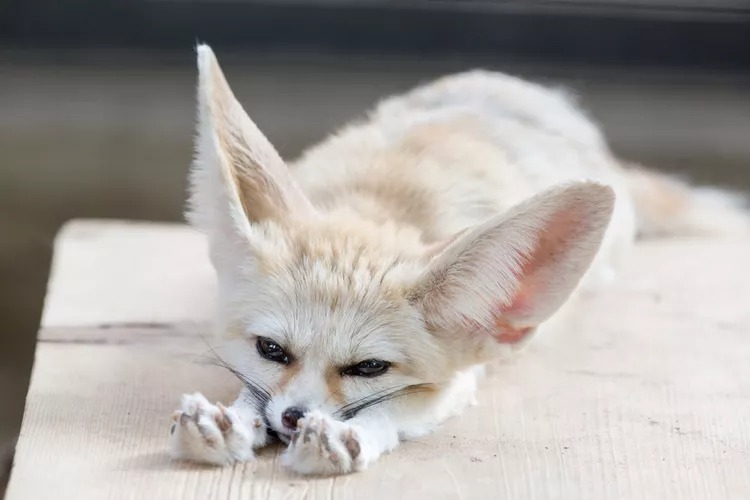
Deserts aren’t excruciatingly hot 24/7; rather, nights can be quite the opposite because there usually isn’t enough cloud cover to keep warm temperatures low to the ground. Fennec foxes need plenty of fur to stay warm when the temperature plummets, but that fur is also useful in the heat. It has extra-furry feet to protect its paw pads from the hot sand. The thick fur also gives the fox extra traction when maneuvering across loose sand and dunes.
4. It Has a Dedicated Family Life
Fennec foxes mate for life. A couple produces one litter of two to five pups per year, and the offspring from one litter may stay with the family even as the next litter of pups is born. When the female is pregnant and nursing the pups, her mate will bring her food and protect her from danger. Pups are not weaned until they are about 2 months old. They reach maturity after about nine months. Though they grow up quickly, the San Diego Zoo says fennec foxes can live 10 years in the wild and 13 years in captivity.
5. It Leads a Rich Social Life
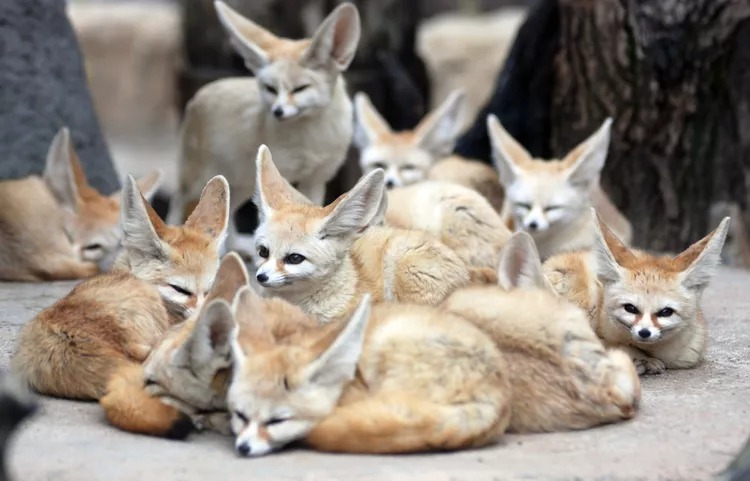
Not only do they generally have flourishing family lives, they also tend to hang out in large and tight-knit social circles. Fennec fox behavior is known mainly through what has been observed in captivity, but they look to be highly social animals, enjoying the company of other foxes and engaging in play even as adults. Fennec foxes live in groups of as many as 10 individuals, though the size of the group is mostly determined by the amount of food resources available in a territory.
6. It’s a Skilled Communicator

Both young and adult fennec foxes use an array of vocalizations — including barks, chatters, growls, brief and repeated howls, shrieks, squeaks, and whimpers — to communicate with each other, such as to establish social rank during play. According to the Smithsonian’s National Zoo & Conservation Biology Institute, they are extremely protective of their clans and will typically mark their territories by urinating and defecating around the perimeter, similar to many other canids.3
7. It Doesn’t Need To Drink Water
The fennec fox is so well-adapted to desert life that it can live without free-standing water for long periods of time.1 Instead, it stays hydrated in the Sahara heat just by eating leaves, roots, and fruits — these, together, make up nearly 100 percent of the fox’s water intake. It also eats grasshoppers, locusts, small rodents, lizards, birds, and their eggs. The big-eared V. zerda will also lap up condensation that collects in its den for hydration.
8. It Loves the Night Life

Like so many desert-dwelling animals, fennec foxes are nocturnal. Spending the hottest part of the day snoozing in their cool, underground burrows keeps them out of the heat, though being a night prowler has its own challenges for staying warm on cold nights and, of course, locating prey in the dark. (But, then again, this is why they have such thick fur and those decidedly adorable, whopping ears.)
They are so adorable. Love them