• Skip to main content
  • Skip to primary sidebar
  • Skip to footer
  • Home
  • About Us
  • Copyright Report
  • Submit Content
  • Terms
  • Privacy Policy
  • Legal Disclaimer

Hasan Jasim

Hasan Jasim is a place where you may get entertainment, viral videos, trending material, and breaking news. For a social generation, we are the largest community on the planet.

Ad example

Why Woodpeckers Don’t Get Headaches from Their Hammering Habit

by Stephen King 3 Comments

FacebookTweetPinLinkedIn

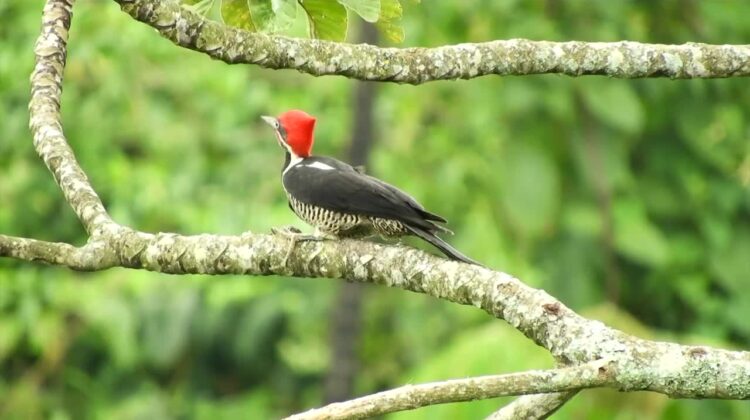
Have you ever wondered how woodpeckers can repeatedly peck at trees with such force without suffering from debilitating headaches or brain damage? These seemingly indestructible birds have evolved a remarkable set of adaptations that allow them to thrive in their challenging environments.
The Mystery of the Uninjured Brain

Woodpeckers deliver blows to trees with a force equivalent to 1,000 times the force of gravity. This is a staggering impact that would be fatal to most creatures. However, woodpeckers remain unscathed, thanks to a combination of physical and physiological adaptations.
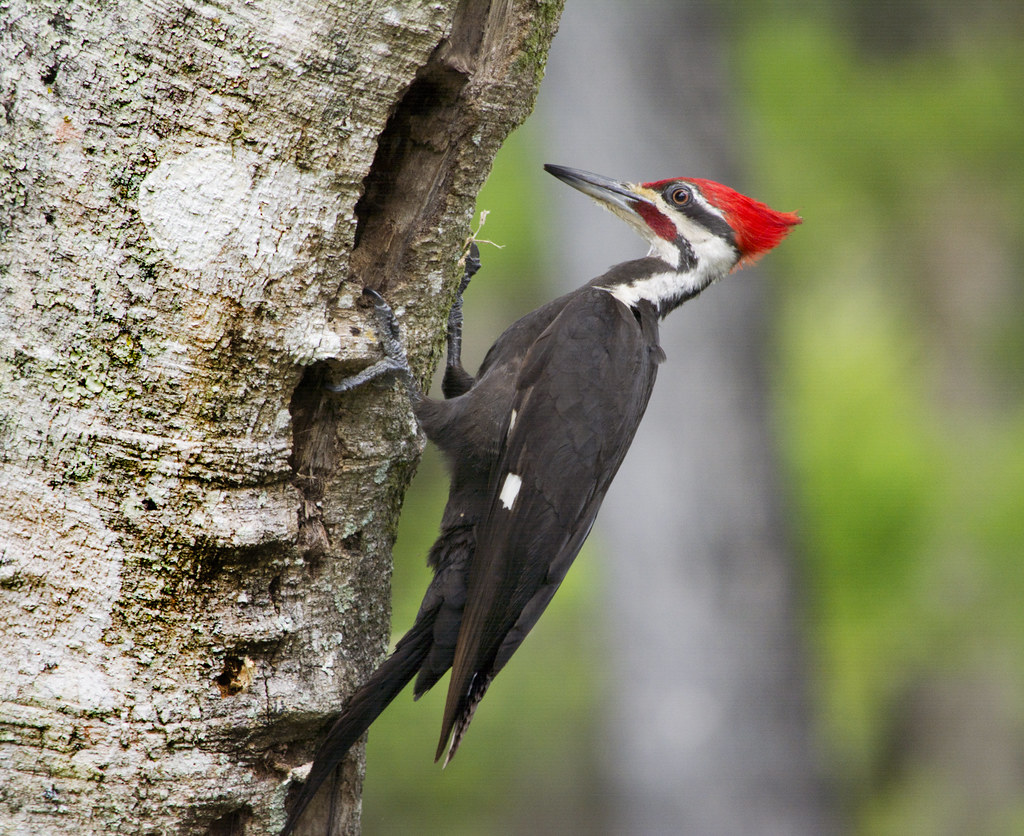
One key adaptation is their specialized beak. Unlike a human hammer, a woodpecker’s beak is designed to penetrate wood rather than abruptly stopping. This reduces the force transmitted to the bird’s head. Additionally, strong neck muscles and a unique brain structure help to absorb the shock of each impact.

A Tongue Longer Than Its Bill
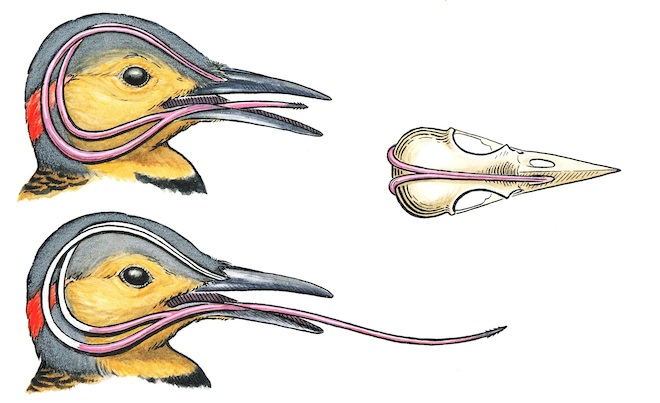
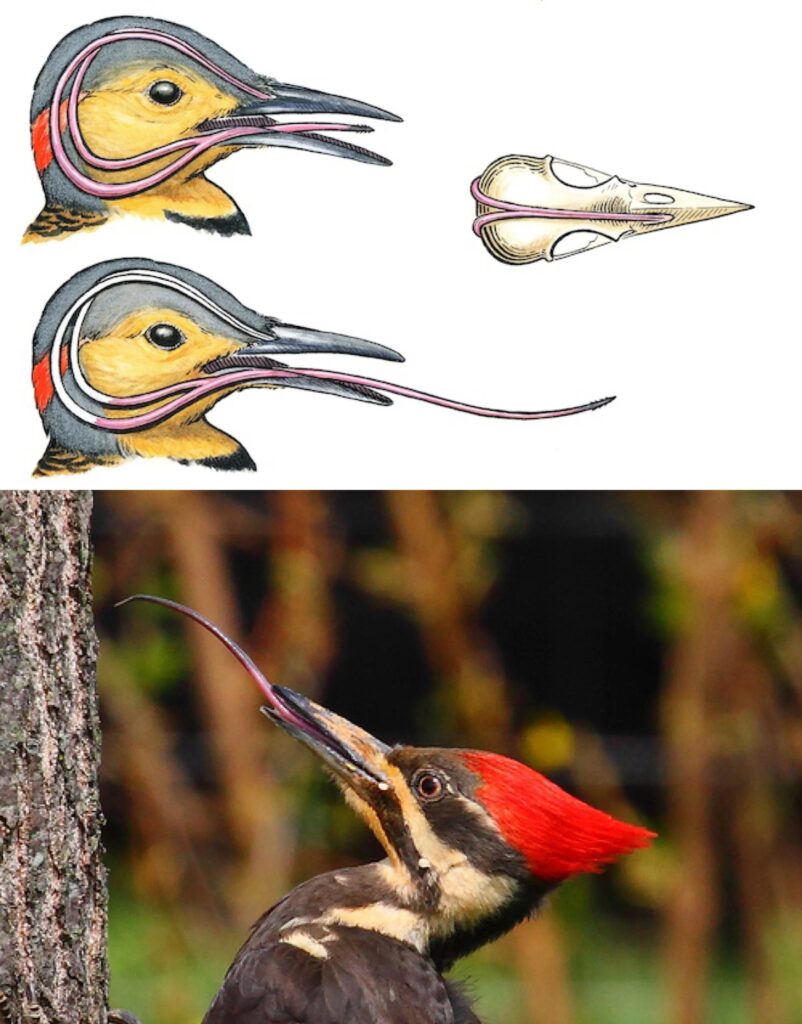
Another fascinating adaptation of woodpeckers is their unusually long tongue. This elongated organ is essential for reaching into crevices and extracting insects from deep within trees. Woodpeckers have developed a complex system of bones and cartilage, known as the hyoid apparatus, that allows them to extend their tongues to remarkable lengths.
The hyoid apparatus is anchored to the base of the tongue and extends backward and laterally. In woodpeckers, these extensions, called horns, can wrap around the back of the skull and even into the nostril. This unique arrangement enables the bird to store its long tongue when it’s not in use and to extend it to its full length when needed.

A Variety of Feeding Strategies

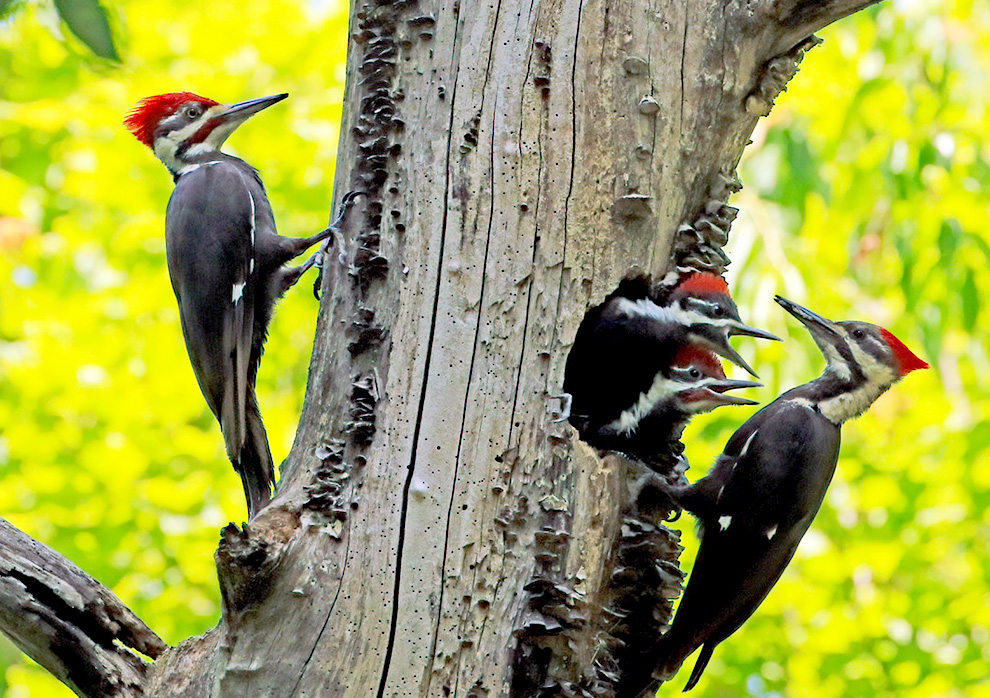
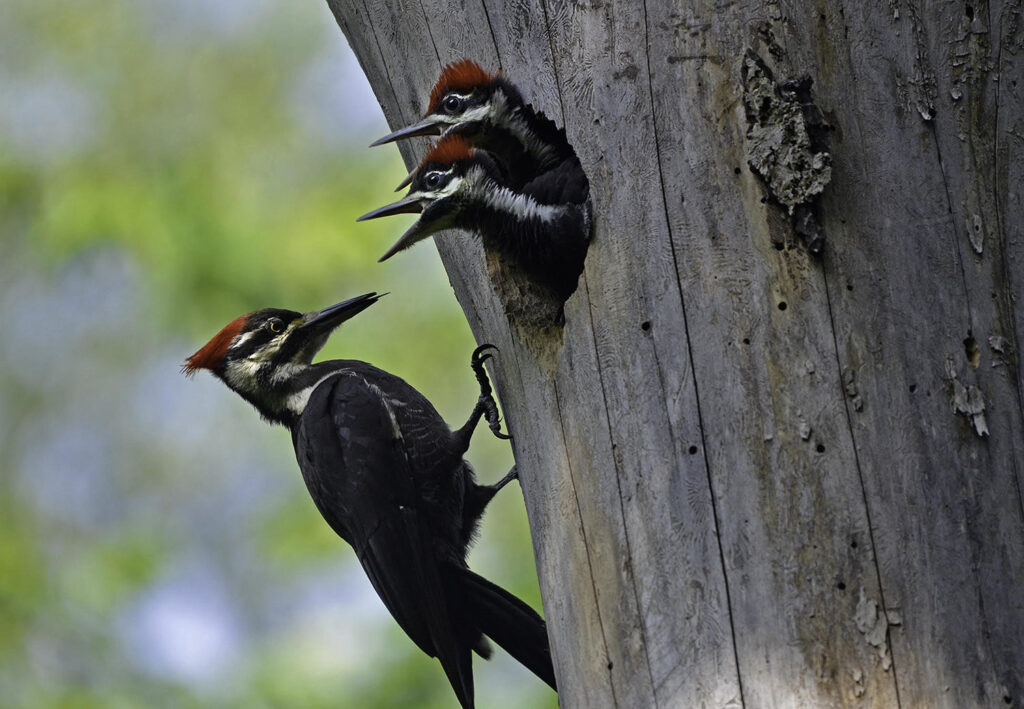
While all woodpeckers share the ability to peck at trees, they have evolved different feeding strategies. Some species, like sapsuckers, specialize in drilling holes in trees to extract sap. Others, such as flickers, primarily feed on ants. Pileated woodpeckers, on the other hand, are known for their impressive excavating skills, which they use to locate carpenter ants deep within trees.
Woodpeckers are truly remarkable creatures. Their ability to withstand the immense forces generated by their pecking is a testament to the power of natural selection. From their specialized beaks to their elongated tongues, these birds have evolved a suite of adaptations that allow them to thrive in their challenging habitats.

Facebook Comments Box
FacebookTweetPinLinkedIn

Filed Under: Trends Worldwide Tagged With: adaptations, brain damage, flickers, headaches, hyoid apparatus, Pileated Woodpeckers, sapsuckers, tongue, woodpeckers

Reader Interactions

Comments

  1. Giles Highnam says

    January 25, 2023 at 1:35 pm

    Thank you for the assembled info and data on woodpeckers, Hasan.

    Are Kookaburras a type of woodpecker, and do they share the same physiology ?

    Reply
    • Tanya Lagace says

      February 2, 2023 at 5:04 am

      If I’m not mistaken, kookaburras are a type of kingfisher

      Reply
  2. Janice Oreilly says

    January 27, 2023 at 9:11 pm

    Very interesting thanks for the information

    Reply

Leave a Reply Cancel reply

Your email address will not be published. Required fields are marked *

Primary Sidebar

More to See

A Medal Has Been Awarded To An African Giant Pouch Rat For Hunting Landmines

By Stephen King

Diesel is chained up in the cold for 4 years – then some animal lovers find out and rush to save him

By Stephen King

“Flamingo” The Rescue Pigeon Is A Reminder To Never Dye Birds

By Stephen King

Amazing Photo Of A Wild Bonobo Cradling Most likely, a mongoose isn’t what it seems.

By Stephen King

Unicorns Lived Among Humans, Died Due To Climate Change: Australian Researchers

By Stephen King

Abandoned dog scans every house in neighborhood for family

By Stephen King

The ‘three-dot tattoo’ – potential meaning and significance

By Stephen King

Footer

Home and Garden: Timeless Beauty and Smart Investment

Your home and garden reflect your personality and values, offering both emotional and financial worth. A well-maintained space enhances your life and withstands market changes.

Hasan Jasim emphasizes the lasting value of homes and gardens, from beautiful gardens that boost curb appeal to interiors that create sanctuary. These spaces are more than assets—they are legacies.

Incorporating health-boosting elements like dates, known for their energy, heart health, and gut benefits, supports your well-being. Whether for diabetes, weight loss, or skin health, dates are a smart, natural choice.

By prioritizing quality materials and timeless design, your home and garden remain valuable investments for years to come.

Recent

  • The University in Japan That Lets Students Graduate in Anything — Even Full Cosplay
  • The Cat Who Calls an Ancient Temple Home: Meet Cece of Dendera
  • Scientists Just Captured The Flash of Light That Sparks When a Sperm Meets an Egg
  • She Gave Up Her Crown So Her Friend Could Feel Like a Princess
  • Deaf and Blind Dog Reunites with Dad After a Year — Her Reaction Will Melt Your Heart
  • What Does It Mean to Encounter a Black Cat? Mysteries, Myths, and Ancient Symbolism
  • Mars Up Close: Stunning New Photos from 200 Million Miles Away

Search

Contact us

Hasan Jasim LLC is proudly based in the United States, delivering professional and reliable services. You can reach us by phone at +1 (914) 575-5957 or visit our office at 1234 Block Blvd., San Francisco, CA 94120. We are always here to assist you with any inquiries and provide the support you need promptly and efficiently.

Copyright © 2025 · Magazine Pro on Genesis Framework · WordPress · Log in