• Skip to main content
  • Skip to primary sidebar
  • Skip to footer
  • Home
  • About Us
  • Copyright Report
  • Submit Content
  • Terms
  • Privacy Policy
  • Legal Disclaimer

Hasan Jasim

Hasan Jasim is a place where you may get entertainment, viral videos, trending material, and breaking news. For a social generation, we are the largest community on the planet.

Ad example

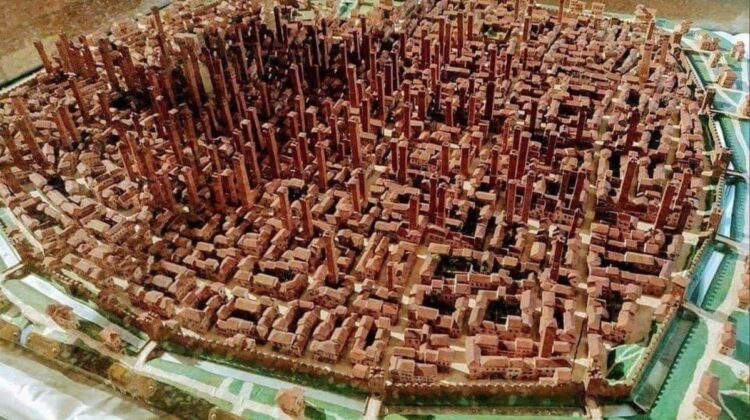
Skyscrapers Existed in the Middle Ages: The Italian City of Bologna Was Like Manhattan Back Then

by Stephen King Leave a Comment

FacebookTweetPinLinkedIn

When we think of skyscrapers, we often envision the modern steel and glass giants that dominate the skylines of our bustling cities today. But did you know that back in AD 1200, the Italian city of Bologna boasted around 180 towers that we would consider skyscrapers today? The tallest among them, standing at an impressive 320 feet (97 meters), still graces the cityscape.

During the 12th and 13th centuries, Bologna was a city that resembled modern Manhattan, complete with towering structures that reached astonishing heights, with the tallest soaring to 97 meters. These towers were not just architectural wonders; they were built with a clear purpose – defense.
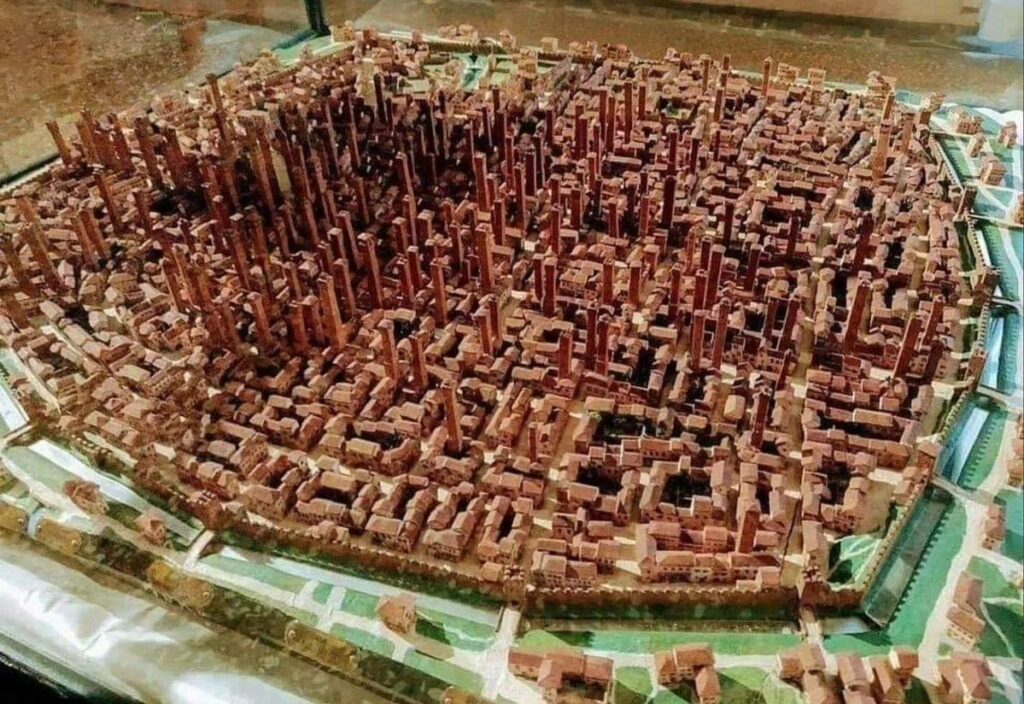
Aside from the towers, remnants of fortified gateways known as “torresotti” still stand today, corresponding to the gates of the 12th-century city wall, the Mura dei torresotti or Cerchia dei Mille, although much of the wall itself has been lost to time.

But why were so many towering structures constructed during this period in Bologna’s history? The answer to this question remains elusive. One theory posits that the wealthiest families erected these towers for offensive and defensive purposes during the Investiture Controversy, a medieval European conflict that revolved around the appointment of bishops and abbots by either the church or the state, including the pope.
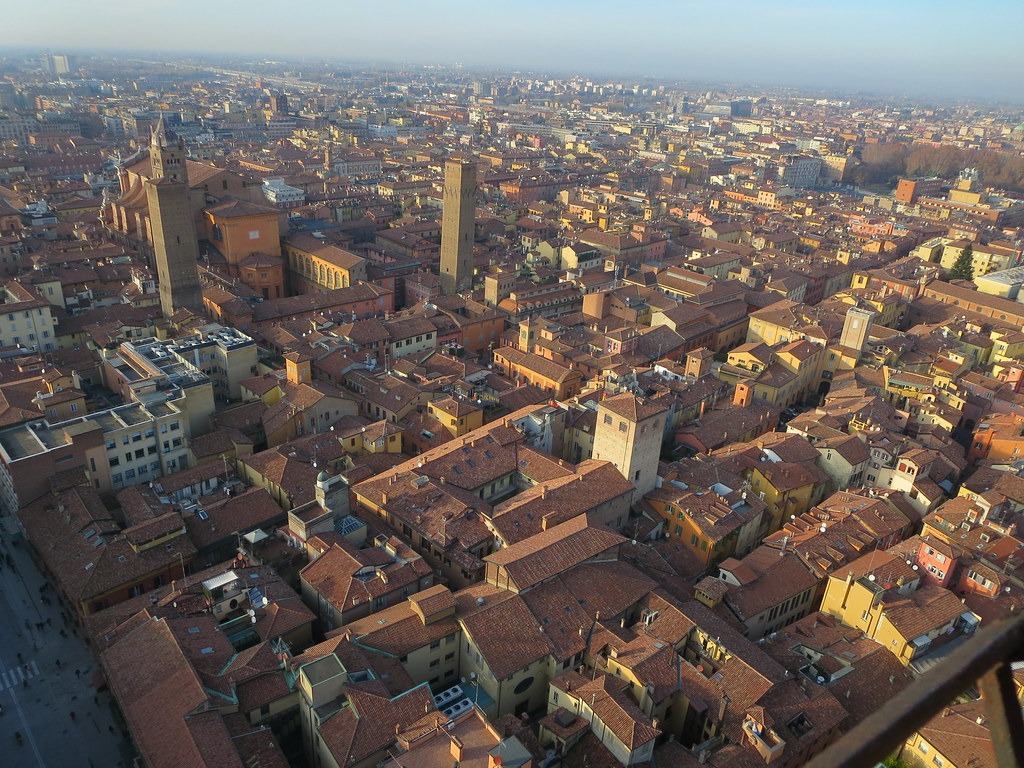
You can see some of those towers even today. This photo was taken from one of the two most famous Bologna towers. Image credit: leiris202

In the 13th century, many of these impressive towers were dismantled or crumbled into history. Some were repurposed as prisons, city towers, shops, or residences. Nevertheless, the towers remained iconic landmarks of Bologna, even finding mention in Dante’s “Inferno.” It wasn’t until the 20th century, during a citywide restructuring initiative, that the Artenisi Tower and the Riccadonna Tower met their unfortunate end in 1917.

Today, fewer than twenty towers from that bygone era grace Bologna’s skyline. Among them are the Azzoguidi Tower (61 meters), the Prendiparte Tower (60 meters), the Scappi Tower (39 meters), Uguzzoni Tower (32 meters), Guidozagni Tower, Galluzzi Tower, and the renowned ‘Two Towers’: the Asinelli Tower (97 meters) and the Garisenda Tower (48 meters).
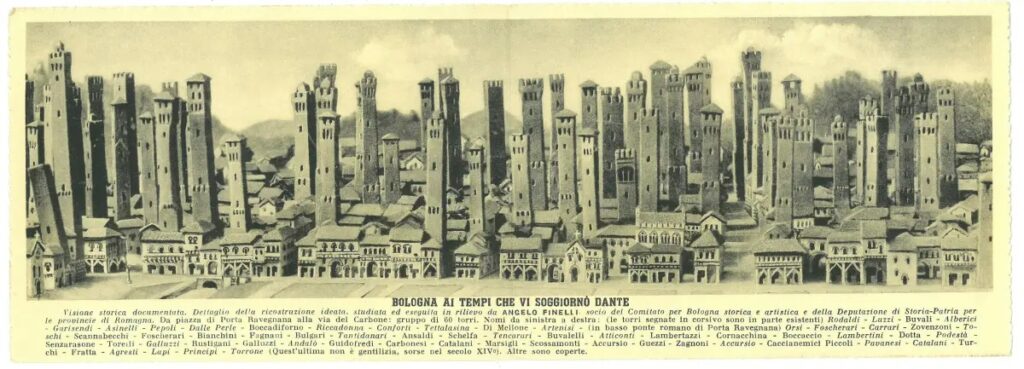
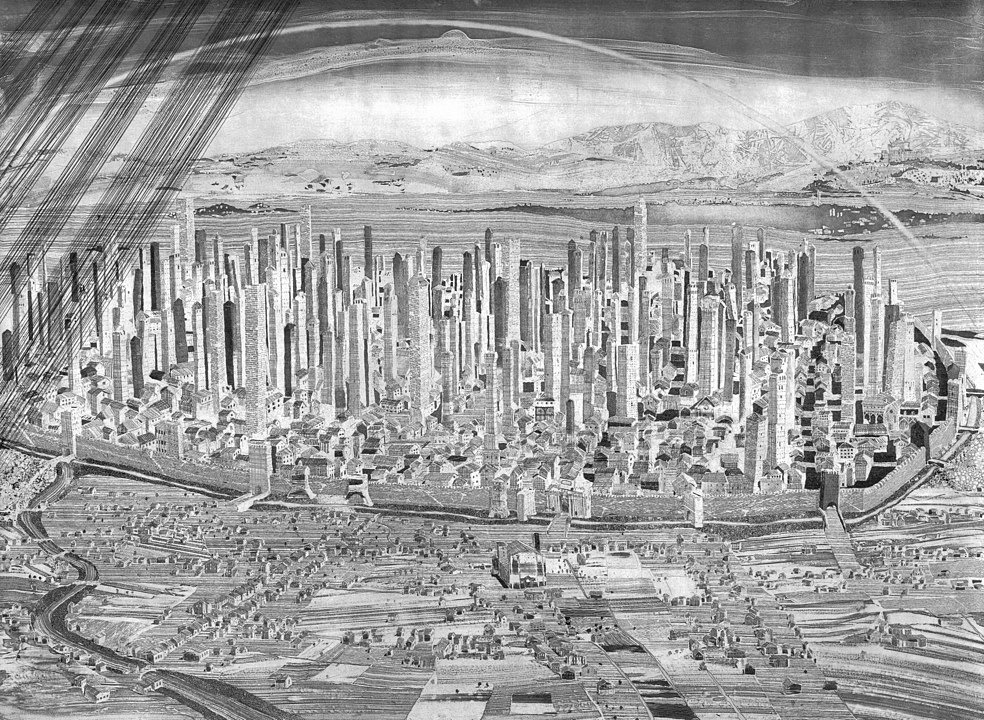
What Bologna looked like when Dante Alighieri stayed in the city at the turn of the 13th and 14th centuries.

The construction of these towers was a monumental undertaking, requiring the labor of numerous serfs or peasants. Building a typical 60-meter Bologna tower would take between three to ten years of labor.

The towers had square cross-sections with foundations five to ten meters deep, fortified with driven-in poles and covered with pebble and lime. Selenite stone blocks formed the base, while the upper walls became progressively thinner and lighter.
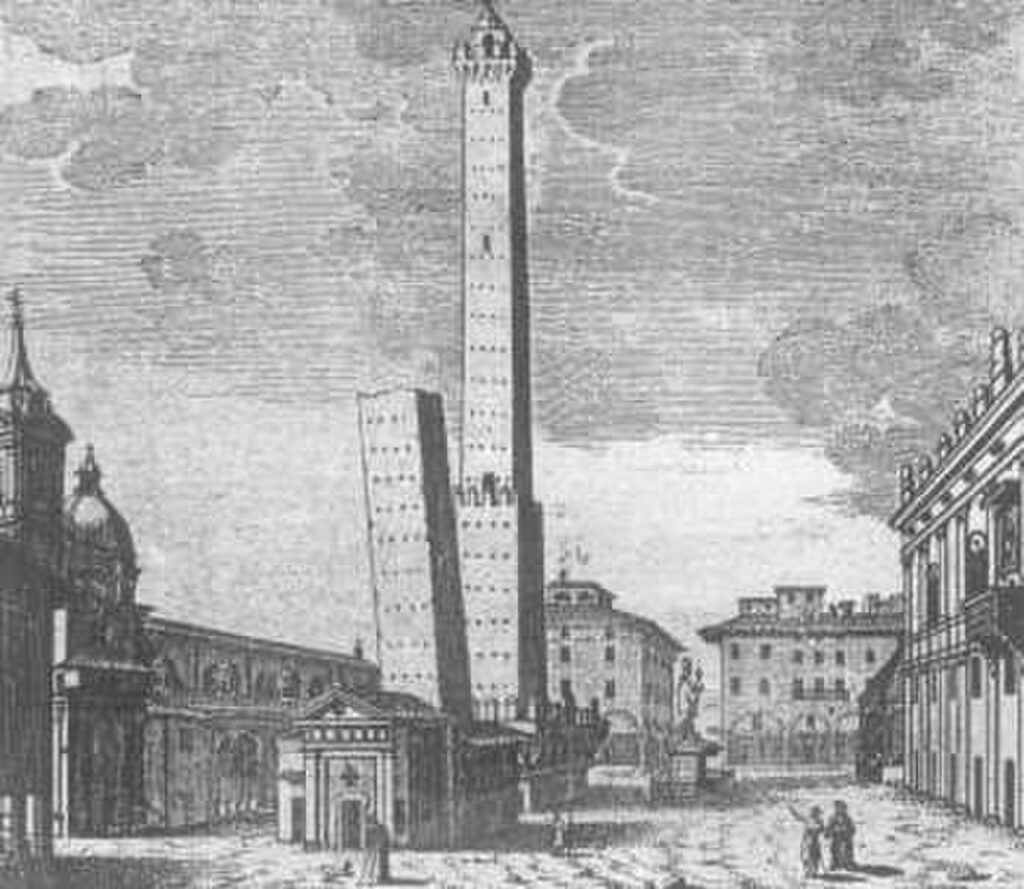
The Two Towers in 1767 by Pio Panfili

As the towers reached greater heights, builders employed a technique called “a sacco” masonry, featuring a thick inner wall and a thinner outer wall filled with stones and mortar. Holes in the outer wall and larger cavities in the selenite were left to accommodate scaffolding and future modifications.

Evidently, these towering structures transformed Bologna into a remarkable sight during the Middle Ages.
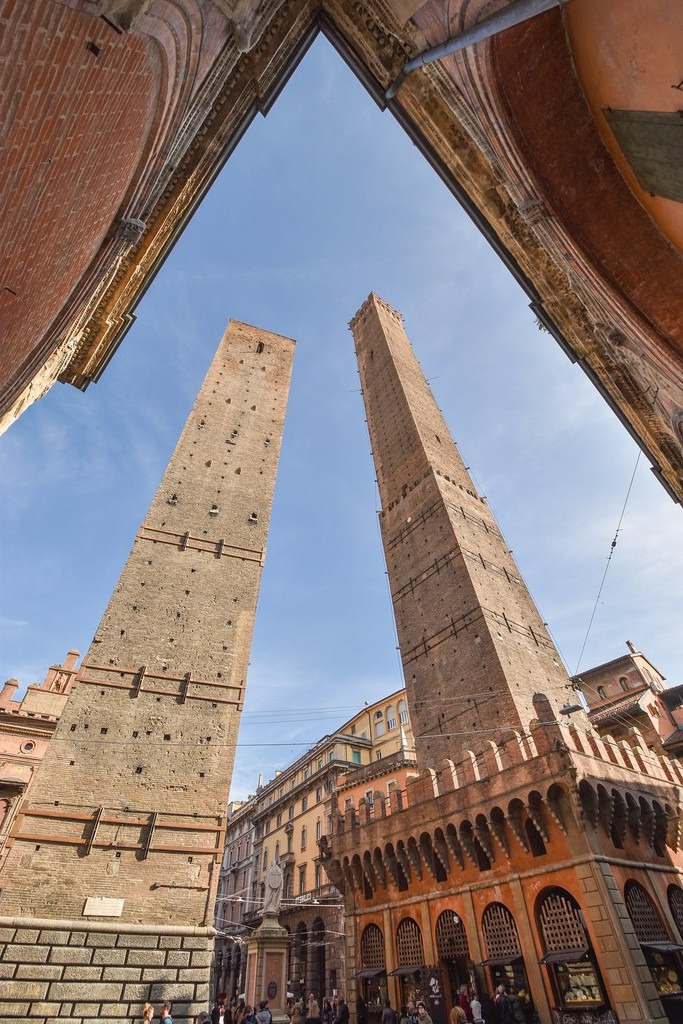
The same towers today. Image credit: Gwendolyn Stansbury

The first historian to extensively study Bologna’s skyscrapers was Count Giovanni Gozzadini, a 19th-century Italian senator determined to elevate his hometown’s status within the newly unified Italy. He delved into civic archives, scrutinizing real estate deeds to determine the number of towers based on documented ownership changes. Gozzadini’s findings initially tallied an astounding 180 towers, a staggering number for a medieval Bologna.

While more recent estimates have revised that number downward to around 80 to 100 towers, it remains a remarkable figure for a relatively “small” settlement that thrived a millennium ago.
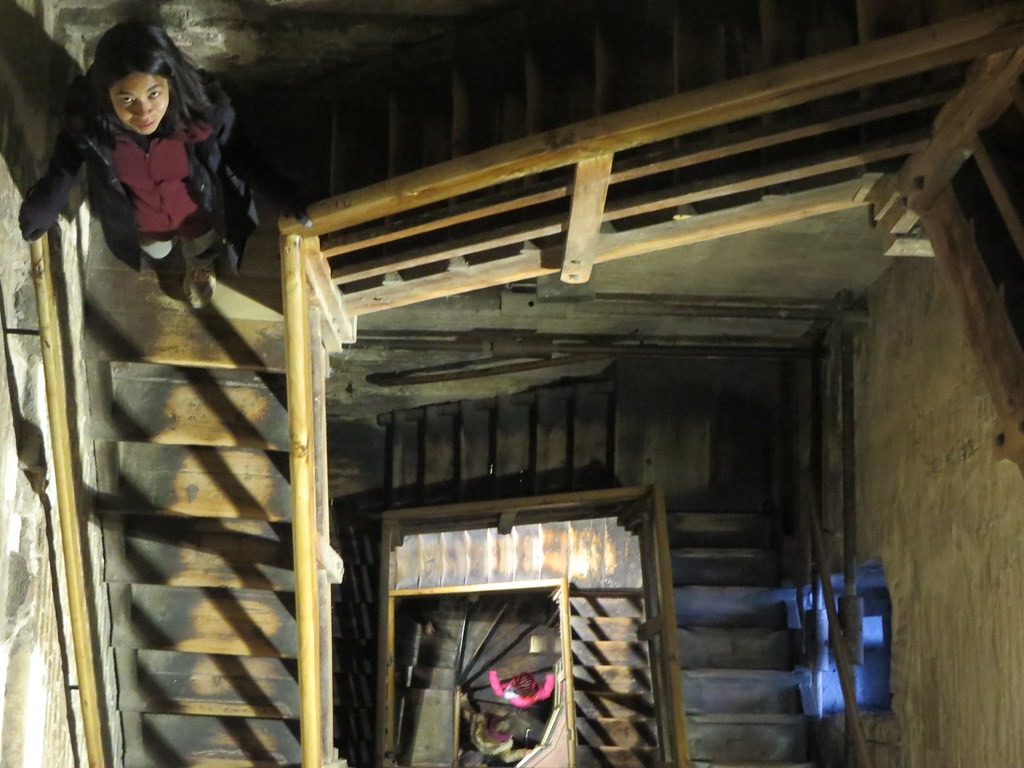
Inside Asinelli Tower – the larger of the two towers, Bologna. Image credit: leiris202
Medieval Bologna, full of towers, as imagined by modern engraver Toni Pecoraro.

The true purpose and significance of these towers continue to intrigue, leaving us with a captivating historical mystery that adds an extra layer of wonder to the city of Bologna, where the Middle Ages once reached for the sky in the form of skyscrapers.

Facebook Comments Box
FacebookTweetPinLinkedIn

Filed Under: Trends Worldwide Tagged With: ages:, back, bologna, city, existed, italian, like, manhattan, middle, skyscrapers, then, trends, worldwide

Reader Interactions

Leave a Reply Cancel reply

Your email address will not be published. Required fields are marked *

Primary Sidebar

More to See

The Enigmatic Sri Lanka Frogmouth: A Master of Disguise

By Stephen King

Dog raises alarm about friend trapped in the harbor, leading to life-saving rescue just in time

By Stephen King

Owner ‘buries’ beloved dog, pooch’s hilarious reaction leaves Internet in stitches

By Stephen King

A young Swiss guy resigned his work, sold his belongings, and travelled to Africa to help conserve wild creatures

By Stephen King

Indonesian Scientists Discovered The World’s First Carnivorous Pitcher Plants That Feed Underground

By Stephen King

Reason NY Could Owe Peanut the Squirrel’s Owners $10 Million After Beloved Pet Was Seized and Euthanized

By Stephen King

Photographer From Nantucket Captures Nearly Frozen Waves On Camera

By Stephen King

Footer

Home and Garden: Timeless Beauty and Smart Investment

Your home and garden reflect your personality and values, offering both emotional and financial worth. A well-maintained space enhances your life and withstands market changes.

Hasan Jasim emphasizes the lasting value of homes and gardens, from beautiful gardens that boost curb appeal to interiors that create sanctuary. These spaces are more than assets—they are legacies.

Incorporating health-boosting elements like dates, known for their energy, heart health, and gut benefits, supports your well-being. Whether for diabetes, weight loss, or skin health, dates are a smart, natural choice.

By prioritizing quality materials and timeless design, your home and garden remain valuable investments for years to come.

Recent

  • The University in Japan That Lets Students Graduate in Anything — Even Full Cosplay
  • The Cat Who Calls an Ancient Temple Home: Meet Cece of Dendera
  • Scientists Just Captured The Flash of Light That Sparks When a Sperm Meets an Egg
  • She Gave Up Her Crown So Her Friend Could Feel Like a Princess
  • Deaf and Blind Dog Reunites with Dad After a Year — Her Reaction Will Melt Your Heart
  • What Does It Mean to Encounter a Black Cat? Mysteries, Myths, and Ancient Symbolism
  • Mars Up Close: Stunning New Photos from 200 Million Miles Away

Search

Contact us

Hasan Jasim LLC is proudly based in the United States, delivering professional and reliable services. You can reach us by phone at +1 (914) 575-5957 or visit our office at 1234 Block Blvd., San Francisco, CA 94120. We are always here to assist you with any inquiries and provide the support you need promptly and efficiently.

Copyright © 2025 · Magazine Pro on Genesis Framework · WordPress · Log in