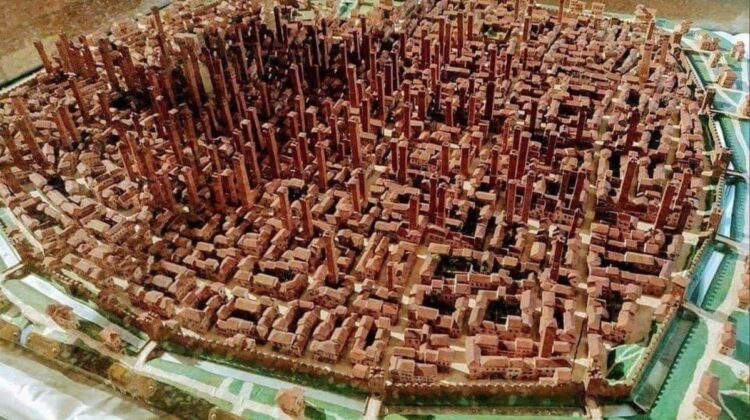
When we think of skyscrapers, we often envision the modern steel and glass giants that dominate the skylines of our bustling cities today. But did you know that back in AD 1200, the Italian city of Bologna boasted around 180 towers that we would consider skyscrapers today? The tallest among them, standing at an impressive 320 feet (97 meters), still graces the cityscape.
During the 12th and 13th centuries, Bologna was a city that resembled modern Manhattan, complete with towering structures that reached astonishing heights, with the tallest soaring to 97 meters. These towers were not just architectural wonders; they were built with a clear purpose – defense.
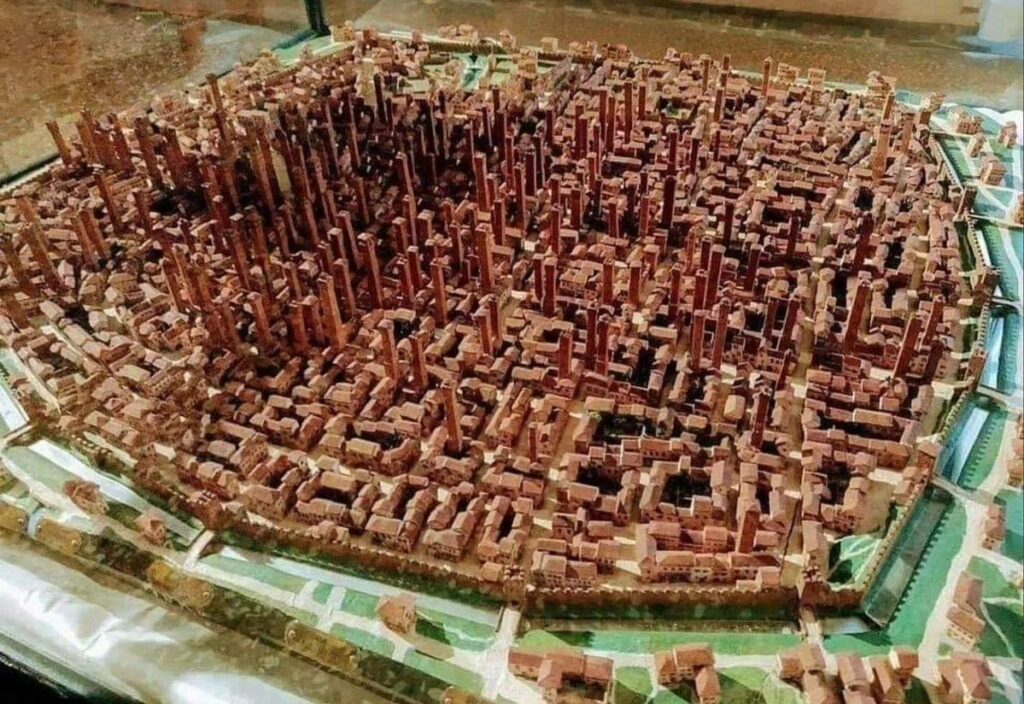
Aside from the towers, remnants of fortified gateways known as “torresotti” still stand today, corresponding to the gates of the 12th-century city wall, the Mura dei torresotti or Cerchia dei Mille, although much of the wall itself has been lost to time.
But why were so many towering structures constructed during this period in Bologna’s history? The answer to this question remains elusive. One theory posits that the wealthiest families erected these towers for offensive and defensive purposes during the Investiture Controversy, a medieval European conflict that revolved around the appointment of bishops and abbots by either the church or the state, including the pope.
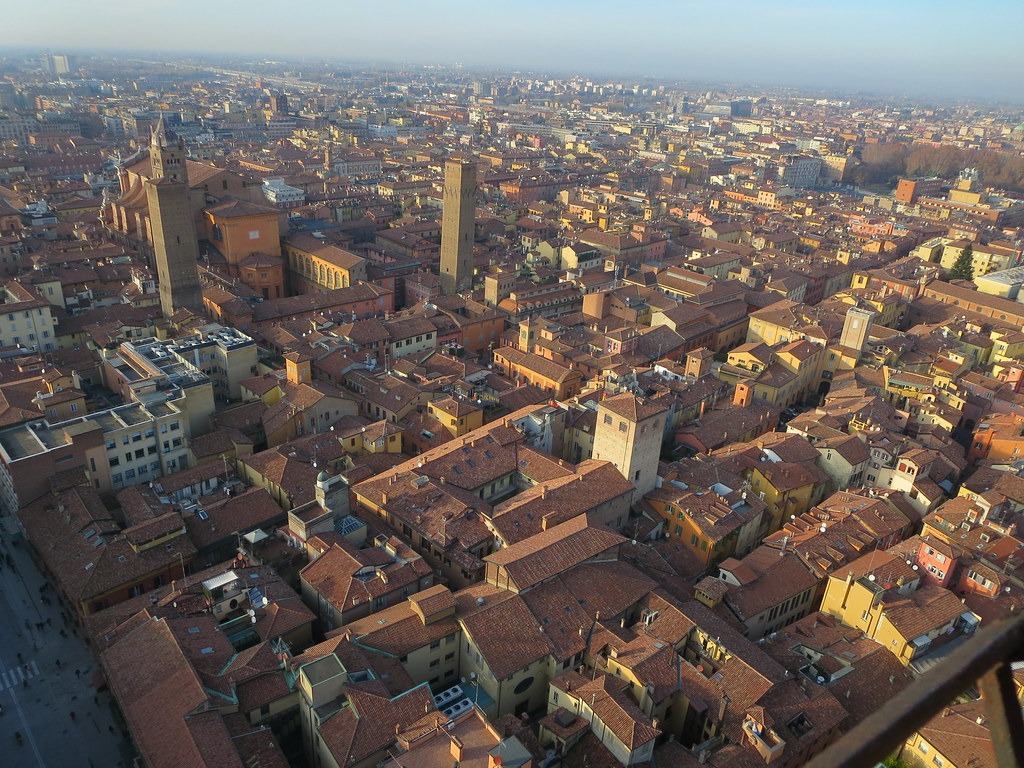
In the 13th century, many of these impressive towers were dismantled or crumbled into history. Some were repurposed as prisons, city towers, shops, or residences. Nevertheless, the towers remained iconic landmarks of Bologna, even finding mention in Dante’s “Inferno.” It wasn’t until the 20th century, during a citywide restructuring initiative, that the Artenisi Tower and the Riccadonna Tower met their unfortunate end in 1917.
Today, fewer than twenty towers from that bygone era grace Bologna’s skyline. Among them are the Azzoguidi Tower (61 meters), the Prendiparte Tower (60 meters), the Scappi Tower (39 meters), Uguzzoni Tower (32 meters), Guidozagni Tower, Galluzzi Tower, and the renowned ‘Two Towers’: the Asinelli Tower (97 meters) and the Garisenda Tower (48 meters).
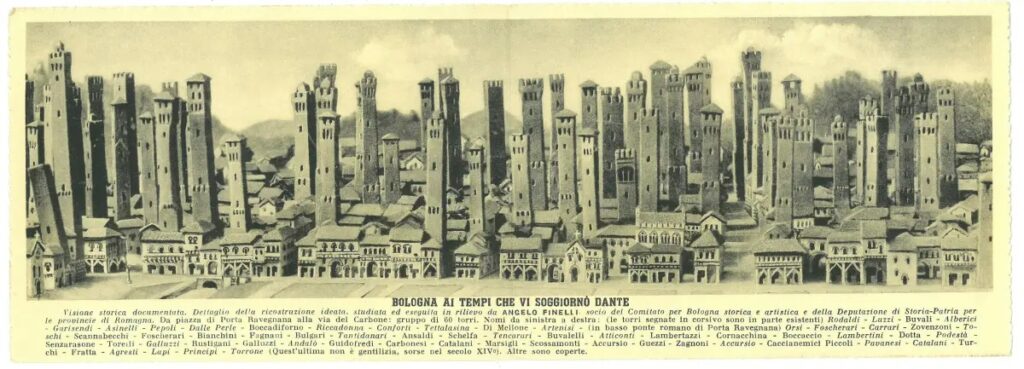
The construction of these towers was a monumental undertaking, requiring the labor of numerous serfs or peasants. Building a typical 60-meter Bologna tower would take between three to ten years of labor.
The towers had square cross-sections with foundations five to ten meters deep, fortified with driven-in poles and covered with pebble and lime. Selenite stone blocks formed the base, while the upper walls became progressively thinner and lighter.
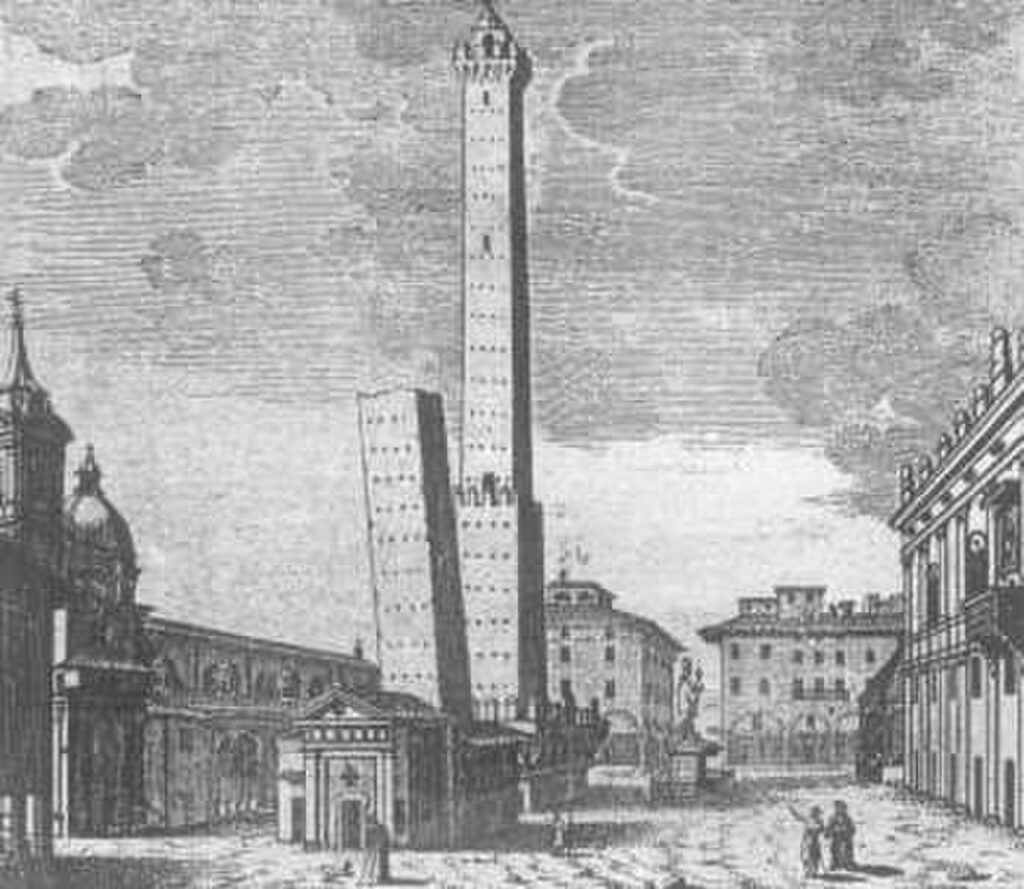
As the towers reached greater heights, builders employed a technique called “a sacco” masonry, featuring a thick inner wall and a thinner outer wall filled with stones and mortar. Holes in the outer wall and larger cavities in the selenite were left to accommodate scaffolding and future modifications.
Evidently, these towering structures transformed Bologna into a remarkable sight during the Middle Ages.
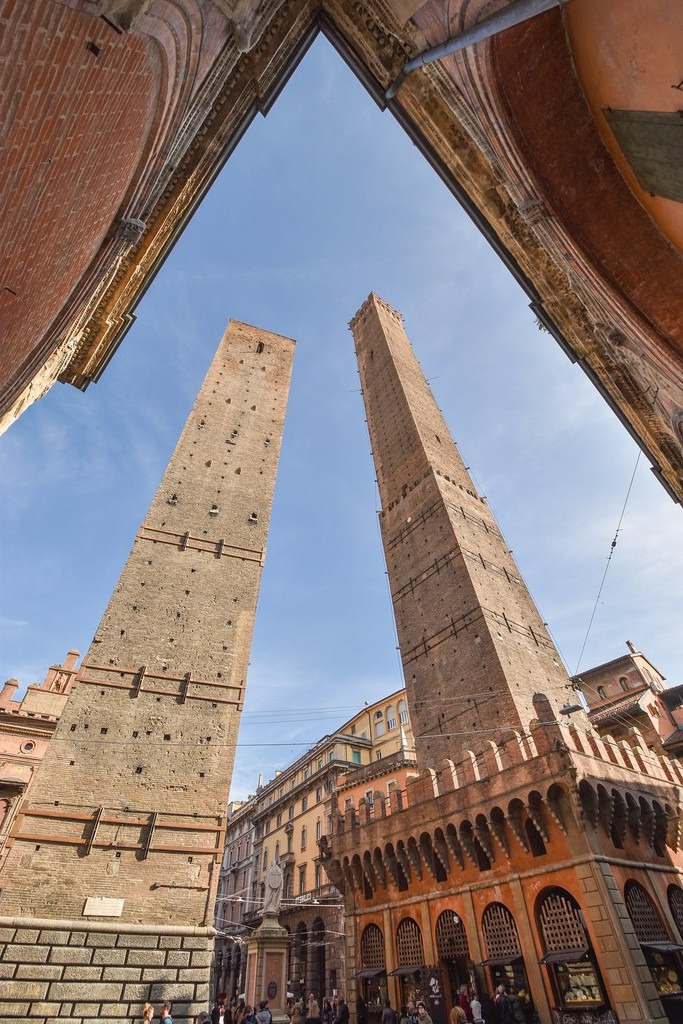
The first historian to extensively study Bologna’s skyscrapers was Count Giovanni Gozzadini, a 19th-century Italian senator determined to elevate his hometown’s status within the newly unified Italy. He delved into civic archives, scrutinizing real estate deeds to determine the number of towers based on documented ownership changes. Gozzadini’s findings initially tallied an astounding 180 towers, a staggering number for a medieval Bologna.
While more recent estimates have revised that number downward to around 80 to 100 towers, it remains a remarkable figure for a relatively “small” settlement that thrived a millennium ago.
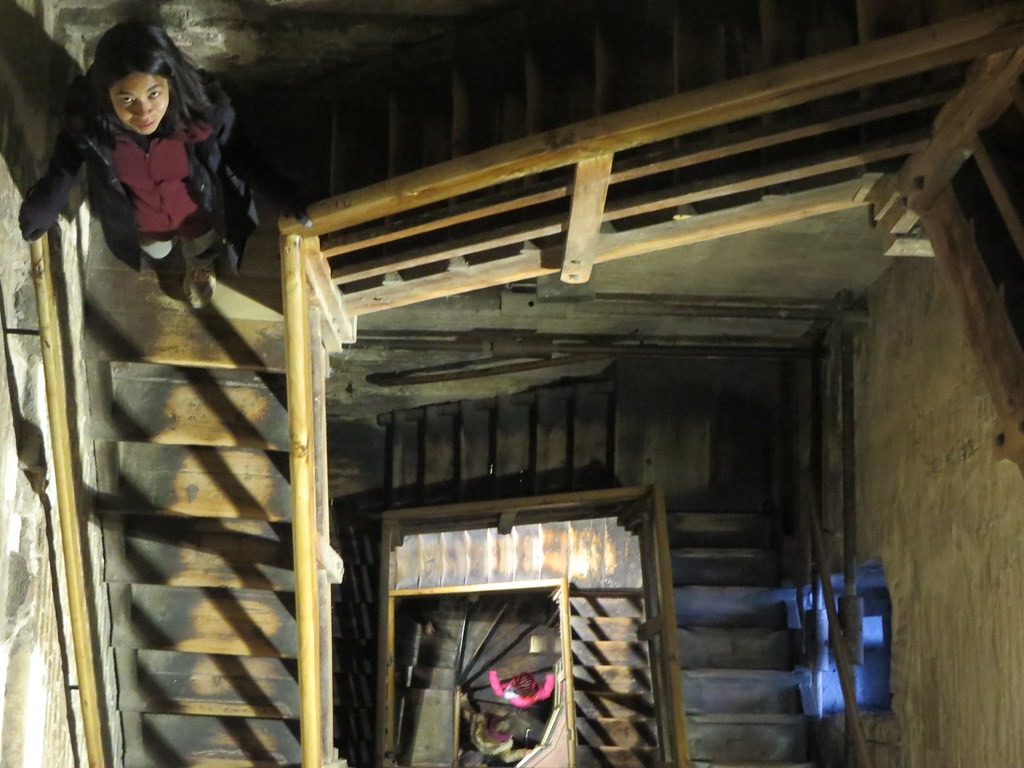
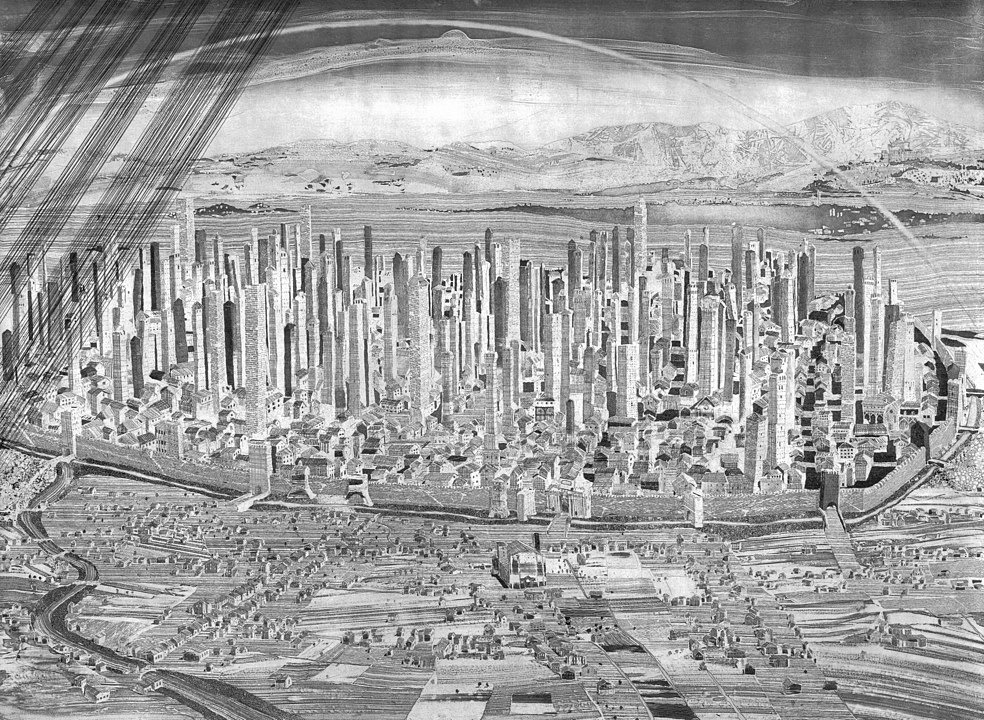
The true purpose and significance of these towers continue to intrigue, leaving us with a captivating historical mystery that adds an extra layer of wonder to the city of Bologna, where the Middle Ages once reached for the sky in the form of skyscrapers.
Leave a Reply