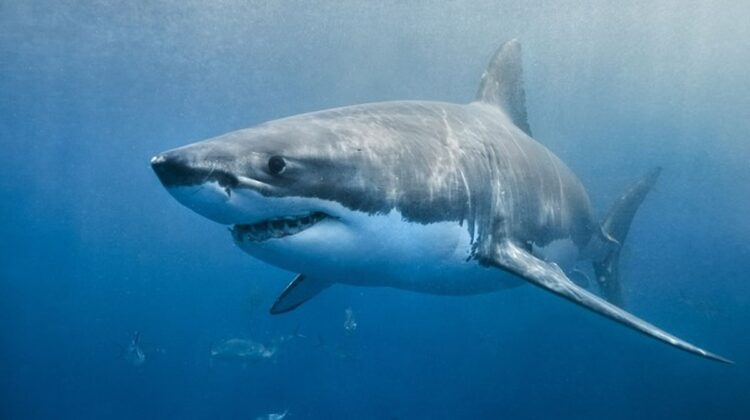
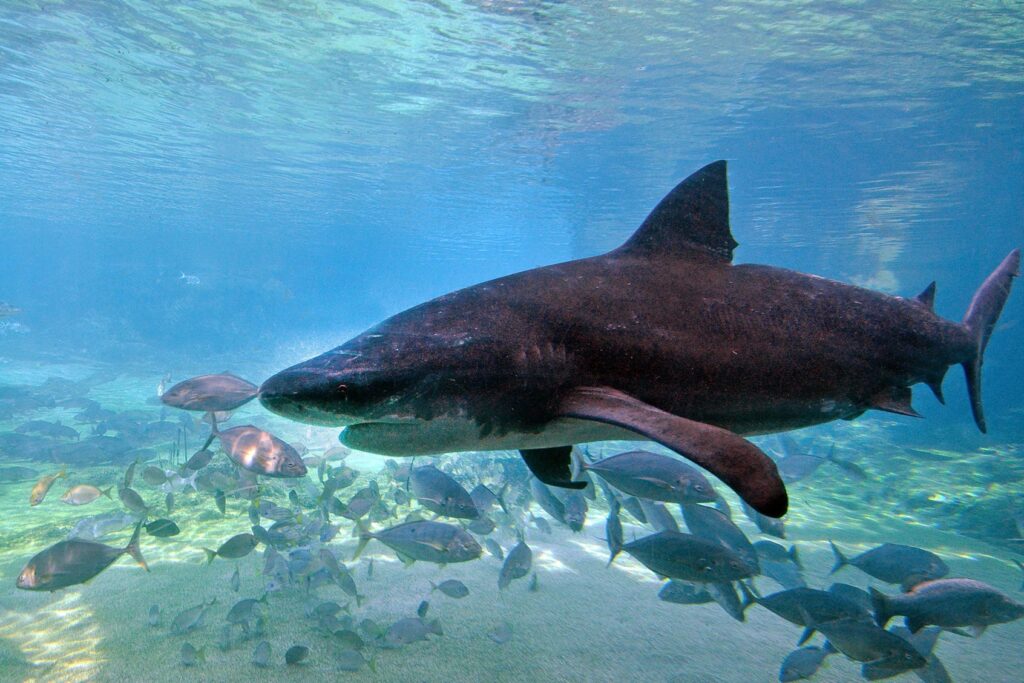
Bull sharks (Carcharhinus leucas) are large, voracious predators. Measuring anywhere from 7 to 11 feet from tail to snout, with dark gray skin and a white underbelly, bull sharks eat everything from fishes and dolphins to other sharks and even the occasional human. It is for that last reason that it takes a lot of gumption to attach electronic tags to wild bull sharks — yet that is precisely what scientists did in a recent study for the journal Nature.
Their findings proved, tragically, that there is a newly-discovered way in which climate change makes life more difficult for both bull sharks and other undersea life.
Specifically, the study found that climate change is making both more frequent and more intense a phenomenon known as extremely cold upwelling events. Those refer to when pockets of cold water replacer warm water at the surface after being brought there by strong winds and ocean currents. Led by researcher Nicolas Lubitz from James Cook University in Queensland, Australia, the scientists learned that the sharks chose shallower water during upwelling events because they needed to avoid the newly-colder water.
In a related study, the researchers also analyzed 41 years of sea surface temperature data and 33 years of wind records to learn about the history of upwelling events in the Indian Ocean’s Agulhas Current and the East Australian Current — particularly when they had a large death toll in animals like sharks, squid and manta rays.
The researchers concluded that the cold upwelling events turn lethal depending on how fast they cause the temperature to drop. Additionally, when an events last for a long time such as multiple days, marine animals like fish species and turtles are more likely to die or suffer serious health problems from issues like hypothermia. An increasing number of killer cold upwellings might also cause a sort of “bait and switch” to occur in certain ecosystems, with species that reside in the subtropics expanding their territorial range while those closer to the poles suffer an increased risk of dying from the cold. Finally, these events will almost certainly impact humans, particularly those who rely on the fishing industry for survival.
“We’re seeing changes in how often the upwelling occurs, how intense it is, which might impact the fishing communities in these areas,” Lubitz told CNN. “It’s really an economic thing as well as the biodiversity thing.”
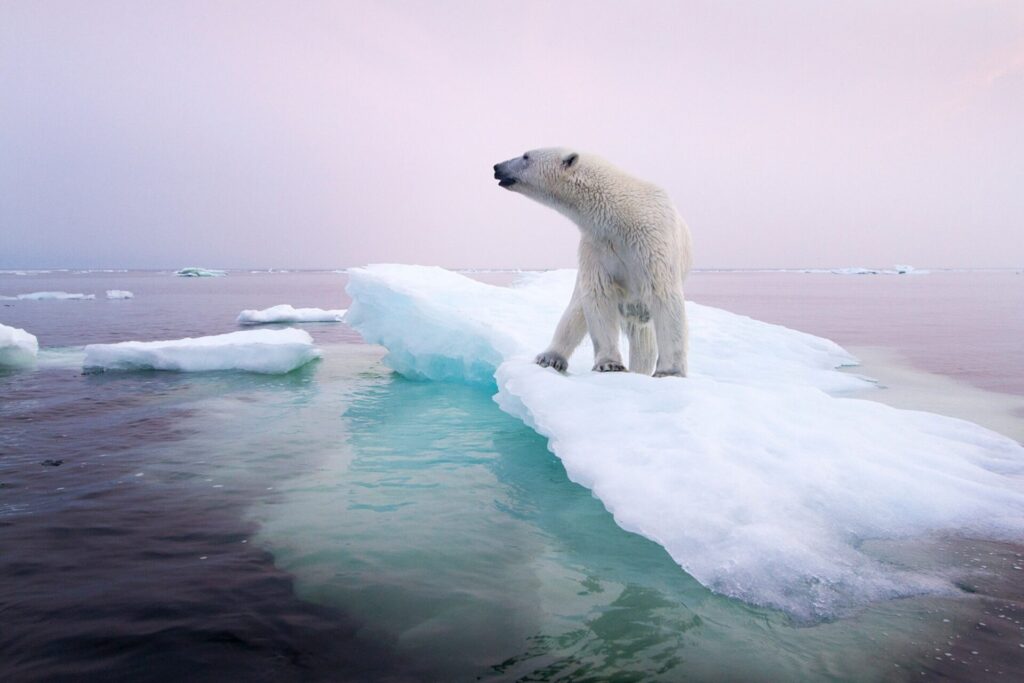
More broadly, the study reveals that climate change is not only about the planet warming, but in a seeming paradox can also trigger catastrophic cooling events.
“This shows the potential impacts of increased cold events, an understudied aspect of climate change research, and highlights the complexities of climate change effects on marine ecosystems,” the authors write.
Studies of climate change and ocean temperatures usually focus on heating rather than cooling. For example, a recent report by the Great Barrier Reef Marine Park Authority found that more than half of 1,000 reefs analyzed out of more than 2,900 in total suffered from significant levels of bleaching, with a mere quarter being unaffected. Coral bleaching occurs when coral become stressed due to high temperatures or lack of nutrients and expel the algae that live symbiotically within it. This is the fifth mass bleaching event to occur on that reef in the last eight years.
Climate change is causing ocean temperatures to spike in unprecedented ways, with temperature records shattered every single day in 2023.
In a similar development, in 2022 the journal Advances in Atmospheric Sciences published a study measuring ocean temperatures by studying ocean heat contact (OHC), a catch-all term referring to the saltiness (or salinity), different layers of temperatures and other factors that culminate to determine global oceanic temperatures. The group found that as of that year, 2022 had been the hottest in the historical record, surpassing the previous maximum record set in 2021. The authors speculated that the increase in OHC could have factored into extreme weather events like the increased number of wildfires and floods.
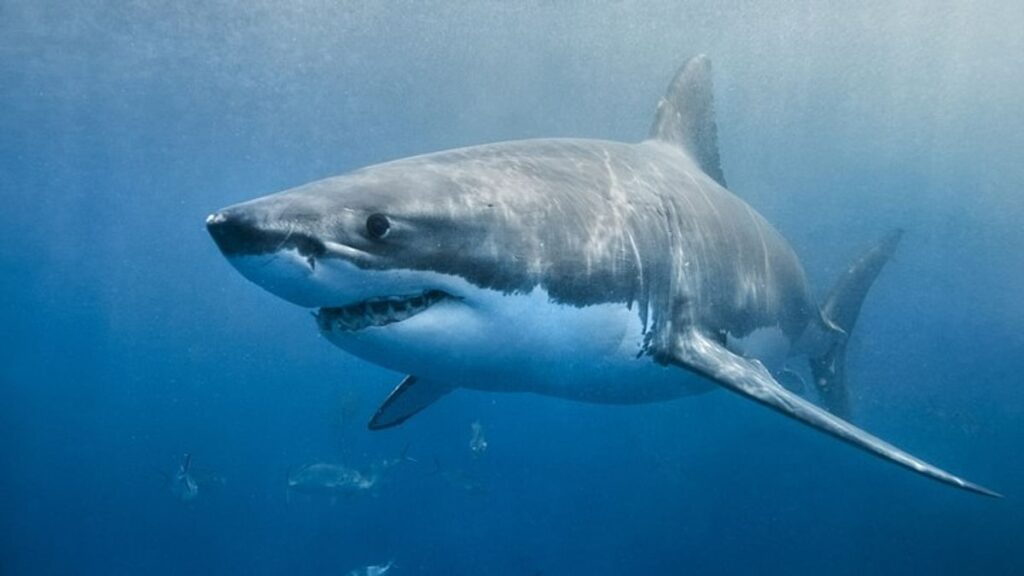
In the future, if the oceans warm too much, it could further destabilize the Atlantic meridional overturning circulation (AMOC), a conveyor belt of ocean currents essential to the fishing industry and maintaining stable weather. AMOC has already shown signs of weakening, and if it is drastically altered, the result could be even more extreme weather changes. In short, climate change has a complex relationship with ocean temperatures, sometimes raising them to dangerous levels and on other occasions causing them to drop precipitously for ocean animals that depend on stability. At least one of those species, however, was able to shed light on the terrible toll being taken for the humans causing the problem: sharks.
“That was really the key in this study in that we could see when the sharks migrate,” Lubitz told CNN. “We could see how the temperature profiles change, and how the sharks were swimming shallower when they were in upwelling areas because they were trying to avoid the colder water from the depths.”
Leave a Reply