
2025 heralds the dawn of a fresh generational cohort—Generation Beta. Spanning births from 2025 to 2039, Generation Beta promises a transformative leap in cultural and technological integration, reshaping societal norms and our relationship with technology.
What Defines Generation Beta?
Coined by futurist Mark McCrindle, who introduced the term “Generation Alpha” for those born between 2010 and 2024, Generation Beta is poised to inherit a world where the boundaries between the digital and physical realms blur like never before. This cohort is the offspring of Millennials (1980-1994) and Generation Z (1995-2009), two groups synonymous with rapid technological adoption.
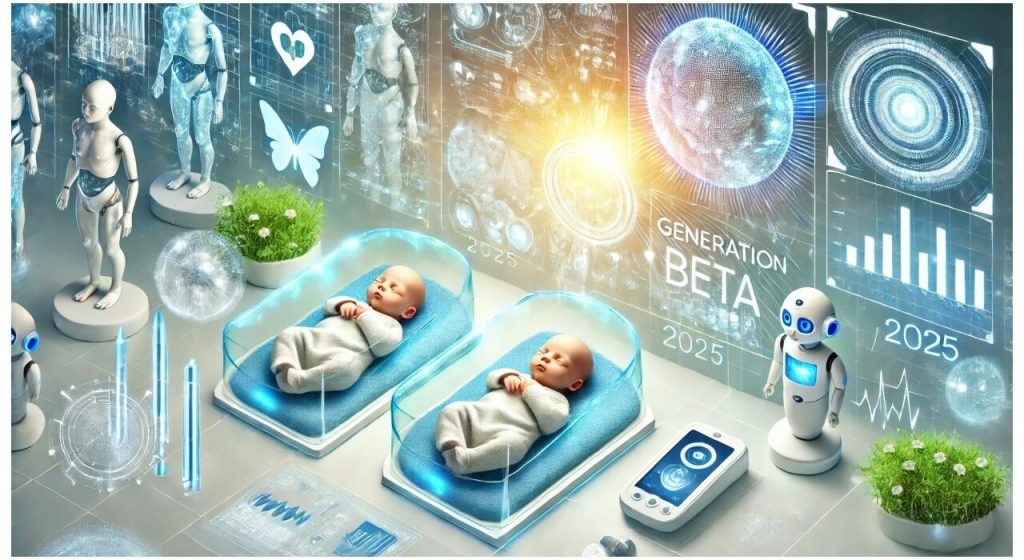
Generation Beta will witness the rise of artificial intelligence (AI), autonomous vehicles, wearable health devices, and immersive virtual environments as standard aspects of life. McCrindle’s research predicts that AI-powered personalization will dominate their learning, shopping, and social interactions, creating hyper-customized experiences.
A Digital Yet Cautious Upbringing
Interestingly, Generation Beta’s relationship with technology will likely be more nuanced. Raised by digital-native parents—Millennials and Gen Z—who are acutely aware of the pitfalls of excessive screen time and the negative impacts of social media, this generation may encounter stricter boundaries on digital engagement.

A McCrindle study reveals that 36% of Gen Z parents prioritize limiting screen time, compared to 30% of Millennials. This shift reflects growing concerns about fostering healthy digital habits amidst an era of constant connectivity.
The Impact of Climate Change and Global Challenges
Beyond technology, Generation Beta will inherit a world grappling with pressing challenges like climate change, resource scarcity, and shifting demographics. By 2035, they will represent 16% of the global population, growing up with values shaped by parents committed to ideals such as diversity, equality, and sustainability.

The First “AI-Native” Generation
Unlike their predecessors, who adapted to technological advancements, Generation Beta will be born into an era where AI and automation are omnipresent. This exposure from birth will redefine their education, healthcare, and career landscapes.
For example:
- Education: AI algorithms will create personalized learning paths, ensuring each student maximizes their potential.
- Healthcare: Wearable devices will monitor health in real-time, with predictive analytics guiding preventive care.
- Transportation: Autonomous vehicles will redefine commuting, making it safer and more efficient.

Generation Beta’s Legacy
As the first generation to bridge the 21st and 22nd centuries, Generation Beta’s legacy will be profound. Their formative years will mold solutions to some of humanity’s most significant challenges, blending technological innovation with a conscientious approach to its ethical implications.
This transition to Generation Beta marks not just a new era but a shift in how humanity evolves in tandem with its creations. The cultural, societal, and technological imprints they leave behind will set the tone for centuries to come.
Leave a Reply