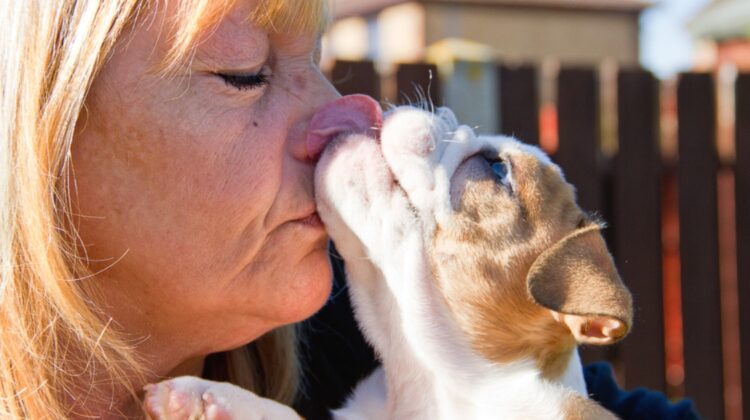
You finally sit down after a long day — shoes off, muscles relaxing — when suddenly your dog lunges forward and delivers an enthusiastic, slobbery face lick. It can be sweet, awkward, or downright overwhelming. But it raises a surprisingly complex question:
Why do dogs lick our faces at all?
Far from being random or meaningless, face licking is deeply rooted in instinct, social behavior, sensory exploration, and even biology. Understanding it reveals just how sophisticated — and sometimes contradictory — canine affection can be.
It Starts With Ancient Instincts
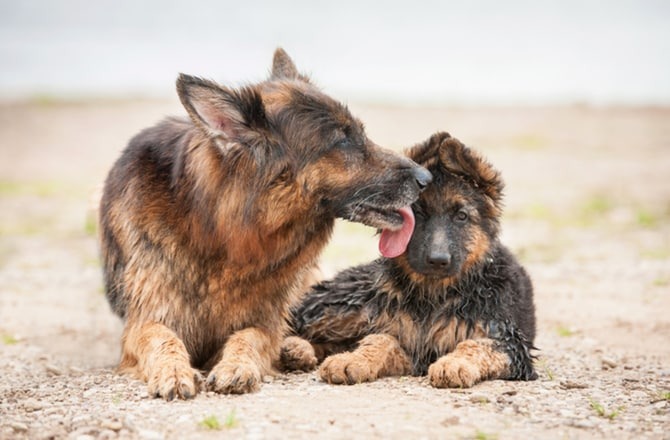
From the moment puppies enter the world, their mouths are their primary tools for exploration and survival. In wild canine groups, pups lick their mother’s face to stimulate regurgitation of food. While that behavior may sound unpleasant to humans, it is entirely natural in canine development.
Although your adult dog isn’t expecting dinner in return, the instinct remains. Face licking taps into this early behavioral wiring, making it one of the most deeply ingrained actions dogs perform around trusted companions.
Licking Is a Social Language
Dogs don’t communicate affection the way humans do. They rely on body language, scent, posture — and licking. A face lick can signal appeasement, reassurance, or emotional awareness. In canine terms, it often means: “I trust you,” “I’m calm,” or “I want connection.”
It can also appear during moments of excitement or mild anxiety. Rather than dominance or submission alone, licking is best understood as emotional regulation — a way dogs maintain social harmony.
Your Face Is Sensory Gold
Dogs experience the world primarily through smell and taste, and human faces offer a surprisingly rich sensory profile. Salt from sweat, traces of food, natural skin oils — all of it is information.
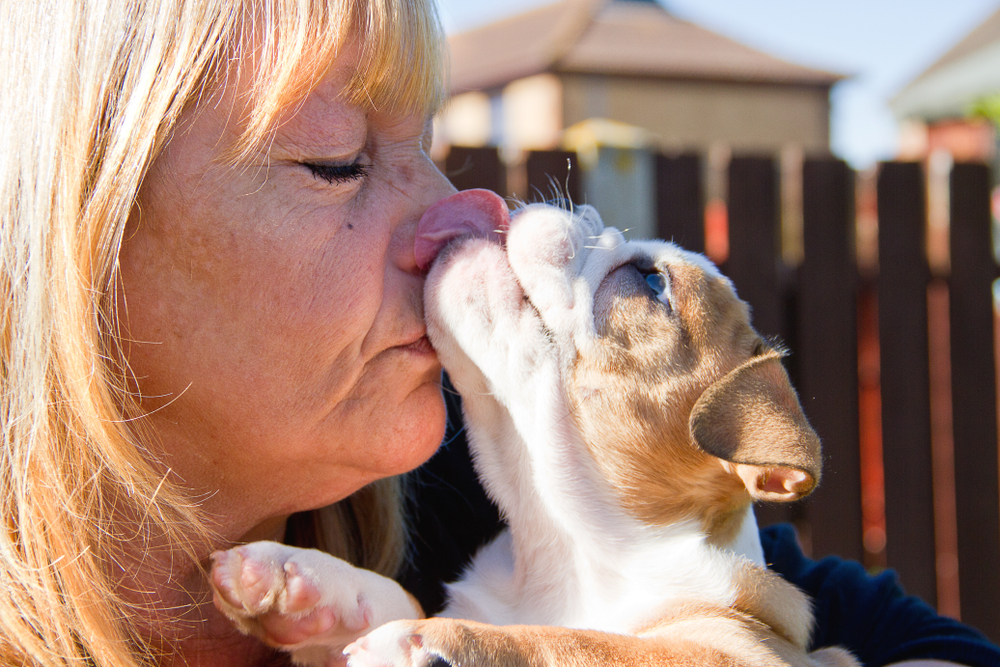
To a dog, licking your face can simply be curiosity in action. It’s data collection, not misbehavior.
The Immune System Connection
There may even be a biological upside — particularly for children.
Research supporting the hygiene hypothesis suggests that early exposure to diverse microbes helps train the immune system, potentially reducing the risk of allergies and asthma later in life. Children raised around dogs, farm animals, or pets in general often develop stronger, more balanced immune responses.
Some studies indicate that microbial exposure from dogs — even before birth — may influence gut microbiome development in beneficial ways. In moderation, affectionate dog contact may help shape immune resilience during critical stages of growth.
The Risks Are Real, Too
Despite their charm, dog mouths are not sterile environments. Scientists estimate that only about 16% of the bacteria shared between humans and dogs has been fully identified, meaning every lick carries unknown microbial passengers.
Certain bacteria, such as Capnocytophaga and Pasteurella, live harmlessly in dogs but can cause serious infections in humans — especially those with weakened immune systems, young children, or open wounds.
This doesn’t mean dog kisses are inherently dangerous, but it does mean boundaries are reasonable and responsible.
Teaching Healthier Alternatives
If face licking makes you uncomfortable, dogs can absolutely learn alternatives. Calm redirection works best: turning away, stepping back, or teaching simple cues like “off.” Rewarding relaxed behavior reinforces better habits without punishment.
Over time, dogs learn what behaviors strengthen connection — and which don’t.
Breeds Most Likely to Lick
According to John Burns, MBE, veterinarian and founder of Burns Pet Nutrition, some breeds are especially prone to affectionate licking:
- Labrador Retriever
- Poodle
- Golden Retriever
- Dachshund
- German Shepherd
- Beagle
- Corgi
Breed tendencies don’t guarantee behavior, but they do influence personality traits.
A Little Perspective
Dogs don’t lick to annoy, dominate, or confuse us. Each lick is a layered behavior — instinctual, social, sensory, and sometimes affectionate all at once.
Understanding this helps us respond with empathy rather than frustration.
Final Thought
Occasional face licking is generally harmless when dogs are healthy and properly cared for. Regular veterinary checkups, good hygiene, and clear boundaries keep interactions safe and enjoyable.
At the end of the day, a dog’s love — like their tongue — is expressive, unpredictable, and unmistakably canine.
Leave a Reply