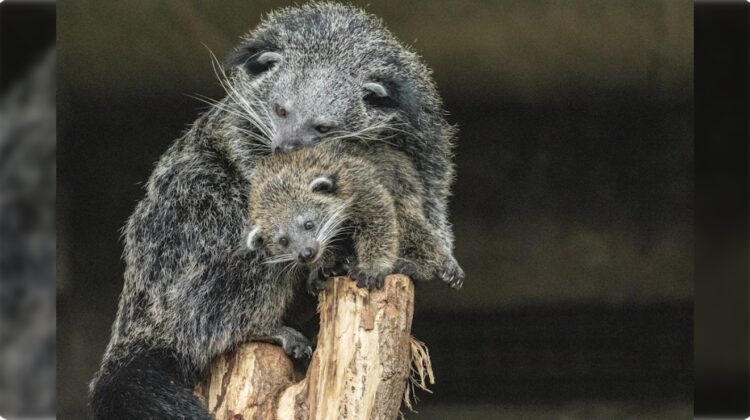
Ask anyone who’s stood near a binturong enclosure what they noticed first, and the answer is rarely “the animal.” It’s the smell — and it is, unmistakably, buttered popcorn.
A Bear? A Cat? Neither
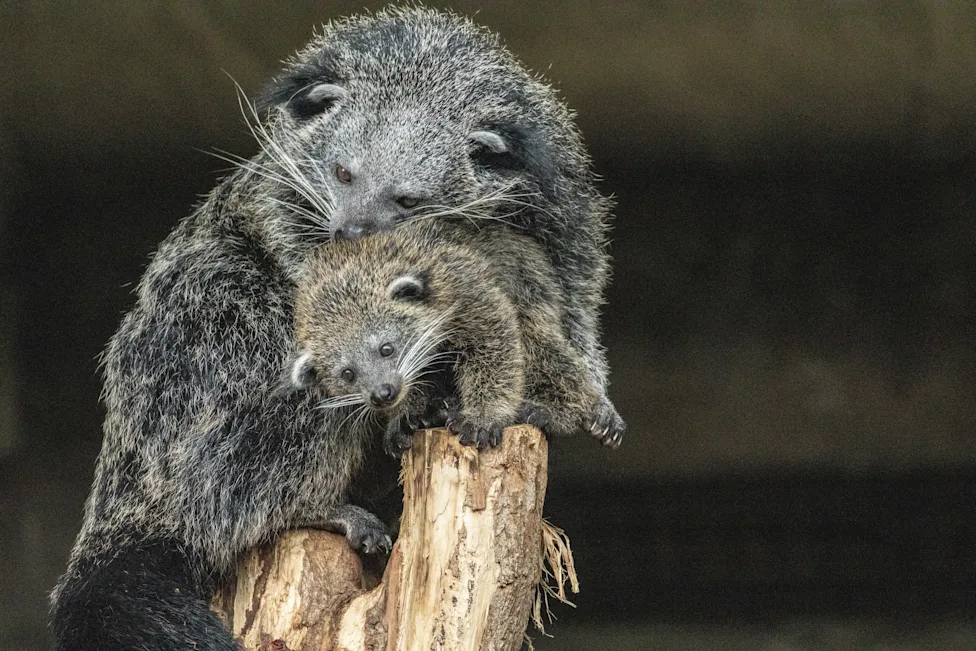
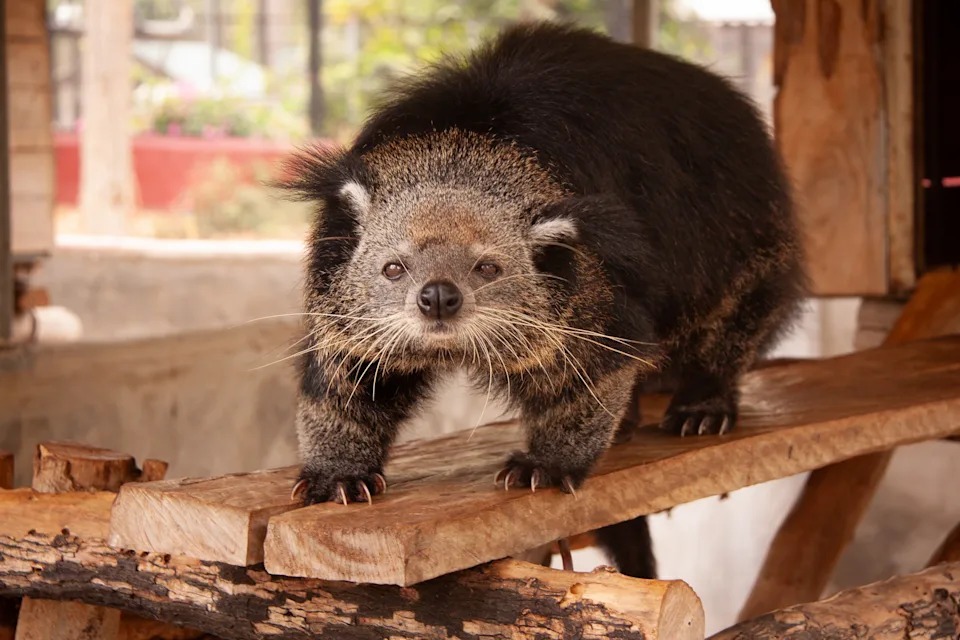
The binturong (Arctictis binturong) goes by the nickname “bearcat,” which turns out to be wrong on both counts. It isn’t a bear or a cat — it’s a member of the civet family, part of one of the oldest lineages within Feliformia, the broader group of cat-like carnivores. Native to the rainforests of South and Southeast Asia, binturongs are largely solitary, mostly nocturnal, and spend much of their time in trees, aided by a fully prehensile tail. That tail is a rare trait: binturongs are the only Old World mammal that uses its tail as a functional fifth limb, the way some New World monkeys do.
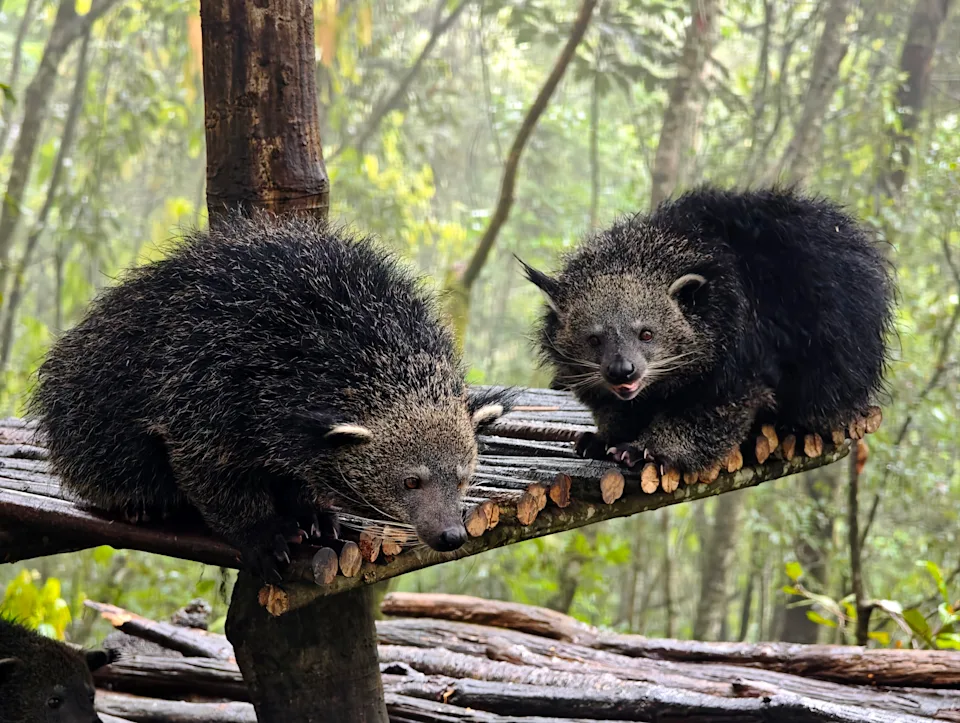
Shaggy, dark-furred, and often described as looking like an oversized, rain-soaked raccoon, binturongs are listed as vulnerable by the IUCN, primarily due to habitat loss and demand from the exotic pet trade.
Solving the Popcorn Mystery
The smell puzzled zookeepers and researchers for years before a team led by Duke University evolutionary anthropologist Christine Drea tracked down the cause in 2016. Analyzing urine samples from 33 binturongs at Carolina Tiger Rescue, a North Carolina wildlife sanctuary, the researchers identified 29 chemical compounds — and one, 2-acetyl-1-pyrroline (2-AP), showed up in every single sample. It’s the same compound responsible for the smell of popcorn, toasted bread, and cooked rice.
That created a genuine puzzle. 2-AP normally forms only through a heat-driven chemical reaction, the same Maillard browning process that makes toast smell like toast. Binturongs obviously aren’t cooking anything. Drea summed up the mystery in Duke’s own release: producing that compound would ordinarily require temperatures higher than any mammal can generate on its own.
The leading explanation researchers arrived at is that bacteria living on the animals’ skin, fur, and gut interact with their urine to produce 2-AP through a kind of fermentation, chemically arriving at the same molecule heat would normally produce. Male binturongs were found to secrete notably more of the compound than females, and because it’s especially stable and long-lasting compared to other scent compounds, researchers believe it functions as a kind of durable calling card: a way for these solitary animals to signal who was recently in the area, and possibly their sex and reproductive state, to others passing through days later.
Binturongs urinate in a squatting position, which soaks their feet and famously bushy tails, letting them drag the scent along branches and leaves as they move through the canopy.
Don’t Expect to Own One
However charming the smell, binturongs aren’t suited to life as pets. Most U.S. states either prohibit private ownership of exotic carnivores like binturongs outright or require permits substantial enough to rule out casual ownership, and the animals require large, specialized enclosures and expert veterinary care that most households can’t provide. For now, the popcorn smell is one you’ll only find at accredited zoos and sanctuaries, or, of course, in an actual bucket of popcorn.
Frequently Asked Questions
Why do binturongs smell like popcorn? Their urine contains 2-acetyl-1-pyrroline (2-AP), the same aroma compound found in popcorn, toasted bread, and cooked rice, likely produced by bacteria interacting with their urine rather than any heat-based process.
Is a binturong a bear or a cat? Neither. It’s a civet, in the broader Feliformia group of cat-like carnivores, unrelated to true bears or cats.
Can you legally own one as a pet? In most U.S. states, no, or only with an involved permitting process, and they require large enclosures and specialized care.
Sources: Duke University press materials; Drea et al., The Science of Nature (2016); Chemical & Engineering News; Sci-News; A-Z Animals; Santa Ana Zoo; New Santa Ana; Los Angeles Times (PressReader archive).
Leave a Reply