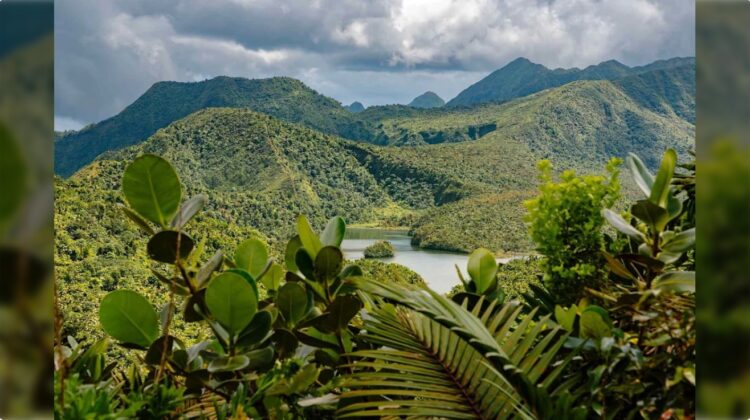
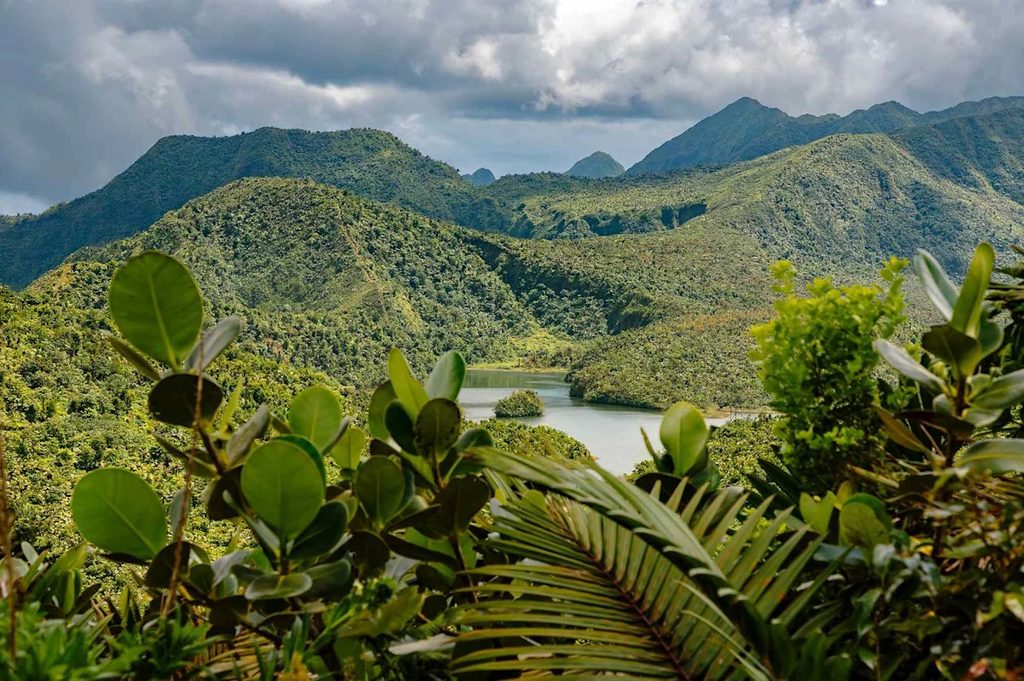
Dominica doesn’t have the postcard beaches that define most of the Caribbean’s tourism marketing, and that’s largely the point. What it has instead — waterfalls, volcanic hot springs, rainforest rivers, and a coastline of black and white sand — has made it a magnet for a different kind of traveler: the kind who’d rather hike to a hot spring than lie on a lounge chair.
Not to Be Confused With Its Bigger Neighbor
Dominica, wedged between Guadeloupe and Martinique in the Lesser Antilles, is a separate country from the Dominican Republic, despite the similar name. Locally it’s known as “The Nature Island,” a nickname that undersells how much of the country is covered in protected rainforest, river gorges, and volcanic terrain. A nonstop route from Newark to Douglas-Charles Airport has made it easier to reach directly from the U.S. in recent years.
The drive from the airport into the capital, Roseau, cuts past sea cliffs and through dense forest, past small villages and the edges of Morne Trois Pitons National Park, a UNESCO World Heritage site built around the island’s volcanic core.
Where History Meets the Waterfront
Roseau’s Fort Young Hotel occupies a military fort dating to 1699, converted into a hotel in the 1960s and since renovated into a modern waterfront property with its own dive shop and art gallery, a short walk from the city’s markets and cafés.
The Falls, the Springs, and the Rocks
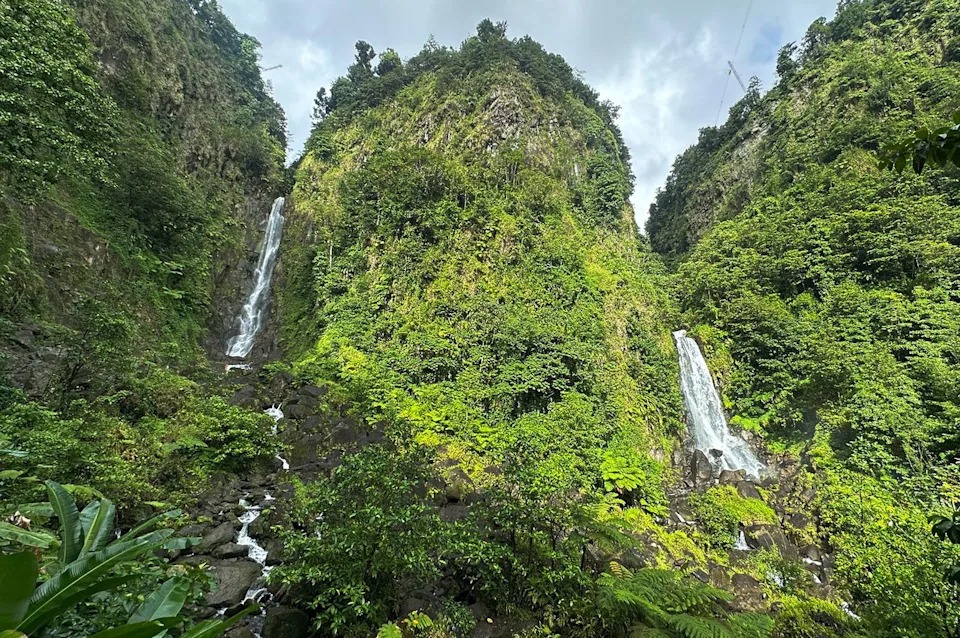
Trafalgar Falls, one of Dominica’s best-known sights, is actually two side-by-side waterfalls, one warmed by volcanic activity and one fed by cold mountain water. Nearby, the family-run Ti Kwen Glo Cho — Creole for “little corner of hot water” — offers natural sulfur hot spring pools. On the island’s northeast coast, the Calibishie Red Rocks form a rust-colored barrier reef riddled with sea caves, where the surf breaks dramatically against the shoreline.
A rowboat trip down the Indian River, often run through local operators like Cobra Tours, winds through mangroves and overhanging tropical canopy reflected in still water. The river gained a measure of Hollywood fame as a filming location for “Pirates of the Caribbean: Dead Man’s Chest.”
A Recovery Still Visible
Hurricane Maria struck Dominica in 2017, and traces of the damage are still visible on some buildings years later. What stands out to many visitors isn’t just the landscape’s recovery but the community’s, spanning longtime locals, the island’s Indigenous Kalinago people, and expatriates who’ve settled there.
People Rebuilding the Island’s Reefs and Gardens
Simon Walsh opened Nature Island Dive in 1994 and has since turned part of his work toward treating coral affected by waterborne disease, part of an effort to preserve more than two dozen native coral species in a biobank. He describes treated corals healing and going on to reproduce, calling it proof the approach is working.
At Paradise Valley Garden Nursery, Dominica native Dian Douglas spent years landscaping in New Jersey before returning home to turn a nearly 60-acre plot of forest and farmland into a sprawling botanical garden, filled with found objects from oversized pots to statues. He has said the beauty of the land was what pulled him back.
The Kalinago community showcases its heritage at Kalinago Barana Auté, a recreated traditional village, while transplants like the Brooklyn couple running Sea Cliff Eco-Cottages have built small businesses around the island’s natural resources, including a small-batch gin made with local botanicals.
A High Note to End On
Credit: Rachel Chang/Travel + Leisure
Many visits culminate at Secret Bay, a treetop villa resort that has repeatedly appeared on Travel + Leisure’s cover, known for ocean-view accommodations, an open-air dining experience built around ingredients grown on-site, and a funicular connecting guests to their villas through the forest canopy. Owner Gregor Nassief, who was born in Dominica, has said what sets the island apart in the Caribbean is the depth and authenticity of its people and experiences.
Frequently Asked Questions
Is Dominica the same as the Dominican Republic? No. They’re separate countries. Dominica is a small island nation in the Lesser Antilles; the Dominican Republic shares the island of Hispaniola with Haiti, much farther north.
How do you get to Dominica from the U.S.? A nonstop route connects Newark (EWR) to Douglas-Charles Airport (DOM); other routes typically connect through neighboring islands.
What’s the appeal for travelers who don’t want a beach vacation? Rainforest hiking, waterfalls, volcanic hot springs, river tours, diving, and a dense concentration of protected natural sites, all on an island small enough to cross in a day.
Sources: Travel + Leisure (Rachel Chang); AOL (syndicated republication); Wanderlog; Travelocity.
Leave a Reply