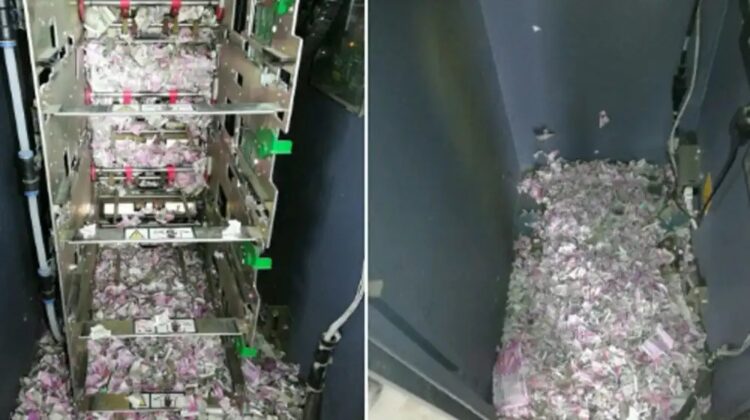
What began as a routine technical complaint soon unfolded into one of the most unusual banking incidents in recent memory—an unexpected encounter between modern financial infrastructure and one of nature’s most resourceful survivors.
For several days, customers attempting to use an ATM operated by the State Bank of India (SBI) in the town of Tinsukia, in Assam, were met with the same message: out of order. At first, officials assumed the machine was experiencing a standard mechanical failure. With tens of thousands of ATMs operating nationwide, occasional malfunctions are a normal part of daily operations.
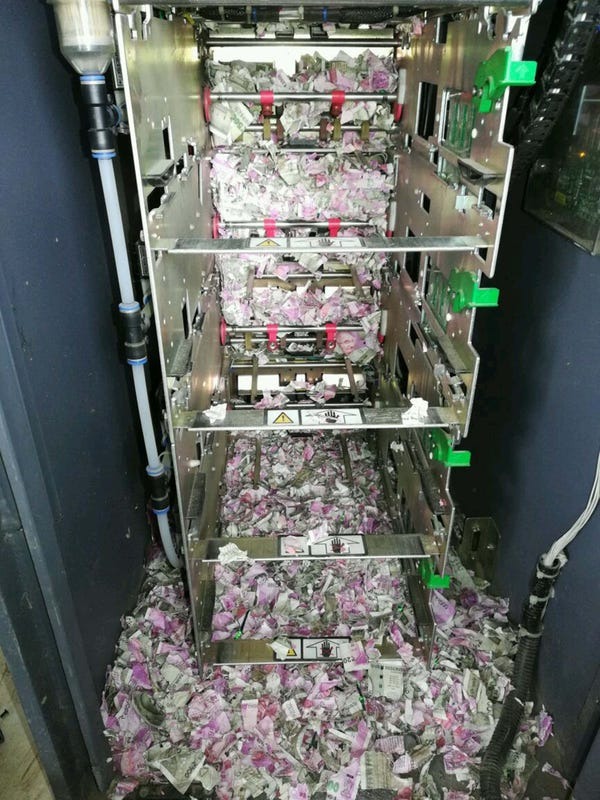
But when technicians finally opened the machine on May 20, they were confronted with a startling discovery.
Inside the ATM were shredded banknotes, damaged wiring—and the body of a rat.
According to branch manager Chandan Sharma, staff were “shocked” by what they found. Investigators later determined that the rodent had entered the machine through a small opening designed for electrical cables. Once inside, it chewed through internal wiring, disabling the ATM, before gnawing through stacks of cash stored within.
Authorities estimate that between 1.2 and 1.3 million rupees—approximately £18,000 (around $17,600 to $19,000)—were destroyed. The banknotes were so badly damaged that they were rendered completely unusable, scattered in fragments throughout the machine.
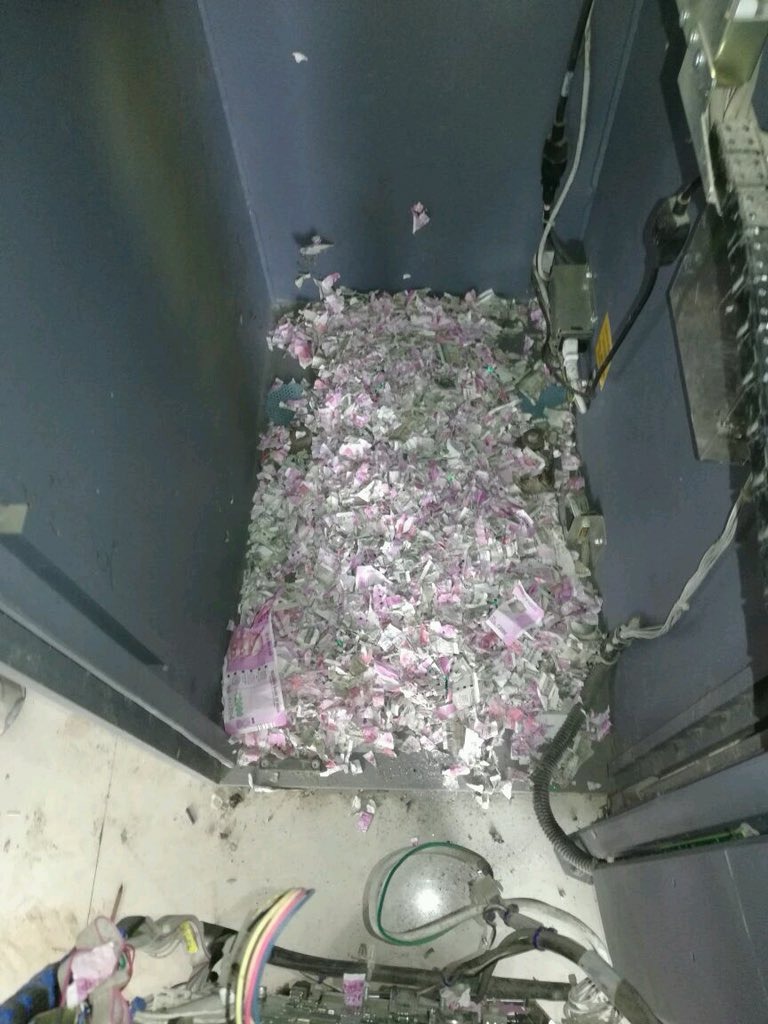
Police superintendent Mugdha Jyoti Mahanta confirmed that there was no sign of theft and no evidence of human interference. The damage was entirely the result of the animal’s intrusion, turning a routine service issue into a full-scale investigation.
While the story quickly attracted attention for its irony—earning the rodent a reputation for having one of the most expensive meals imaginable—it also highlights a broader reality. Rats are among the most adaptable mammals on the planet, capable of exploiting even the smallest structural vulnerabilities. From homes and vehicles to power grids and underground systems, they routinely navigate environments built to exclude them.
This incident underscores the fragile boundary between human-engineered systems and the natural world. Despite layers of security and advanced technology, a single overlooked opening was enough to compromise a high-security financial machine. It serves as a quiet reminder that resilience in modern infrastructure often depends not on complexity, but on attention to the smallest details.
In an age defined by automation and digital systems, this unlikely intrusion stands as a testament to nature’s persistence—and to the unexpected ways it continues to intersect with everyday human life.
A Broader Lesson from an Unlikely Incident
Beyond its shock value, this incident reveals how fragile even the most advanced systems can be when they intersect with the natural world. As cities expand and technology becomes more deeply embedded in daily life, encounters between wildlife and human infrastructure are no longer rare anomalies—they are growing signals of coexistence under pressure. From power outages to transportation disruptions and financial system vulnerabilities, small biological intrusions can trigger outsized consequences. Understanding these interactions is no longer a curiosity; it is essential for designing safer, more resilient systems in an increasingly interconnected world.
Leave a Reply