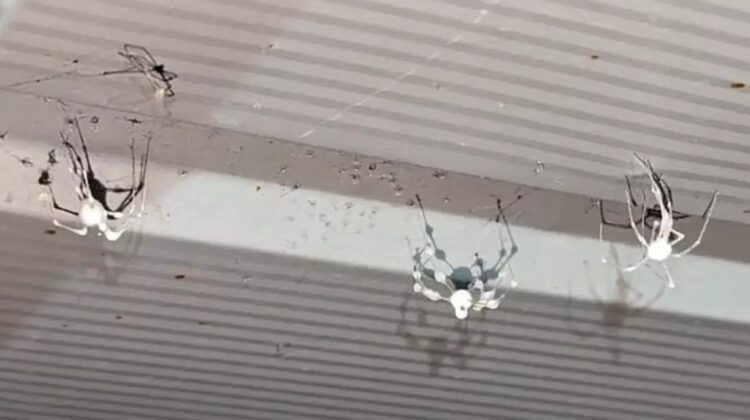
It sounds like something from a horror movie — but scientists say it’s very real.
People across parts of the United States have been left unsettled after discovering spiders behaving in a disturbing and unfamiliar way.
These so-called “zombie” spiders are being controlled by a newly identified fungus — one that has never before been recorded in the country.
The organism, known as Gibellula attenboroughii, targets spiders and alters their behavior in a way that has shocked both homeowners and researchers.
Once infected, the spider begins to act strangely.
Instead of staying hidden, it leaves its usual shelter and moves into open spaces — a critical step for what happens next.
Scientists say this behavior is not random.
It is being controlled by the fungus itself.
The goal is simple: survival and spread.
By forcing the spider into an exposed area, the fungus increases its chances of releasing spores into the air, allowing it to infect new hosts.
Soon after, the spider dies.
But the process does not end there.
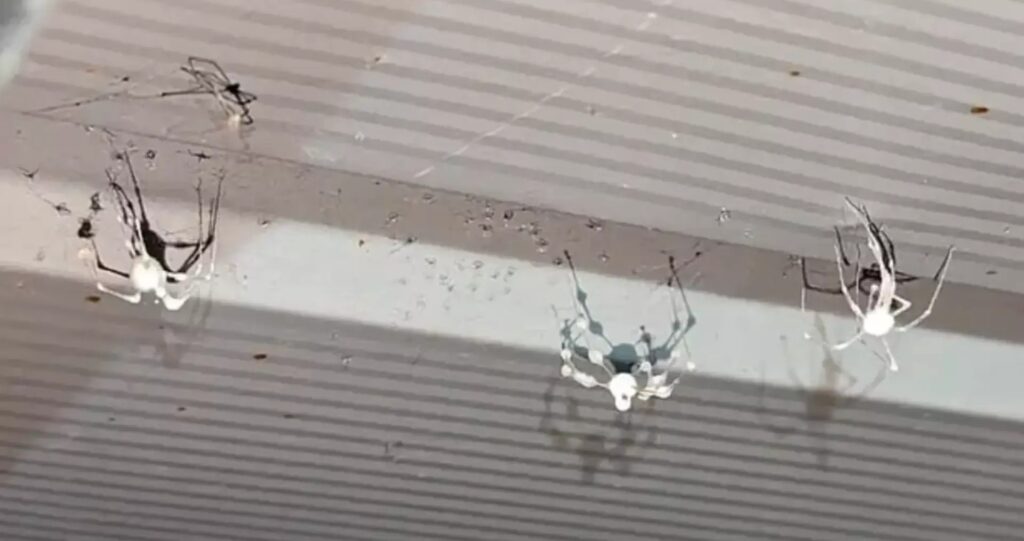
The fungus continues to grow from the spider’s body, feeding on it while preserving its structure using antimicrobial compounds. The result is a chilling sight — a lifeless spider overtaken by a pale, cotton-like growth.
Researchers say this mechanism is similar to how certain fungi infect ants, effectively turning them into “zombies” before killing them.
Experts, including scientists from the Center for Agriculture and Bioscience International, have been studying this phenomenon closely.
Researcher Harry Evans explained that fungi remain one of the least understood groups of organisms on Earth.
“There’s a lot more fungi to find,” he said, noting that scientists have only identified a small fraction of existing species.
Despite the disturbing nature of these infections, experts stress an important point.
This fungus does not pose a threat to humans.
Mycologist João Araújo reassured that for a fungus like this to infect humans, it would require millions of years of evolutionary change.
Still, that hasn’t stopped people from feeling uneasy.
Reports and images shared online show infected spiders appearing in homes, garages, and other enclosed spaces — often leaving residents alarmed.
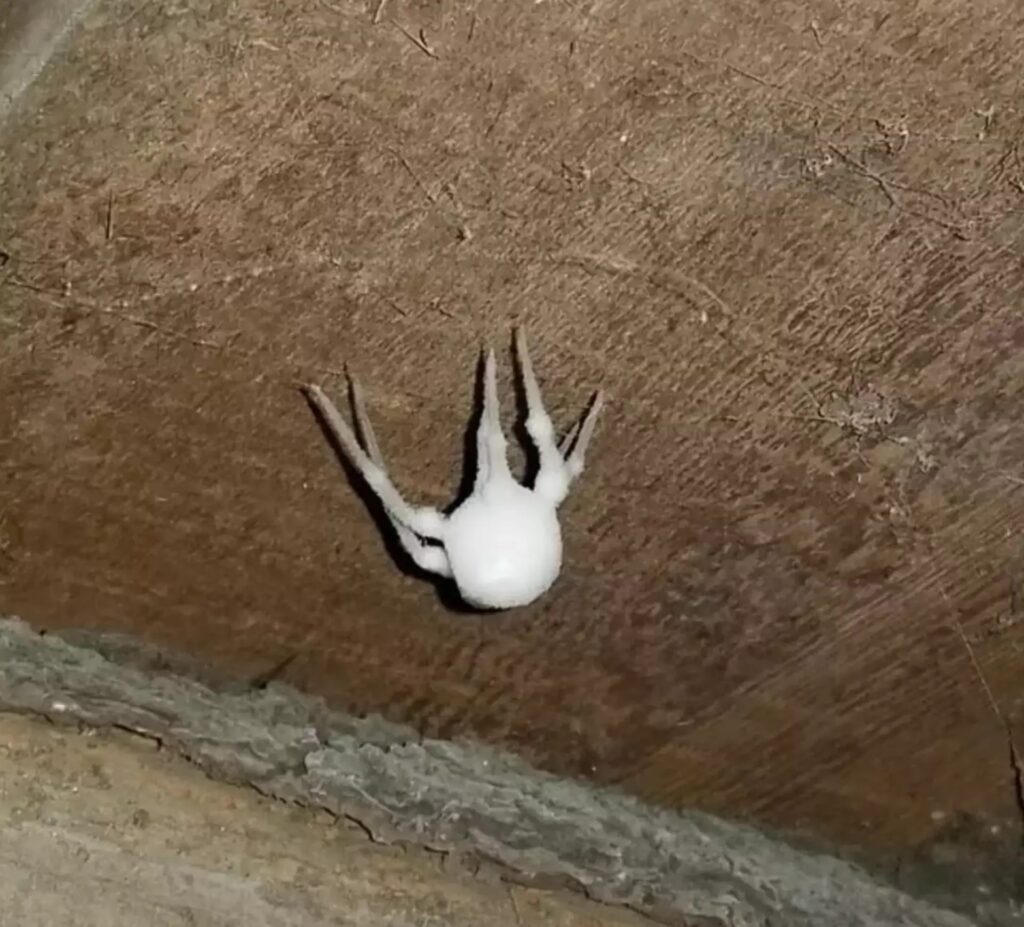
Photographer Ben Mitchell described his first encounter with the fungus as both fascinating and eerie.
He recalled seeing a strange, cotton-like mass attached beneath a leaf, with only parts of the spider visible.
While the sight may be unsettling, scientists believe there could be a positive side to this discovery.
Some of the compounds produced by the fungus may have medical potential, possibly contributing to the development of new antibiotics or treatments in the future.
For now, researchers continue to study this strange relationship between fungus and host.
It’s a reminder that even in the smallest corners of nature, there are still mysteries waiting to be uncovered.
And sometimes, they look like something straight out of a nightmare.
Scientific discoveries in microbiology and biotechnology are driving innovation in pharmaceutical research, antibiotic development, biotechnology solutions, medical research programs, and healthcare innovation industries. Researchers continue to explore natural organisms for potential breakthroughs that could lead to new treatments and advanced medical technologies.
Leave a Reply