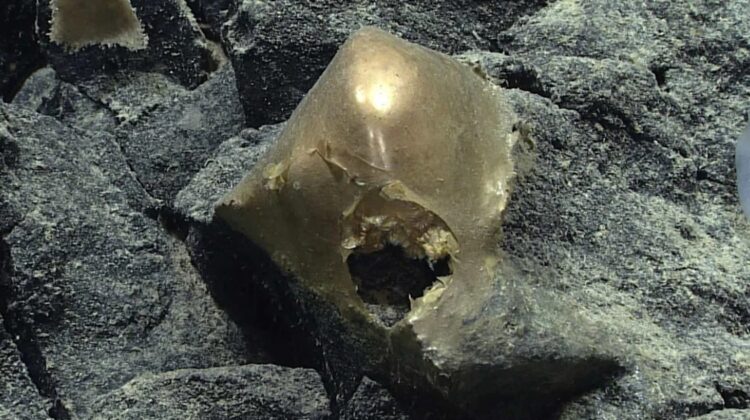
A strange, metallic-looking object discovered deep beneath the ocean off the coast of Alaska has finally been identified—more than two years after it first puzzled scientists.
The mysterious “golden orb,” which captured global attention in 2023, has now been confirmed by researchers from National Oceanic and Atmospheric Administration (NOAA) to be part of a deep-sea organism—specifically, a structure linked to a giant sea anemone.
A baffling discovery in the deep
The object was first spotted during a NOAA Ocean Exploration mission in the Gulf of Alaska, more than two miles below the surface.
Resting on a rock among pale sea sponges, the small, smooth orb appeared almost artificial—golden, rounded, and marked by a small opening. Scientists onboard the research vessel were immediately intrigued.
“Isn’t the deep sea so delightfully strange?” said Sam Candio at the time, reflecting the mix of curiosity and confusion surrounding the find.
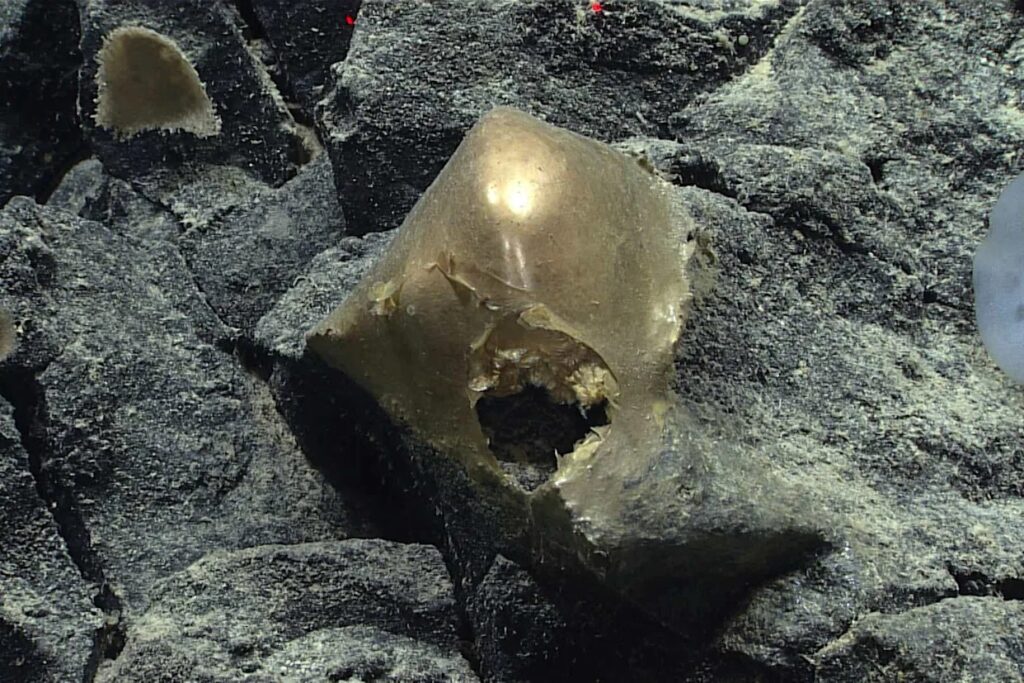
Initial theories ranged widely. Some researchers wondered whether it could be an egg casing, a sponge, or even an entirely new species. Others speculated it might represent an unknown life stage of a known organism.
Careful collection and long investigation
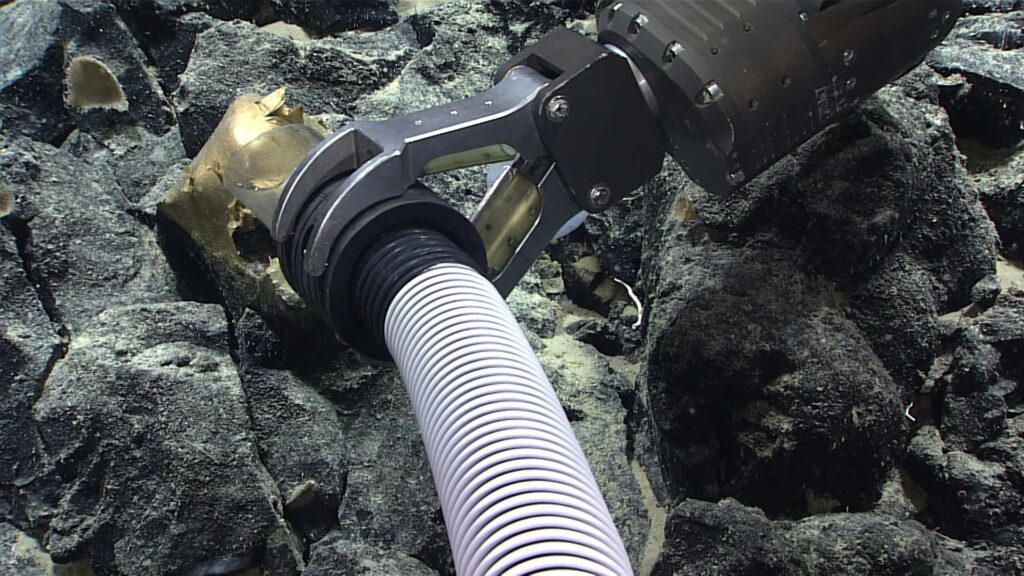
Because the rock it was attached to was too large to retrieve, scientists used a suction sampler to carefully extract the orb without damaging it.
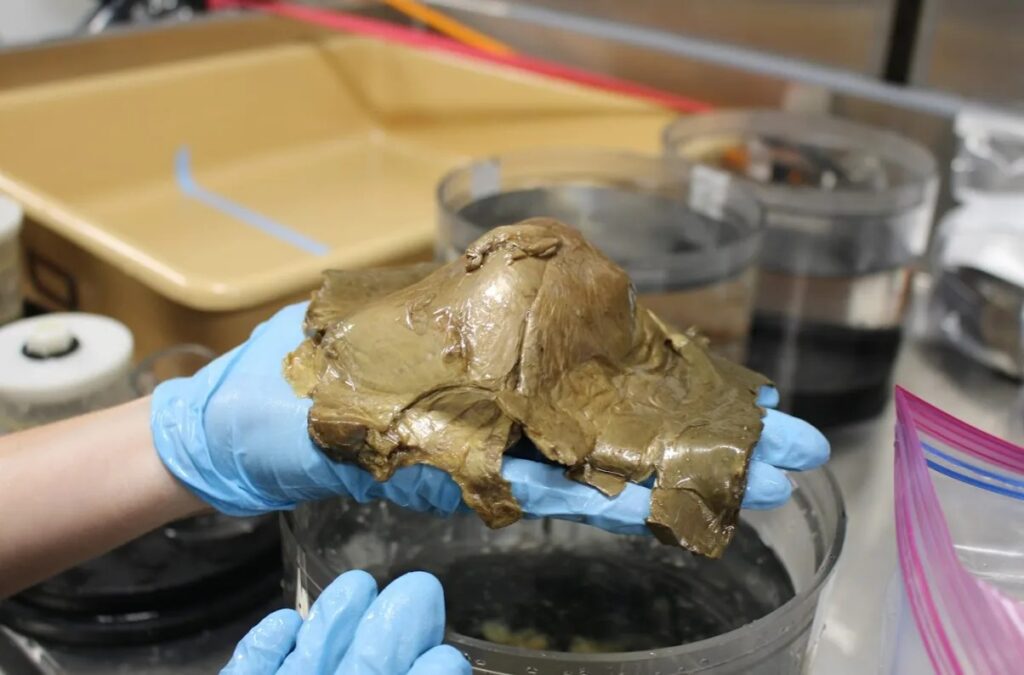
The specimen was later sent to the Smithsonian National Museum of Natural History for further analysis.
What followed was a lengthy and complex investigation. Researchers examined both the structure of the object and its genetic material, combining expertise from multiple scientific fields.
The answer: a deep-sea anemone structure
After detailed study, scientists determined that the orb was a remnant of tissue belonging to a giant deep-sea anemone known as Relicanthus daphneae.
More specifically, it was part of the base structure that allows the anemone to anchor itself to rocks. The golden appearance came from dead or specialized cells that formed this attachment point.
Allen Collins explained that solving the mystery required combining morphological analysis with DNA sequencing, calling it “a complex case” that demanded collaboration across multiple scientific disciplines.
The deep sea remains largely unknown
Despite solving this particular mystery, scientists emphasize that the deep ocean still holds countless unknowns.
According to William Mowitt, discoveries like this highlight both the progress and the limitations of modern science.
Advanced tools such as genetic sequencing are helping researchers unlock answers faster than ever—but vast areas of the ocean remain unexplored.
The resolution of the “golden orb” mystery is a reminder that even on our own planet, entire worlds remain hidden in darkness. Each discovery adds a small piece to a much larger puzzle—one that could reshape our understanding of life itself. As technology advances, the deep sea is no longer just a frontier of curiosity, but a critical domain for science, resources, and the future of global exploration.
Leave a Reply