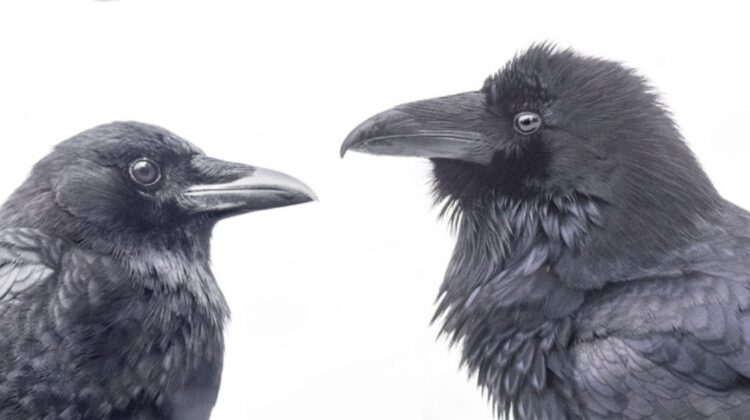
To the untrained eye, they are just two birds of the same color. But look a little closer, and you will discover that crows and ravens are worlds apart within. Despite sharing the same sleek, jet-black feathers, these two corvids lead vastly different lives, boasting unique behaviors, distinct lifespans, and fascinating levels of intelligence.
In this article, we will dive into the subtle beauty of nature’s ultimate classroom and explore the remarkable differences between the crow and the raven.
Habitat and Social Life: The City vs. The Wild
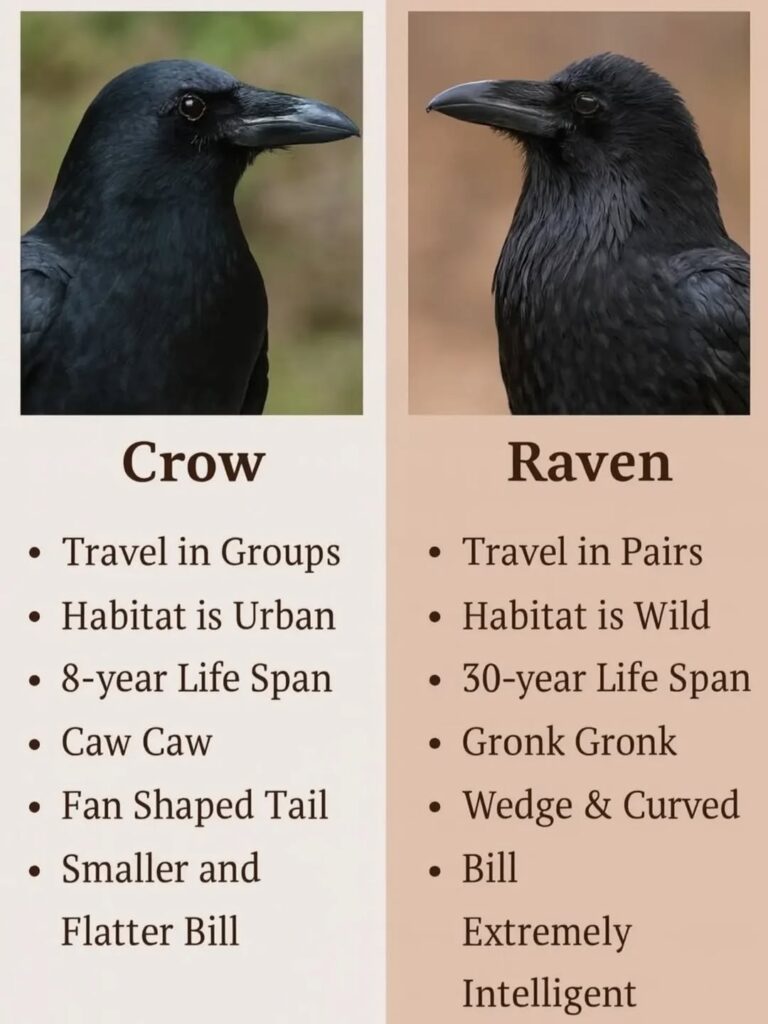
One of the easiest ways to tell these two brilliant birds apart is by observing where they live and who they hang out with.
- The Urban Crow: Crows are the social butterflies of the corvid family. They thrive in bustling environments, comfortably roaming city streets and suburban neighborhoods. You will almost always spot them traveling and foraging in large, tight-knit flocks, constantly communicating with one another.
- The Wild Raven: Ravens, on the other hand, prefer the solitude of the wilderness. They are the majestic wanderers of forests, mountains, and open deserts. Instead of large flocks, ravens are highly romantic and loyal, typically traveling and living in devoted pairs.
The Lifespan Gap: A Brief Spark vs. Enduring Wisdom
Nature has granted these two birds vastly different timelines to experience the world.
While crows are incredibly sharp and adaptable, their time is relatively fleeting. In the wild, a crow typically lives a brief, fast-paced life of about 8 years.
In stark contrast, the raven is built for endurance. These wild wanderers can live up to 30 years. With this extended lifespan comes a profound depth of experience; their long lives allow them to accumulate what can only be described as a heavy weight of avian wisdom, passing down survival tactics through generations.
The Language of Corvids: Cawing vs. Gronking
If you can’t see them clearly, just close your eyes and listen. Their vocalizations are entirely different and reveal a lot about their distinct personalities.
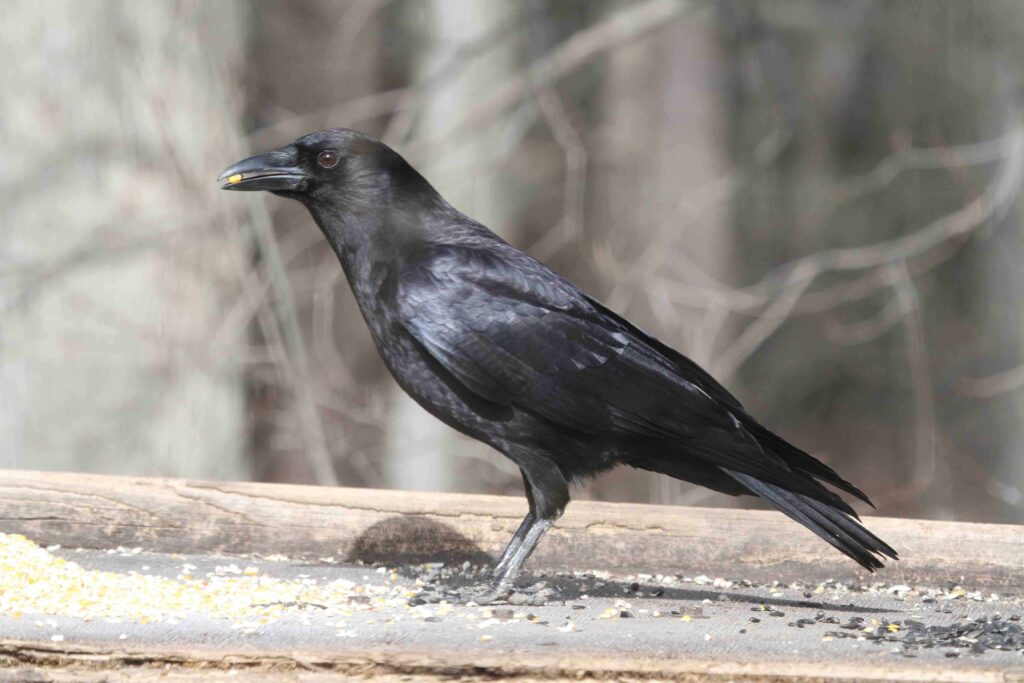
- The Crow’s Call: Crows announce their presence loudly and proudly. They use a sharp, staccato “caw caw” sound that cuts through the noise of city traffic and alerts their flock to food or danger.
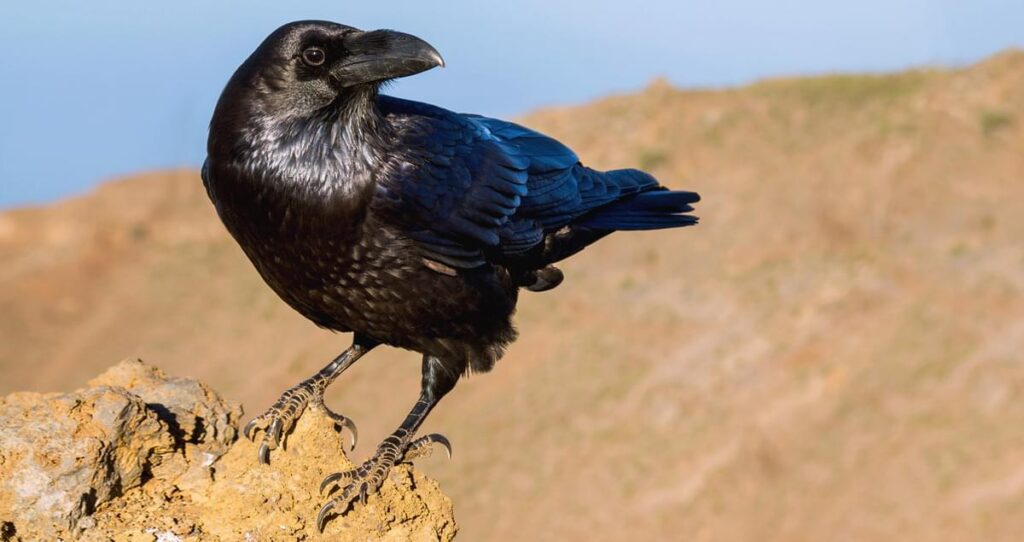
- The Raven’s Echo: The raven’s voice matches its ancient, wilderness habitat. They produce deep, resonant, and guttural “gronk gronk” tones or hollow croaks. These low-frequency calls echo beautifully across canyons and forests, carrying their wisdom over long distances.
Physical Traits and Intelligence: Nature’s Subtle Beauty
Beyond their habitat and voices, the physical and intellectual differences between the two are a testament to evolutionary perfection:
- Beaks and Tails: Crows have smaller, straighter beaks and a tail that spreads out like a fan during flight. Ravens are noticeably larger, equipped with thick, curved “Roman” beaks and distinctive wedge-shaped tails.
- Feathered Geniuses: Both birds belong to the corvid family—widely considered the smartest birds on the planet. While crows excel at urban problem-solving (like dropping nuts on crosswalks for cars to crack), ravens possess a slightly more advanced level of analytical intelligence, capable of multi-step puzzle-solving and complex play in the wild.
The Ultimate Takeaway: In the subtle differences of their beaks, tails, behaviors, and intelligence lies nature’s true beauty. Whether it is the quick-witted city crow or the ancient, wandering raven, the natural world remains a profound classroom, if only we choose to observe.
To the casual observer, they may simply be black birds in the sky. But to those who look closer, crows and ravens reveal one of nature’s greatest lessons: even among creatures that seem alike, survival can take profoundly different forms—through community or solitude, speed or patience, noise or mystery.
Leave a Reply