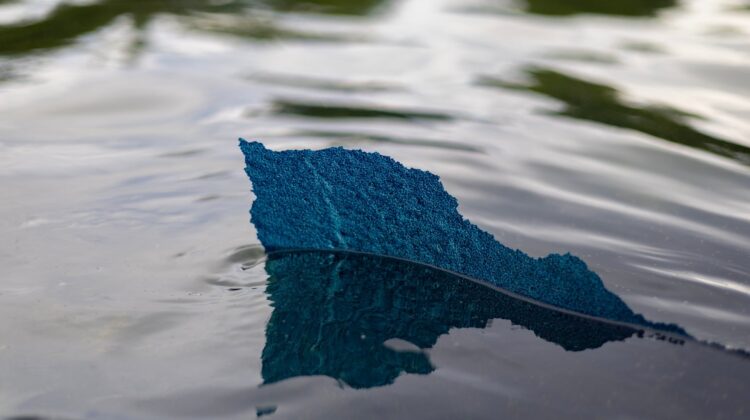
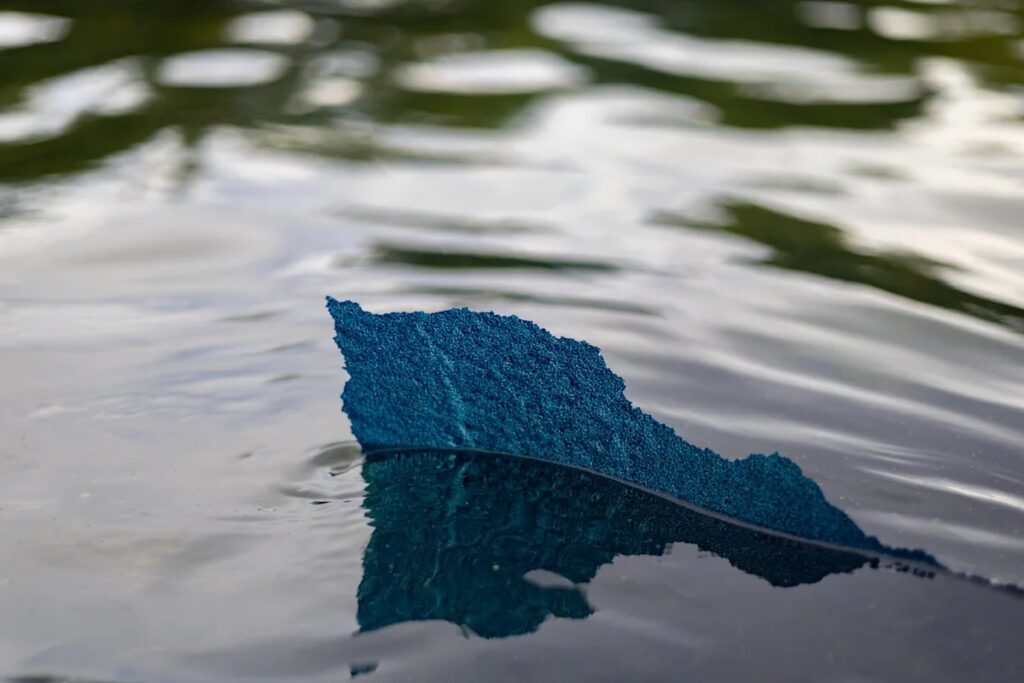
The recent renovation of the iconic Lincoln Memorial Reflecting Pool was intended to give one of America’s most recognizable landmarks a fresh appearance. Instead, visitors have been left puzzled after blue fragments of material began peeling from the pool’s surface and floating in the water just days after the project was completed.
The striking images quickly spread online, raising questions about what went wrong with a restoration project that was expected to symbolize national pride.
The issue centers on a blue protective layer known as polyurea coating, a durable waterproof membrane commonly used in swimming pools and industrial structures. The coating was applied to the Reflecting Pool’s floor and walls as part of a renovation ordered earlier this year. However, experts now believe that a combination of technical challenges may have caused the coating to separate from the surface beneath it.
According to aquatic engineering specialists, the problem is unlikely to have a single explanation.
“The failure of the adhesion to the substrate of that product probably could have been caused by many factors,” said Tim Auerhahn, chairman of the Aquatic Council.
One theory focuses on the preparation of the pool’s surface before the coating was applied. Polyurea requires extremely precise conditions during installation. Each layer must bond correctly to the previous one, and even minor mistakes in timing, temperature, or surface preparation can weaken the final result.
Another important question is whether the coating was suitable for the Reflecting Pool’s granite structure in the first place.
“The material that you’re adhering that polyurea coating to is questionable,” Auerhahn explained. “They were adhering it to granite.”
Experts also point to Washington’s intense summer heat and ultraviolet radiation as possible contributors. Constant exposure to sunlight, changing temperatures, water chemistry, and environmental stress can all affect how coatings behave over time.
Some observers speculated that hydrogen peroxide, which was reportedly added to the water to combat algae blooms, might have damaged the coating. While hydrogen peroxide can act as a paint stripper under certain conditions, specialists believe the concentration used in the Reflecting Pool was likely too diluted to be the sole cause.
Instead, they suspect a combination of factors is responsible.
“When investigating engineering failures, we’re rarely going to see one single cause,” Auerhahn said. “There were a lot of different stressors to that coating, and they probably all had some level of contribution.”
The company responsible for the work has acknowledged that certain areas of the seven-acre project require repairs, but insists the peeling does not represent a complete failure of the liner system. Repairs are expected once the pool can be drained safely.
Meanwhile, additional controversy has surrounded the project after reports that several individuals were arrested for allegedly vandalizing parts of the pool, though experts stress that a comprehensive engineering investigation is still needed before firm conclusions can be reached.
David McFayden, a coatings expert, summarized the challenge simply:
“If you’ve met one coating failure, you’ve met one coating failure. They’re all very different.”
For more than a century, the Lincoln Memorial Reflecting Pool has stood as a symbol of American history and resilience. Yet its recent troubles serve as a reminder that even the most iconic landmarks are vulnerable to modern engineering challenges. Until investigators uncover exactly why the coating failed, the peeling blue fragments drifting across the water remain more than just a maintenance issue—they are a visible mystery unfolding in the shadow of one of America’s greatest monuments
Leave a Reply