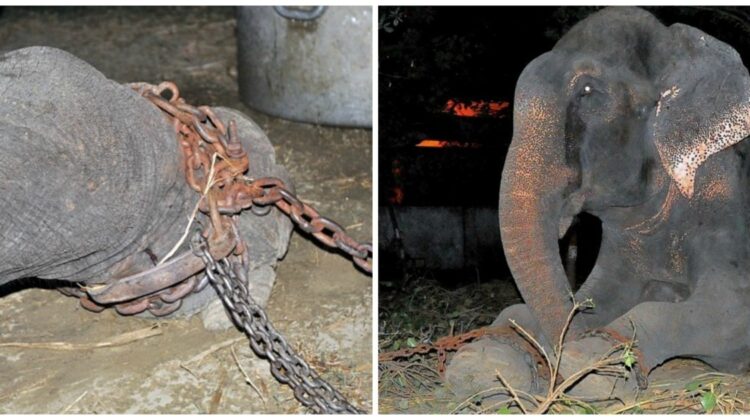
Raju’s story is one of the most widely shared elephant rescues in India. According to the animal welfare group that freed him, he spent most of his life in chains, used by his owners to beg from tourists, until a night-time rescue moved him to a sanctuary. Here is what has been reported, and what remains unconfirmed.
A Life in Captivity
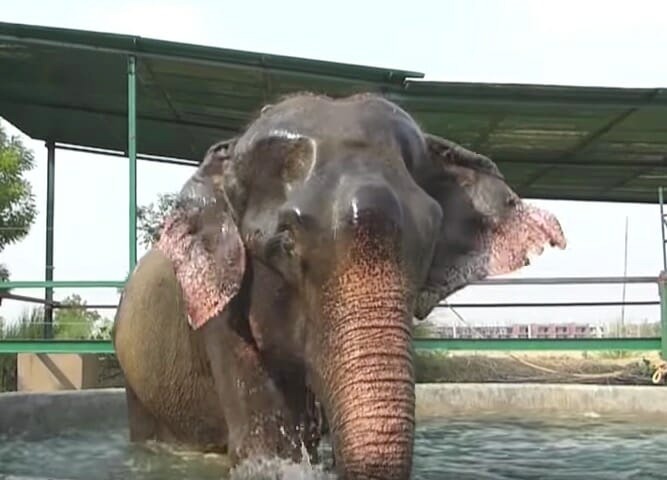
Reports say Raju was taken from the wild as a baby and knew nothing but captivity. He lived in the Indian state of Uttar Pradesh, where, according to Wildlife SOS, he was chained for roughly 50 years and used as a prop so his owners could beg for money from tourists.
The group said he survived on handouts from passersby, including paper and plastic, and carried injuries from the spiked chains used to restrain him. He was also reportedly beaten so often that he had become used to it.
The Rescue
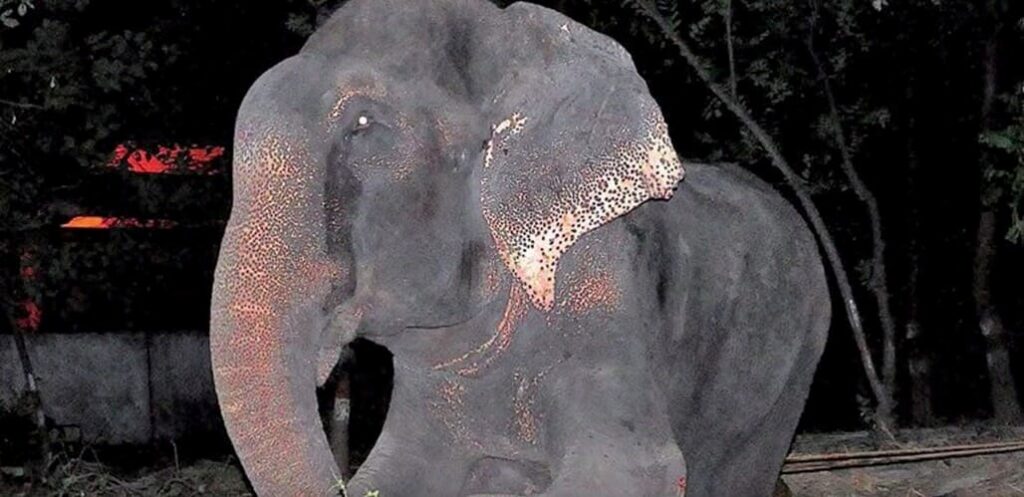
Wildlife SOS, an animal conservation organization in India, says it learned about Raju and decided to act. The rescue team included 10 veterinarians and animal experts, along with 20 forestry officials and two police officers. The operation took place at night to draw as little attention as possible.
The group said the owner tried to obstruct the rescue by shouting commands meant to frighten the elephant and by adding more chains to his legs. Reports describe the situation as dangerous, since a frightened bull elephant can seriously hurt a person. The team pressed on, and the organization’s chief veterinarian, Yaduraj Khadpekar, cut the chains from Raju’s legs.
“Tears” During the Rescue
A Wildlife SOS spokesperson told the Daily Mail that rescuers saw tears rolling down Raju’s face as he was freed, and said the team felt he understood what was happening. This is the organization’s interpretation. Elephants do produce tears to keep their eyes moist, so the observation can’t prove what Raju felt, but it became the most emotional part of the story for many readers.
Arriving at the Sanctuary
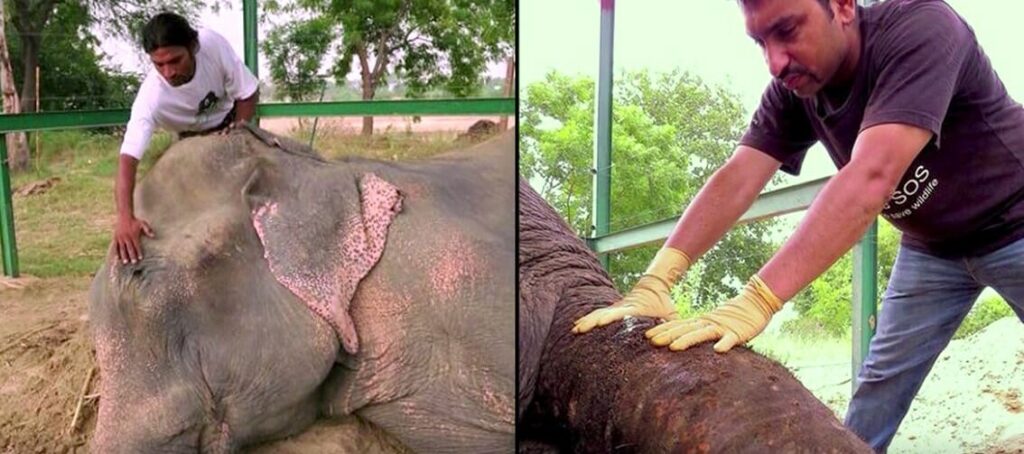
Raju was taken to the group’s wildlife center. According to the report, he arrived around midnight, and the other elephants there came to greet him. The organization’s co-founder, Kartick Satyanarayan, said rehabilitation would be long and slow, and that the goal was to teach Raju that humans don’t have to mean pain.
What the Reports Don’t Confirm
Some parts of the story should be read with care:
- Most details, including the “50 years” figure, the owner’s actions and the elephant’s emotions, come from Wildlife SOS and media outlets quoting it. They haven’t been independently verified here.
- The coverage focuses on the rescue itself, and the reports don’t describe Raju’s current health or circumstances.
- Elephants cannot tell us how they feel. Descriptions like “tears of joy” are human interpretations of their behavior.
Elephants in Captivity
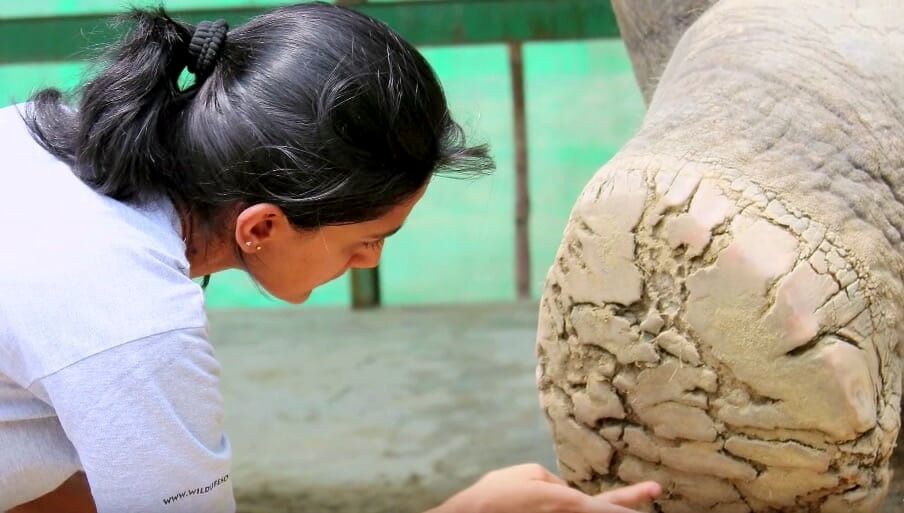
Raju is an Asian elephant (Elephas maximus), a species listed as endangered by the IUCN. Wildlife groups warn that elephants used for begging, riding or performing are often taken young and trained through harsh methods, and that long-term chaining can cause physical injuries and psychological distress. Elephants are highly social, intelligent animals that naturally live in family herds and travel long distances, which is why sanctuaries try to give rescued animals space and the company of other elephants.
How to Visit Elephants Ethically
If you want to see elephants on a trip, a few choices make a big difference:
- Avoid rides, shows and photo ops with chained or restrained elephants.
- Choose true sanctuaries. Look for places that don’t chain elephants, don’t offer rides and let the animals live in groups.
- Check independent accreditation. Ask whether the sanctuary is reviewed by a recognized body, and read recent traveler reviews.
- Don’t give money to street begging. Tourists who pay for photos or food help keep the practice going.
- Report suspected abuse to local authorities or a wildlife rescue group.
Support Elephant Rescue and Ethical Travel
If this story moved you, here are ways to help:
- Support rescue work. Compare elephant sanctuary donations, wildlife rescue charities and symbolic elephant adoption programs.
- Plan an ethical trip. Look into ethical wildlife tours, elephant sanctuary visits and eco-friendly travel packages.
- Protect your trip. Travel insurance can cover cancellations, medical costs and lost luggage on international trips.
- Bring the right gear. Browse wildlife photography cameras, zoom lenses and binoculars for watching animals from a respectful distance.
Frequently Asked Questions
Who is Raju the elephant? An Asian elephant in Uttar Pradesh, India, who was rescued by Wildlife SOS after, according to the group, spending most of his life in chains.
Who rescued Raju? Wildlife SOS, working with veterinarians, forestry officials and police officers.
Did Raju really cry? Rescuers said tears rolled down his face. That is their observation and interpretation, since elephants can’t tell us what they feel.
Where did Raju go after the rescue? To Wildlife SOS’s wildlife center, where other elephants live.
Sources: Wildlife SOS statements and the Daily Mail, as reported in media coverage of Raju the elephant’s rescue in Uttar Pradesh, India.
Leave a Reply