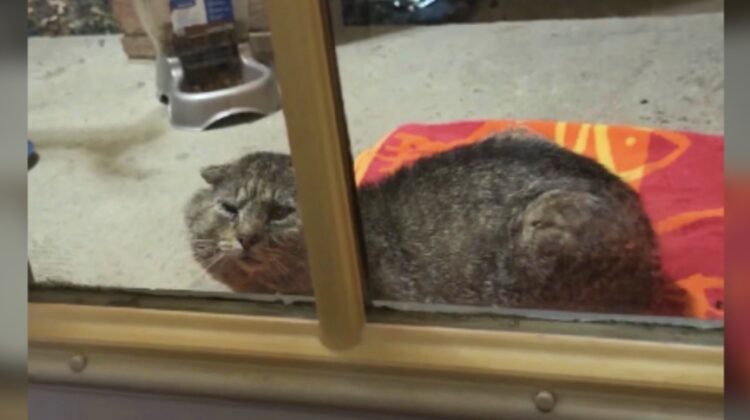
For months, a large stray tomcat wandered the streets near Memphis, Tennessee, surviving on whatever food and shelter he could find. Like many community cats, he kept his distance from people. But one evening, everything changed when he appeared outside the home of a woman who had made it her mission to care for the neighborhood’s forgotten felines.
Jaclyn Andersen regularly leaves food outside for stray and feral cats that pass through her neighborhood. Over time, she had become familiar with many of their faces and behaviors. Most would quietly eat before disappearing into the darkness, avoiding human contact whenever possible.
But one newcomer behaved differently.
The large tomcat, later named Charles, first appeared outside Andersen’s home late at night. His enormous cheeks—typical of mature unneutered male cats—immediately caught her attention. Yet it wasn’t his appearance that truly stood out. It was the way he refused to leave.
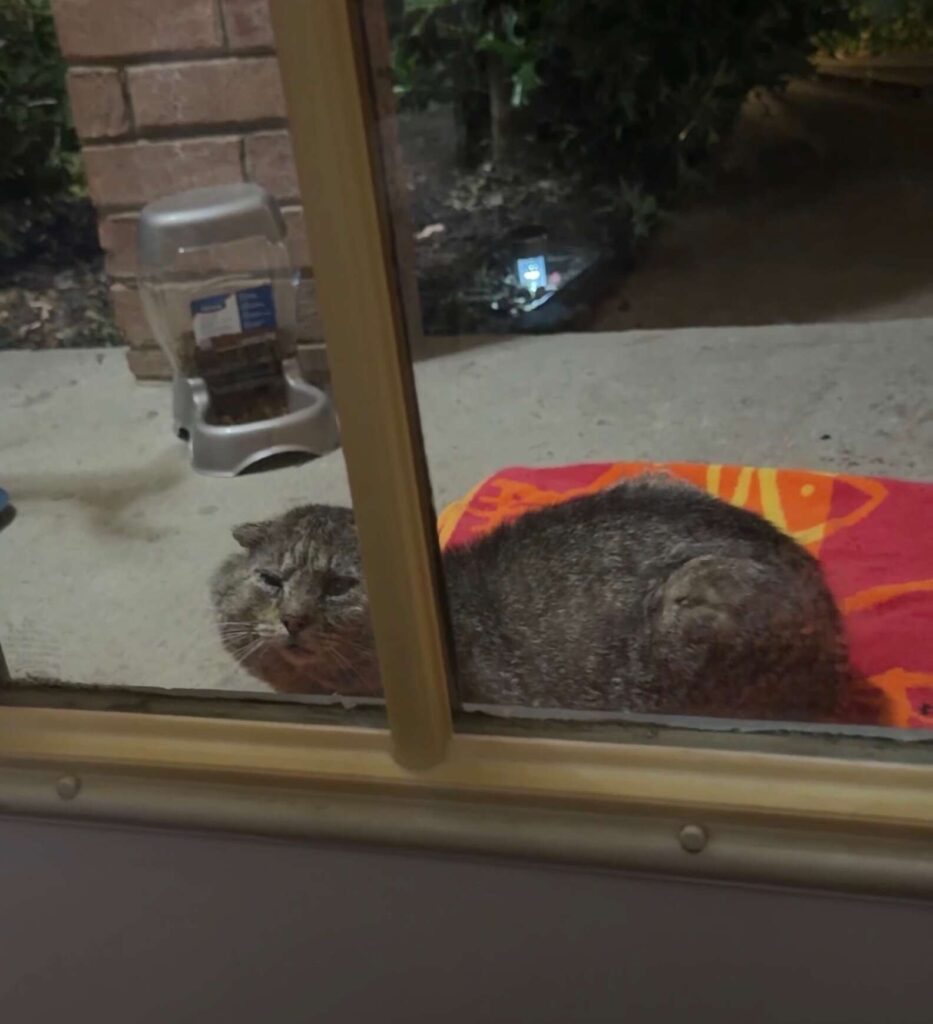
After finishing his meal, Charles settled onto the doormat outside Andersen’s front door and remained there for nearly an hour. Unlike the wary neighborhood cats that usually fled at the slightest movement, Charles seemed unusually calm, as though he had finally found a place where he felt safe.
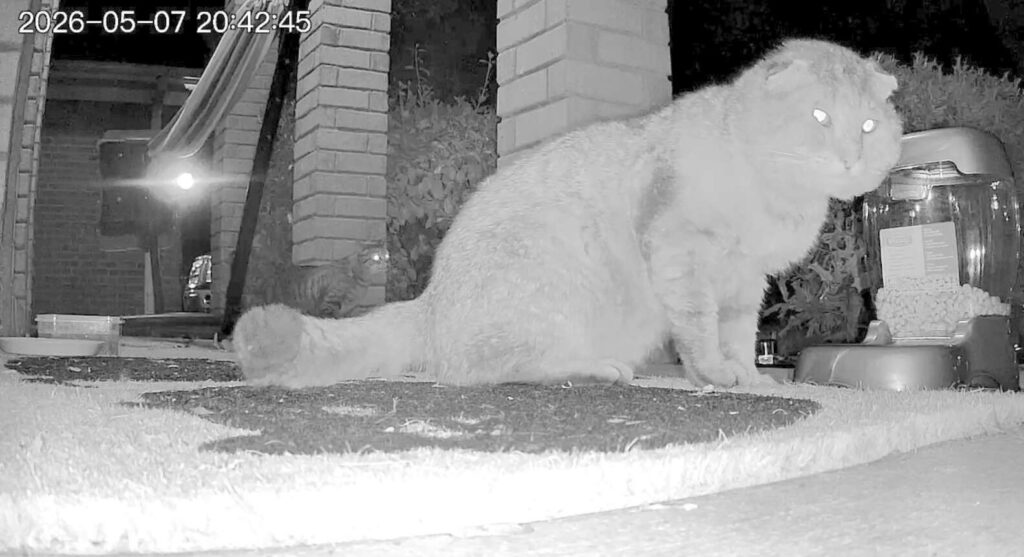
Day after day, he returned.
Inside the house, Andersen’s three resident cats soon became fascinated by their mysterious visitor. They gathered by the window to watch him quietly resting outside. One of Andersen’s cats had also been rescued from the same neighborhood, leading her to wonder whether the two had crossed paths during their years on the streets.
As the days passed, Charles began showing subtle signs that he wanted more than food.
Whenever Andersen approached the window, he stayed nearby instead of running away. He looked directly at her, blinking slowly—a behavior cats often use to communicate trust and affection. To Andersen, it felt as though the weary tomcat was trying to tell her something.
His physical condition made the decision even more urgent.
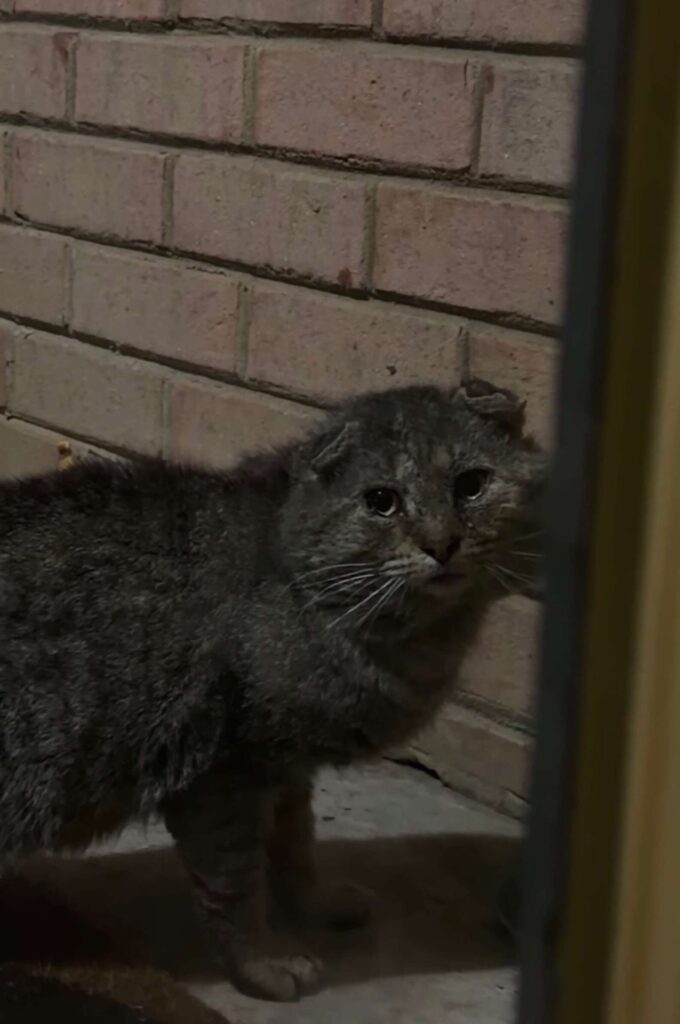
Charles’ ears were damaged and infected, his body showed signs of exhaustion, and life outdoors had clearly taken its toll. Andersen realized that if he remained on the streets much longer, his health would likely continue to decline.
Determined to help, she safely trapped Charles and took him to a veterinarian for a full medical examination.
The diagnosis revealed that Charles was living with Feline Immunodeficiency Virus (FIV), a condition that weakens a cat’s immune system. While the virus can leave cats more vulnerable to infections, veterinarians explain that FIV-positive cats often live long, comfortable lives when kept indoors with proper veterinary care, good nutrition, and a safe environment.
For Andersen, the diagnosis changed nothing.
Rather than seeing an obstacle, she saw a cat who had spent years surviving alone and deserved the opportunity to finally experience comfort and security. She decided to make Charles a permanent member of her family.
Adjusting to indoor life has been a completely new experience for the former stray. After years of sleeping outside and remaining constantly alert to danger, Charles has slowly learned that he no longer needs to fight for survival.
Week by week, his confidence has grown.
At first, Andersen expected the shy tomcat to resist human contact. Instead, when she gently reached out to pet him, Charles surprised her by remaining completely relaxed, leaning into the affection as though he had been waiting for that simple act of kindness for years.
Today, Charles continues settling into his new home alongside his feline companions. The frightened stray who once waited patiently outside a window is gradually transforming into a beloved family pet, discovering the comforts of warm beds, regular meals, and the gentle touch of someone who refused to ignore his silent plea for help.
Every year, countless stray cats spend their lives searching not only for food but also for safety, compassion, and a place to belong. Sometimes, all it takes is one person willing to notice the quiet signals that an animal cannot express with words. Charles’ journey is a powerful reminder that rescue is about more than offering shelter—it is about giving a vulnerable life the chance to heal, trust again, and discover that home is not simply a place, but the feeling of finally being safe.
Leave a Reply