Shark attacks are, statistically, rare — but researchers say a specific pattern within them is becoming harder to ignore: a growing number of the people getting bitten are influencers and content creators actively trying to get close to sharks for social media footage.
A String of Recent Incidents
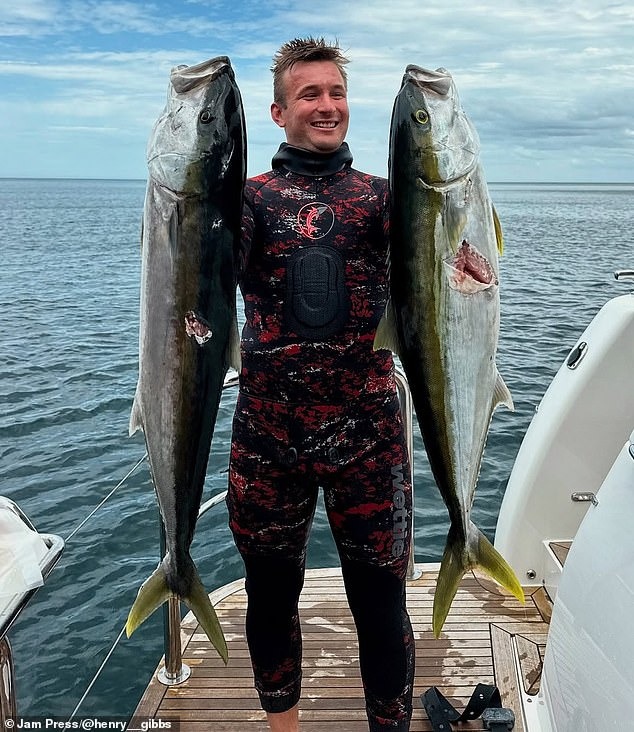
At least three influencers have been attacked by sharks in roughly the past year. New Zealand fishing influencer Henry Gibbs nearly lost his right leg after a reef shark bit him while he was spearfishing in Fiji in July 2026, requiring four surgeries and a skin graft to save the limb. A 26-year-old Chinese content creator was bitten by a nurse shark in the Maldives in December 2025.

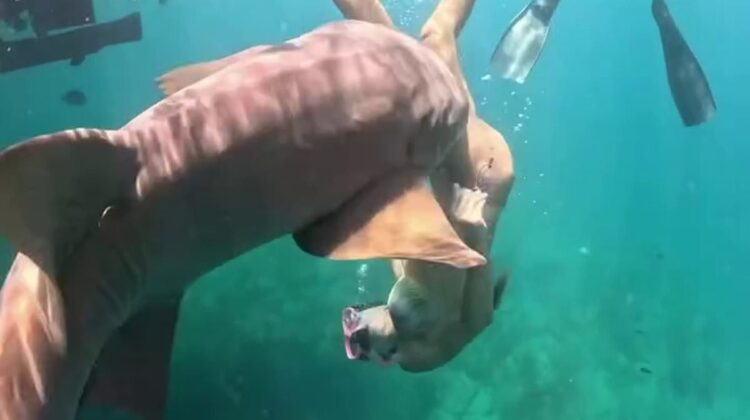
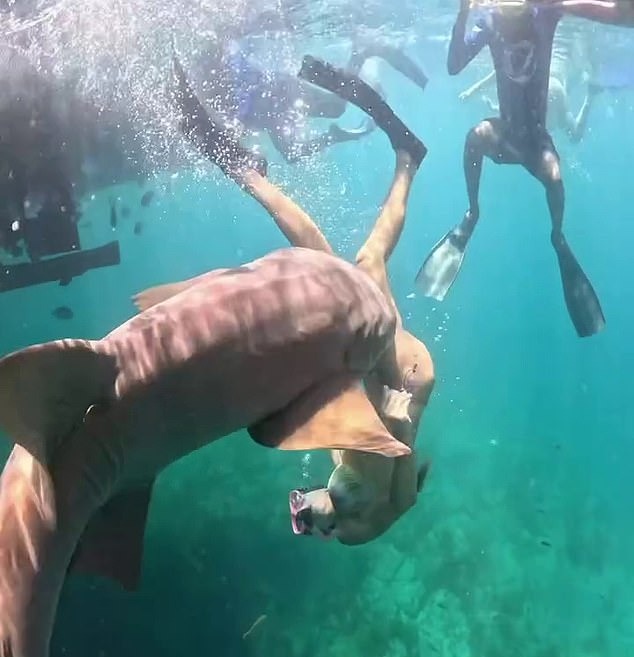
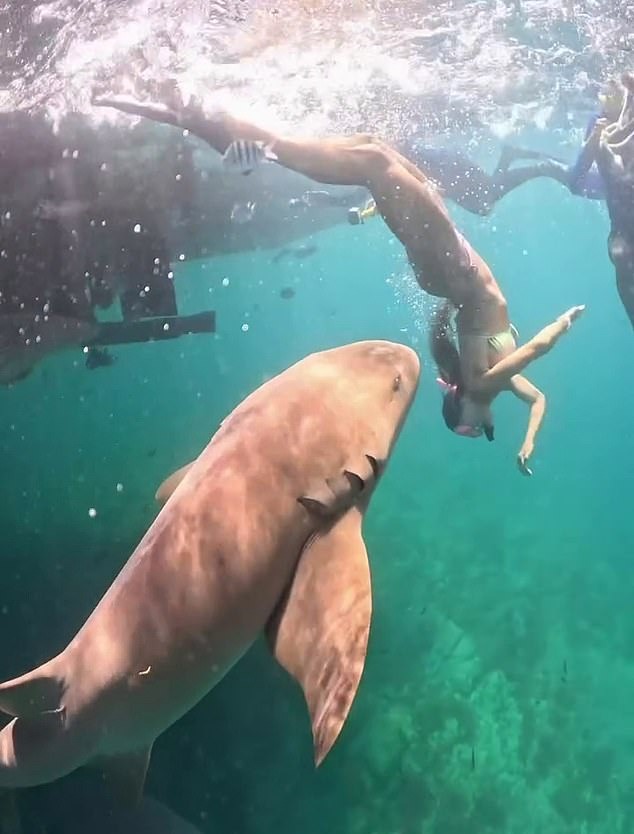
Brazilian lawyer and social media personality Tayane Dalazen was bitten by a nurse shark during a diving trip in April, after noticing something felt off before entering the water. “I knew something was different because the sharks were on the surface. There were a lot of them,” she said, later learning the tour operators had been feeding the sharks to encourage them to interact with tourists. The shark — more than seven feet long — clamped onto her thigh and held her underwater for several seconds before she got free. “When the shark bit me, the pain was very strong,” she said. “I stayed calm because I knew I couldn’t fight the animal.” Dalazen posted footage of the attack, which has since been viewed by millions.
Non-influencers have been caught up in the same trend: in February 2025, a tourist in the Caribbean lost both hands attempting to photograph a bull shark in shallow water, and two months later a snorkeler carrying a selfie stick off Israel’s coast was killed by sharks while reportedly trying to take a photo.
The Numbers Still Say Sharks Aren’t the Real Risk
It’s worth keeping this in context: overall shark bite numbers have stayed remarkably stable, at roughly 70 documented bites per year worldwide over the past three decades, according to researchers who track these incidents. What appears to be changing isn’t how dangerous sharks are — it’s how often people are deliberately putting themselves within striking distance for a photo or video.
Why Researchers Are Alarmed
Marine biologist Eric Clua, who studies the motivations behind shark bites, argues that influencer content is actively reshaping public perception of risk. “The message transmitted by influencers is, ‘Look! Touch the shark, nothing will happen to you,'” he has said, pointing to a rise in incidents tied to people getting too close because they no longer perceive sharks as dangerous.
Shark scientist Kristian Parton says she now sees new shark-attack footage circulating “every single week,” and worries the trend is heading toward more serious outcomes. Her comparison: “You wouldn’t walk into the Serengeti and try to put your hand on the face of a lion.” Approaching sharks in their own habitat, she notes, causes them stress and can interfere with the space they need to survive.
There’s also a physiological cost to the animals themselves. Research has found that sharks approached or touched by humans show elevated levels of glucocorticoid stress hormones — and in excess, those hormones have been linked to weakened immune function, higher mortality, and even aborted offspring in sharks.
Not All Sharks — or Encounters — Are Equal
Dalazen’s attacker was a nurse shark, a species generally considered docile compared to other sharks. Some influencers have gone further, filming themselves touching tiger sharks and even great white sharks — species with a very different risk profile.
The best-known figure in this space is Ocean Ramsey, a former model who became widely known in 2019 after being photographed swimming alongside one of the largest great white sharks ever documented. Ramsey runs paid shark-diving tours in Hawaii and regularly posts footage of herself in close contact with sharks. She maintains her goal isn’t views but shark protection: “My intent with all of my content has never been to gain views, it’s to gain protection for sharks,” she has said, pointing to her contributions to research and data collection. Ramsey disputes that her content encourages risky imitation, arguing that “most people are observing what I’m sharing with an educational message and they’re not going out to just replicate that,” and that the sharks, in her account, choose to approach her rather than the other way around.
Other researchers in the field aren’t convinced that close-contact content serves any real conservation purpose. Shark researcher Jack Cooper has said he can’t see how touching or riding a shark aids conservation, arguing that such footage mainly documents a person interacting closely with a wild animal rather than generating the kind of scientific data or policy pressure that could actually help protect shark populations.
A Booming, Barely Regulated Industry
Shark diving and swimming tourism has grown substantially worldwide — travel booking sites list well over a hundred shark-swim experiences in the Maldives alone, with some explicitly marketed around getting “the ultimate selfie.” The gap between that marketing and the scientific warnings is, at this point, wide and well documented.

Frequently Asked Questions
Are shark attacks actually becoming more common? No — overall bite numbers have stayed roughly stable at around 70 per year globally over the last three decades. What’s changed is the number of incidents specifically tied to people deliberately approaching sharks for photos or video.
Is it ever safe to swim near sharks? Researchers generally distinguish between passive observation from a respectful distance and active contact (touching, riding, or feeding) — the latter is what’s driving both the rise in incidents and the documented stress response in sharks.
Why do some shark tour operators feed sharks to attract them? Feeding, sometimes called chumming or baiting, is used by some operators to reliably draw sharks close enough for guaranteed sightings or photos, but researchers say it changes shark behavior around humans in ways that can increase risk for the next group of swimmers.
Sources: multiple outlets reporting on shark researcher statements, including Eric Clua (École Pratique des Hautes Études, Paris), Kristian Parton, Jack Cooper, and Ocean Ramsey’s own public statements.
Leave a Reply