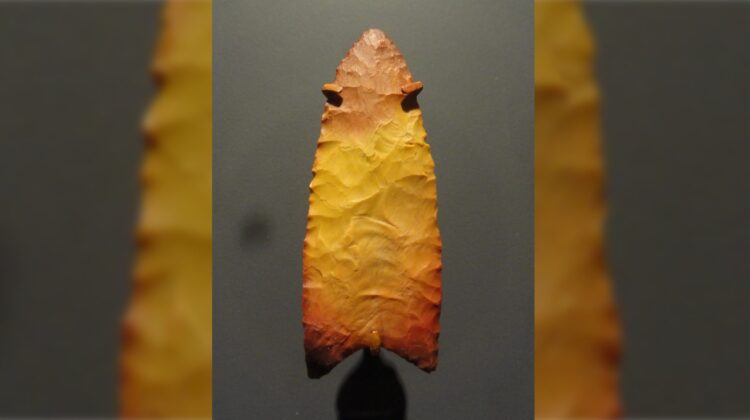
For decades, archaeologists believed the Clovis people, North America’s first widespread culture, stayed mostly on the plains and in valleys. Now stone tools from the Beartooth Mountains of Montana are challenging that picture.
A Child, an Antler and 100 Stone Tools
The story starts in 1968, when construction workers in Park County, Montana, accidentally uncovered a burial. The Anzick site contained the partial remains of a toddler, along with roughly 100 stone tools and several bone and antler tools that match the Clovis culture. Radiocarbon dating placed the burial between about 12,725 and 12,900 years ago.
Genome analysis later showed the child, known as Anzick-1, belonged to a population directly ancestral to many contemporary Native Americans. The site lies in a valley, though, not in the mountains.
Finds High Above the Valley
Archaeologist Scott Dersam and his Alpine Ecosystem Research Institute have documented Clovis-era stone tools at multiple sites in the Beartooths, within a few miles of Yellowstone National Park and at elevations above 9,000 feet. Dersam says each site was the highest known Clovis location when it was found, and five sites in the area have been identified since 2001.
His work builds on the collection of Vern Waples, a game warden who gathered more than 2,000 artifacts on horseback from the 1950s to the 1970s. After Waples’s collection was donated, Dersam realized it was the largest and densest high-elevation stone tool collection in North America. Using models to predict ancient habitation, Dersam followed Waples’s trails and the finds multiplied.
Why It’s a Puzzle
Thousands of Clovis artifacts have been found across the country, but the overwhelming majority are at low elevations. Dersam says the sediment at his sites doesn’t fit standard reconstructions of the region’s Ice Age environment, which have the Beartooths covered by the Pinedale Glacier. “It’s more than a monkey wrench to the current paradigm,” he told Mountain Journal.
If the dates and interpretations hold, these may be some of the oldest and highest known habitation sites in North America. He has suggested the Clovis may have moved into the mountains for generations, and has floated drought as one possible reason.
What We Don’t Know Yet
The work is still in progress. The findings come from archaeological surveys and conference presentations, not from a single, fully published, peer-reviewed study, and the explanations are still hypotheses. Researchers still need to establish exactly how old each site is and what the local ecosystem looked like at the time.
At a public lecture in Livingston, Dersam said the finds could change “our current understanding of how the Clovis people were operating.” Researchers say more fieldwork is needed to explain why people climbed so high.
Explore Montana’s Ancient Past
If you’d like to see Ice Age history for yourself, Montana makes it easy:
- Visit a museum. The Yellowstone Gateway Museum in Livingston displays Paleo-Indian artifacts from Park County.
- Plan a Yellowstone trip. Compare Yellowstone vacation packages and Montana lodging deals.
- Drive the Beartooth Highway. Compare rental car deals for a high-altitude scenic route.
- Gear up. Good hiking boots and layered outdoor clothing matter at altitude.
- Protect your trip. Travel insurance covers cancellations and emergencies.
Frequently Asked Questions
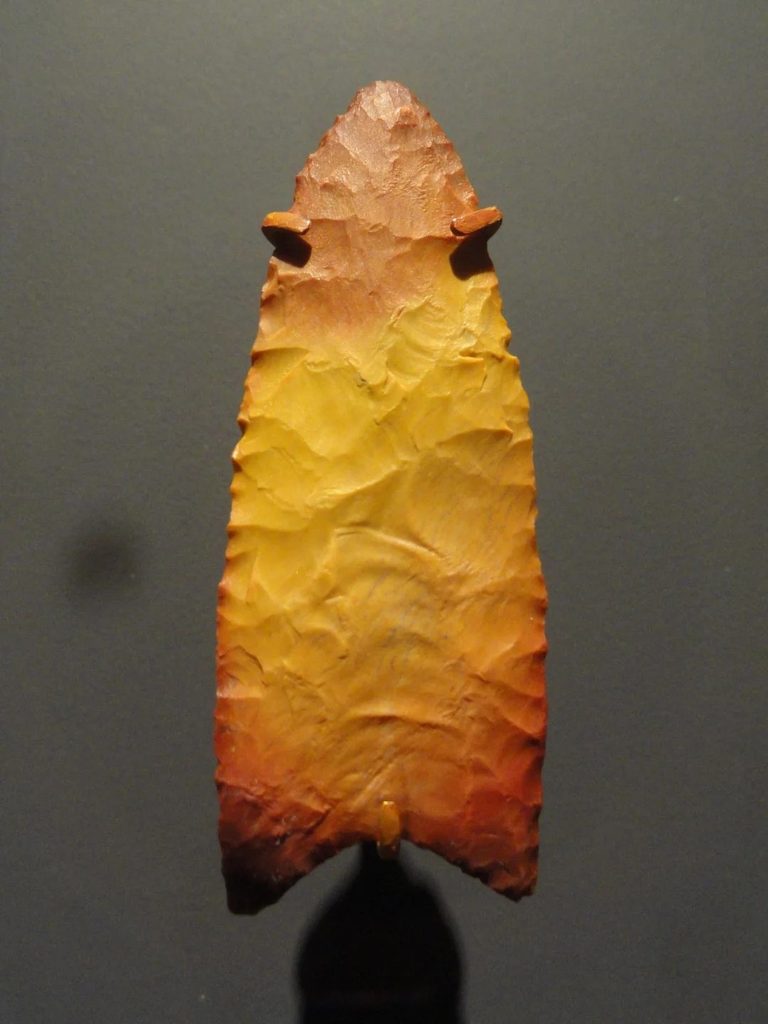
Who were the Clovis people? The Clovis are the first widespread culture in North America, known for grooved stone spear points and for hunting large animals such as mammoths.
Where was the Anzick child found? At the Anzick site in Park County, Montana, in 1968; it’s the only known Clovis burial.
Why are the Beartooth finds surprising? Most Clovis sites are at low elevations, and the Beartooths were thought to be covered by glacial ice during that period.
Is this proven? Not fully. The findings are still being studied, and the dating and environmental explanations need more research.
Sources: Mountain Journal, Livingston Enterprise, Montana Public Radio, and Nature, all covering the Anzick Clovis burial, the genome of Anzick-1, and Scott Dersam’s high-elevation Clovis discoveries in the Beartooth Mountains.
Leave a Reply