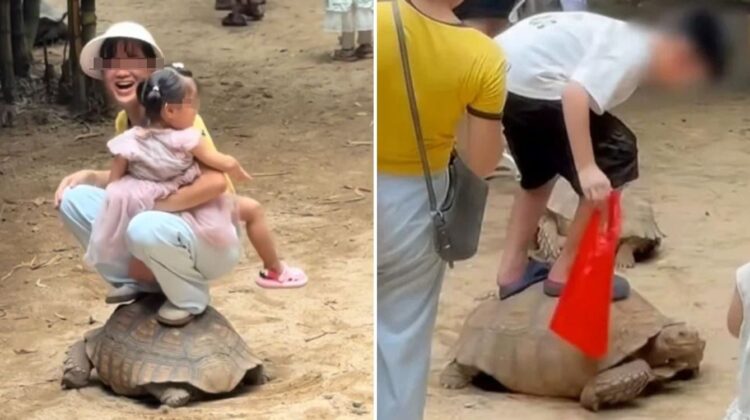
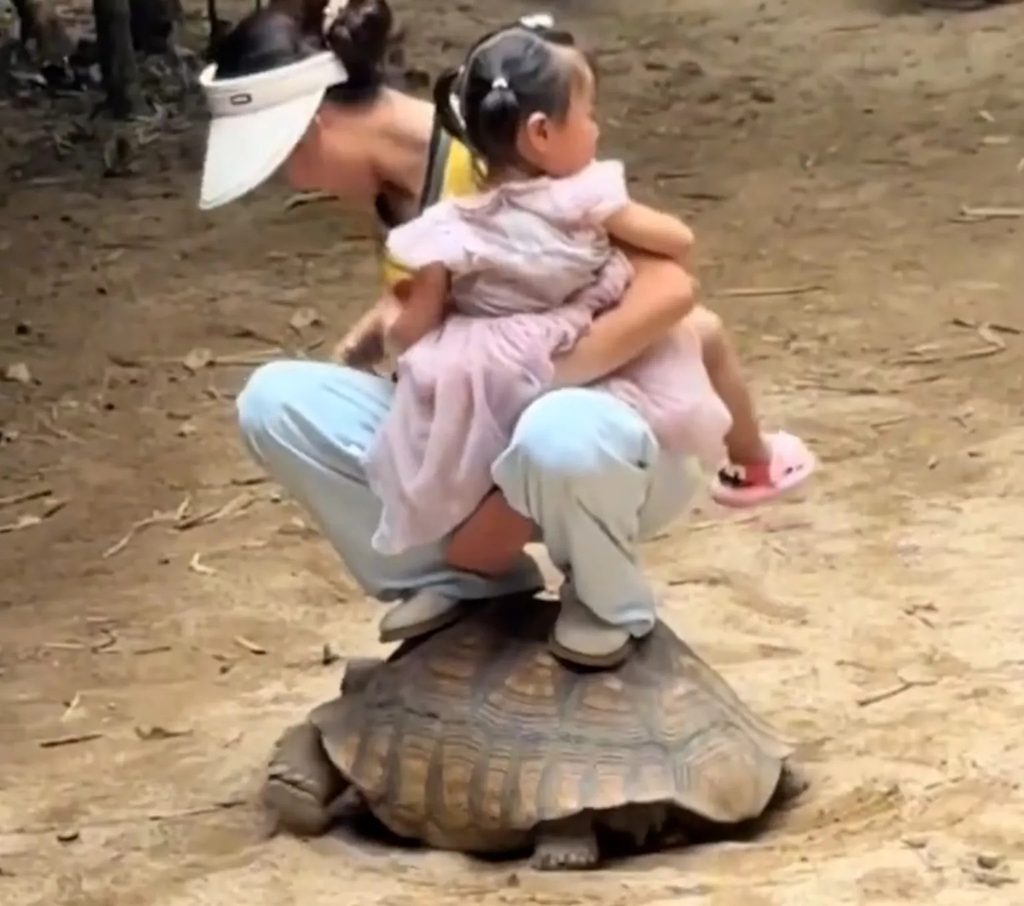
Footage filmed at a theme park in southern China has drawn widespread criticism after it appeared to show a woman standing and squatting on the back of a young, endangered tortoise while holding a child — despite posted signs asking visitors not to step on the animals.
What the Video Shows
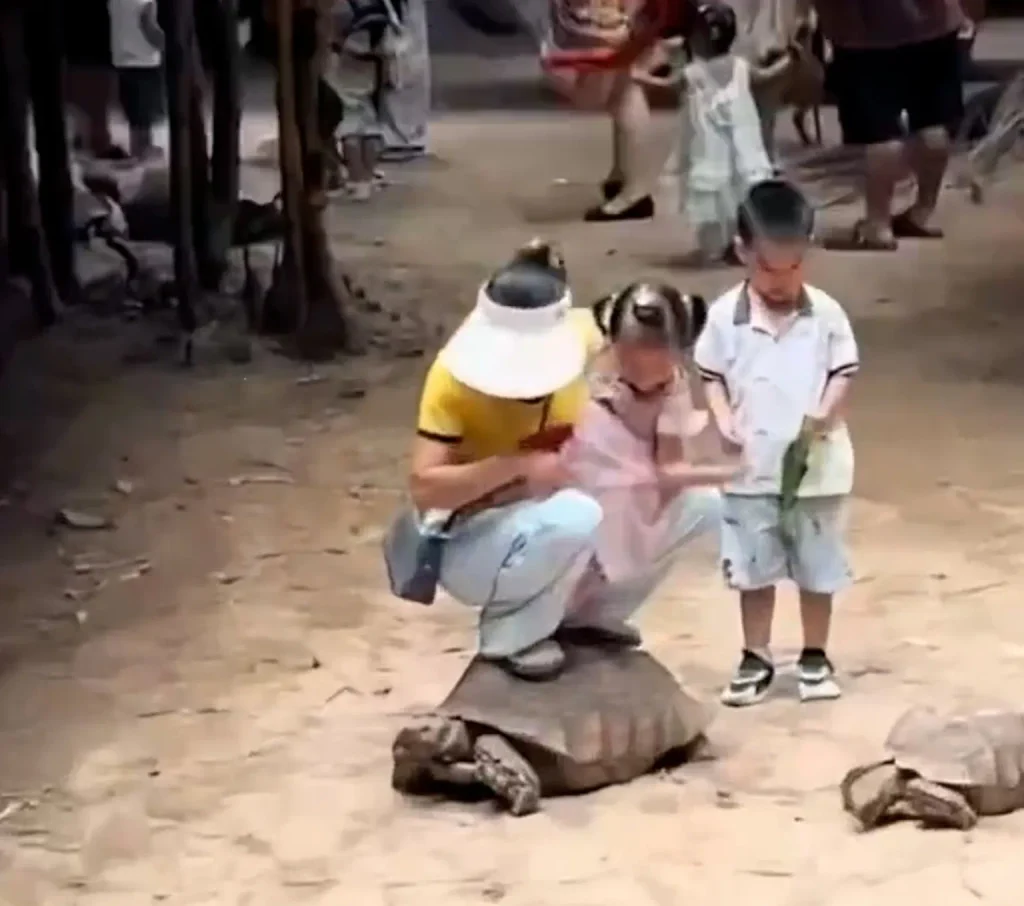
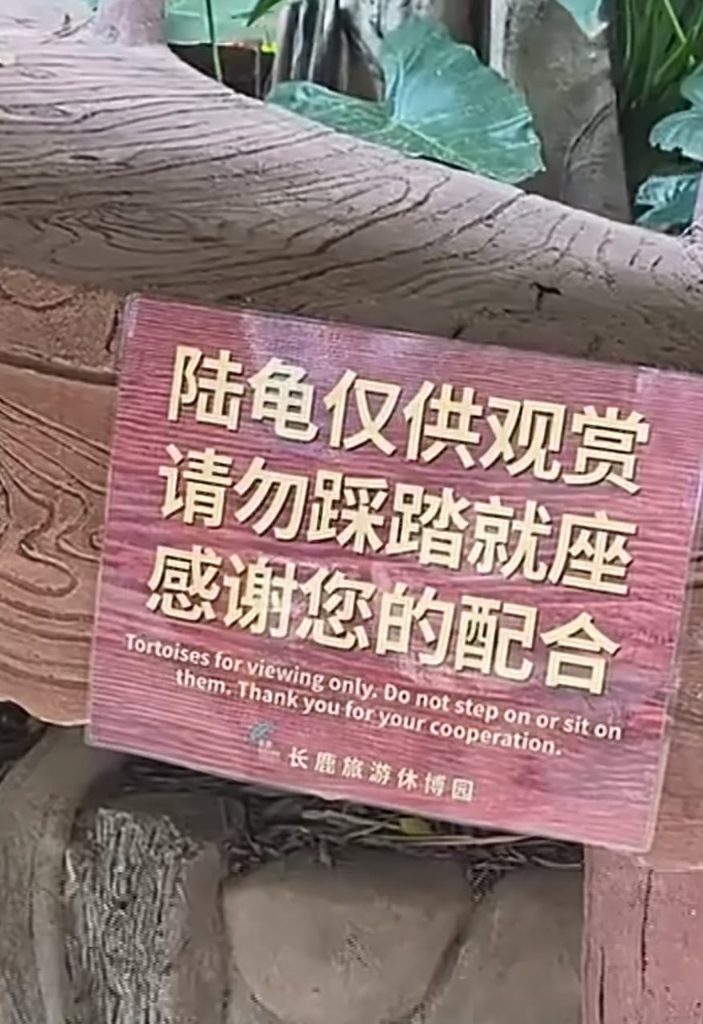
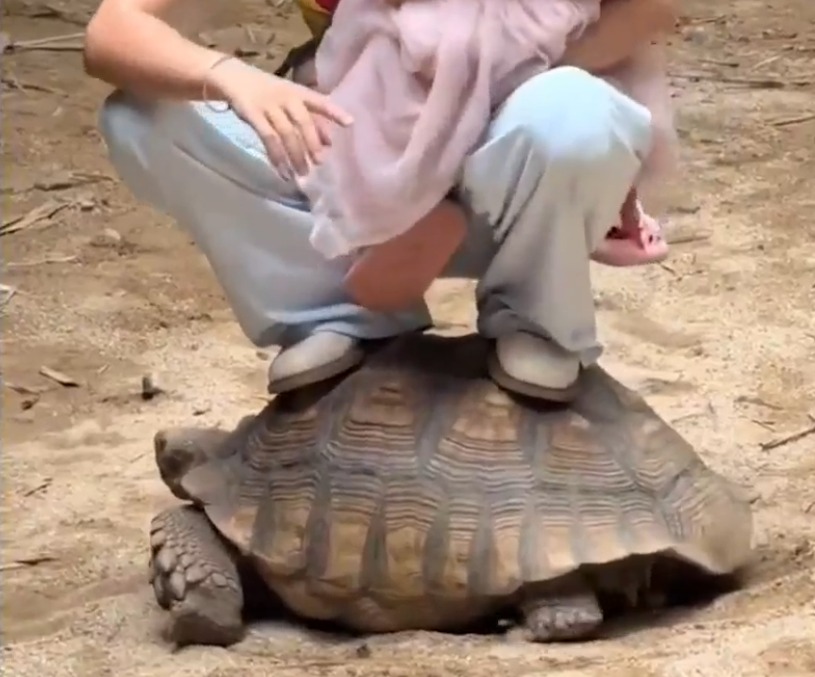
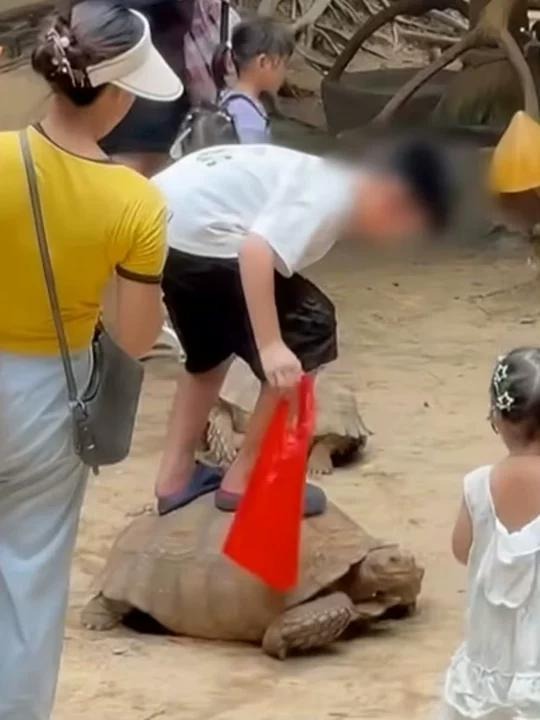
The incident took place on August 21 at Changlu Tourism and Leisure Park in Foshan, Guangdong Province, according to Free Press Journal and China’s state-run outlet Huanqiu.com. Video shows the woman standing on the back of an African spurred tortoise while holding a young girl, with the animal visibly struggling to move under the added weight. She’s then seen laughing and gesturing for a nearby boy to climb on as well.
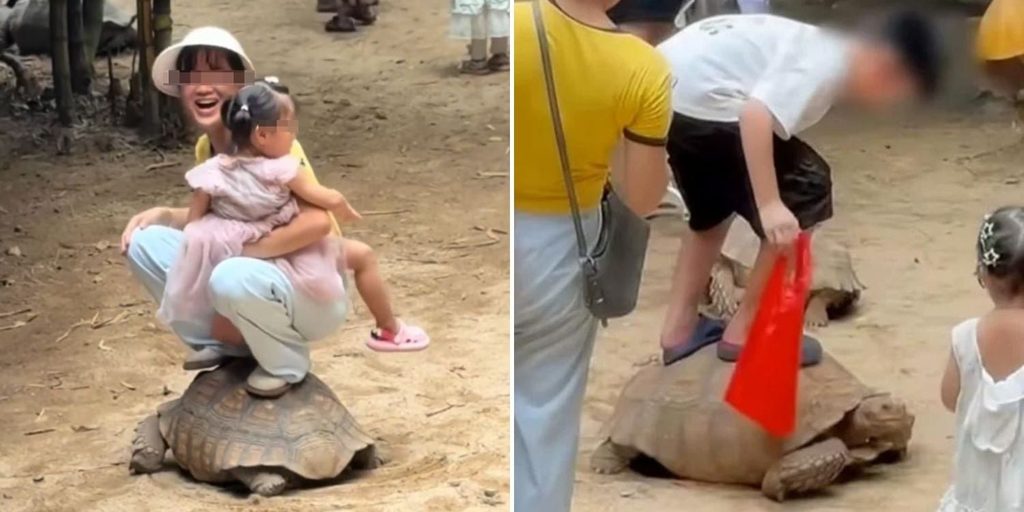
The person who filmed the incident, cited by Must Share News, alleged the family had kicked the tortoise before standing on it, and that other children at the site had also stepped onto tortoises in the enclosure — though witnesses singled out this incident as particularly serious. No staff member was reported to have intervened, despite signage in the area prohibiting visitors from sitting or stepping on the animals.
The Species Involved
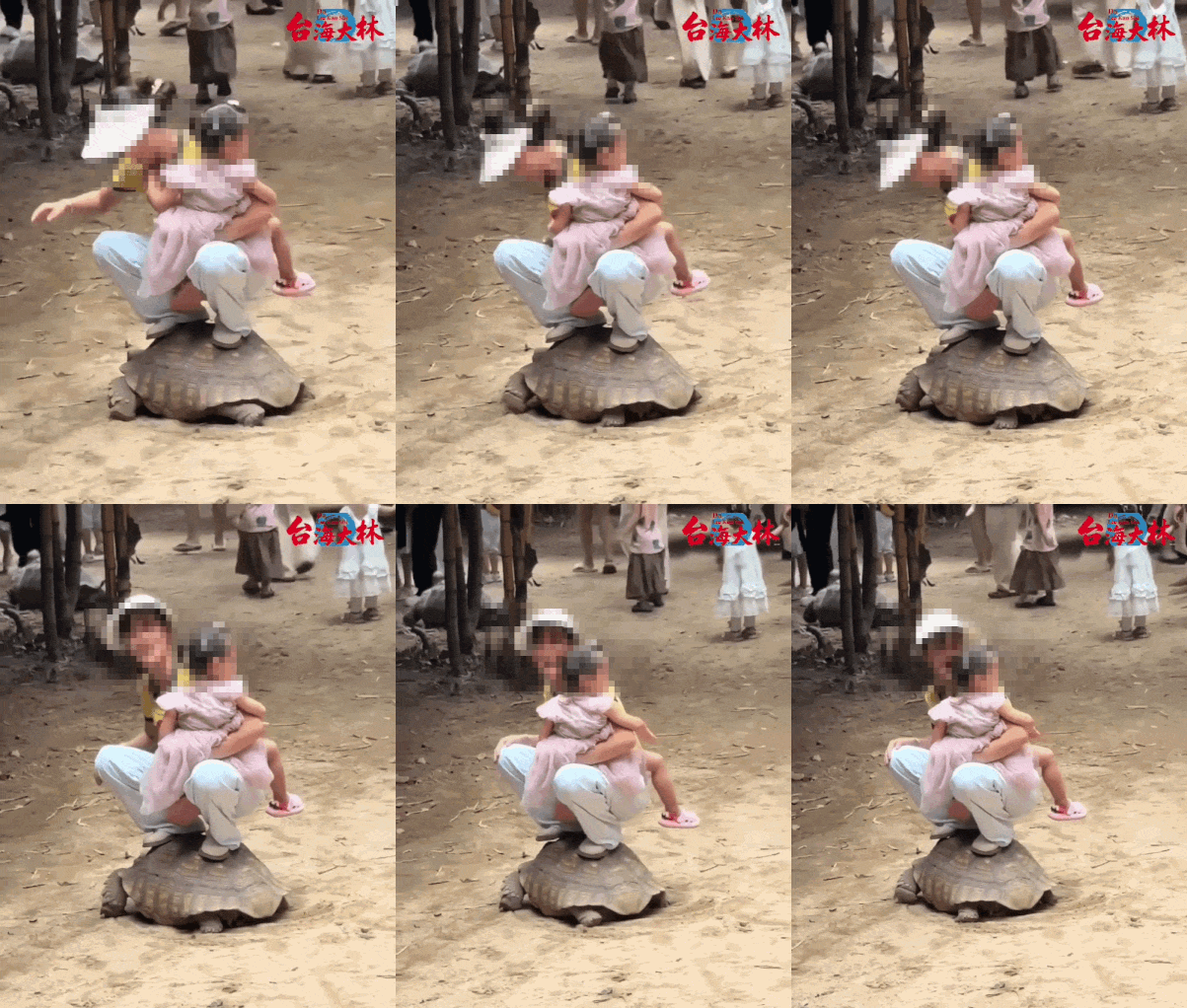
The tortoise was identified as a juvenile African spurred tortoise (also called a Sulcata tortoise), native to the Sahara Desert region and the third-largest tortoise species in the world as an adult. The animal involved measured roughly 40 centimeters in shell length — young enough that its skeletal structure was still developing, which makes crush-type injuries a particular concern.
Why This Actually Risks Serious Harm
Contrary to a common misconception, a tortoise’s shell isn’t a separate, detachable layer of armor — it’s fused directly to the animal’s spine and rib cage, and contains nerve endings and blood vessels throughout. According to the park’s own statement, standing on a tortoise’s shell can cause hidden fractures, spinal injuries, and compression of internal organs, none of which are necessarily visible from the outside immediately afterward.
The Park’s Response
Changlu Tourism and Leisure Park said it arranged for a veterinarian to examine the tortoise following the incident, and confirmed the animal was found to be in good health. The park said it would investigate potential shortcomings in on-site supervision and strengthen patrols to ensure staff intervene if similar behavior happens again.
As of the most recent reporting, the woman involved has not been publicly named, and no legal or regulatory consequences have been reported.
The Broader Context: Protected on Paper, Vulnerable in Practice
African spurred tortoises are listed under international wildlife trade protections, largely due to habitat loss and over-collection for the pet trade across their native range. Incidents like this one highlight a gap conservationists frequently point to: legal protection status doesn’t automatically translate into protection from mishandling once an animal is in a tourism or captive setting, where enforcement depends heavily on staff presence and visitor compliance with posted rules.
Frequently Asked Questions
Can standing on a tortoise actually kill it? It can cause serious internal injury even without visible external signs — the shell’s direct connection to the spine and organs means blunt force trauma from a person’s weight can cause fractures or internal damage a casual visual check might miss.
Are attractions where visitors can touch or interact with tortoises inherently unsafe for the animals? Not necessarily, but they carry real risk when supervision is inconsistent — reputable wildlife attractions typically enforce strict no-standing, no-riding policies with active staff monitoring, which appears to have been missing in this case.
What should someone do if they witness similar mistreatment of an animal at a tourist attraction? Reporting directly to on-site staff or park management in the moment, and to local animal welfare authorities afterward if the situation isn’t addressed, is generally more effective than filming alone — though documentation has clearly played a role in this case prompting a park response.
Sources: Free Press Journal, Must Share News, and Shanxi Evening News (via Must Share News), cited above.
Leave a Reply