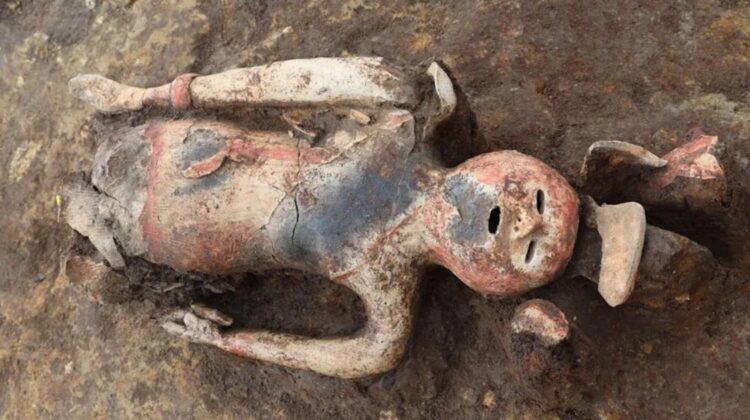
Hair tied in a topknot, red paint on her wrists and a ritual rod in her hand: a clay figure from Japan’s Kofun era may show a female shaman who once guarded a tomb.
A Surprise in the Moat
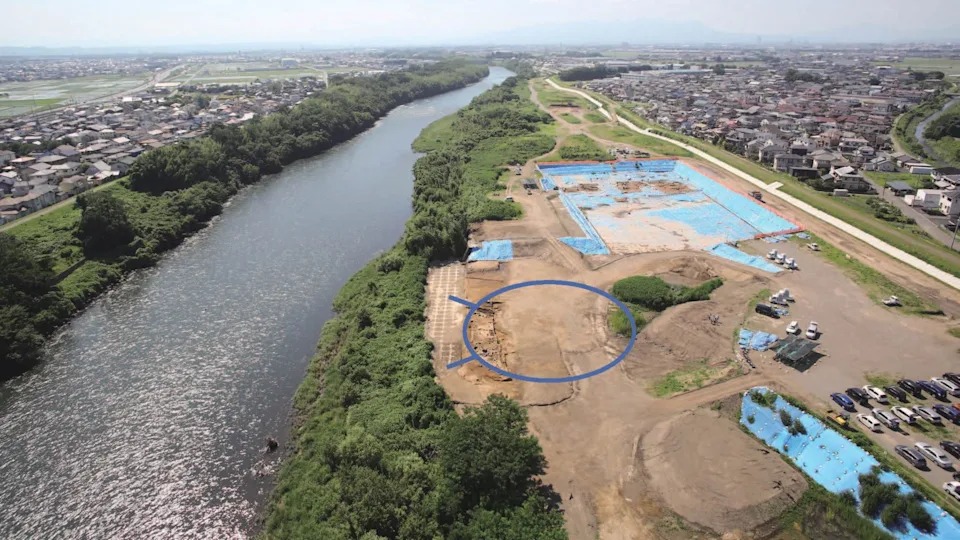
Archaeologists digging at the Nishikaminomiya site in Isesaki, Gunma Prefecture, northwest of Tokyo, have found a haniwa, a hollow clay figure made to stand at a burial mound. The work is part of excavations carried out ahead of a river improvement project along the Tone River, led by the Gunma Archaeological Research Foundation.
The figure came out of the moat around the largest burial mound at the site, known as Tomb No. 1, which measures about 45 meters (145 feet) across. It dates to the second half of the fifth century. Nearly a dozen kofun, as these mounds are called, have been found in the area, dating to the fifth and sixth centuries.
What Is a Haniwa?
Haniwa are unglazed terracotta sculptures that people in Japan placed around kofun, the large burial mounds built during the Kofun period (roughly A.D. 300 to 710). Many were cylinders, but over time makers created houses, horses and human figures. Human-shaped haniwa first appeared in the Kinai region at the start of the fifth century and spread to Gunma toward the end of that century, which makes this one of the earliest human-shaped haniwa known in the prefecture.
A Closer Look at the Figure
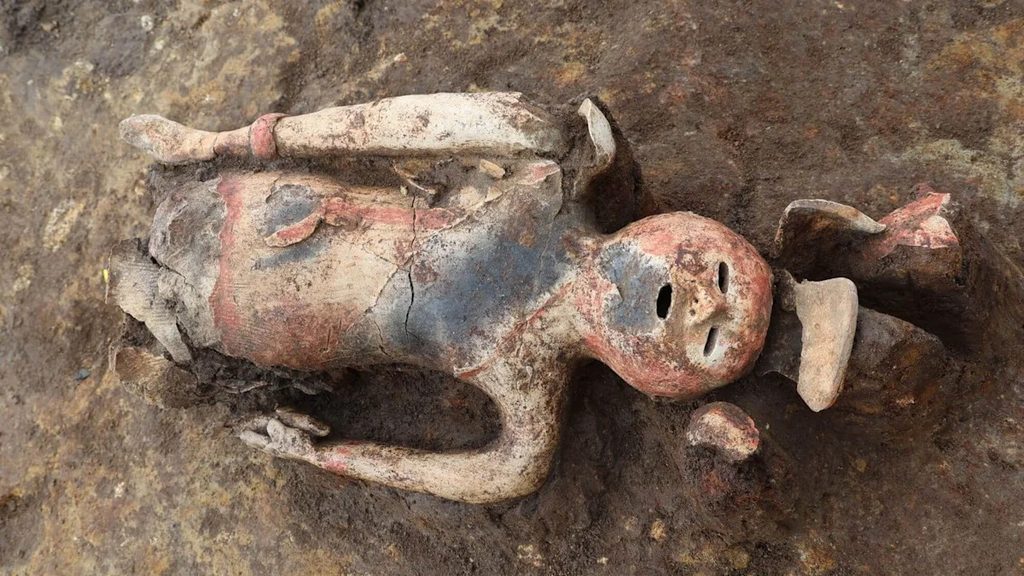
Only the head and torso survive, measuring about 40 centimeters (16 inches), so the full statue would have been much taller. The moat location suggests it once stood on the mound near a boat-shaped sarcophagus and slid down the slope over the centuries.
Its details are striking. The figure wears the kofun shimada, a hairstyle in which the hair is gathered into a topknot, formed here with clay cords. She has clay bracelets with red pigment, a red sash painted across her chest, and carefully molded fingers, and she holds a rod-shaped implement in her left hand. Experts at the Gunma prefectural government noted that the makers took great care, even with features hard to see from a distance.
Who Was the Miko?
Because of the hairstyle and ritual objects, researchers believe the figure shows a miko, often translated as a shrine maiden or female shaman. In Shinto tradition, miko act as intermediaries between the human and spiritual worlds. During the Kofun period, women in this role are thought to have taken part in funeral ceremonies and communication with the divine.
It’s not yet clear whether the sculpture represents a specific person or a symbolic guardian of the tomb. For now, the figure offers a rare glimpse into the religious life of the era.
See the Haniwa for Yourself
The haniwa is on display for a limited time at an exhibition near the site. Many of Japan’s best haniwa collections are in museums across the Kanto region.
Planning a Trip to Japan?
If ancient history is on your itinerary, these are some options worth comparing:
- Travel packages. Look at Japan tour packages, Tokyo day trips and Gunma Prefecture travel guides.
- Transport and passes. Compare Japan Rail Pass options, museum passes and bullet train tickets.
- Travel protection. Review international travel insurance and medical evacuation coverage.
- Learning. Explore online archaeology degrees, Japanese history books and ancient history courses.
- Hands-on. Try pottery classes and museum memberships.
Frequently Asked Questions
What did archaeologists find? A clay haniwa figure from the fifth century that appears to depict a female shaman, or miko, found in a moat around a burial mound in Gunma Prefecture, Japan.
What is a haniwa? It is a hollow clay sculpture placed around burial mounds during the Kofun period and linked to funeral ritual.
Why do experts think it’s a shrine maiden? Its shimada topknot hairstyle, red sash, bracelets and ritual rod are features associated with miko.
How big is the figure? The surviving head and torso are about 40 centimeters (16 inches) tall, but the full statue was much larger.
What is the Kofun period? It is the era of Japanese history lasting from about A.D. 300 to 710, named after the huge burial mounds built then.
Sources: Live Science, The Debrief, Archaeology.wiki, Arkeofili, and the Gunma Prefectural Government, all covering the discovery of a human-shaped haniwa depicting a female shaman at the Nishikaminomiya burial mound in Isesaki, Gunma Prefecture, Japan.
Leave a Reply