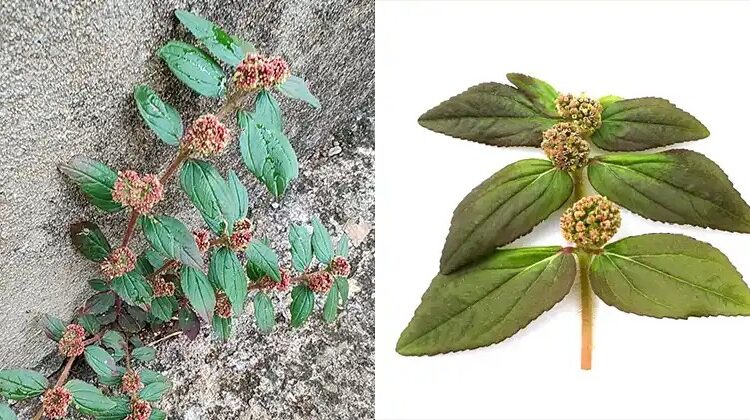
Euphorbia hirta — nicknamed “Asthma-plant,” and also called Australian asthma herb or Queensland asthma weed in some regions — is a small, low-growing herb found throughout warm climates worldwide. It has a genuinely long history in traditional medicine systems, including Ayurveda and traditional Chinese medicine, for coughs, chest congestion, and breathing difficulty. What’s important to understand upfront is the kind of evidence behind that reputation.
What the Research Actually Shows
Multiple pharmacological reviews confirm E. hirta contains active compounds — flavonoids, tannins, saponins, and phenolics — with documented anti-inflammatory, antimicrobial, and antispasmodic effects in laboratory and animal studies. A murine (mouse) asthma model study found measurable anti-inflammatory activity from plant extracts, and toxicity studies in rats found no significant adverse effects even at high doses over 90 days.
Here’s the honest caveat, stated directly in the scientific literature itself: a 2025 phytochemical review concluded that “comprehensive clinical trials are lacking, and toxicological profiles remain underexplored” in humans. In plain terms — the promising results come from cells, animals, and centuries of traditional use, not controlled human clinical trials. That’s a meaningfully different evidence standard than what’s required before something is considered a proven asthma treatment.
Why This Distinction Is Genuinely Important
Asthma isn’t a minor discomfort — it’s a chronic respiratory condition that can escalate to a life-threatening attack within minutes. Standard medical treatment relies on fast-acting rescue bronchodilators (like albuterol inhalers) for acute symptoms and, often, daily controller medications like inhaled corticosteroids for long-term management. No herbal remedy, including this one, should be treated as a substitute for prescribed asthma medication or emergency care during an actual attack.
Traditional use in regions with limited access to modern asthma medication doesn’t establish that a remedy is equally effective or safe as a replacement where proper treatment is available — it reflects, often, a lack of alternatives rather than equivalence.
Seek Emergency Care Immediately If You or Someone Else Experiences
- Severe shortness of breath that doesn’t improve with a rescue inhaler
- Difficulty speaking in full sentences due to breathlessness
- Bluish tint to the lips or face
- Chest that appears to be sucking in with each breath (retractions)
- Confusion, extreme drowsiness, or loss of consciousness
These are signs of a severe asthma attack requiring emergency medical treatment — not a situation where any herbal tea or home remedy is appropriate.
Other Traditional Uses
Beyond respiratory support, E. hirta has traditional use for mild digestive support, minor skin applications, and as a mild diuretic. As with the respiratory claims, these uses are rooted in traditional and preliminary laboratory evidence rather than robust human clinical data.
How to Identify the Plant
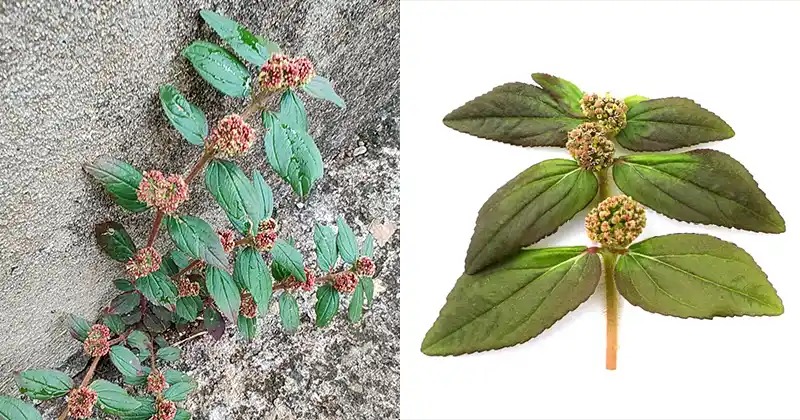
For those interested in it botanically rather than medicinally, E. hirta is recognizable by:
- Low, mat-forming growth habit
- Hairy stems and small oval leaves, often with a reddish-purple tint
- White, milky sap released when the stem or leaves are broken
- Tiny clustered flowers at the leaf joints
Important Safety Precautions
This is the section the original article cut off before completing:
- The milky sap is a genus-wide caution. Many Euphorbia species — not necessarily this one specifically, but the broader genus — produce sap that can irritate skin and eyes on contact, and cause nausea or vomiting if ingested in larger amounts. Wash hands after handling, and avoid contact with eyes.
- Plant identification matters. Several Euphorbia species look similar; misidentifying a more toxic relative as E. hirta is a real risk for anyone foraging rather than buying from a verified herbal supplier.
- Avoid during pregnancy and breastfeeding, given the lack of human safety data in these populations.
- Consult a doctor before use if you take other medications, particularly diabetes or blood pressure medication, given the plant’s documented effects on blood sugar and blood pressure in animal studies.
- This is not a substitute for prescribed asthma treatment. If you have diagnosed asthma, any interest in traditional or complementary remedies should be discussed with your doctor — not used as a replacement for your prescribed management plan.
Frequently Asked Questions
Can Euphorbia hirta replace my asthma inhaler? No — there is no clinical trial evidence supporting it as a replacement for prescribed asthma medication, and it should never be relied on during an actual asthma attack, which requires fast-acting rescue medication or emergency care.
Is Euphorbia hirta safe to use as a general wellness tea? Animal toxicity studies suggest low toxicity at typical doses, but since human clinical safety data is limited, it’s reasonable to check with a doctor first, especially if you’re pregnant, breastfeeding, or taking other medications.
Why is correct plant identification so important with this species? The Euphorbia genus contains species with genuinely irritant or toxic sap, and visual similarities between species make misidentification a real risk for anyone collecting the plant themselves rather than sourcing it from a verified supplier.
Sources: Phytojournal (2025 phytochemical review), Biomedical Research and Therapy, Journal of Ethnopharmacology, and a rat toxicity study published via NCBI/PMC, cited above.
Leave a Reply