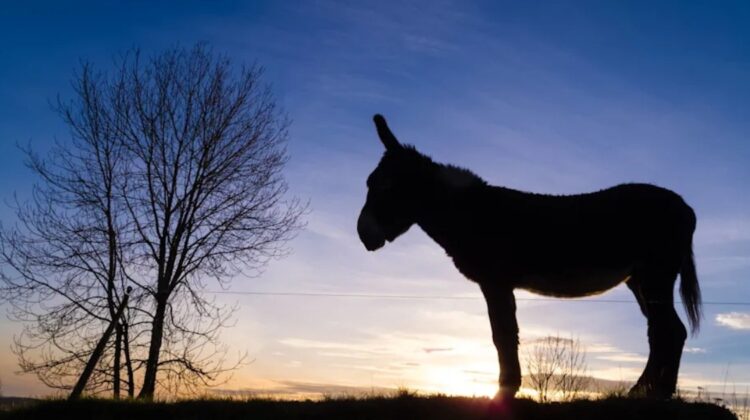
Chalupa the donkey has a routine, and he expects everyone else to keep up with it. Breakfast in the morning, a day spent hanging around the farm with the other animals, and — once it gets dark — a walk back to the pasture for the night. One evening, the human half of that routine dropped the ball. Chalupa was not going to let it slide.
Taking Matters Into His Own Hooves
Rather than wait around in the dark, Chalupa walked straight up to the farmhouse and rang the doorbell — then stood there patiently, waiting for someone to answer. The farm’s TikTok account, DogDaysFarm (@dogdaysfarm5), caught the whole thing on camera, captioning it with the hashtag #smartass, and the internet agreed the label fit.
Commenters had a field day. “Him: ‘Who’s the jack ass now?’ Lol!” one wrote. Another admitted, “The only time I’ll actually answer the door, to be honest.”
Why This Isn’t Actually That Surprising
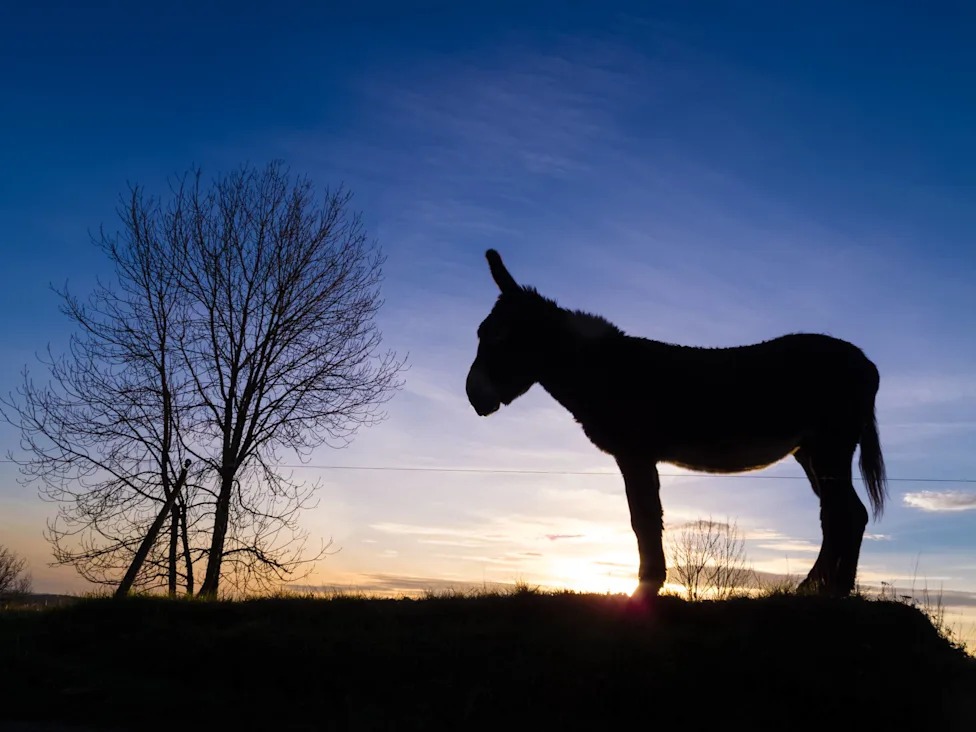
As charming as it looks, Chalupa’s move tracks with what a growing body of research says about donkey cognition — a field that’s gotten far less scientific attention than dog or horse intelligence, largely because donkeys have long been stereotyped as stubborn rather than studied as capable.
A 2019 study published in the Journal of Veterinary Behavior tested 300 genetically evaluated Andalusian donkeys using a nonverbal, human-analogous IQ framework built on thirteen distinct cognitive processes. The researchers found that individual intelligence explained more than 62% of the cognitive variation between donkeys, with a heritable genetic component — meaning some donkeys are measurably smarter than others, in patterns that echo how intelligence varies and is inherited in humans.
Separate cognitive research has found donkeys demonstrate object permanence and both short- and long-term spatial memory — and, according to findings reported in the journal Animal Cognition, can recognize and remember the faces of up to 50 different individuals.
The “Stubborn” Reputation Is Backwards
What often gets read as stubbornness is, according to Britannica’s summary of donkey cognition research, closer to caution. Unlike horses, which tend to flee from unfamiliar or risky situations immediately, donkeys pause to assess a situation before deciding how to respond — a “problem-focused coping style,” as researchers describe it, rather than a refusal to cooperate. That same evaluative approach shows up in how donkeys solve physical problems: if one method of freeing themselves from a stuck position doesn’t work, they’ll methodically try another rather than repeating a failed attempt.
What Probably Happened With Chalupa
The most likely explanation, according to behavior researchers, isn’t that Chalupa understands doorbells in the abstract — it’s associative learning combined with genuine memory: he’s learned that a doorbell brings a human to the door, and he knows which door leads to the human responsible for his nightly routine. Given his strong preference for a consistent schedule — well documented in donkeys generally — ringing the bell was, in a very real sense, the logical next step once the obvious method (standing around and braying) came to mind as an option.
The Donkey Sanctuary notes that disruptions to a donkey’s normal routine can genuinely affect their behavior and stress levels, which is part of why organizations that care for donkeys recommend introducing any changes gradually. Chalupa, in his own way, made sure that particular disruption didn’t last long.
Frequently Asked Questions
Are donkeys actually smarter than horses? Direct comparisons are difficult since the species solve problems differently, but research has found donkeys and horses can be slower than mules on certain spatial tasks, while donkeys show particularly strong long-term memory and social recognition abilities.
Why do donkeys have a reputation for being stubborn? Researchers now generally attribute this to a cautious, evaluative response style — donkeys often pause to assess risk before acting, rather than reacting instantly like horses tend to, which can look like refusal but is actually a different decision-making process.
Can donkeys really learn to use objects like doorbells or latches intentionally? Yes, within the bounds of associative learning — donkeys have been documented working out solutions like opening gates or moving objects to reach food or water, consistent with the kind of behavior Chalupa displayed.
Sources: Journal of Veterinary Behavior (Navas González et al., 2019), Britannica, Animal Cognition (via Hands for Healing Equine), and The Donkey Sanctuary, cited above.
Leave a Reply