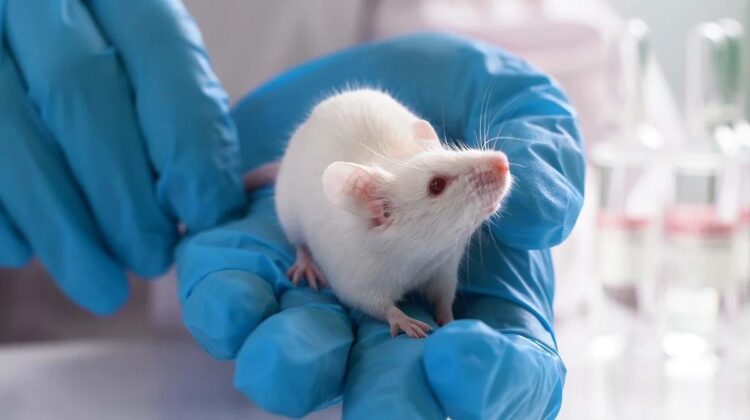
A mouse brain is not supposed to contain human cells. In a study published in Nature on 16 September 2026, a Stanford Medicine team reported a mouse brain that largely does — and the human tissue inside it didn’t just survive, it wired itself into the rest of the animal’s nervous system.
Mice Engineered Without Their Own Cortex
The cerebral cortex is the brain’s outer layer, the tissue most associated with memory, attention and higher-level thinking. The Stanford team, led by Professor Sergiu Pasca, genetically engineered mice so that almost all of that layer — along with most of the hippocampus — never formed at all. The researchers call these animals “apallial” mice.
That left a large, fluid-filled cavity where a mouse cortex would normally sit. The researchers then filled it.
Where the Human Tissue Came From
The transplanted material was not a brain grown in a jar. Researchers reprogrammed ordinary human cells into stem cells, then coaxed them into small three-dimensional clusters called cortical organoids — self-organising collections of living, connected cells that reproduce some of the architecture of the human cortex.
The team surgically placed these organoids into the brain cavities of two-day-old apallial mice. Over the following weeks and months the human cells divided and expanded to fill much of the available space, matured, and formed working connections with the host brain and with spinal circuits.
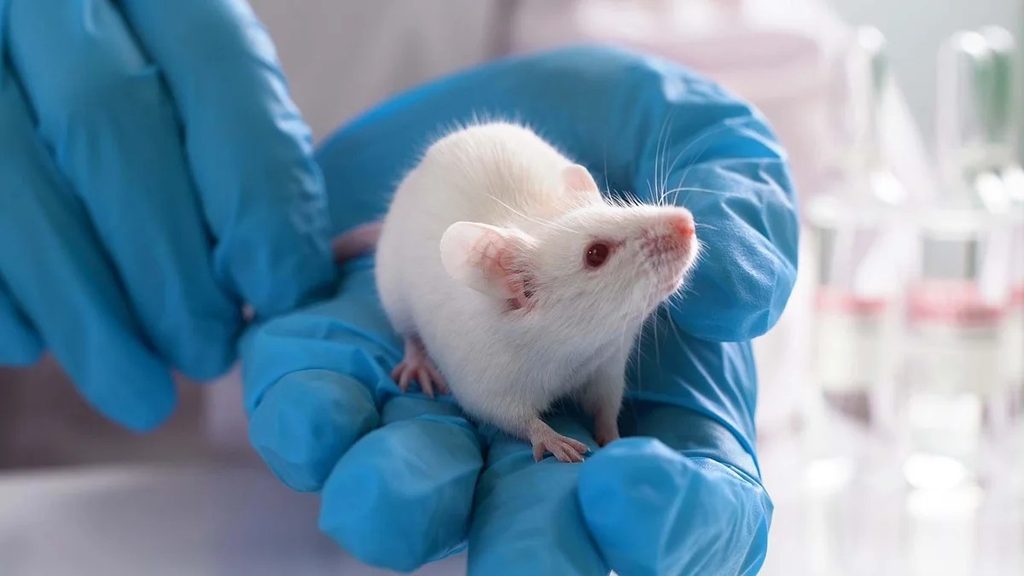
The resulting animals have a name of their own: xenocortical mice.
Why Empty Space Was the Whole Point
This wasn’t the first attempt. In 2022 the same group transplanted human cortical organoids into newborn rats, where the human neurons matured, integrated, and responded to sensory input from the animals’ whiskers. The obstacle was timing: human neurons develop far more slowly than rodent ones, and the two systems ended up competing for the same territory.
Clearing the cortex removed that competition. Given room and time, the human cells behaved more like human cells — including the appearance of cells resembling von Economo neurons, a type found in human and other primate brains but not in mice. Asked why the mouse brain encourages this, Pasca was candid: “We do not yet know,” he said, calling it one of the most interesting questions the study raises.
Not “Mice That Think Like Humans”
This is the line the researchers and outside commentators have been most careful about, and it deserves the same care here.
The engineered mice are not enhanced. In behavioural testing roughly six months after surgery, the implanted animals performed broadly like ordinary laboratory mice — better than apallial mice missing their cortex entirely, which struggle badly with memory tasks, but with no sign of anything beyond normal mouse ability.
Independent bioethicist Dr Sarah Chan of the University of Edinburgh, speaking to BBC News, said there was no indication the work had produced mice that think like humans, while noting that it does raise a real question about what changing animal cognition means for how laboratory animals should be treated. Neuroscientist Professor James Ainge of St Andrews University made a related point: the ethical weight of raising living human brain tissue inside an animal may keep this model confined to a small number of labs and a narrow set of questions. The Stanford team says the animals are bred and housed under strict welfare rules, and that the work underwent independent ethical review.
What It Might Actually Be Good For
Some human brain disorders simply cannot be modelled in a mouse, because mice don’t develop them. That gap is part of why psychiatric drug candidates so often perform well in animals and then fail in human trials.
A model carrying patient-derived human cortical tissue inside a living, connected nervous system could narrow that gap for conditions such as epilepsy, autism and cerebral palsy. There is precedent in the group’s earlier work: their 2022 rat experiments used tissue from patients with Timothy syndrome, helped pinpoint the molecular defect behind it, and led to a candidate drug now being prepared for early safety trials.
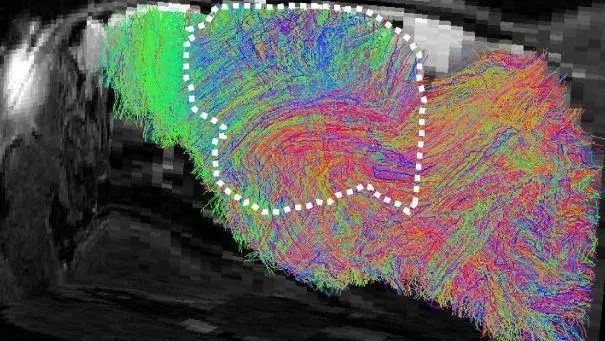
Expectations should still be set carefully. This is a research tool, not a treatment, and what grows is a partial, imperfect cortex — scans of these brains look disorganised next to the neatly layered real thing. What it offers is a new place to look, which in this field has long been the scarcest resource of all.
Frequently Asked Questions
Do these mice have human thoughts or human consciousness? No. The researchers found no enhancement of ability, and independent ethicists reviewing the work have said there is no indication the mice think like humans. The human tissue provides cortical function for a mouse brain, not human cognition.
Was a whole human brain grown inside a mouse? No. The transplanted organoids are small clusters of living human cells that reproduce some features of the cortex. They are not whole brains, and the tissue that grows is structurally messier than a real human cortex.
Is this legal and ethically reviewed? The study was published in Nature after independent ethical scrutiny, and the animals are bred and kept under established welfare guidelines. Several neuroscientists have nonetheless said the approach raises questions serious enough to limit how widely it is used.
Sources: Stanford Medicine news release, 16 September 2026; Kaganovsky, K. et al., “Developmental xenocortication using human-derived organoids in mice,” Nature, 2026; ScienceAlert. Quotes from Dr Sarah Chan and Prof James Ainge were originally reported by BBC News.
Leave a Reply