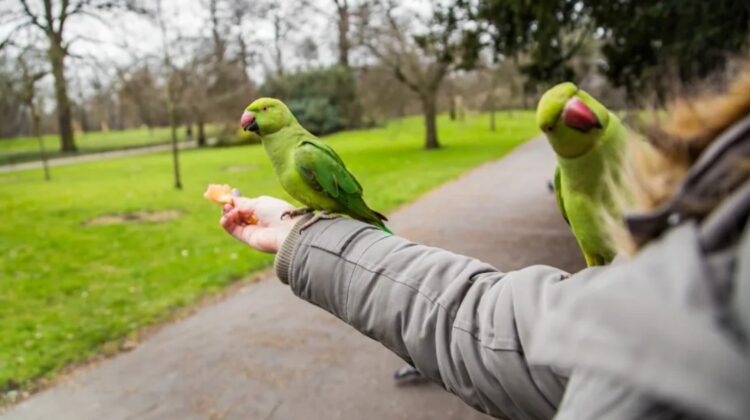
San Francisco is known for its hills, its bridges, and — less famously — a noisy flock of wild parrots that has nothing to do with the city’s native wildlife at all.
An Unlikely Flock, Decades in the Making
The birds are cherry-headed conures, a species also known as red-masked parakeets. They aren’t native to California; the flock descends from escaped or released pet birds and has built a self-sustaining feral population in the city over several decades, one well-documented enough to have its own 2003 documentary, The Wild Parrots of Telegraph Hill.
A San Francisco resident who posts on TikTok as @shirleybirdy lives in a high-rise that the flock regularly visits. Over time she began feeding the birds and giving them a safe place to land and rest on her balcony — and the conures, in turn, grew comfortable enough to treat her home as a regular stop.
The Morning the Babies Showed Up
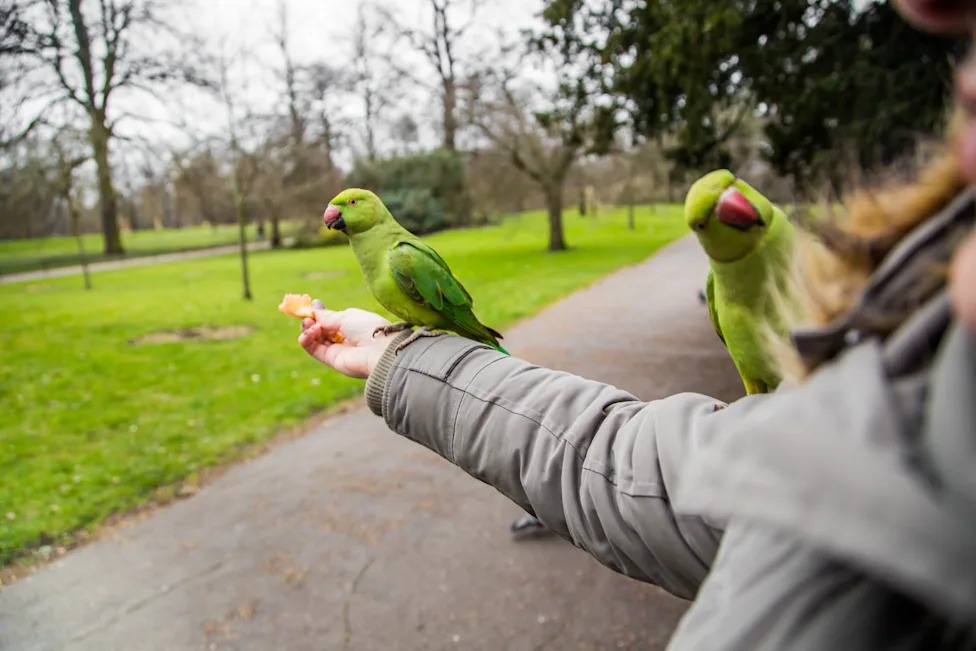
One morning this month, several adult conures arrived with three young birds in tow — newly fledged hatchlings from the flock. “They brought me three new babies this morning — I cried,” she wrote in the video’s caption.
A follow-up clip showed two of the juveniles exploring her balcony, described as curious and full of energy. The post quickly drew attention online, with many commenters saying they hadn’t known San Francisco had a wild parrot population at all.
Why This Isn’t the Same as Taming a Wild Animal
It’s worth being precise about what did and didn’t happen here. The parrots were never captured, caged, or trained — they come and go freely, and the relationship is closer to a standing invitation than domestication. Wildlife researchers generally treat that distinction as important: comfort around a person is not the same thing as dependence on one.
Feeding wild animals isn’t automatically risk-free. A 2023 review in Conservation Science and Practice found that feeding wildlife can backfire when it’s done with inappropriate food, in excessive amounts, or in ways that cause animals to cluster in unsafe locations or grow reliant on humans for survival. None of that appears to describe this case — the conures remain a self-sufficient wild flock that simply has one reliable, low-key stop on its route — but it’s the reason wildlife groups generally recommend feeding responsibly or not at all.
What the Behavior Might Mean
Whether the adult birds were “introducing” the babies on purpose, or simply brought them along to a familiar, food-rich perch, isn’t something researchers can say with certainty from a single event. Parrots are highly social, and flock behavior around trusted locations and trusted people is well documented — but attributing intent, like showing off offspring, goes beyond what the footage alone can support.
What’s not in question is the response it got. The clip resonated with viewers well beyond the Bay Area’s existing wild-parrot fan base, many of whom said it was their first time hearing that a feral parrot population lives in San Francisco at all.
Frequently Asked Questions
Are San Francisco’s wild parrots a native species? No. Cherry-headed conures are native to South America. San Francisco’s population descends from escaped or released pet birds and has sustained itself in the wild for decades.
Is it safe or advisable to feed wild parrots like this? Feeding wildlife carries real risks if done carelessly — wrong food types, overfeeding, or crowding animals into unsafe areas can cause harm. Occasional, responsible feeding that doesn’t make animals dependent is generally considered lower-risk, but wildlife groups typically recommend caution.
Where can I learn more about San Francisco’s wild parrot flock? The 2003 documentary The Wild Parrots of Telegraph Hill is widely credited with first introducing the flock to a broad audience and remains a good starting point.
Sources: TikTok (@shirleybirdy); Yahoo Creators / PawsMint; Conservation Science and Practice.
Leave a Reply