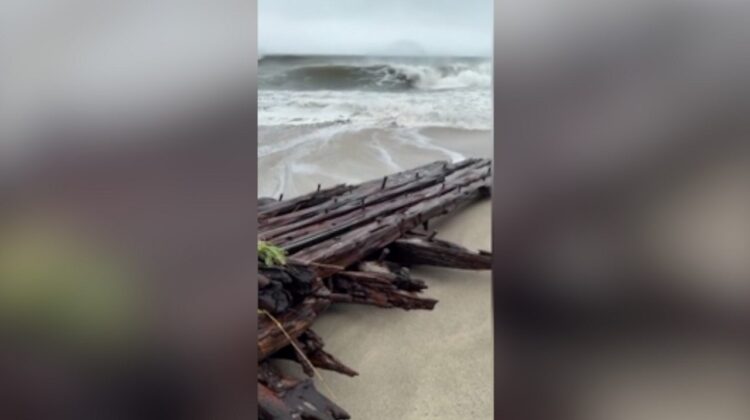
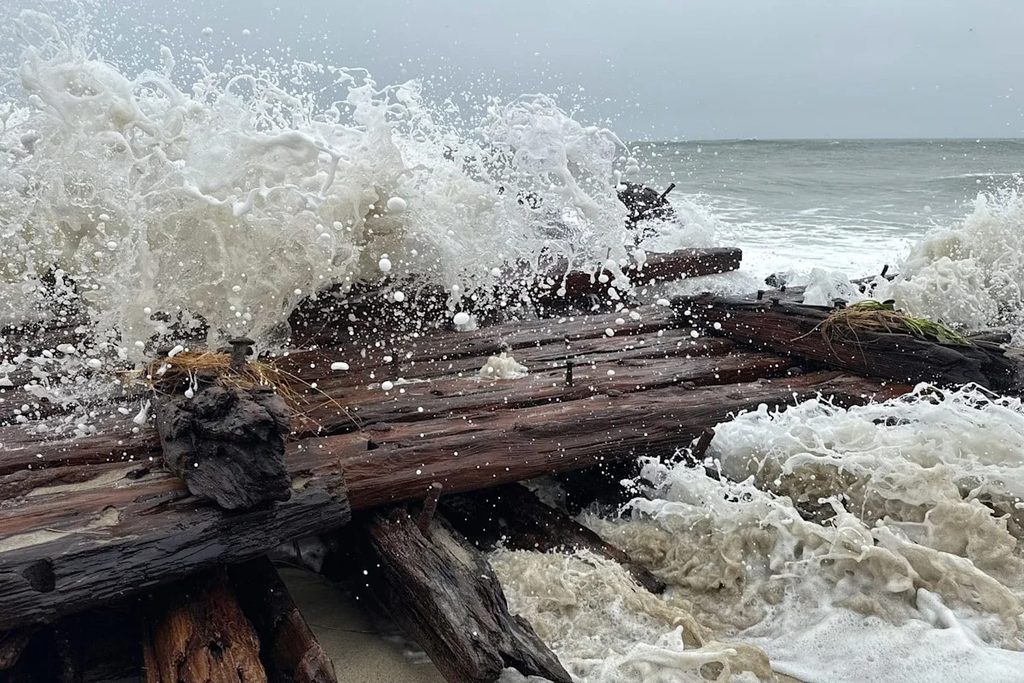
A powerful nor’easter battering the East Coast has stripped sand from Nantucket’s south shore and exposed wooden timbers that may belong to a schooner lost more than 140 years ago.
A Spotted Fragment
Jason Graziadei, editor-in-chief of the Nantucket Current, noticed the weathered wood on the island’s south shore on Saturday and posted a video of it online. He believes the pieces most likely come from the Warren Sawyer, a wooden schooner that wrecked near Miacomet Beach in 1884.
He was careful not to overstate it. Speaking to NBC News, he said it was possible the timbers come from a different wreck, but that the location and appearance pointed toward the Warren Sawyer. As far as he knew, it was the first time a piece of the wreck had resurfaced since early 2023.
The Ship Behind the Timbers
The Warren Sawyer was a three-masted schooner traveling from New Orleans to Boston when it ran aground on December 22, 1884. Its cargo included 1,115 bales of cotton and roughly 28 tons of scrap metal. The Surfside Life-Saving Station rescued the crew, and islanders spent the following weeks salvaging what they could before the vessel broke apart in a storm.
Not the First Time
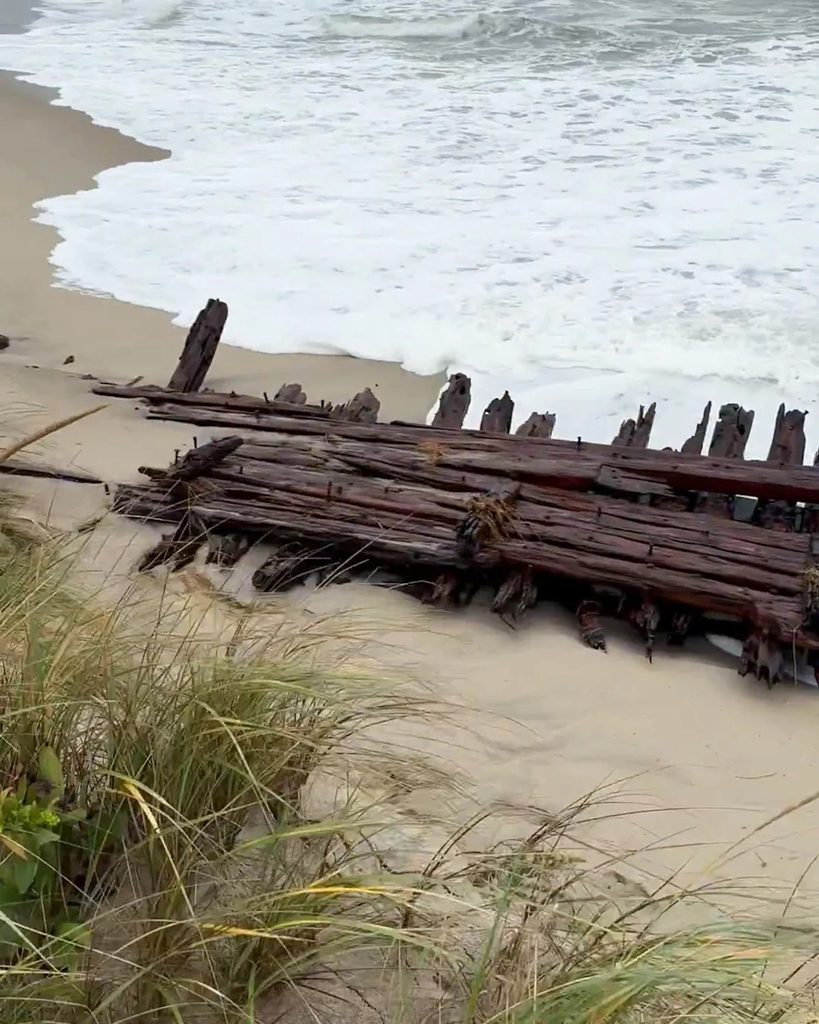
Fragments believed to belong to the same ship first appeared in December 2022, after erosion exposed hull remains on the south shore. A second section turned up in early 2023 about half a mile to the west. Researchers from the Massachusetts Board of Underwater Archaeological Resources reviewed archival, photographic, historical, and archaeological evidence and concluded in a 2023 report that the wreckage was most likely the Warren Sawyer. State archaeologist David Robinson was candid about the limits of that conclusion: the evidence pointed toward the schooner, but nothing proved it beyond doubt.
Charles Allard of Egan Maritime’s Shipwreck and Lifesaving Museum has noted that the site has a habit of revealing itself roughly every two decades, as shifting sand covers and uncovers the timbers.
Experts Urge Caution
Jascin N. Leonardo Finger, deputy director of the Maria Mitchell Association, which runs a natural history museum on the island, said the newly exposed remnants may well be from the Warren Sawyer but that more investigation is needed before anyone can say so with confidence. The Massachusetts Board of Underwater Archaeological Resources and the Egan Maritime Institute did not respond to requests for comment on the latest find.
Leonardo Finger also told The New York Times that shipwrecks near Nantucket were common in the Warren Sawyer’s era, and that islanders routinely scavenged material that washed ashore from wrecks. It is one reason attributing any single fragment to a specific ship is difficult.
Why Nantucket Keeps Giving Up Its Wrecks
Nantucket earned its nickname “Graveyard of the Atlantic” for good reason. Local historians count hundreds of recorded wrecks in the surrounding waters, many of them along shallow, shifting shoals that trapped ships during storms. Because the island’s beaches constantly gain and lose sand, powerful weather systems like nor’easters can expose long-buried timbers within hours, and just as quickly cover them again.
When earlier fragments surfaced, Egan Maritime and state officials asked visitors to treat the site as if it were in a museum: look and photograph, but do not walk on, move, or dig up the remains.
Frequently Asked Questions
What was the Warren Sawyer?
It was a three-masted wooden schooner that ran aground on Nantucket’s south shore on December 22, 1884, while carrying cotton and scrap metal from New Orleans to Boston. Its crew was rescued.
Has it been confirmed that these timbers belong to that ship?
No. Researchers have said earlier fragments are most likely from the Warren Sawyer, but no one has proven it definitively, and experts say the newest pieces need further study.
Why do shipwrecks reappear after storms?
Strong wave action and storm surge move large amounts of sand, which can strip away the layer covering old wrecks and expose the wood beneath. The same forces often rebury the remains again soon after.
Can you take pieces from a shipwreck you find on the beach?
In Massachusetts, historic wrecks are protected under state law, and discoveries should be reported to the Massachusetts Board of Underwater Archaeological Resources rather than moved or removed.
Sources: NBC News and The New York Times (reporting on the latest discovery); Nantucket Current; Egan Maritime Institute; The Boston Globe; Maria Mitchell Association.
Leave a Reply