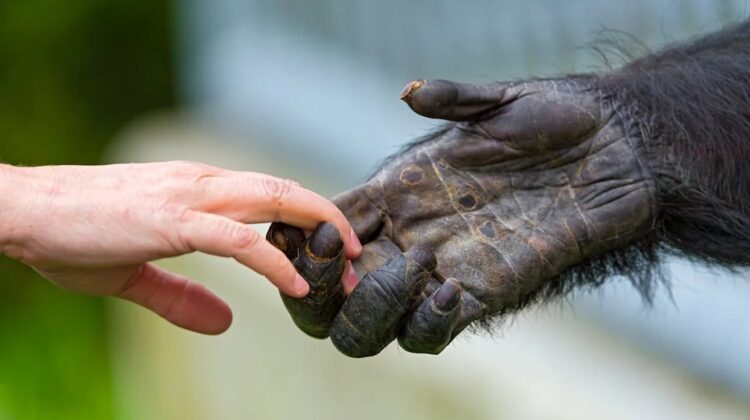
In the early 20th Century, long before science fiction popularised fears of genetic experimentation, one Soviet biologist pursued a deeply controversial goal that blurred the line between science and ethics: the creation of a human-ape hybrid.
His name was Ilia Ivanov, a Russian zoologist whose work in artificial insemination had already earned him scientific recognition for breeding horses and hybridising various animal species. But Ivanov’s ambitions extended far beyond livestock.
Convinced that humans and great apes shared a close enough biological relationship, he became determined to test whether a cross between the two was possible.
By 1910, Ivanov had publicly suggested that a human-ape hybrid could be scientifically achievable — a claim that would later become one of the most disturbing scientific pursuits of the Soviet era.
Ivanov had built a reputation by successfully crossing animals including zebras with donkeys and cattle with bison. These experiments convinced him that hybridisation could potentially be pushed further.
In the 1920s, with backing from Soviet authorities, Ivanov travelled to French Guinea in West Africa, where he sought chimpanzees for his experiments.
His initial plan involved inseminating female chimpanzees with human sperm.
Working in colonial Guinea, Ivanov captured chimpanzees and conducted a series of experiments, including attempts to impregnate female chimps using human reproductive material. None succeeded.
At one stage, historical accounts suggest Ivanov even considered inseminating women with chimpanzee sperm without informed consent — a proposal so ethically horrifying that even Soviet officials reportedly rejected it.
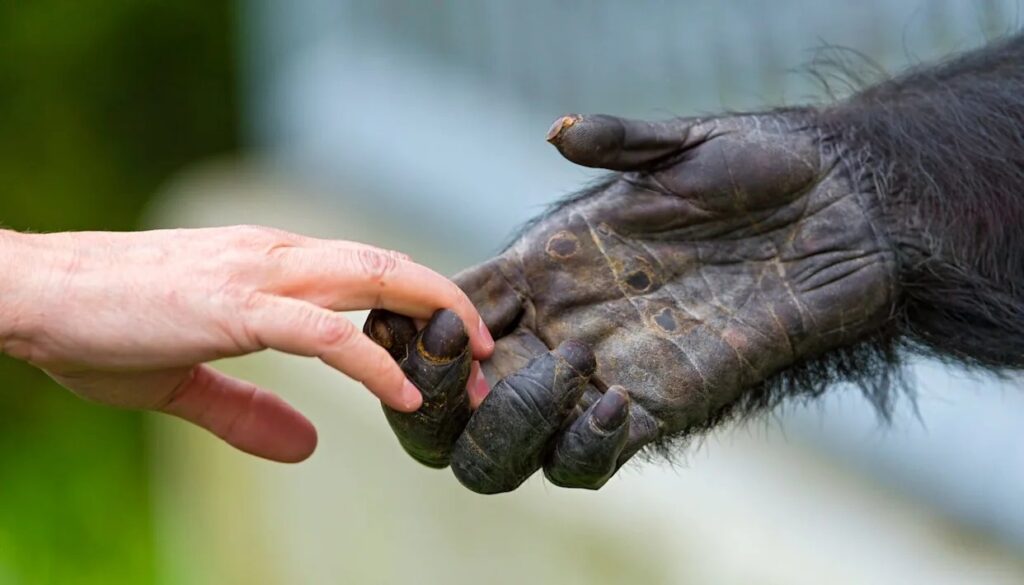
Despite these failures, Ivanov persisted.
After returning to the Soviet Union, he established a primate research centre in Abkhazia, then part of the Soviet republic of Georgia. There, surviving chimpanzees imported from Africa became the focus of further experiments.
He reportedly sought female volunteers for insemination with chimp sperm, though no documented pregnancies occurred.
The fundamental scientific barrier was one Ivanov could not overcome: humans and chimpanzees are genetically incompatible for reproduction.
Chimpanzees possess 48 chromosomes, while humans have 46. Although humans and chimpanzees share a common evolutionary ancestor, millions of years of divergence created biological differences too great for viable hybridisation through such methods.
Modern genetics confirms that natural reproduction between humans and chimpanzees is not biologically feasible.
By the early 1930s, Ivanov’s experiments had produced no results, while political support evaporated amid growing criticism, questionable ethics, and wider Soviet political purges.
In 1930, Ivanov was arrested during Stalin’s crackdown and exiled to Kazakhstan, where he died two years later.
His legacy remains one of scientific obsession overshadowed by profound ethical failure.
Historians have also noted that Ivanov’s work existed within a broader political and ideological climate that mixed atheism, eugenics, and deeply troubling racial theories. His experiments were not merely about biology — they reflected an era when science was sometimes weaponised in pursuit of ideology.
Today, Ivanov’s story stands as a chilling reminder that scientific curiosity without ethical boundaries can lead to dangerous territory.
Ilia Ivanov’s experiments never produced the human-ape hybrid he imagined, but they left behind something equally powerful: a warning. His work exposed how easily science can drift from discovery into moral catastrophe when ambition overrides humanity. In the end, biology itself imposed the limits Ivanov ignored — proving that not every question science can ask should be answered at any cost.
Leave a Reply