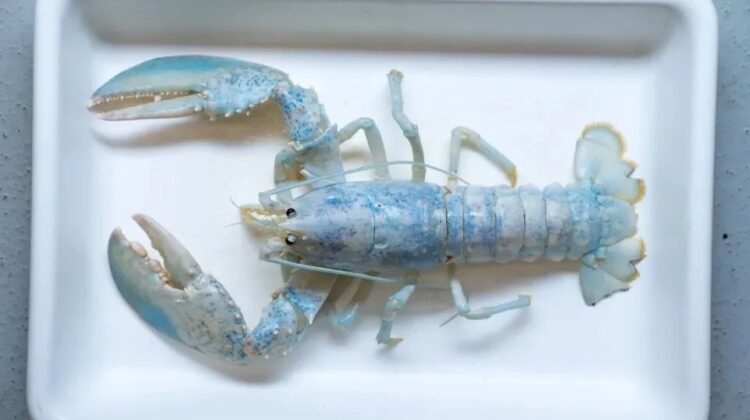
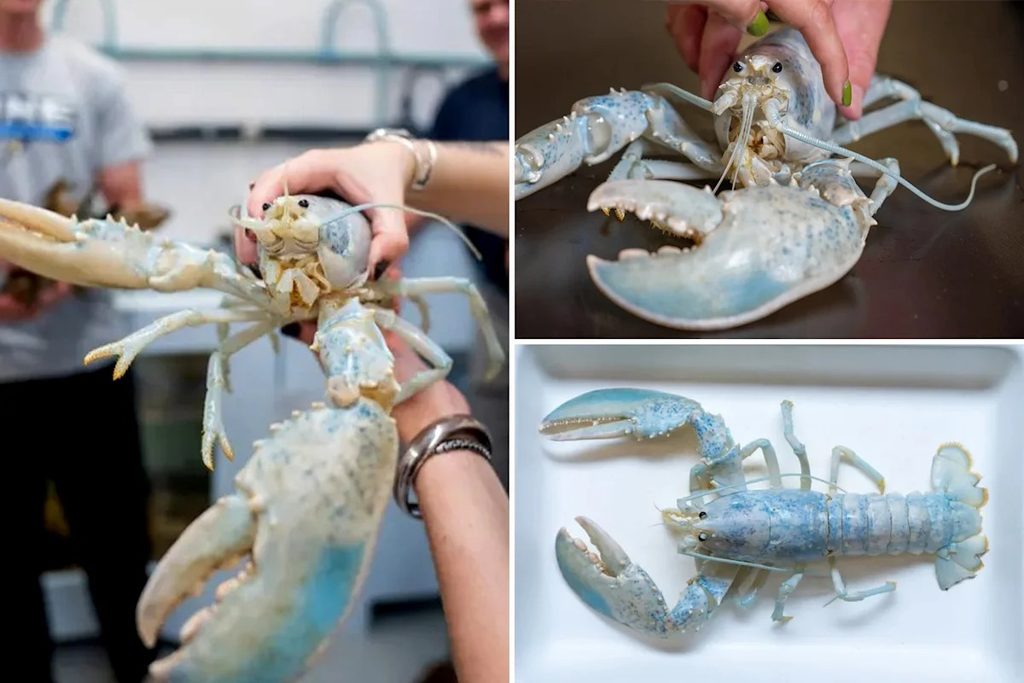
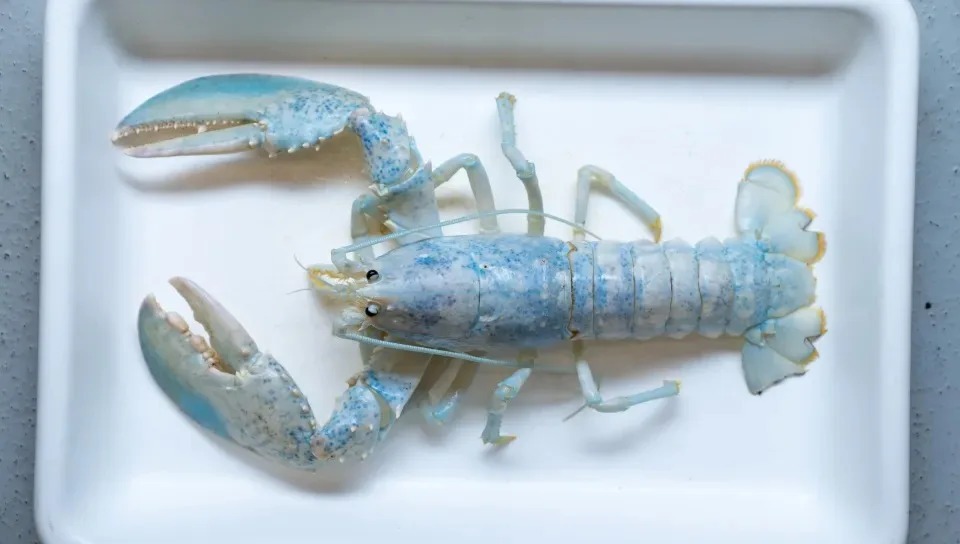
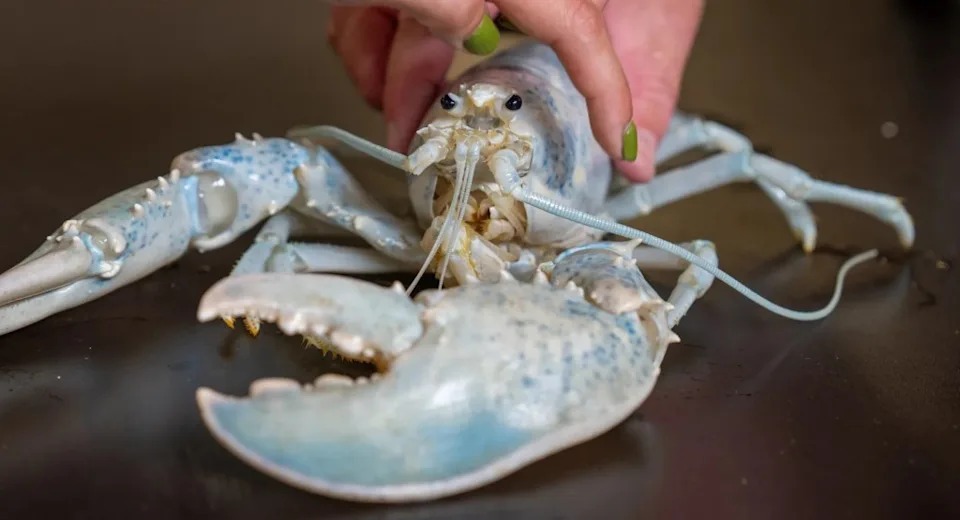
A rare, nearly all-white lobster has moved into a research lab in Biddeford, Maine — and scientists say the odds of finding one like him in the wild are about one in 100 million.
The lobster, donated by the Maine State Aquarium in Boothbay, now lives at the University of New England’s Arthur P. Girard Marine Science Center, according to the University of New England. Researchers named him Casper.
Why “Ghost” Lobsters Are So Rare
Most lobsters are a mottled greenish-brown, a color that helps them blend into the seafloor. The bright red most people associate with lobsters only shows up after cooking: heat unwinds a protein called crustacyanin, which normally holds the color blue, releasing a red pigment underneath, IFLScience explained.
Casper skips that transformation entirely. His near-total lack of pigment means he stays pale even if boiled — not that anyone at UNE has any intention of doing that. His coloring places him at the extreme end of a spectrum of rare lobster hues that also includes blue (roughly 1 in 2 million), yellow (about 1 in 3 million), calico (around 1 in 30 million), and split-colored lobsters (about 1 in 50 million), according to figures UNE has cited in past rare-lobster arrivals, per the Bangor Daily News.
A Growing Colony Of Colorful Research Subjects
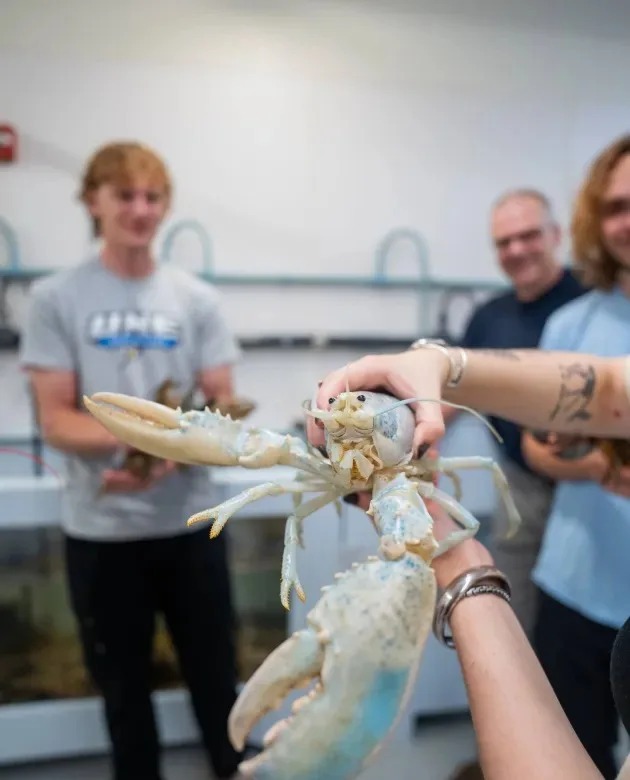
Casper isn’t the first unusually colored lobster to end up at UNE. The university’s collection has grown steadily since 2021, when a yellow lobster named Banana, missing both claws, became its first local celebrity crustacean. Since then, the lab has taken in lobsters named Peaches, Currant, and Fig, among others, in shades of orange, blue, purple, and calico.
That growing collection became the basis for a dedicated genetics study launched in 2024 under Markus Frederich, a professor of marine sciences who directs UNE’s Invertebrate Physiology Lab. One of the study’s early subjects, an orange lobster named Peaches, produced offspring with a completely ordinary reddish-brown color — a result that gave researchers a rare chance to examine how color-related traits get passed down, or don’t, from one generation to the next.
Thousands Of Genes, One Open Question
Using genetic material pulled from juvenile lobsters, Frederich’s team has since analyzed more than 15,000 genes connected to lobster coloration, looking for the molecular mechanisms behind why some lobsters develop these rare hues in the first place, UNE said in a research announcement.
Frederich said the appeal of studying animals like Casper goes beyond their novelty. “For us, they provide an amazing opportunity to ask fundamental biological questions,” he said, adding that the work has been especially rewarding given how many undergraduate students are involved in the research.
Importantly, none of the lobsters are harmed in the process. The lab relies on non-invasive sampling methods to collect genetic material, meaning animals like Casper live out their time at the Marine Science Center as research residents rather than test subjects in any invasive sense.
Frequently Asked Questions
What makes Casper’s coloring so rare?
Casper lacks the pigment-producing proteins that give lobsters their typical greenish-brown color. Scientists estimate this level of pigment loss occurs in only about 1 in 100 million lobsters.
Where did Casper come from?
He was donated to the University of New England by the Maine State Aquarium in Boothbay, Maine.
Is Casper actually albino?
Researchers describe “ghost” lobsters like Casper as having a near-total absence of pigment, consistent with albinism, though some pale-colored lobsters have partial pigment loss known as leucism.
Will Casper be harmed during the research?
No. UNE’s research team uses non-invasive genetic sampling methods, meaning the lobsters in the study, including Casper, aren’t harmed as part of the research.
What is the study trying to figure out?
Researchers are trying to identify the genetic and molecular mechanisms behind rare lobster shell colors, using genetic samples from Casper and other unusually colored lobsters in UNE’s collection.
Are other rare-colored lobsters part of this research?
Yes. UNE’s collection includes lobsters with orange, blue, yellow, purple, calico, and split-colored shells, several of which are part of the same ongoing genetics study.
Sources: University of New England, Fox Weather, IFLScience, and Bangor Daily News.
Leave a Reply