
More than 100 international scientists have issued what they’re calling their starkest warning yet about the state of the planet’s oceans, describing a set of interconnected, long-term changes the world is largely unprepared to face.
Four Decades of Data, One Alarming Picture
The tenth Copernicus Ocean State Report, released by Mercator Ocean International, draws on more than 40 years of satellite, buoy, and sensor data to assess the health of the world’s oceans. Pierre Bahurel, the organization’s Director General, summarized the report’s core message: “The ocean is transforming before our eyes: warming, rising seas and ecosystem degradation are interconnected signs of significant and long-term change.”
Compounding the long-term trends identified in the report, an intense El Niño event, a natural climate pattern marked by warmer-than-average water across the equatorial Pacific, is on track to become the strongest on record, adding further pressure to already stressed ocean systems.
Record Heat, Record Speed
The world’s oceans absorb roughly 90% of the excess heat generated by human fossil fuel use, and that warming has accelerated sharply. The report found the rate of ocean warming has doubled over the past two decades, with sea surface temperatures hitting record highs in 2023, 2024, and again in 2026.
Last year alone, the oceans absorbed an additional 23 zettajoules of heat, a ninth consecutive annual record. For scale, that’s roughly equivalent to the energy of 12 Hiroshima-scale bombs detonating every second for a full year, or about 40 times the total energy the world consumed in 2025.

The Ripple Effects
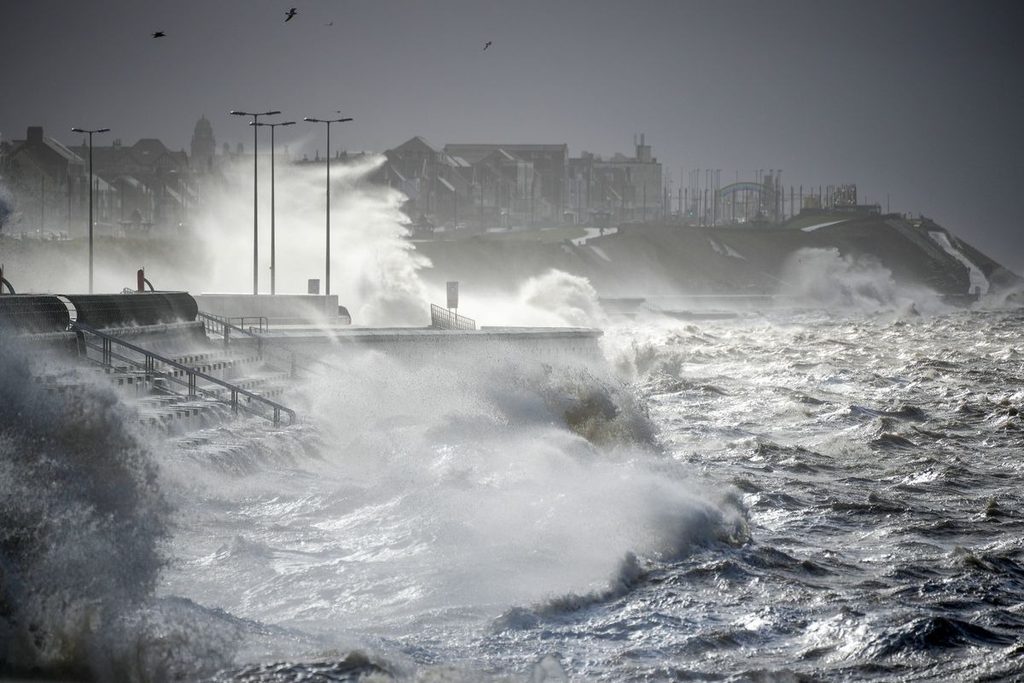
That accumulated heat drives a cascade of consequences: more intense marine heatwaves, stronger storms, stressed marine ecosystems, and accelerating sea level rise, both from melting ice and from the simple physical expansion of warmer water.
Global average sea levels have climbed by roughly 3.8 millimeters a year since 1999, totaling nearly four inches overall, with the pace accelerating since 2012. Hundreds of millions of people living in coastal regions worldwide are directly exposed to that rise.
Ocean acidity has also increased by around 17% since 1985, as the ocean absorbs growing volumes of carbon pollution. Sometimes called “climate change’s equally evil twin,” acidification makes it harder for organisms like oysters, lobsters, and corals to build and maintain their shells and skeletons.
Europe Under “Intense Pressure”
Some regions are experiencing disproportionate stress. Karina von Schuckmann, a report author and senior advisor at Mercator Ocean International, said European seas in particular are under “intense pressure.”
The Mediterranean and Black Seas both saw record-breaking marine heatwaves in 2024, with some events lasting more than 30 days and pushing water temperatures as much as 4.6°C above average. “These are not isolated hot spells; they are occurring against a backdrop of sustained ocean warming that is changing the conditions marine ecosystems experience,” said Blanca Fernández-Álvarez, a report author and researcher at The Mediterranean Institute for Advanced Studies.
When Ocean Extremes Hit Land
The report connects these broader trends to tangible, human impacts. Storm Louis in 2024 brought 26-foot waves to parts of Spain’s coastline, causing one death, widespread power outages, and significant infrastructure damage.
That same year, prolonged, intense winds over Bothnian Bay, between Sweden and Finland, pushed so much water out of the bay that sea level there dropped by 60 inches, forcing ferry operations to halt for 18 hours.
The Poles Are Changing Fastest
Some of the most dramatic shifts are unfolding in the rapidly warming Arctic, where sea surface temperatures have risen by about 4.2°C over the past four decades. Monthly average Arctic sea ice coverage has shrunk by roughly 190,000 square miles per decade between 1979 and 2025, equivalent to losing an area the size of Spain every ten years.
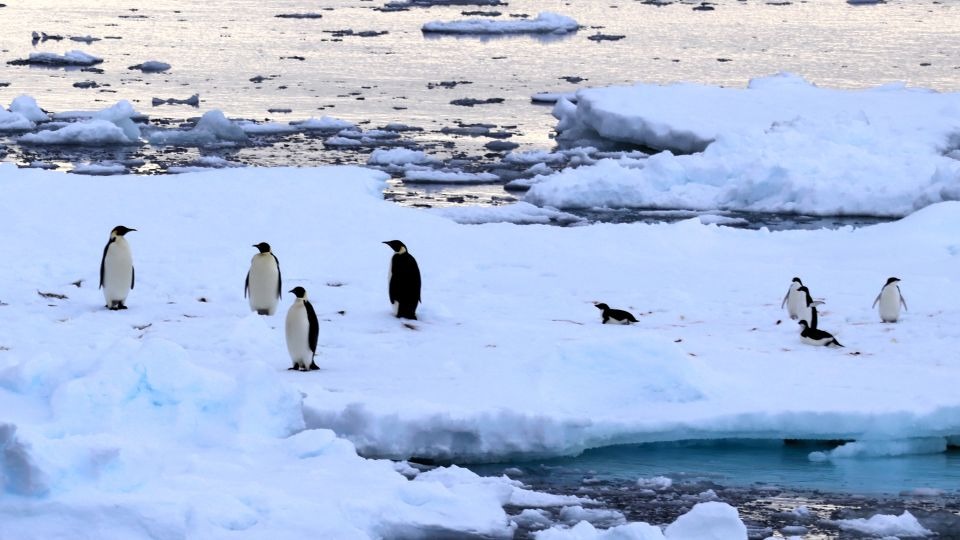
At the opposite pole, record-low Antarctic sea ice in 2022 coincided with the first recorded mass breeding failure among Emperor penguins, which the report describes as a sign that climate change is already reshaping habitat for ice-dependent species.
Small Island States on the Front Line
The report singles out small developing island states as among the most exposed to these shifts, facing combined pressure from sea level rise, intensifying cyclones, and storm surge, often with the fewest resources to adapt.
Frequently Asked Questions
What is the Copernicus Ocean State Report?
It’s an annual scientific assessment produced by the Copernicus Marine Service, implemented by Mercator Ocean International, drawing on decades of satellite and in-situ ocean data to track long-term changes in ocean temperature, sea level, acidity, and ecosystem health.
Why does ocean warming matter beyond the oceans themselves?
Oceans absorb the vast majority of excess heat from human greenhouse gas emissions, acting as a buffer for the broader climate system. As that capacity is pushed further, the effects surface as stronger storms, rising seas, and disrupted marine ecosystems that ripple into coastal economies and food systems.
What is ocean acidification, and why is it dangerous?
It’s a drop in ocean pH caused by absorbed carbon dioxide, which makes it harder for shell- and skeleton-building marine organisms, such as corals, oysters, and lobsters, to survive and reproduce, with knock-on effects throughout marine food webs.
Are small island nations more vulnerable to these changes?
Yes. Their geography and limited land area leave them especially exposed to sea level rise and intensifying storms, while many also have fewer financial and infrastructure resources to adapt compared to larger coastal nations.
Sources: CNN, citing the 10th Copernicus Ocean State Report from Mercator Ocean International, Pierre Bahurel, Karina von Schuckmann, and Blanca Fernández-Álvarez.
Leave a Reply