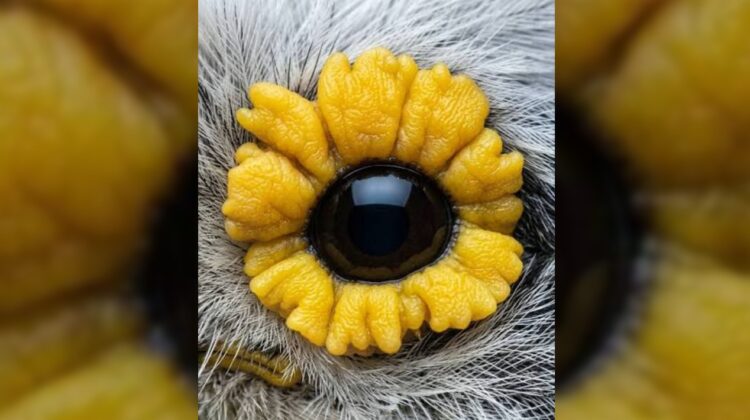
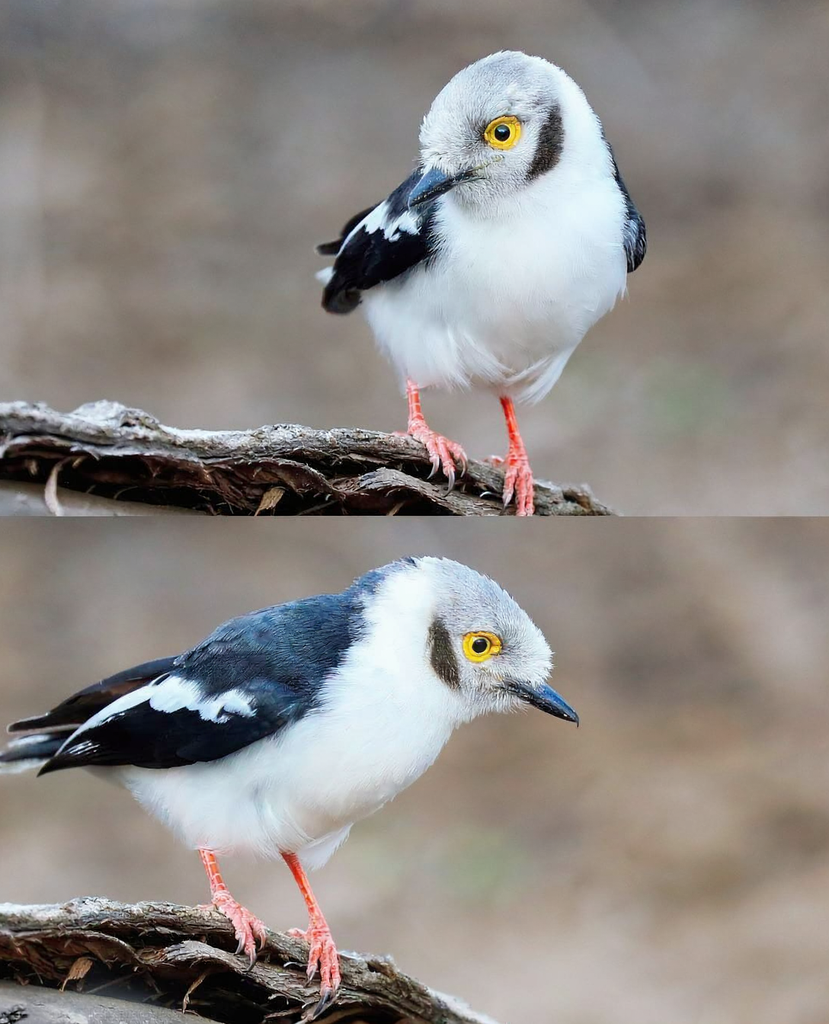
Fluffy, stiff-crested and ringed with bright yellow around each eye, the white-crested helmetshrike looks like a cartoon character. It’s a real bird, and one of the most sociable in the African savanna.
A Face Like a Yellow Flower
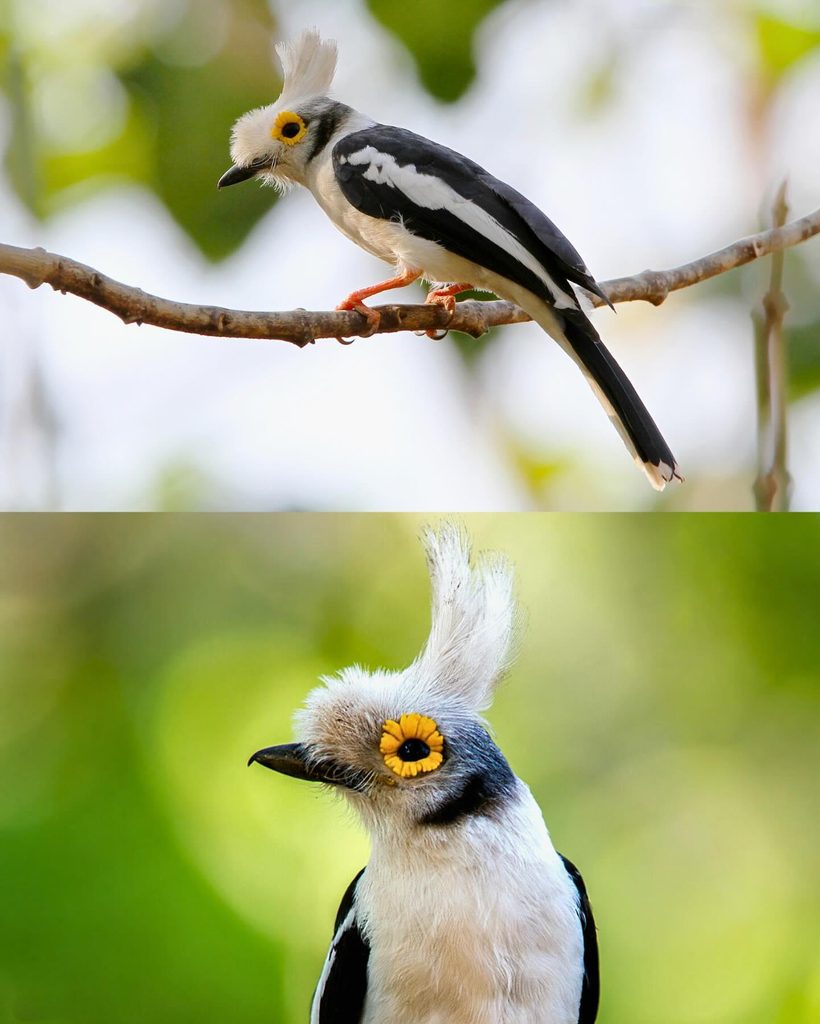
The white-crested helmetshrike, also called the white helmetshrike (Prionops plumatus), is a small black-and-white songbird about 19 to 25 centimeters long. Its most striking feature is a fleshy, scalloped ring of orange-yellow skin around each eye, known as an eye-wattle, which gives its face the look of a small flower.
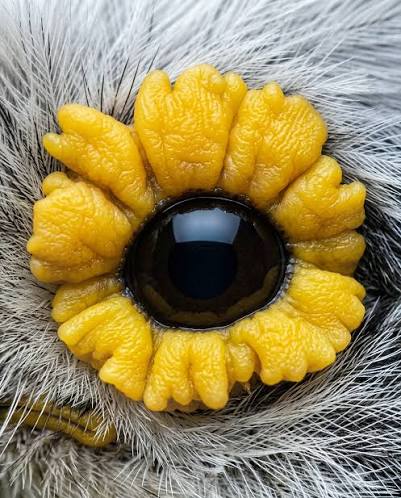
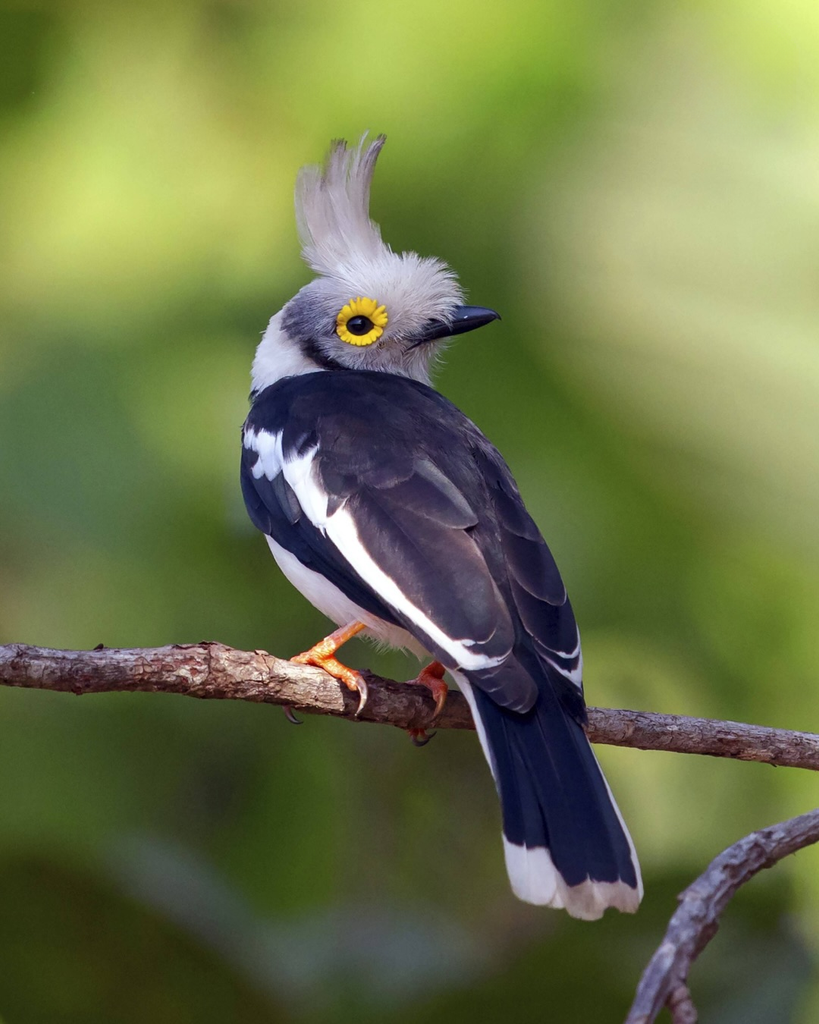
An untidy white crest curls forward over its bill, and the birds are white underneath, with a black back and a black crescent behind the eye. The genus name Prionops comes from Greek words meaning “saw” and “eye,” a reference to the ragged edge of that eye-wattle.
Where It Lives
The species is widespread in woodland and savanna across sub-Saharan Africa, from Senegal east to Ethiopia and south to Kenya, Angola and northeastern South Africa, though it avoids the rainforests of the west, the arid southwest and the cooler south. It’s usually found below about 1,500 meters and is common over much of its range.
Not All Helmetshrikes Look Alike
The species has five subspecies that differ in size, crest length and eye color. Some have grey eyes and a long crest, while others have yellow eyes and a shorter crest. Young birds have brown eyes and lack the colorful ring, so the sunflower look develops with age.
A Social Bird With Its Own Language
White helmetshrikes travel in noisy, close-knit groups, with parties of 5 to 10 birds common and flocks of up to 22 reported. They fly from tree to tree in a pied flash, calling to each other with clicks, whistles and ratcheting sounds. Ornithologists have recorded more than 20 different vocalizations.
They also breed cooperatively: a dominant pair is helped by younger birds that feed and help raise the chicks. Their diet includes caterpillars, moths, grasshoppers, cicadas, spiders and small reptiles, plus some fruit.
See One for Yourself
Helmetshrikes are found in many of Africa’s best-known parks, including Kruger in South Africa and Etosha in Namibia. If you’d like to spot one:
- Book a birding safari. Compare African safari packages and guided birdwatching tours.
- Pack the right gear. Good birding binoculars and a telephoto lens make all the difference.
- Bring a field guide. Compare bird identification books and birding apps.
- Protect your trip. Travel insurance covers cancellations and medical care abroad.
Frequently Asked Questions
What is a white-crested helmetshrike? It’s a social songbird of sub-Saharan Africa, known for its white crest and bright yellow eye-wattles.
Why does it have yellow rings around its eyes? They’re fleshy skin called eye-wattles, and they give the bird its flower-like look; juveniles lack them.
Where does it live? In woodland and savanna from West Africa to the east and south of the continent, though not in rainforest or deserts.
What does it eat? Mostly insects such as caterpillars, moths and grasshoppers, along with spiders, small reptiles and some fruit.
Sources: BirdForum Opus, Oiseaux-birds.com, Namibian.org, and Wikipedia, all covering the white-crested helmetshrike (Prionops plumatus), its eye-wattles, range, diet and social behavior.
Leave a Reply