
Laughter sounds much the same in every culture, but typing it is another matter. From Spanish “JAJAJA” to Korean “ㅋㅋㅋ” and Brazilian Portuguese “kkkk,” every language has found its own way of turning a laugh into text. Different languages, different letters, same universal feeling.
Why Laughter Looks Different in Every Language
Each language writes the sound of laughter with its own letters, which is why the same giggle takes so many forms on screen:
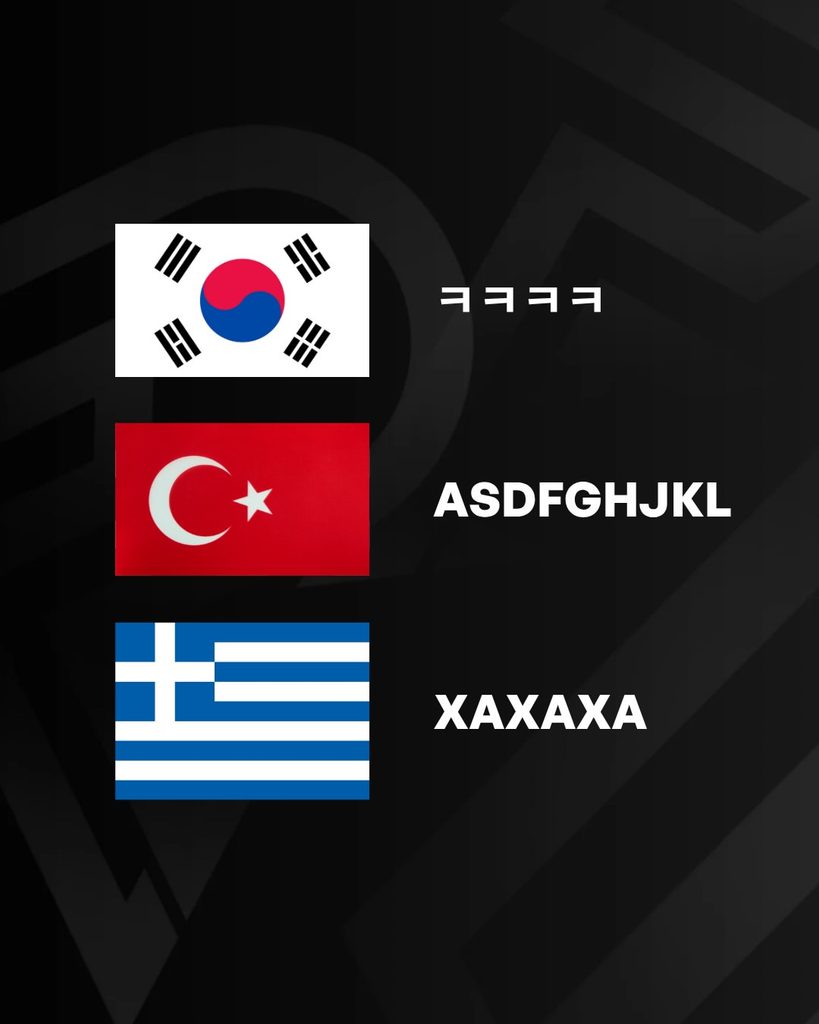
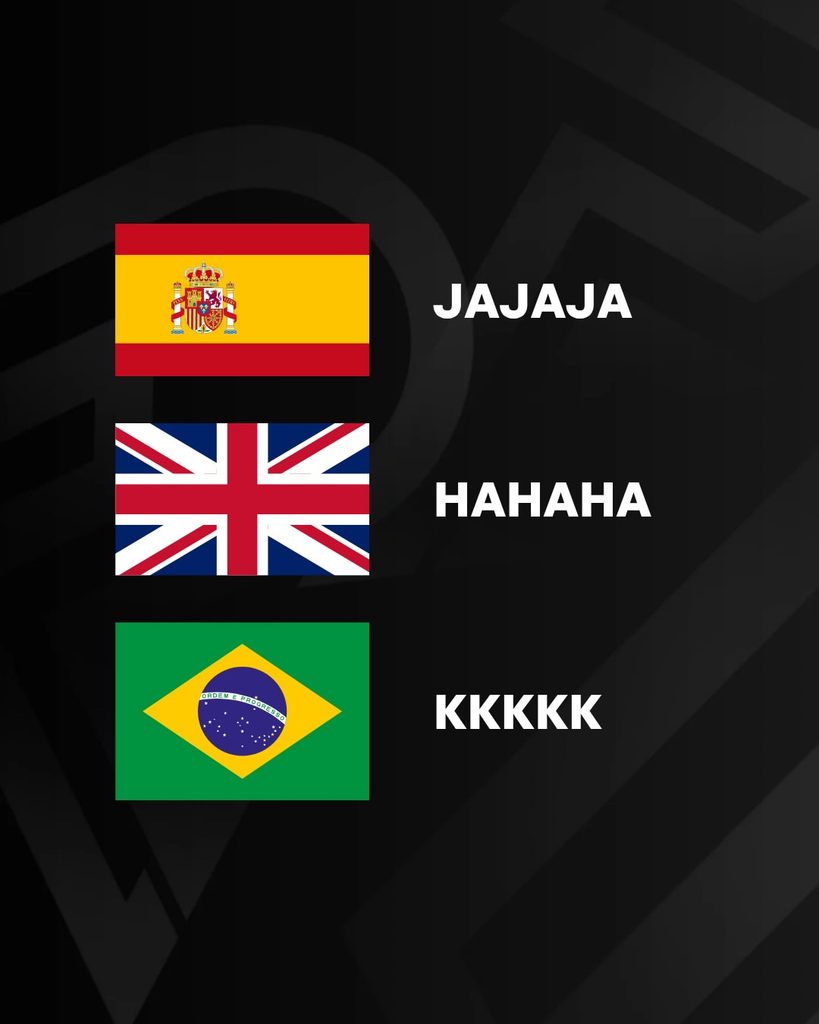
- Spanish “JAJAJA”: The letter J is pronounced like an English “h,” so “ja” sounds like “ha,” Duolingo’s language blog explains. The Royal Spanish Academy (RAE) says Spanish conventionally uses the interjection “ja,” written with a J rather than the “ha” of English or French.
- Korean “ㅋㅋㅋ”: The consonant ㅋ stands for a “k” sound, and Rest of World notes that “ㅋㅋㅋ” reads as “kkkk.” Repeating it a few times gives the distinctive sound of laughter, according to Duolingo.
- Brazilian Portuguese “kkkk”: Rest of World lists it alongside the Korean version. It also relies on the “k” sound, and the longer the string, the bigger the laugh.
What the Royal Spanish Academy Says
The RAE also has guidance for formal writing. Xataka Móvil reports that the academy recommends separating each “ja” with commas, as in “ja, ja, ja,” even though “jajaja” is the usual form on social media. It adds that a normal laugh typically has at least three repetitions, while one or two can signal mockery, disbelief or irony.
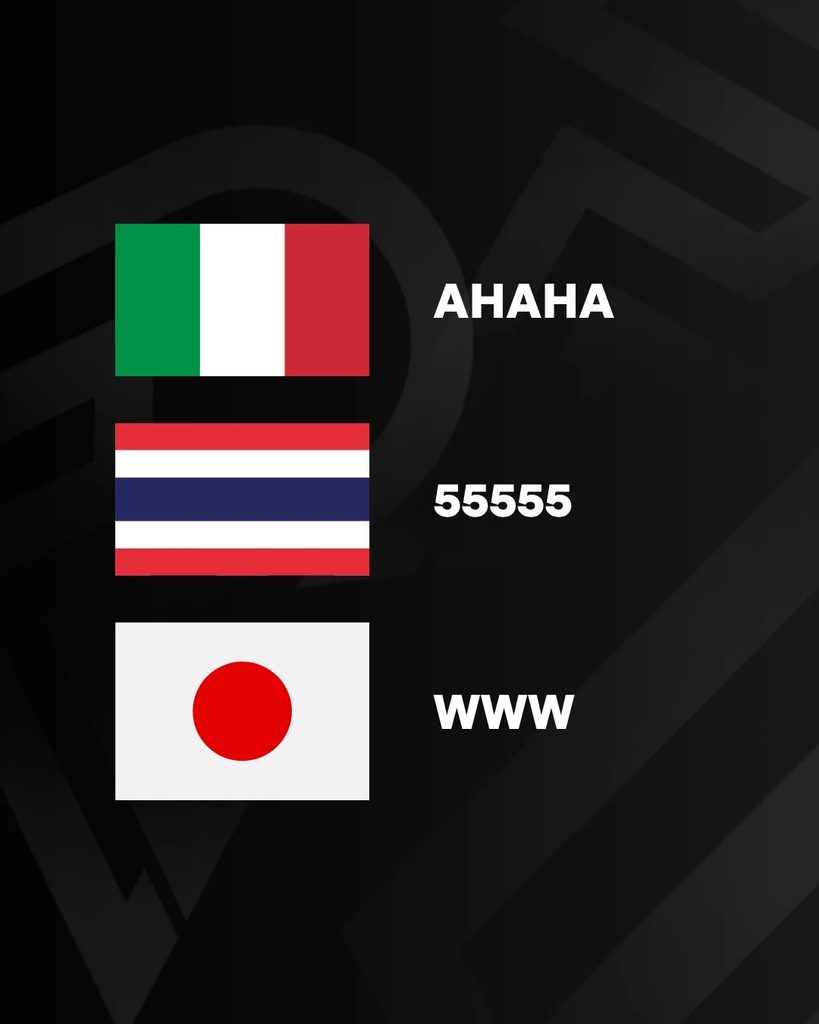
More Ways the World Laughs Online
- Thai “555”: The Thai word for the number five, ห้า, is pronounced “ha,” so “555” reads as “hahaha.” Khaosod English reports that more 5s mean a bigger laugh: “555” is a normal laugh, while “55555” suggests a stronger one.
- French “mdr”: Short for “mort de rire,” meaning “dying of laughter,” according to Duolingo.
- English “haha” and “LOL”: The forms most familiar to English speakers.
Laughter Around the World at a Glance
| Language | Typed laughter | Why it works |
|---|---|---|
| Spanish | jajaja | The letter J is pronounced like “h” |
| Korean | ㅋㅋㅋ | The consonant ㅋ stands for a “k” sound |
| Brazilian Portuguese | kkkk | Repeats a “k” sound |
| Thai | 555 | The number five is pronounced “ha” |
| French | mdr | Short for “mort de rire” |
Tips for Laughing Online in Another Language
- Match the language. “JAJAJA” in a Spanish chat or “ㅋㅋㅋ” in a Korean one reads as more natural than “LOL.”
- Mind the length. In Spanish, one or two “ja” can sound sarcastic, so three or more is the safer choice.
- Add an emoji. A next to the laugh makes the joking tone clear in any language.
So how do you type your laugh?
Turn Your Laugh Into Something You Can Keep
- Funny T-shirts and mugs. Look for laughter-themed T-shirts, language humor mugs and “JAJAJA,” “ㅋㅋㅋ” or “555” prints.
- Stickers and phone cases. Funny sticker packs and custom phone cases are cheap, shareable gifts.
- Learn a language. Language learning apps, phrasebooks and beginner Spanish, Korean or Thai courses are a fun way to start typing laughs like a native.
Frequently Asked Questions
How do you type laughter in Spanish? Spanish speakers typically type “JAJAJA,” since the letter J sounds like “h” in Spanish. The Royal Spanish Academy (RAE) recommends “ja, ja, ja” in formal writing.
What does “ㅋㅋㅋ” mean in Korean? It is the Korean way of typing laughter, using a repeated “k” sound.
How do Brazilians type laughter? In Brazilian Portuguese, laughter is commonly typed as “kkkk.”
Why does laughter look different in every language? Each language writes the same sound with its own letters and habits, so the same universal feeling shows up in different forms.
Sources: Real Academia Española (RAE), Xataka Móvil, Khaosod English, Rest of World, and Duolingo Blog, all covering how people type laughter online across languages, including Spanish “jajaja,” Korean “ㅋㅋㅋ,” Thai “555,” French “mdr” and Brazilian Portuguese “kkkk.”
Leave a Reply