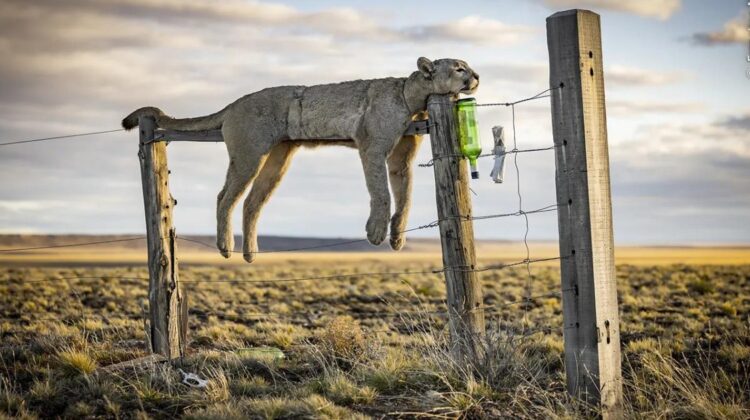
A dead puma, tied to a wire fence post along a remote highway in Argentine Patagonia, is this year’s most unsettling image in one of photography’s most prestigious competitions — and that was entirely the point.
The Photograph
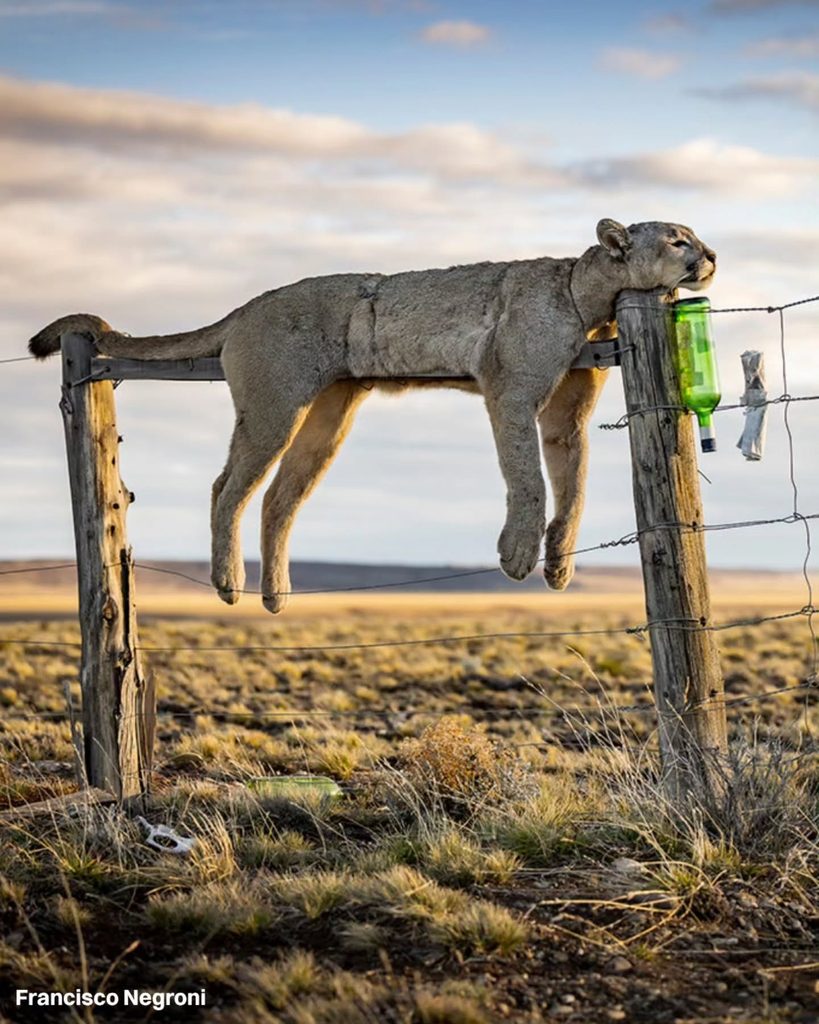
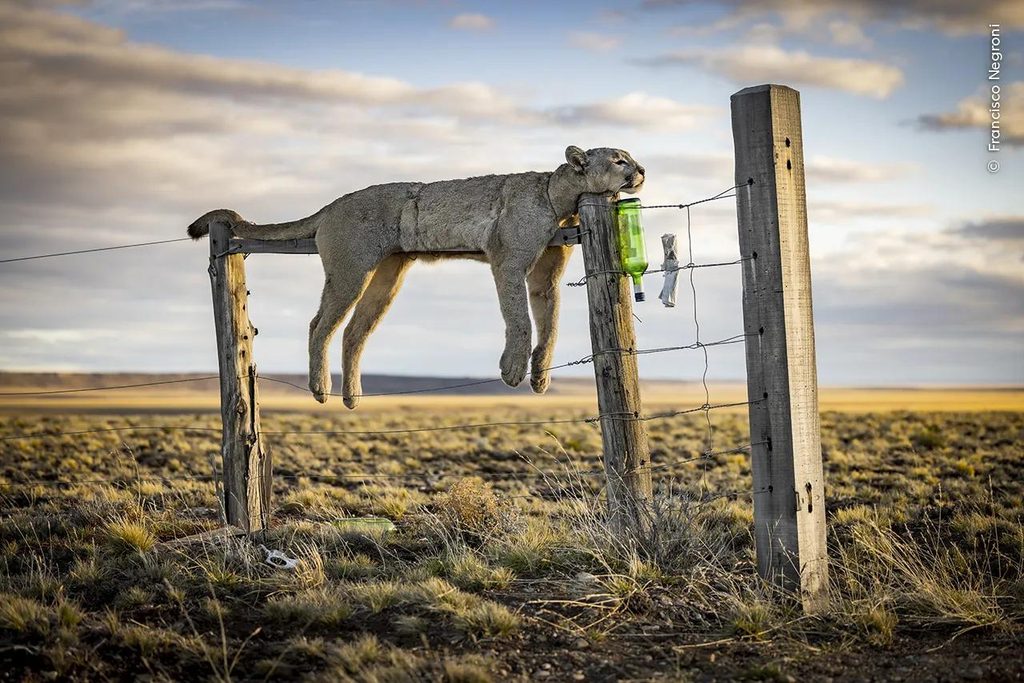
Chilean photographer Francisco Negroni’s image, titled “Warning Sign,” won the Photojournalism category at the 2026 Wildlife Photographer of the Year competition, run by the Natural History Museum in London. It shows a puma’s body draped over a fence post along Route 40 in Santa Cruz Province, Argentina, apparently displayed as a hunting trophy.
Negroni, who has covered major assignments including the 2004 Indian Ocean tsunami and the 2005 Kashmir earthquake, has described the scene as one he had “never witnessed or photographed before.” The photo was taken on a Canon EOS R5 with a 70–200mm lens.
The overall title of Wildlife Photographer of the Year 2026 went to a different image: Italian photographer Federico Veronesi’s “The Aftermath,” a black-and-white photograph of a female elephant carrying her deceased calf. Negroni’s win is specific to the Photojournalism category, which recognizes images that document real-world issues affecting wildlife, rather than purely aesthetic nature photography.
Why Pumas Are Being Killed
Pumas occasionally prey on sheep and other livestock, which has led some farmers across Patagonia to hunt them in an effort to protect their herds and livelihoods. Conservationists and wildlife officials point to less lethal alternatives that have shown success elsewhere, including guard dogs trained to deter predators and enclosing sheep in secure pens overnight. In parts of southern Chile, some farmers have reportedly abandoned sheep farming altogether in favor of puma-focused ecotourism, an alternative livelihood that removes the underlying conflict entirely.
A Law With a Gap
Argentina’s Santa Cruz province formally banned puma hunting in 2025. Negroni’s photograph, taken afterward, documents that the ban hasn’t stopped the practice: illegal persecution of pumas continues in the region despite the legal protection now technically in place. That gap, between what the law says and what’s actually happening on the ground, is central to why the judging panel selected the image.
Why the Competition Chose It
Wildlife Photographer of the Year, developed and produced by the Natural History Museum, deliberately includes images that are difficult to look at alongside its more conventionally beautiful entries. The Photojournalism category exists specifically to recognize photography that documents how human activity is affecting the natural world, even when — especially when — that documentation is uncomfortable.
This year’s competition drew a record 65,403 entries from photographers in 121 countries, the largest turnout in its 62-year history, across 20 categories including Photojournalism, Wetlands, Plants and Fungi, Behaviour, and several youth categories. The winning images, including “Warning Sign,” go on public display at the Natural History Museum in London starting October 16, 2026, running through July 11, 2027.
Frequently Asked Questions
Did this photo win the overall Wildlife Photographer of the Year title? No. It won the Photojournalism category. The 2026 overall title went to Federico Veronesi’s “The Aftermath.”
Is it illegal to hunt pumas in this region? Yes, as of 2025, Santa Cruz province in Argentina has formally banned puma hunting, though the photograph documents that illegal killing continues regardless.
Are there alternatives to hunting pumas to protect livestock? Yes. Guard dogs and secure overnight enclosures for sheep are both cited as effective, and some farmers have shifted toward puma-watching tourism as an alternative source of income.
Sources: Natural History Museum, London (Wildlife Photographer of the Year); PopSci; Colossal; DPReview; Daily Maverick; Gulf News; AOL.
Leave a Reply