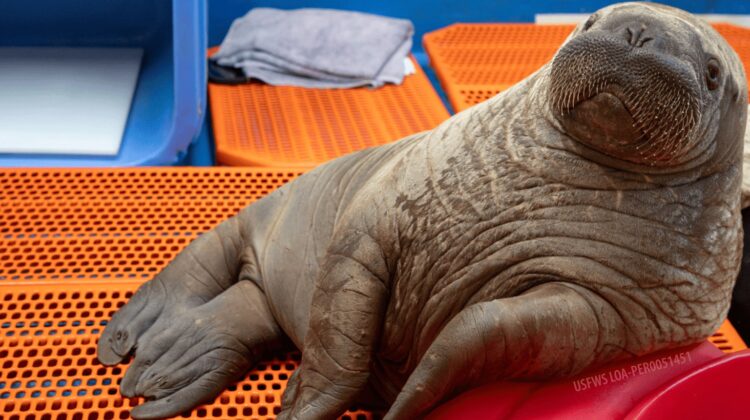
A walrus biologist and a college student were counting carcasses on a remote Alaskan beach when they found something that changed their plans: a living calf, alone, wedged between the bodies of two adults.
A Calf Between Two Carcasses
In mid-September 2026, U.S. Geological Survey walrus biologist Tony Fischbach and Violet Anniskett, an Ilisaġvik College student from Point Lay, Alaska, were documenting a walrus haulout on an island near the village when they found the young male. A herd had fled the beach during heavy surf, and the calf was left behind.
Gulls were circling, and polar bears were prowling nearby. “Two polar bears were also active on the island,” Fischbach said. He had never before found an orphan between the remains of two adults in his years of working with the herds there.
Waiting Out a Storm
The researchers got permission from the Native Village of Point Lay and the U.S. Fish and Wildlife Service to intervene. But the same storm that had scattered the herd stranded them on the island for three days with the calf.
They moved him into an abandoned building to keep him safe from predators. “It was just us two for three days, stuck in a storm with the young walrus,” Anniskett said. She reported that the calf bonded with them quickly and wouldn’t sleep unless one of them was in the room.
An 800-Mile Journey
With the weather clearing, the Native Village of Point Lay helped coordinate getting the calf to the community airport, where a plane and two Alaska SeaLife Center wildlife response staffers were waiting. After a flight and a van ride, he arrived at the center in Seward on September 14, more than 800 miles from where he was found.
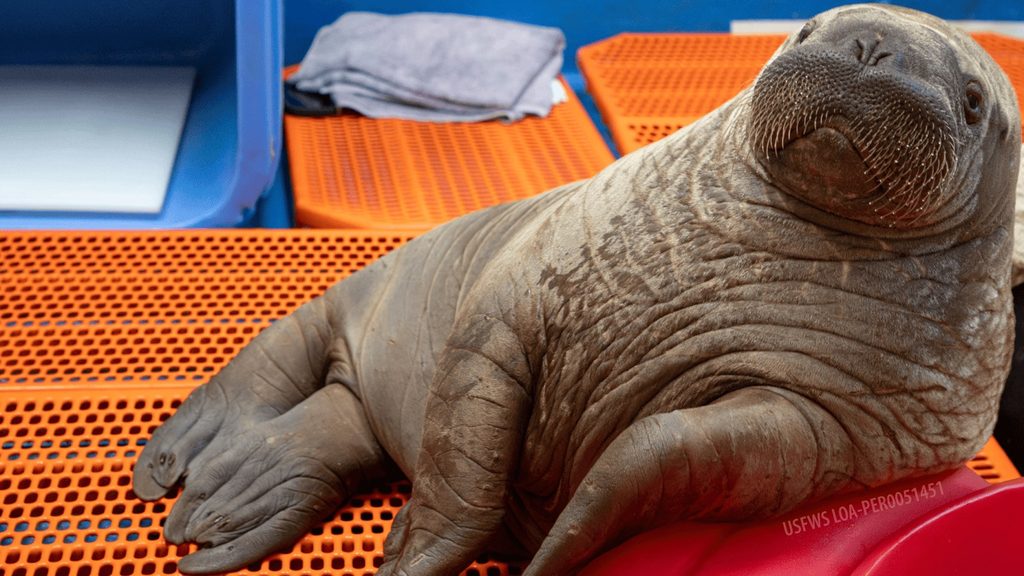
The calf, who weighed about 200 pounds, was dehydrated but alert. Staff treated superficial wounds and gave him fluids.
Meet Annautaq
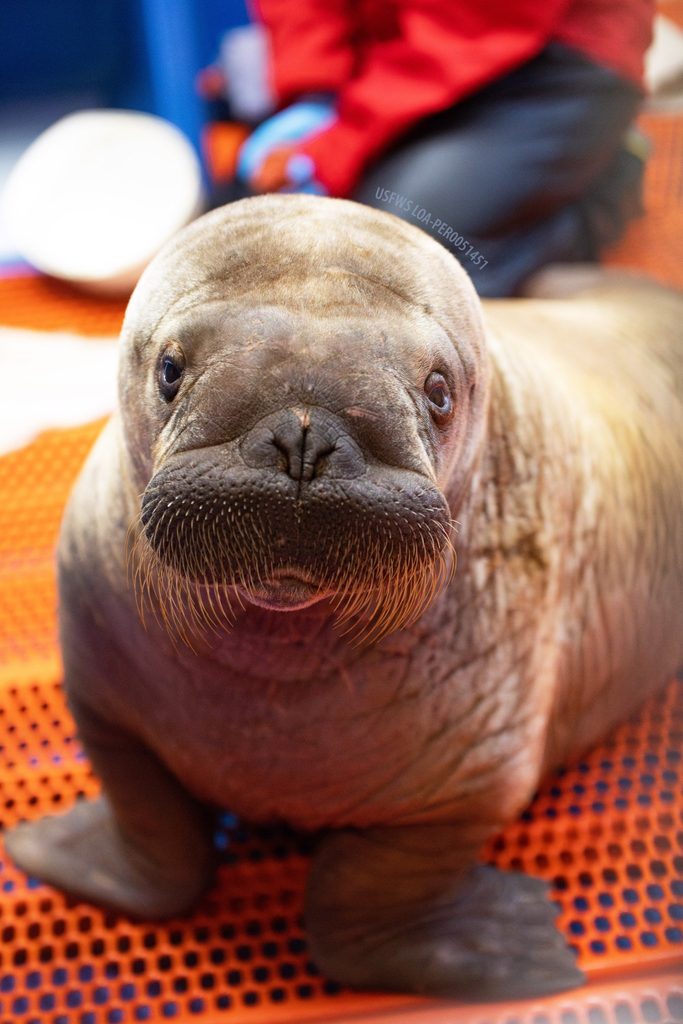
The calf was named Annautaq, after Anniskett’s late father. He is only the 12th orphaned Pacific walrus the center has treated since it opened in 1998.
Why Walrus Orphans Need Round-the-Clock Care
Pacific walrus calves normally stay close to their mothers for one to two years, and physical contact is essential for their development. In rehabilitation, trained staff act as surrogates, providing feeding, veterinary care and social contact. “Caring for an orphaned walrus calf is truly a team effort and requires around the clock commitment,” said Jane Belovarac of the Alaska SeaLife Center. At least two staffers work in shifts at all times.
That close contact means Annautaq can’t return to the wild. After weeks of care, the center transferred him to a long-term home, where he is expected to serve as an ambassador for his species. The location has not been publicly announced.
How to Help Wildlife Like Annautaq
Rehabilitation takes funding and expertise. Here are ways to help:
- Donate. Compare marine mammal rescue donations and wildlife rehabilitation charities.
- Adopt symbolically. Some centers offer animal adoption programs that support care.
- Visit Alaska. Compare Alaska cruises, Seward travel packages and wildlife tours.
- Gear up. Good binoculars and a waterproof jacket make wildlife watching easier.
- Protect your trip. Travel insurance covers cancellations and emergencies.
Frequently Asked Questions
Who found the walrus calf? USGS walrus biologist Tony Fischbach and student Violet Anniskett found him near Point Lay, Alaska.
What is his name? Annautaq, named after Anniskett’s late father.
Why can’t he be released? Surrogate care makes walrus calves comfortable with humans, so he can’t return to the wild.
How far did he travel? More than 800 miles to the Alaska SeaLife Center in Seward.
Sources: Alaska Public Media, KTUU Alaska’s News Source, Popular Science, and Alaska SeaLife Center reporting, all covering the September 2026 rescue of orphaned Pacific walrus calf Annautaq from near Point Lay, Alaska.
Leave a Reply