• Skip to main content
  • Skip to primary sidebar
  • Skip to footer
  • Home
  • About Us
  • Copyright Report
  • Submit Content
  • Terms
  • Privacy Policy
  • Legal Disclaimer

Hasan Jasim

Hasan Jasim is a place where you may get entertainment, viral videos, trending material, and breaking news. For a social generation, we are the largest community on the planet.

Scientists Discover a 319-Million-Year-Old Fossilized Brain

by Hasan Jasim Editorial Team Leave a Comment

ShareTweet

The brain has been hidden inside a fossil fish skull and is now revealing animal evolution secrets.

A fish died a long time ago, was buried in sediments, and eventually became fossilized. It is now the focus of a study that reveals “the oldest example of a well-preserved vertebrate brain” 319 million years later.

Rodrigo Figueroa, a doctoral student at the University of Michigan, led the study, which was published in the journal Nature on Wednesday. The small fish is a ray-finned fish called Coccocephalus wildi. Swordfish and trout are living examples of ray-finned fish. It is a diverse group of approximately 30,000 species.
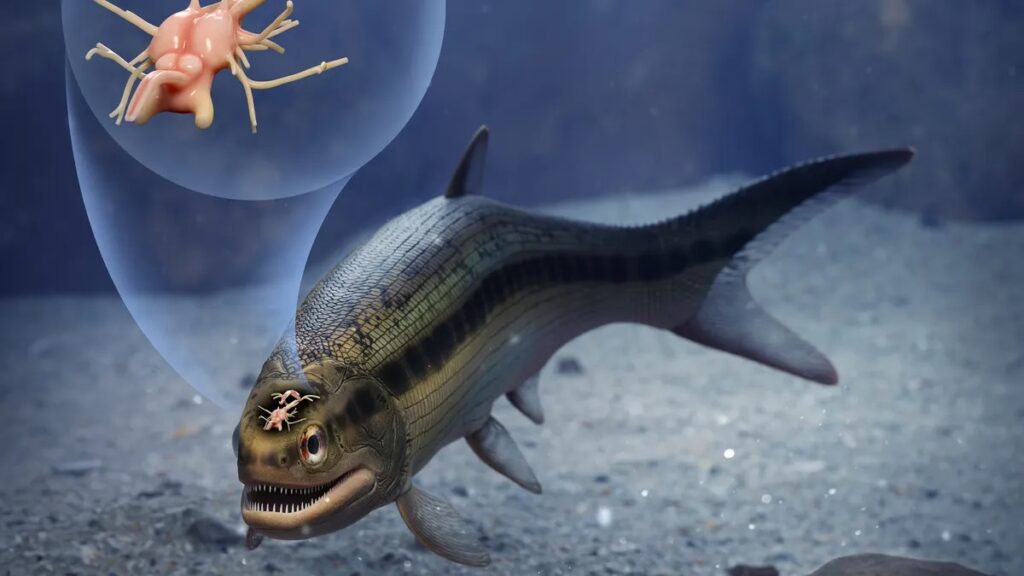
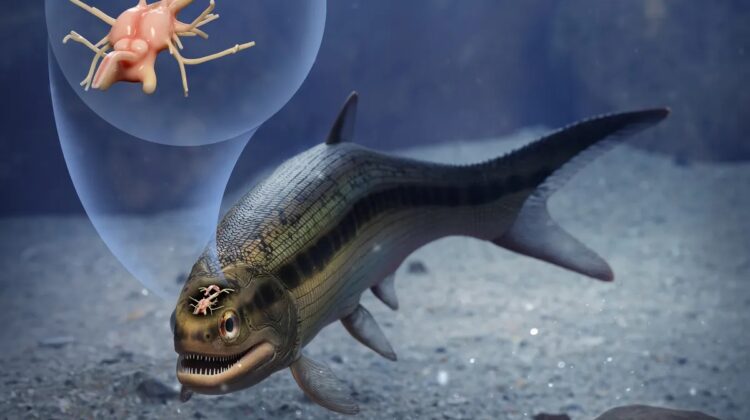
This artist’s rendering shows what Coccocephalus wildi might have looked like back when it lived over 300 million years ago.
Márcio L. Castro

“This unexpected discovery of a three-dimensionally preserved vertebrate brain provides us with a startling insight into the neural anatomy of ray-finned fish,” said paleontologist Sam Giles in a statement issued by the University of Birmingham. “It reveals a more complicated pattern of brain evolution than living species alone suggest, allowing us to better define how and when modern bony fishes evolved.” Giles is one of the study’s co-authors.

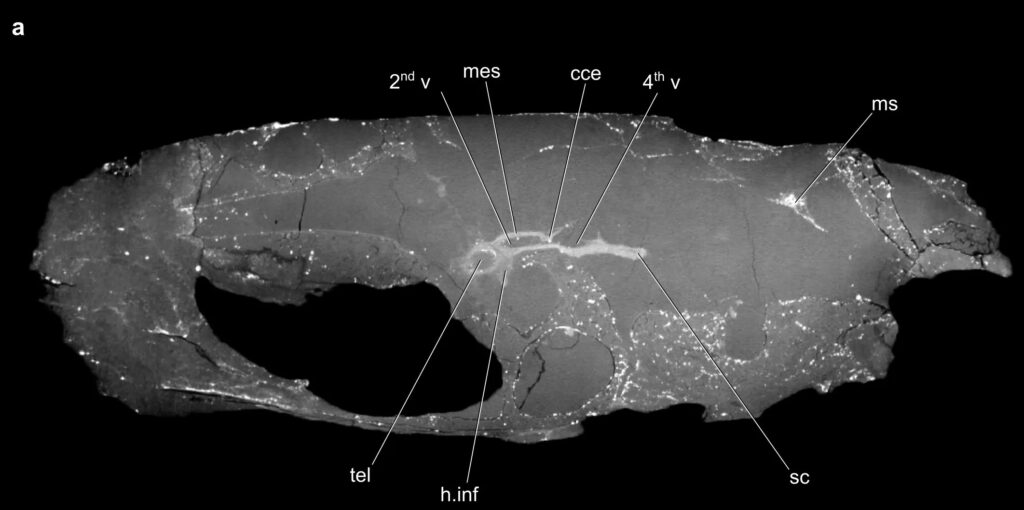
The researchers used a noninvasive CT scan – the same technology used for human medical imaging – to examine the skull without damaging it. They discovered a brain and cranial nerves about an inch (2.5 centimeters) long. According to the university, the brain and nerves were replaced with a dense mineral that preserved them “in exquisite detail.”
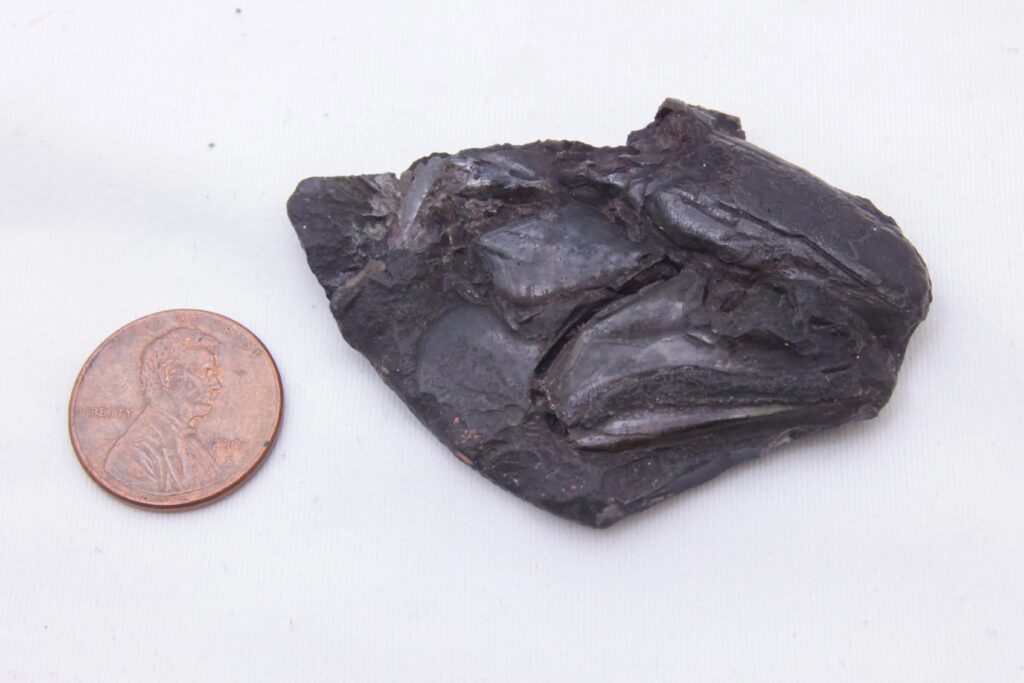
The fossilized skull of Coccocephalus wildi doesn’t look like much from the outside.Jeremy Marble/University of Michigan News
One of the CT scan images of the Coccocephalus wildi skull from the paper. The lines point out parts of the brain inside.Figueroa et al./Nature

We’re all familiar with fossilized bones, but soft tissue preservation, such as brains, is much rarer. The researchers were able to compare the ancient brain structure to that of modern animals. All current ray-finned fish have brains that fold outward during embryonic development. Coccocephalus, on the other hand, causes the brain to fold inward. This information aids scientists in their understanding of the timeline of brain evolution in ray-finned fish.

Giles claims that the brain of Coccocephalus wildi is similar to that of paddlefish and sturgeon, which are considered “primitive” fish because they diverged from other ray-finned fish over 300 million years ago.

Over a century ago, the fossil was discovered in a coal mine in England. “Given the widespread availability of modern imaging techniques, I would not be surprised if we discover that fossil brains and other soft parts are far more common than we previously thought,” Figueroa said. “From now on, our research team and others will examine fossil fish heads from a new and different angle.”

Filed Under: Trends Worldwide Tagged With: 319-million-year-old, brain, discover, fossilized, Scientists, trends, worldwide

Reader Interactions

Leave a Reply

You must be logged in to post a comment.

Primary Sidebar

More to See

Tiny Shadows Reveal a Big Secret: How Leaves Turn into Eclipse Projectors

By Hasan Jasim Editorial Team

The Touching Moment a Chimp Mother is Reunited with Her Newborn is Captured on Video

By Hasan Jasim Editorial Team

Wolf Mom Is Caught On Hidden Camera Snuggling Her Angry Pup Back To Sleep

By Hasan Jasim Editorial Team

Stop buying ginger from store — Grow an endless supply at home in a pot

By Hasan Jasim Editorial Team

Woman Sees Her Neighbor’s Dog In Her Car Mirror — But It’s Not Who It Is

By Hasan Jasim Editorial Team

The World’s Largest Bird Sculpture Took Artists 10 Years to Complete

By Hasan Jasim Editorial Team

Salmon Return to Oregon’s Klamath Basin After Over a Century, First Time Since 1912

By Hasan Jasim Editorial Team

Footer

ABOUT HASANJASIM.ONLINE

Hasanjasim.online is a digital platform dedicated to publishing well-researched articles about the animal kingdom, nature, and the environment. Our editorial team works to source stories from credible outlets, scientific research, and verified reports, aiming to inform as much as we entertain. From wildlife conservation and animal behavior to natural wonders and environmental science, we cover the topics that help readers better understand and appreciate the natural world. Whether you're a lifelong nature lover or simply curious about the planet we share, Hasanjasim.online aims to be a trustworthy destination for stories worth reading — and worth citing.

Recent

  • Woman is reunited with abandoned horses that were left to die
  • Archaeologists Found a Castaway Camp on an Island at the End of the World. Did a Legendary Sailor Build It?
  • They Tore Down Two Dams to Bring Back Salmon. 15 Years Later, Here Are the Results
  • Watch moment powerful king tide sweeps away man and his dog
  • Scientists Simulated What May Happen If a Nuclear Bomb Goes Off in Space. The Fallout Is Terrifying.
  • Stunning iPhone 18 Pro photo makes Time’s Top 100 Photos of 2026
  • Zeus the Cat Keeps Riding Trains Alone — Here’s What Happened

Search