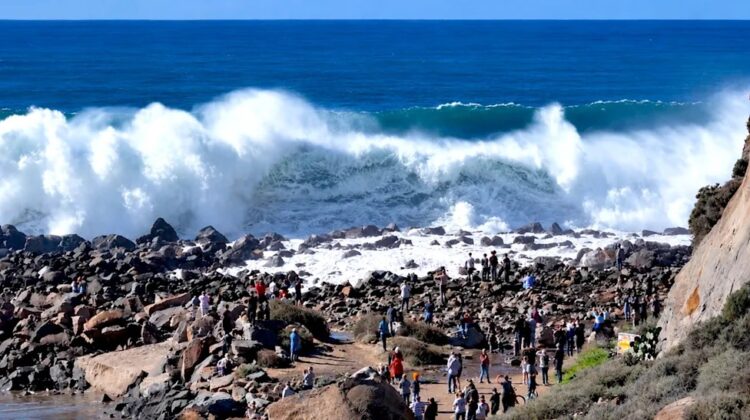
On California’s Central Coast, a powerful swell sent whitewater roaring over the rock breakwater that protects Morro Bay Harbor. Video of the waves, which towered around 20 feet, made the structure look tiny against the Pacific. The scene was dramatic, but it also carried a serious reminder: when the ocean gets this big, the safest place to watch is far from the edge.
What Happened at Morro Bay
Morro Bay’s outer breakwater is a long barrier of rock that shields the harbor from open-ocean waves. In footage circulating online, surf in the 20-foot range pounded the structure and threw whitewater over the top and into the calmer water behind it.
The harbor is better known for fishing boats, sea otters, the iconic volcanic rock that rises from the water and an easygoing beach break than for giant surf, which makes the sight even more striking. The National Weather Service had warned of surf of 18 to 25 feet along San Luis Obispo County’s coast and specifically flagged the Morro Bay Harbor entrance, telling people to stay off jetties, piers and other waterside structures.
Crowds Gathered Anyway
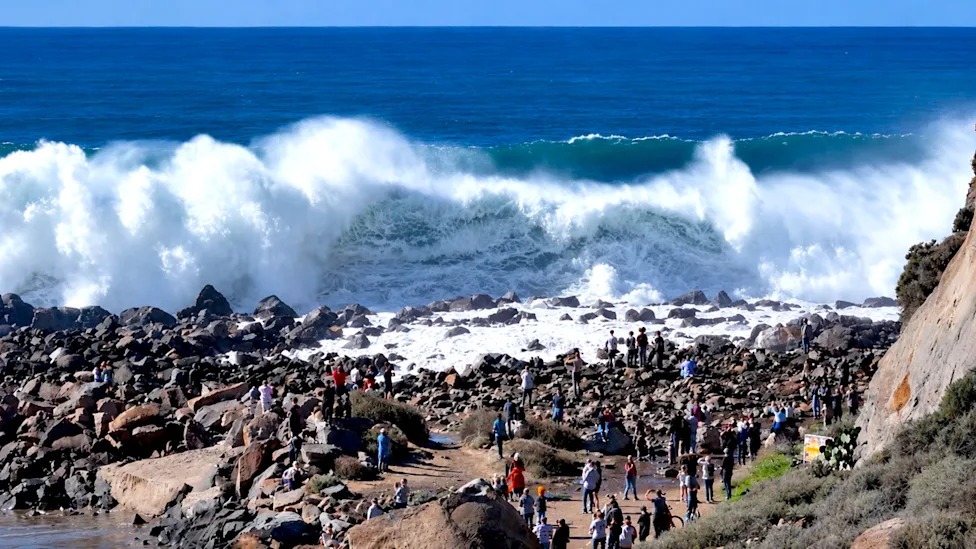
Despite the warnings, spectators gathered along the waterfront. SURFER magazine reported that another viral clip showed a large wave exploding over rocks onto onlookers who had ventured dangerously close. The footage shows how quickly a safe viewing spot can become dangerous when large waves arrive in sets.
A Statewide Event
The impacts weren’t limited to one harbor. Water surged across West Cliff Drive in Santa Cruz, and Pacifica and parts of Southern California experienced coastal flooding.
What Drove the Waves
The waves came from a series of powerful northwest swells arriving during an increasingly strong El Niño. According to NOAA, El Niño continues to strengthen. Forecasters also noted that Kelvin waves, slow-moving ocean waves that travel along the equator and then up the coast, have temporarily raised coastal water levels in California. Higher water levels make flooding more likely when large swells arrive. El Niño years can also bring stormier conditions to the West Coast, which helps explain the energy in the water.
What Didn’t Happen
Waves washed over the rocks, but there was no confirmed report that the breakwater collapsed or sustained structural damage. The structure appears to have done its job, although engineers regularly inspect such barriers after major storms.
What We Don’t Know
The reports don’t describe any injuries from the Morro Bay swell itself, the exact wave heights at the breakwater or how long the high surf will last. Wave conditions change quickly, so anyone planning a coastal trip should check the latest forecasts and advisories.
How to Stay Safe During High Surf
- Heed warnings. Follow National Weather Service surf and coastal flood advisories.
- Stay off jetties, piers and rocks. Waves can wash over them without warning.
- Never turn your back on the ocean. Large waves often arrive unexpectedly, and rogue waves can reach farther than the others.
- Watch from a distance. Choose a high, protected spot well back from the water.
- Keep children and pets close. They are easily swept off their feet.
- Don’t try to rescue someone in the water. Call emergency services instead.
- Take photos safely. A zoom lens lets you capture the action from far away.
Storm Watching and Coastal Planning
Storm watchers often invest in a telephoto zoom lens for photographing waves from a safe distance, wear waterproof jackets and sturdy shoes, and compare California coast travel packages with travel insurance for trips during stormy seasons. Property owners near the shore often review flood insurance and homeowners insurance coverage before winter storms arrive.
Frequently Asked Questions
Did the Morro Bay breakwater collapse? No. Waves washed over it, but there is no confirmed report of collapse or structural damage.
What caused the huge waves? A series of powerful northwest swells arriving during a strengthening El Niño, with raised coastal water levels adding to flooding risk.
How high were the waves? Surf in the 18 to 25 foot range was forecast, and video showed waves around 20 feet.
Is it safe to watch big waves from jetties? No. Officials urge people to stay off jetties, piers and other waterside structures.
Sources: SURFER, National Weather Service, NOAA
Leave a Reply