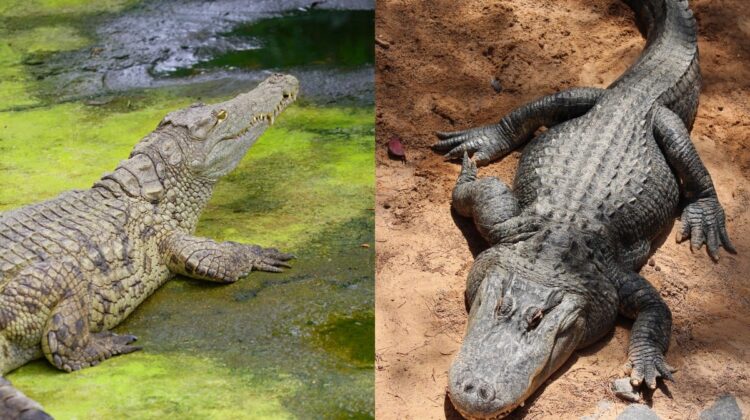
In the world of reptiles, the seemingly subtle differences can unveil fascinating stories of evolution and adaptation. Alligators and crocodiles, both belonging to the taxonomic order Crocodylia, share a common ancestry dating back millions of years. However, the nuanced variations that have emerged in their physical traits and habitats offer a captivating glimpse into the intricate tapestry of nature’s diversity.
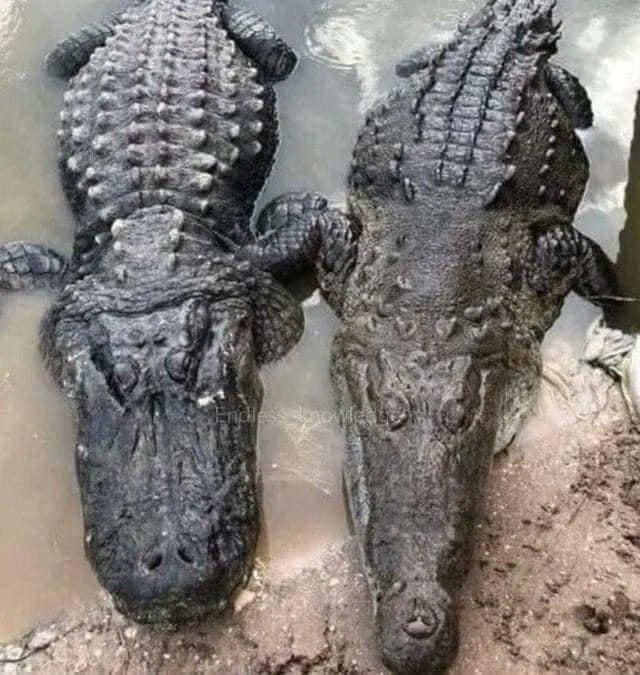
Alligators and crocodiles are categorized under the same taxonomic umbrella of Crocodylia, which is then divided into three major families: Alligatoridae (alligators), Crocodylidea (crocodiles), and Gavialidae (gharial). While they trace their lineage back to a common ancestor, an intriguing evolutionary split occurred around 80 million years ago during the Late Cretaceous period. This divergence led Alligatoridae and Crocodylidae on their separate evolutionary pathways, according to research published in the New York Times.
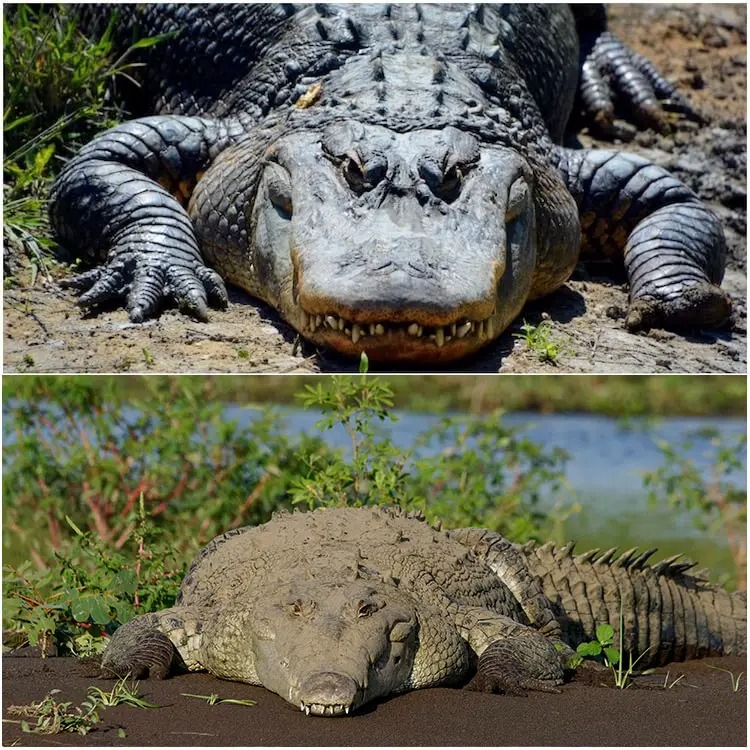
Despite their shared ancestry, the differences between alligators and crocodiles are discernible upon closer inspection. The most apparent distinction lies in their snouts. Alligators boast a U-shaped rounded snout that is wide and short, while crocodiles sport a more elongated, pointed, V-shaped snout. An additional notable feature is their jawline. Alligators have an overbite, concealing the teeth on their lower jaw within sockets in the upper jaw. In contrast, the lower teeth of crocodiles are visible on the outside of their mouths, fitting into grooves along the upper jaw.
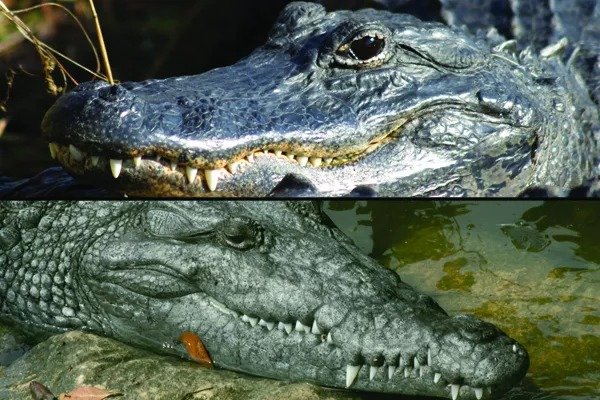
Interestingly, integumentary sense organs (ISOs) play a crucial role in distinguishing these reptiles. These minute black specks on their heads allow them to detect water pressure changes caused by potential prey. While alligators possess ISOs only on their head and around their mouth, crocodiles have ISOs distributed across almost every scale on their bodies.
The differences extend beyond the surface. Research published in the journal Royal Society Open Science reveals variations in bone structure between the two species. Alligators exhibit a shorter humerus bone in their forelimbs and shorter femurs in their hindlimbs compared to crocodiles.
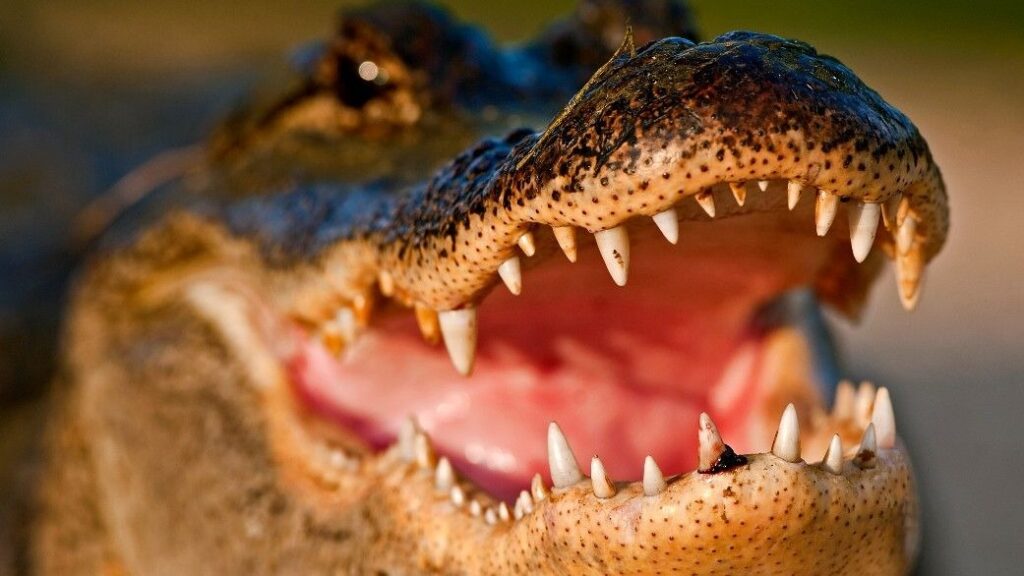
One of the most striking disparities lies in their habitat preferences. Crocodiles possess lingual salt glands on their tongues, allowing them to expel excess salt from their bodies. This remarkable adaptation enables them to thrive in saline environments, exemplified by Australia’s saltwater crocodiles. In contrast, alligators have a less effective salt gland, rendering them more suited to freshwater habitats such as lakes and marshes.
This distinction in salt tolerance not only influences their habitat choices but also accounts for their geographical distribution. While crocodile species inhabit diverse regions across the Americas, Africa, Asia, and Australia, alligators predominantly inhabit North and South America.
The narrative of alligators and crocodiles is a testament to nature’s intricate design. Through subtle differences, these creatures have adapted to their surroundings, carving out distinct niches within ecosystems. As we continue to uncover the secrets of the animal kingdom, the stories behind these differences remind us of the intricate interplay between evolution, adaptation, and the diverse habitats that shape life on Earth.
Leave a Reply