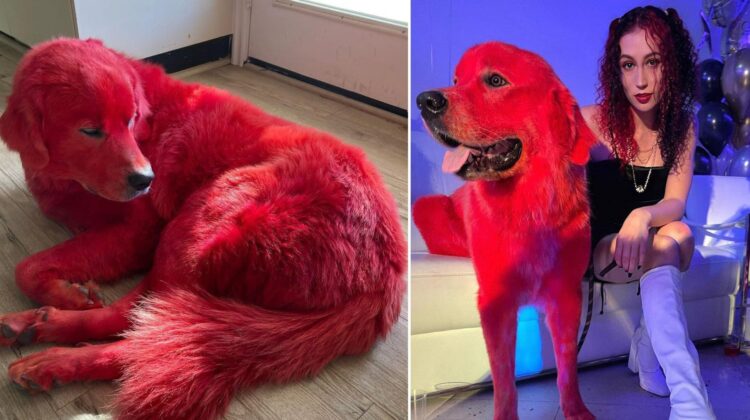
Many dog owners worry about their pets being stolen, and certain rare or expensive breeds can be a genuine target for dognapping. One owner’s approach to the problem went viral for reasons that had less to do with security and more to do with just how bright her solution was.
Meet Dandy
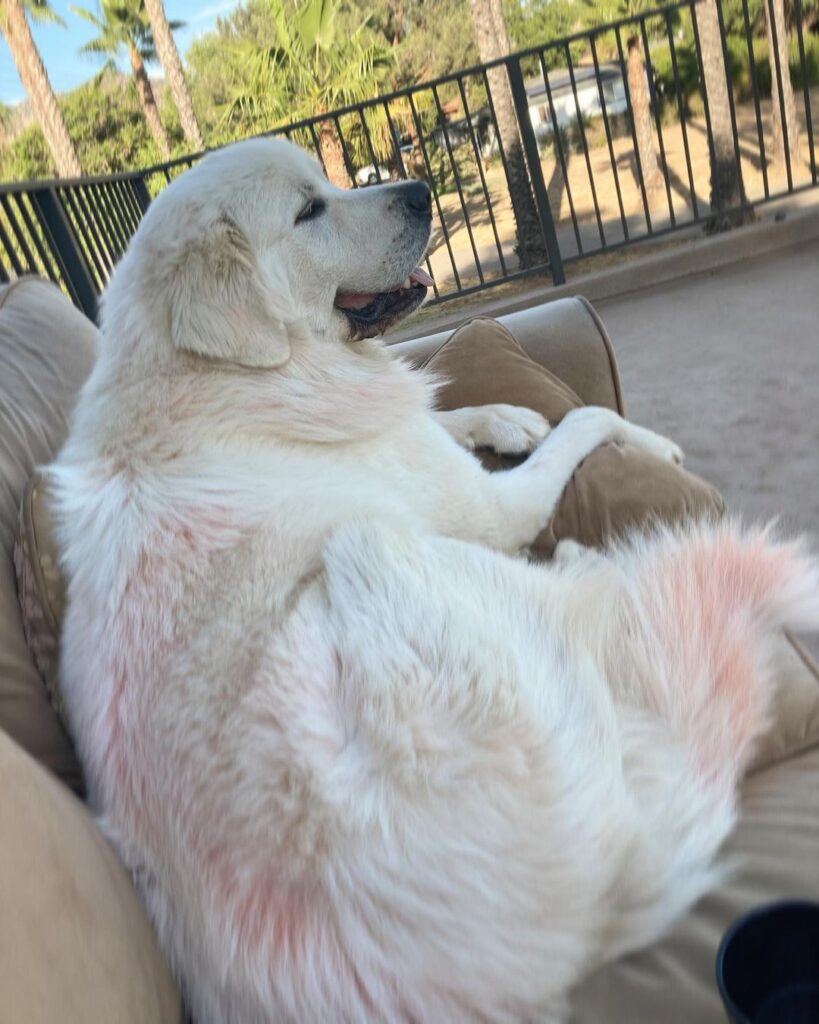
Chloe, who posts under the TikTok handle @danthebigreddog, is the owner of Dandy, a roughly 130-pound Great Pyrenees with a striking, unmissable feature: bright red fur, applied using pet-safe dye.

@danthebigreddog Damn, Dandy. You’re red! ❤️ — https://www.tiktok.com/@danthebigreddog/video/7024615074681621765
Why She Did It
Chloe explained her reasoning across several follow-up videos rather than a single answer. First, since Great Pyrenees dogs were relatively uncommon in her area, she believed a distinctive red coat would make Dandy harder to steal and easier to identify if he ever went missing. Second, she said his size made some people nervous around him: “Dan loves people and kids but he’s 130 pounds so people would get scared of him. Now people don’t get scared of him! They only smile and ask to give him attention.” Third, she said Dandy genuinely seemed to enjoy the grooming process and the extra attention that came with it.
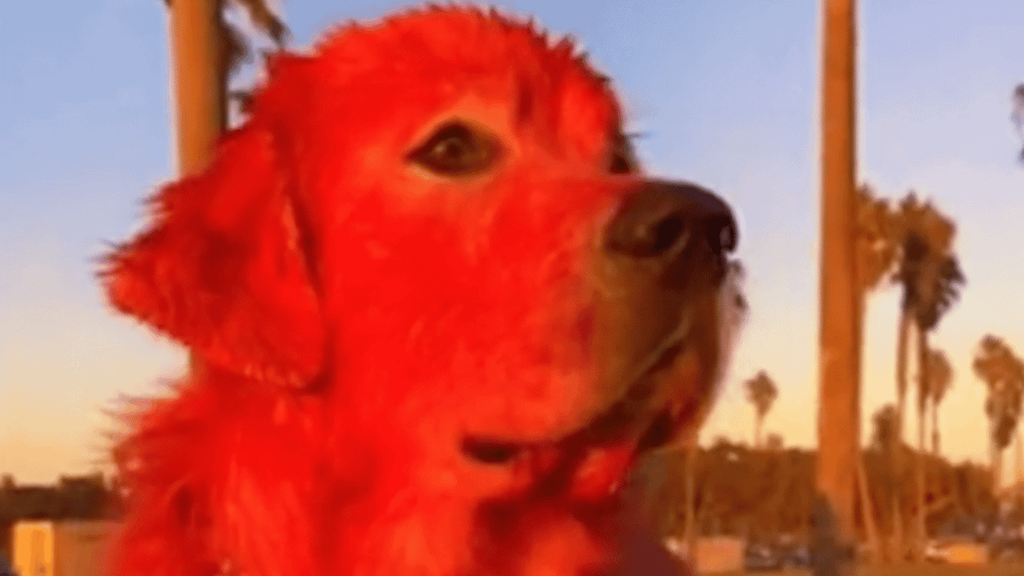
Chloe has also said she wanted to “educate others on safe pet dye practices,” posting instructional videos for other owners interested in doing the same.
A Genuinely Split Reaction
The videos, which have drawn over 10 million likes and more than 318,000 followers, have generated real debate. Critics have questioned both the dye’s actual effectiveness as a theft deterrent and Chloe’s motives, suggesting the real driver was online attention rather than safety. Supporters have pointed out that Dandy appears well-cared for and content, that he has no awareness of his own coloring, and that the choice — so long as it’s done safely — is ultimately the owner’s to make.
What Actually Makes a Pet Dye “Safe”
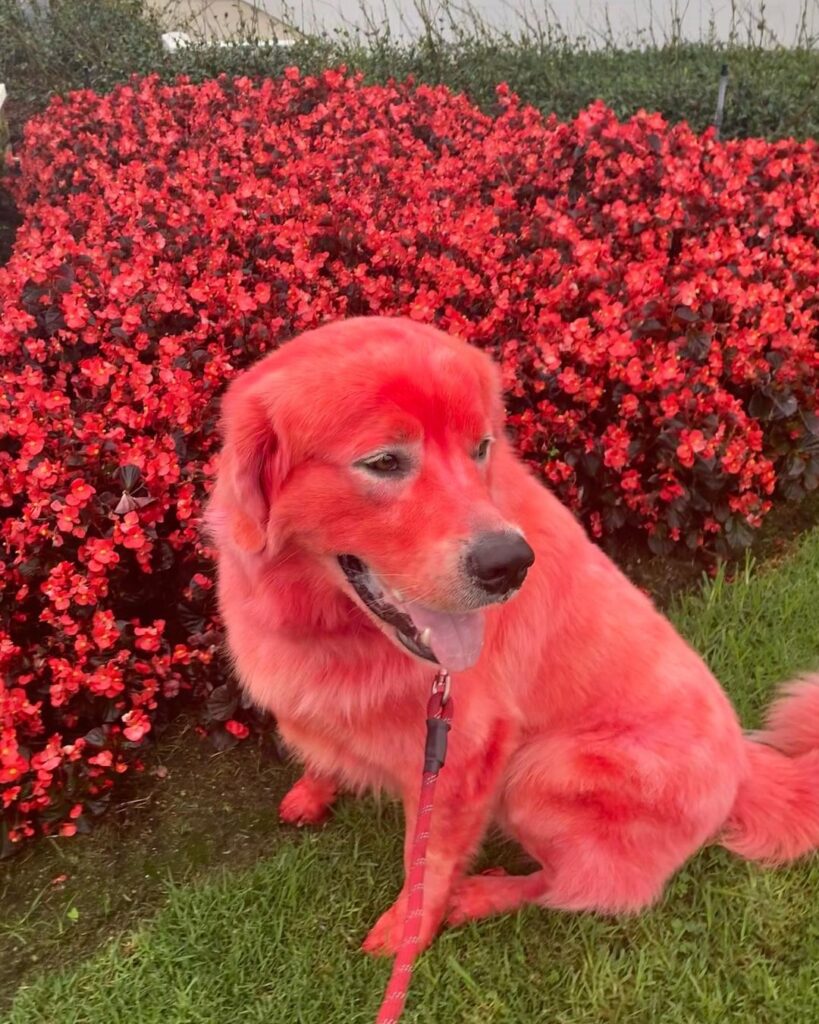
This is the part most coverage of Dandy’s story skipped entirely, and it matters if you’re considering doing this yourself. According to Dr. Caroline Wilde, a veterinarian at Trupanion, the core rule is simple: human hair dye should never be used on a pet under any circumstances. “Just like with people, risk exists for contact sensitivity, irritation, or burns to the skin even with those dyes deemed safe,” Wilde notes. “If the dye is in contact with the skin, it can also be absorbed systemically, so it is very important to critically examine the ingredients of any fur dye.”
Chloe has said she uses Opawz products, a pet-specific dye brand that publishes cytotoxicity testing results and formulates its dyes to meet FDA and Health Canada cosmetic-ingredient standards, without animal testing. Reputable pet-safe dyes like these are typically ammonia-free and made with recognizable, botanically based ingredients — a meaningful difference from human hair dye’s harsher chemical profile (ammonia, peroxide, paraphenylenediamine), which can cause real skin irritation or burns on an animal.
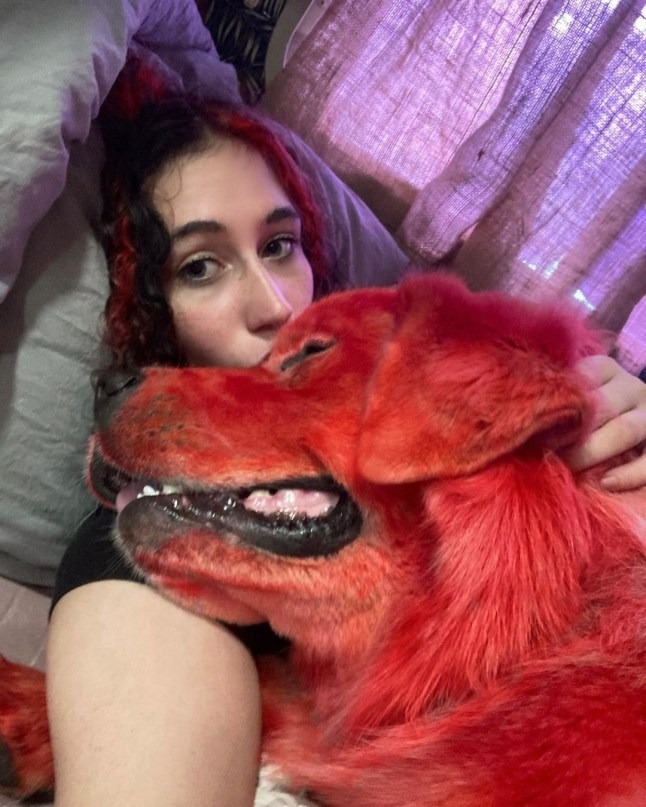
Even with a legitimately pet-safe product, veterinarians recommend a few precautions: patch-test a small area 48 hours before full application, avoid contact with eyes and mouth, and stop immediately and rinse thoroughly if any irritation appears. Cats are considered a higher risk than dogs for at-home dyeing, since frequent self-grooming makes accidental ingestion more likely.
Where Things Stand
Chloe’s TikTok activity slowed considerably after the story’s initial peak, and more recent posts have shown Dandy’s natural white coat with the dye faded, with Chloe indicating he was due for a “touch up.” A meaningful number of commenters have encouraged her to leave him in his natural color going forward. There’s no confirmed, up-to-date public information on Dandy’s current coat color as of this writing.
Frequently Asked Questions
Is dyeing a dog’s fur considered animal cruelty? Using a legitimate pet-formulated dye, applied correctly, is not considered cruelty by veterinary standards — the ethical and safety concerns center specifically on using human hair dye or unverified products, which can cause genuine skin irritation or chemical burns.
Can dyeing a dog’s fur actually help prevent theft? It’s debated — a highly distinctive coat can make a stolen dog easier to identify and publicize, but critics argue it doesn’t meaningfully deter opportunistic theft in the moment, and microchipping remains the more broadly recommended anti-theft measure.
What should I do if my pet has a reaction to fur dye? Stop the dyeing process immediately, rinse the affected area thoroughly with water, and contact a veterinarian right away, especially if you notice swelling, excessive scratching, or skin redness.
Sources: Trupanion Pet Blog, OPAWZ, and The Vet Desk, cited above.
Mean, stupid, and unnecessary.
I love it, and I’m sure others do too. I used to get my poodle groomed every 3 weeks and she always had bows and smelled wonderful…. To me! I’m sure she would have loved forego the bath and frills. Dandy looks, well, just Dandy as a redhead!
Dogs love attention, he looks well taken care of,I have seen both neglected &abused dogs,this is not one of them,let her be she cares enough about her dog to be proactive. I would be heartbroken if someone stole my dog
Dandy is beautiful in any color. It’s quite easy to see that Chloe loves her dog very much. I hope their absence on the platforms doesn’t mean anything is wrong with either of them. Chloe has a right to protect her boy any means necessary and bright red is very handsome. Love you both! 🐾🐾💞💞