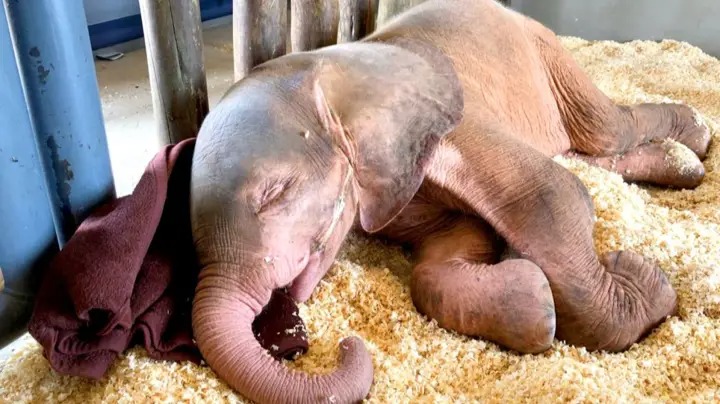
In January 2020, a four-month-old elephant calf was found alone near the border of South Africa’s Kruger National Park, tangled in a poacher’s snare that had cut into her face, ears and neck. She had been trapped, wildlife vets estimated, for four days, according to The African Mirror.
What made her story spread even further was something unrelated to the snare itself: she was albino, born with pale pink skin instead of the grey most elephants have.
Found Alone, Badly Injured
The calf, later named Khanyisa, had apparently tried to free herself from the snare, but her struggling only tightened it further. By the time she was discovered, the wire had cut through the top of one ear and left deep lacerations across her cheeks, neck and mouth, per Good Things Guy, which has followed her recovery since 2020. Some of her wounds were severe enough that maggots had begun feeding on the decaying flesh around her mouth, leaving open holes that needed urgent treatment.
It’s unclear whether Khanyisa had already been separated from her herd before she was caught in the snare, or whether the injury and ordeal caused the separation. Either way, she was alone, dehydrated, and unable to eat by the time she was rescued on January 7, 2020.
A Home At South Africa’s First Elephant Orphanage
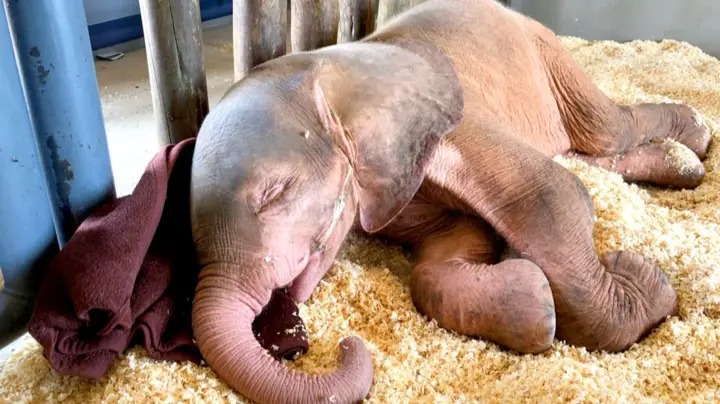
Khanyisa was taken to Hoedspruit Elephant Rehabilitation and Development (HERD), South Africa’s first dedicated elephant orphanage, built specifically to care for calves left orphaned or displaced by poaching and other human-wildlife conflict.
Sue Howells, who worked with HERD at the time, described the calf’s arrival: “She looked so innocent, fragile and pure, and yet so brave — a unique beauty who had been sadly mutilated by the hands of man,” as quoted by Save the Elephants.
Khanyisa arrived weighing just 124 kilograms, a fraction of a healthy weight for her age. Caregivers gave her round-the-clock attention, including a companion sheep named Lammie who helped keep her calm during the hardest stretches of her recovery.
Slowly, Joining A New Family
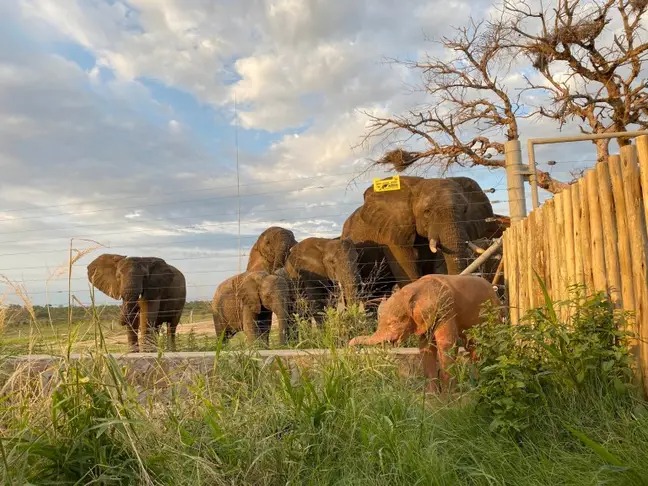
HERD sits alongside the Jabulani Herd at Kapama Private Game Reserve — a group of elephants, most of them rescued orphans themselves, that has a track record of welcoming new orphaned calves into its social structure.
Over the following months, caregivers began the slow process of introducing Khanyisa to the herd. By July 2020, six months after her rescue, she had grown to roughly 250 kilograms and was being progressively integrated into the group, according to HERD’s own account of her recovery. HERD founder Adine Roode later noted that despite her visible scarring, Khanyisa didn’t let her rough start define her, and that she “does not let her tough start in life stop her from shining brightly among the other elephants,” per The African Mirror.
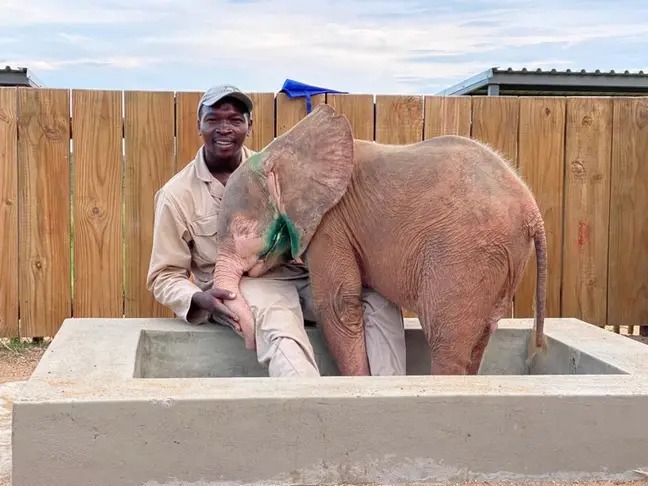
Her name, Khanyisa, means “light” or “sunshine” — a name that, as she recovered, her caregivers said increasingly suited her.
Living With Albinism In The Wild
Albino elephants are extremely rare, and albinism brings its own challenges in the African sun: pale, unpigmented skin is far more vulnerable to sunburn than the thick grey hide of a typical elephant. Khanyisa has had to learn, like other albino elephants, to rely on mud and dust baths for protection, coating her skin the way other elephants use theirs more for cooling than sun defense.
Six Years Later
As of January 2025, Khanyisa was marking six years since her rescue as a healthy, confident member of the Jabulani Herd, Good Things Guy reported. Photos taken over the years show a calf who arrived skeletal and wounded grown into a large, thriving young elephant, scars still visible but no longer defining her.
Her case has also become a point of reference in conversations about snaring, which conservationists say has been on the rise in parts of Southern Africa as human population growth and shrinking wildlife habitat push people and animals into closer contact.
Frequently Asked Questions
What is a poaching snare, and how does it injure animals?
A snare is typically a wire or cable loop set to trap animals by a limb or the neck. As the animal struggles, the loop tightens further, often causing deep wounds, infection, or death if the animal isn’t found and treated in time.
Why is Khanyisa albino, and is that common in elephants?
Albinism is a genetic condition that prevents normal pigment production, and it’s extremely rare in wild elephants. Albino elephants typically have pale pink or white skin instead of grey.
Where does Khanyisa live now?
She lives with the Jabulani Herd at Kapama Private Game Reserve, near HERD (Hoedspruit Elephant Rehabilitation and Development), South Africa’s first dedicated elephant orphanage.
Was her herd ever identified, or did anyone find out who set the snare?
Available reporting doesn’t establish either. It’s unclear if she was already separated from a wild herd before the snare incident, and no information has been reported publicly about who set the snare.
Is snaring a widespread problem in African wildlife conservation?
Yes. Conservationists have flagged snaring as an increasing threat in parts of Southern Africa, driven partly by human population growth and shrinking natural habitat for wildlife.
Sources: Good Things Guy, Save the Elephants (via Mirror UK reporting), The African Mirror, and HERD’s public updates on Khanyisa’s rehabilitation.