
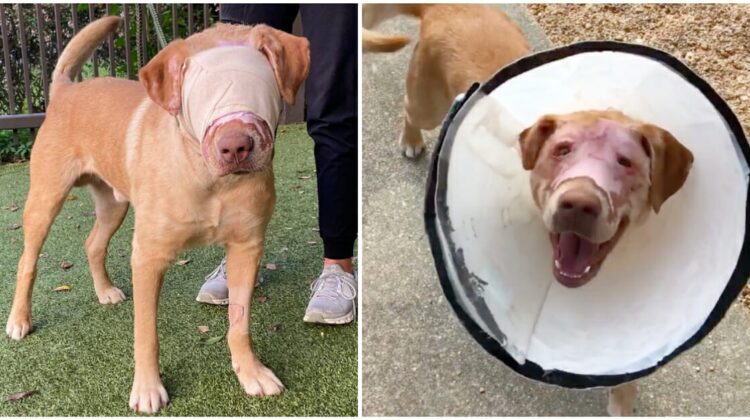
The story of Buddy is a painful reminder of how extreme animal cruelty can still exist—yet it is also a powerful example of resilience, veterinary science, and compassion.
Buddy was described as a happy, carefree dog, never aggressive and never a threat to anyone. Despite this, he became the victim of a horrifying attack that left his face severely burned and his life hanging in the balance.
A Brutal Act of Animal Abuse
In April 2021, the Tunica Humane Society reported that Buddy had been deliberately set on fire. When he was found, his face was completely scorched and charred black, and an extension cord was wrapped tightly around his neck, indicating both burning and strangulation.
According to WTVA, a child later confessed to the act. However, because the child was under the age of 12, no criminal prosecution could take place—raising serious questions about animal protection laws and accountability.
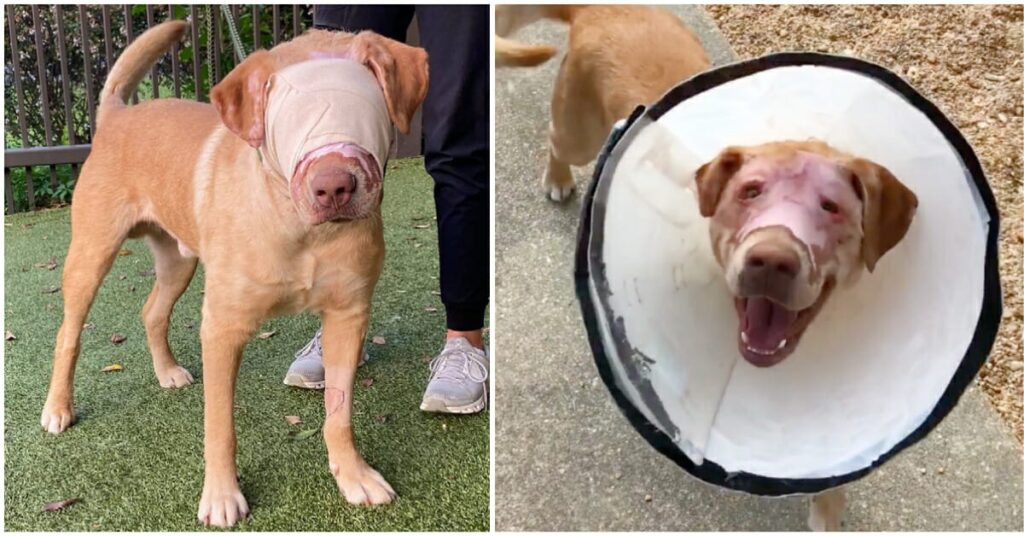
Buddy was immediately taken into the care of the Tunica Humane Society in Mississippi and transferred for advanced treatment to Mississippi State University’s College of Veterinary Medicine.
Critical Condition and Intensive Veterinary Care
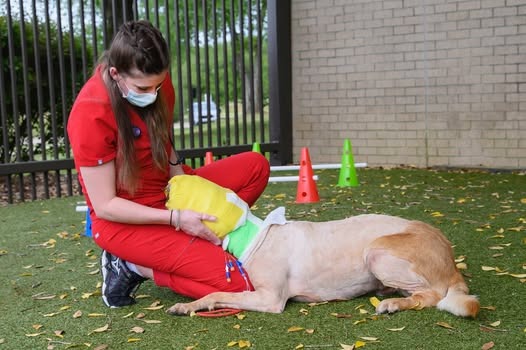
Burn injuries are among the most complex and dangerous traumas in veterinary medicine. Despite the severity of Buddy’s injuries, his vital signs remained stable.
“Buddy’s vital signs are good, but as with any burn patient, this is the bottom of a very tall mountain to be climbed,” said Dr. Elizabeth Swanson, associate professor and veterinary surgeon.
Veterinary teams focused on:
- Pain management
- Continuous bandage changes
- Infection control
- Monitoring complications common in severe burn cases

Buddy’s recovery was slow, but steady.
Preserving Vision Against the Odds
One of the greatest concerns was whether Buddy had permanently lost his eyesight. Fortunately, veterinarians determined that his eyes were still intact, although his eyelids were badly damaged and required future surgical repair.
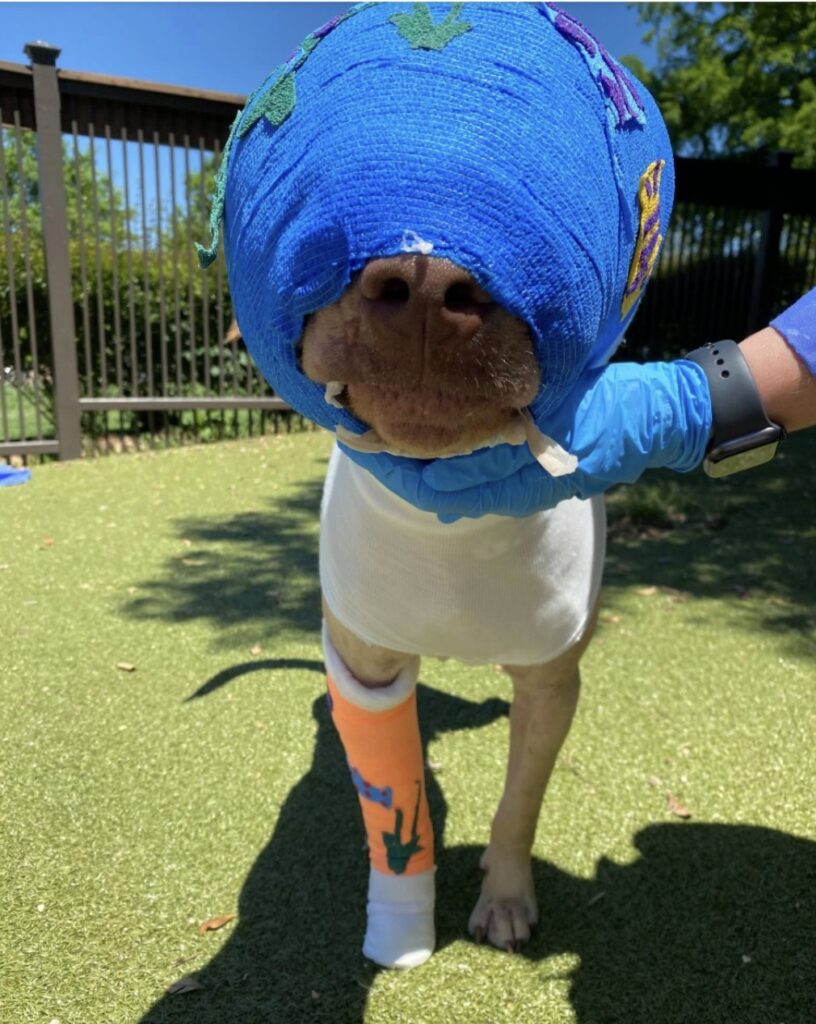
Throughout months of treatment, Buddy remained bandaged around his head and upper body. Yet his temperament never changed.
“He continues to move forward daily,” the Humane Society shared. “Burn wounds are a very slow process, but Buddy is excelling in his healing.”
Skin Grafts, Rehabilitation, and Emotional Healing
Buddy underwent multiple skin graft procedures, which gradually reduced his need for full-body bandaging. During recovery, he began learning basic commands and showing signs of emotional resilience.
Rescuers emphasized that:

- He never showed aggression
- He remained friendly and trusting
- His spirit stayed strong despite extreme trauma
“This sweet, friendly dog didn’t deserve what happened to him,” the organization stated.
A Turning Point: Buddy Sees Again
On August 7, rescuers announced a major breakthrough. For the first time in over three months, Buddy’s bandages were removed without heavy sedation—allowing him to open his eyes and see.
“Yes, Buddy can still see,” the Humane Society confirmed after thousands of prayers and messages of support.
This moment marked a dramatic emotional shift. Buddy’s personality visibly returned. He became playful, energetic, and joyful—often carrying a ball proudly through the halls.
“He loves balls,” said Sandy Williams, director of the Tunica Humane Society. “He carries them around so everyone can see.”
Long-Term Care and Special Needs
Although Buddy’s recovery has been extraordinary, his injuries will affect him for life. Due to damaged skin and sensitive eyes, he requires:
- Sunscreen when outdoors
- Regular eye drops
- Limited sun exposure
“He is not a dog that can stay out in the sun for hours,” Williams explained.
Buddy now lives with his forever family, receiving ongoing care, safety, and love.
Veterinary Burn Treatment, Animal Cruelty Laws, and Long-Term Rehabilitation

Buddy’s case highlights the growing importance of advanced veterinary medicine, including:
- Skin graft technology
- Pain management protocols
- Long-term rehabilitation for burn survivors
It also raises urgent concerns about animal cruelty legislation, juvenile accountability, and the psychological impact of abuse on animals.
Experts stress that preventing similar cases requires:
- Stronger animal abuse laws
- Early education on animal welfare
- Increased funding for veterinary trauma care
Animal cruelty is not only a moral issue—it is a legal, medical, and societal responsibility.
Final Reflection
Buddy’s survival is nothing short of miraculous. His story stands as proof that with expert medical care and human compassion, even the most devastating cruelty does not have to be the end.
But it also reminds us: no animal should ever have to survive this to teach us empathy.
Leave a Reply