
His sweet face when they finally lift it off.
The other day, rescuers in Southern California received a heartbreaking call from a concerned passerby.
Heavy rainstorms had recently swept across the region, causing severe flooding in several areas. As floodwaters rose, debris and trash collected in the rivers and drainage areas.
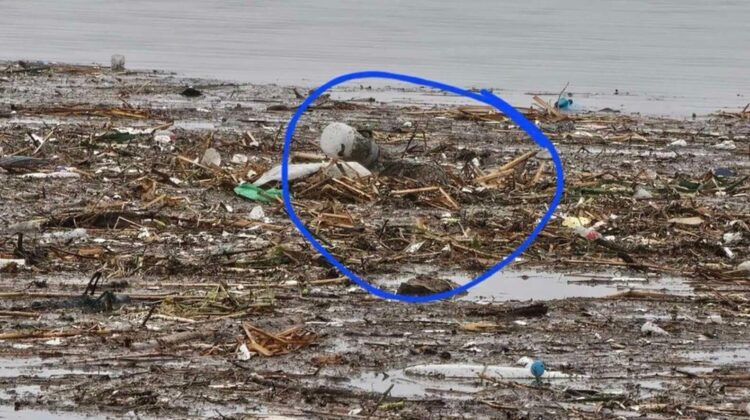
But in the Tijuana River Valley, someone noticed something far more disturbing among the floating debris.
An animal appeared to be trapped in the water — struggling to stay afloat with a bucket stuck on its head.
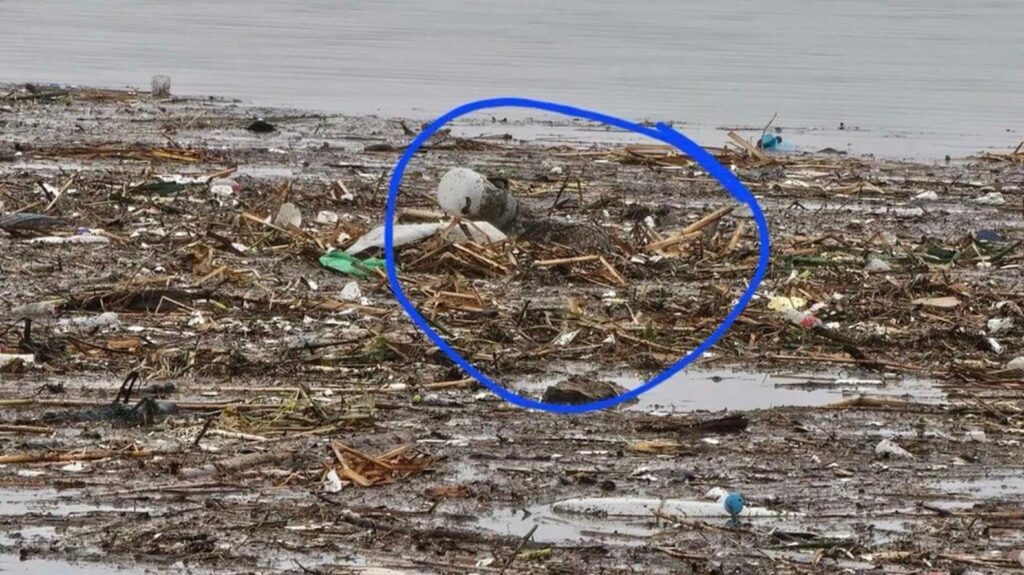
At first glance, it looked like a dog in serious trouble.
Rescue officers rushed to the scene and soon located the frightened animal surrounded by piles of garbage and debris. With the plastic bucket completely covering its head, they couldn’t immediately identify what kind of animal it was.
But they knew one thing for certain — it needed help fast.
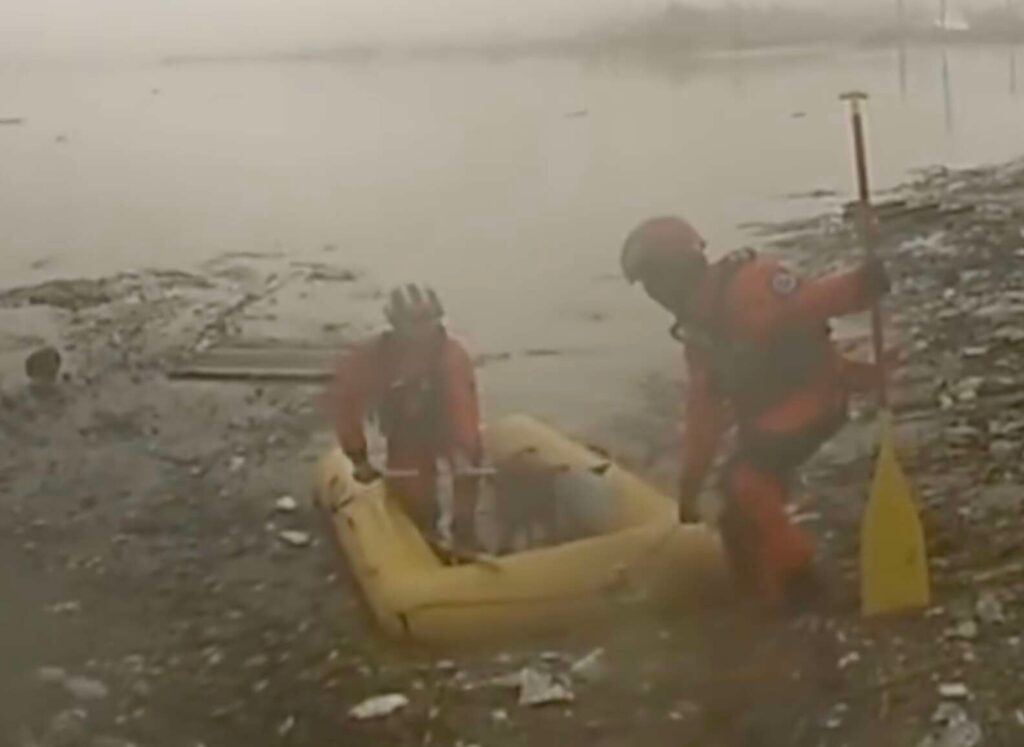
The terrain around the river made the rescue extremely difficult. Thick mud, deep water and unstable ground made it impossible to reach the animal from land.
So the team came up with another plan.
Using a boat, rescuers carefully made their way across the water until they were close enough to reach the struggling creature.
And that’s when they made a surprising discovery.
The animal they thought was a dog… wasn’t a dog at all.
It was a coyote.
The exhausted animal had likely become trapped while trying to search for food among the debris left behind by the storm.
Rescuers gently wrapped the soaked coyote in a towel before carefully lifting him out of the cold water.
He was then transported to a nearby wildlife veterinary center where a medical team immediately began treating him.
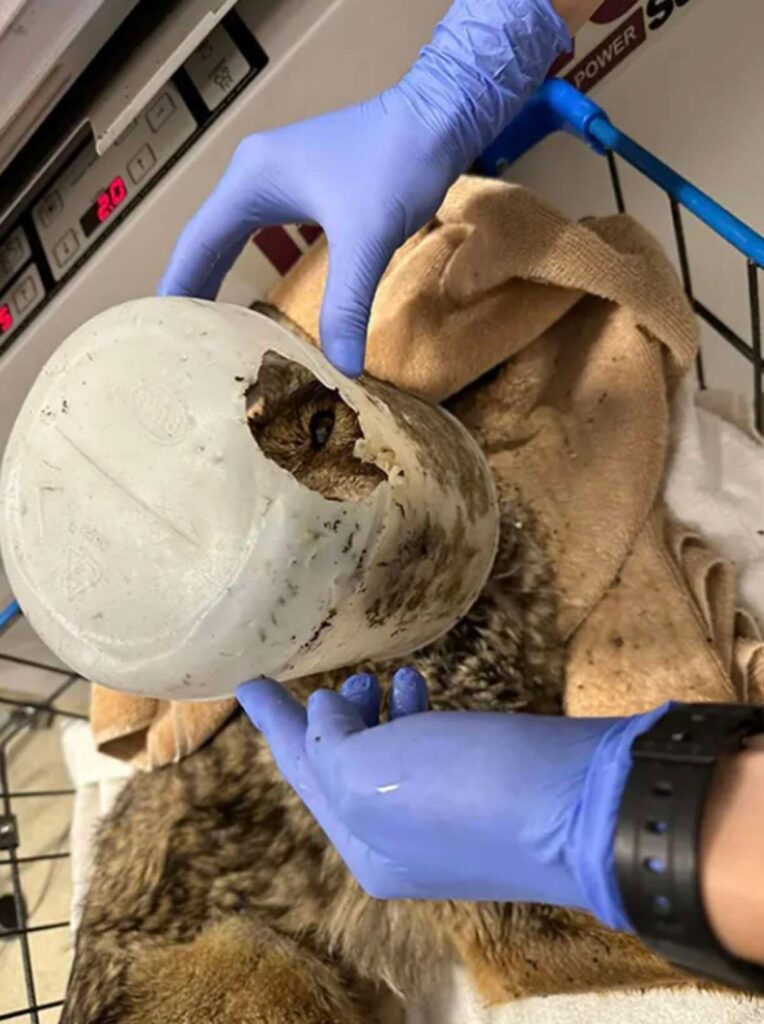
To safely remove the bucket, veterinarians sedated the frightened animal and slowly slid the plastic container off his head.
Finally free from the bucket, the coyote could breathe normally again.
During the examination, veterinarians discovered the animal was suffering from mild hypothermia. He also had small wounds and cactus spines stuck in his fur from struggling through the rough environment.
The team cleaned his wounds, removed the spines and provided fluids and pain medication to help him recover.
Over the next several days, the coyote slowly regained his strength.
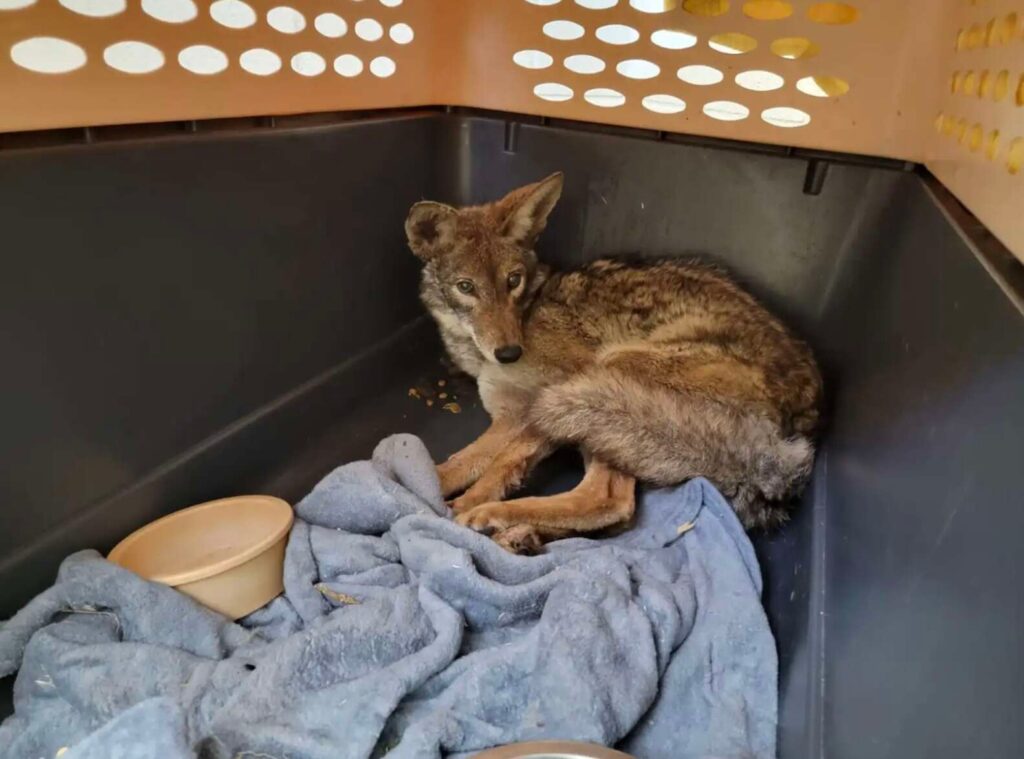
Thanks to proper care and rest, his condition improved quickly.
Before long, he was strong enough to return to the wild.
Rescuers carefully transported him to a quiet wooded area far from the flooded river.
The moment they placed his crate on the ground and opened the door, the coyote burst out and ran straight into the forest.
Within seconds, he disappeared into the trees — finally free again.
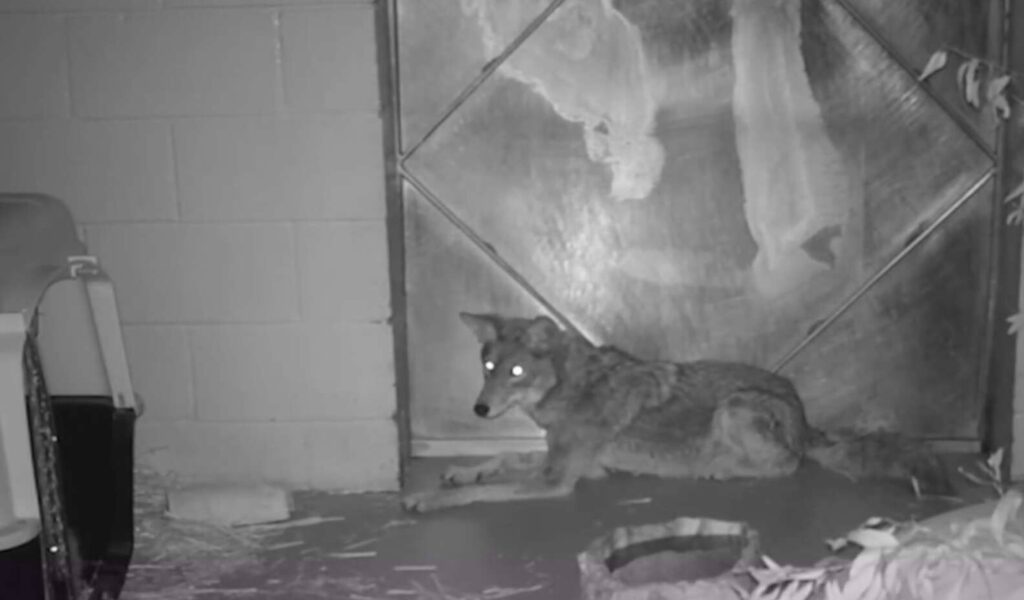
The rescue team watched with smiles as the resilient survivor returned to the wild where he truly belonged.
Wildlife rescue operations are essential for protecting animals affected by natural disasters, pollution, and urban expansion. Many rescue organizations depend on wildlife rehabilitation programs, veterinary medical care, conservation funding, and emergency animal rescue services to treat injured animals and safely return them to their natural habitats. Supporting wildlife protection initiatives helps ensure that vulnerable animals receive proper care and a second chance to survive in the wild.
Leave a Reply