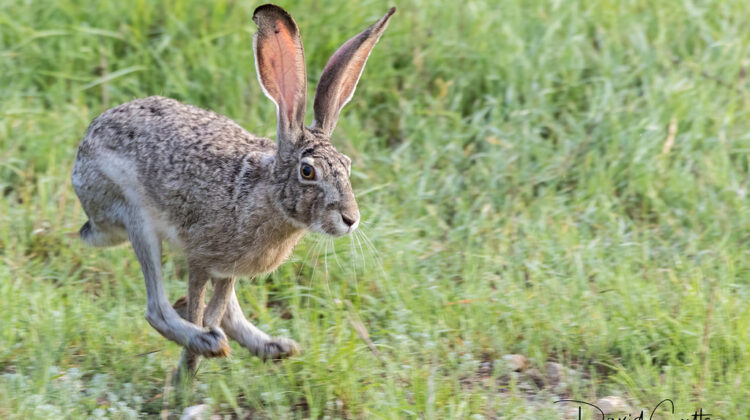
Welcome to another edition of our Creature Feature series, where we explore fascinating adaptations found in nature. In collaboration with the Biomimicry Institute, we delve into the cooling strategy of black-tailed jackrabbits and how it could inspire innovative solutions for human technology.
Imagine living in the scorching temperatures of Death Valley. With summer averages reaching a blistering 46˚C (116˚F), staying cool becomes a formidable challenge for any living creature. While humans rely on sweating to dissipate heat, the limited rainfall in Death Valley, with only 6 centimeters (2.4 inches) annually, makes excessive sweating a risky proposition due to dehydration.
However, some animals in this arid environment have evolved ingenious ways to regulate their body temperature without losing precious water. One such mammal is the black-tailed jackrabbit, which, despite the heat, remains active during daylight hours. These remarkable hares possess disproportionately large ears, and these ears happen to be their secret weapon for staying cool.

The jackrabbit’s ears, known as pinnae, are densely packed with tiny blood vessels that carry hot blood from the core of their bodies. When the air temperature is slightly cooler than the hare’s body temperature, a natural heat exchange occurs. Heat flows from the ears to the surrounding air, facilitated by the large surface area provided by the jackrabbit’s impressive ears. In addition, the blood vessels in the ears can widen through a process called vasodilation, allowing for even greater heat loss. (You may have experienced a similar process when your cheeks turn red during exercise!)
At air temperatures around 30°C (86°F), the jackrabbit’s ears can efficiently shed all excess heat, helping the animal maintain a safe body temperature while conserving water that would have otherwise been lost through sweating or panting.
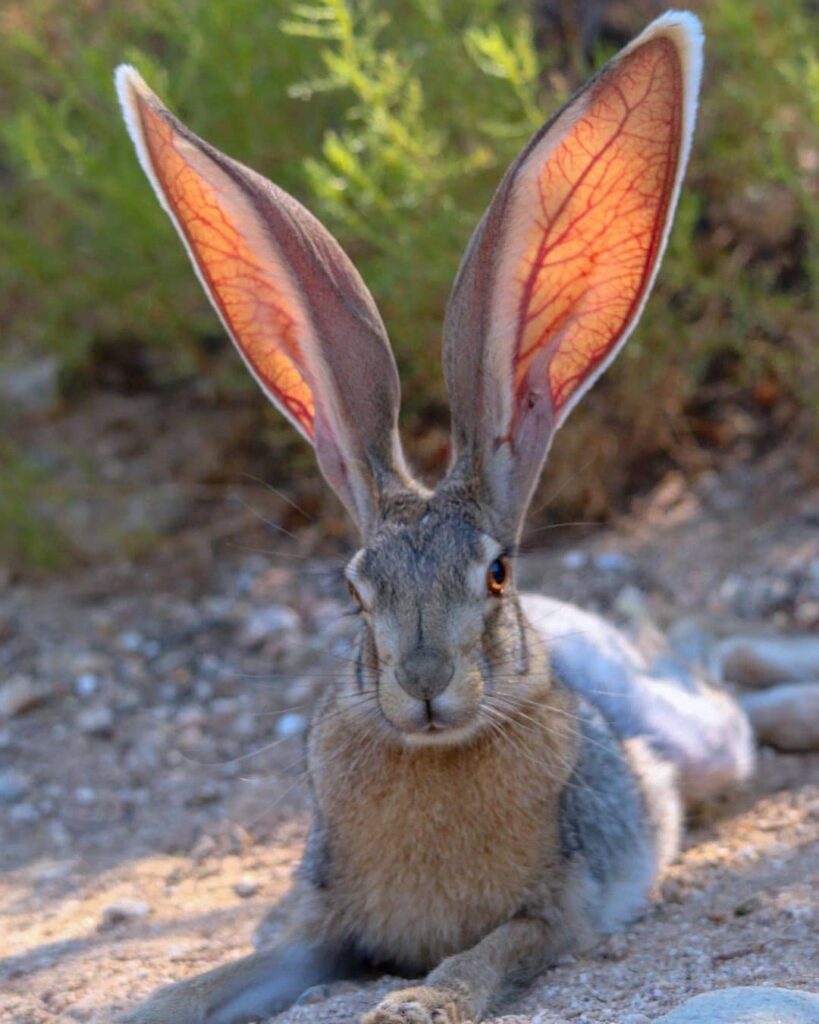
While the jackrabbit is not the only creature to utilize appendages for heat management, its unique adaptation is particularly notable considering the extreme temperature-regulation challenges it faces in its Death Valley habitat. Other animals, such as opossums, rats, muskrats, seals, and goats, have also evolved specialized appendages or body parts to manage excess heat.
Now, the question arises: What can humans learn from the resourcefulness of the black-tailed jackrabbit? Could this remarkable strategy be applied to tackle overheating issues in human-made systems? For example, server farms, essential for keeping the internet running, generate significant amounts of heat, consuming electricity equivalent to 180,000 homes. Is there something the jackrabbit can teach us about managing heat in these data centers? Moreover, how might the jackrabbit’s cooling strategy inspire more sustainable designs for home air conditioners or assist in cooling engines, machinery, and electronics prone to overheating?
Nature has long been a source of inspiration for solving human challenges, and the jackrabbit’s cooling strategy is another example of how we can learn from the remarkable adaptations found in the natural world. By observing and emulating nature’s ingenious solutions, we can develop more efficient and sustainable technologies.

Next time you find yourself facing a problem, consider looking to nature for inspiration. The AskNature collection of Great Nature Project photos is a great resource to explore more examples of how we can learn from the wonders of the natural world. Let’s continue to unlock the secrets of nature and create a brighter future by embracing the wisdom of creatures like the black-tailed jackrabbit.
Leave a Reply