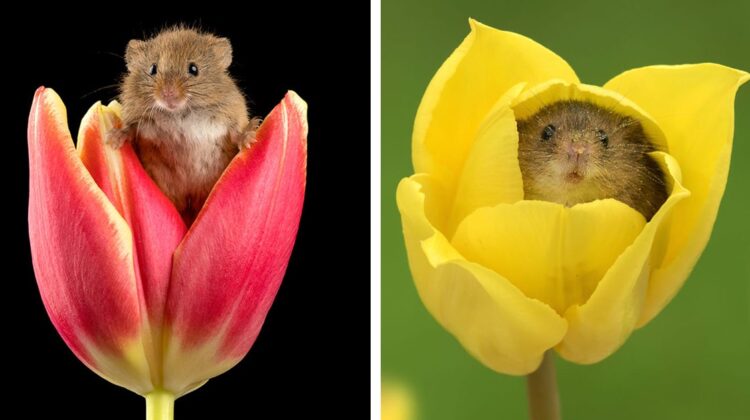
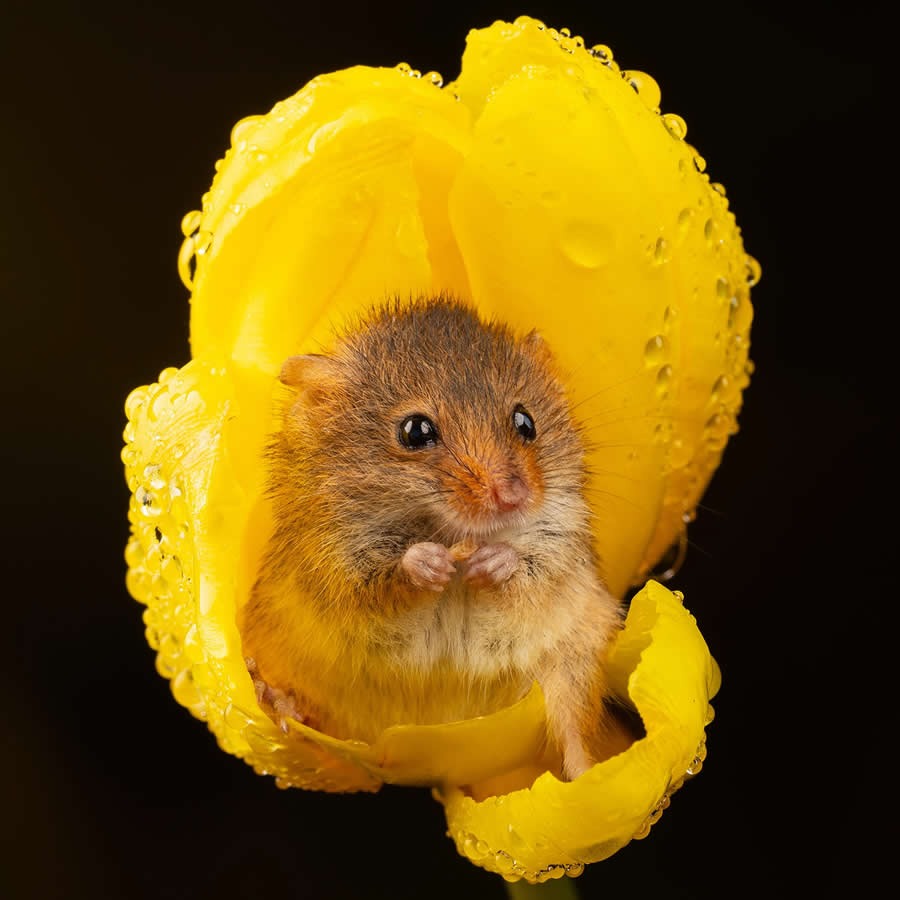
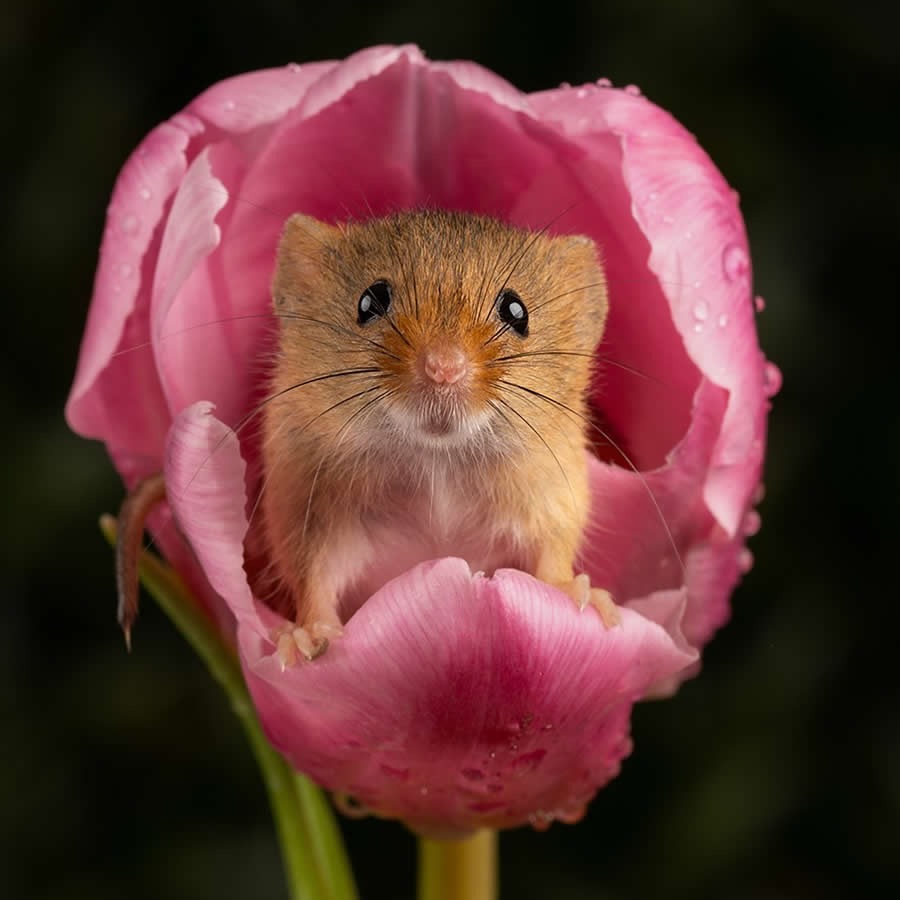
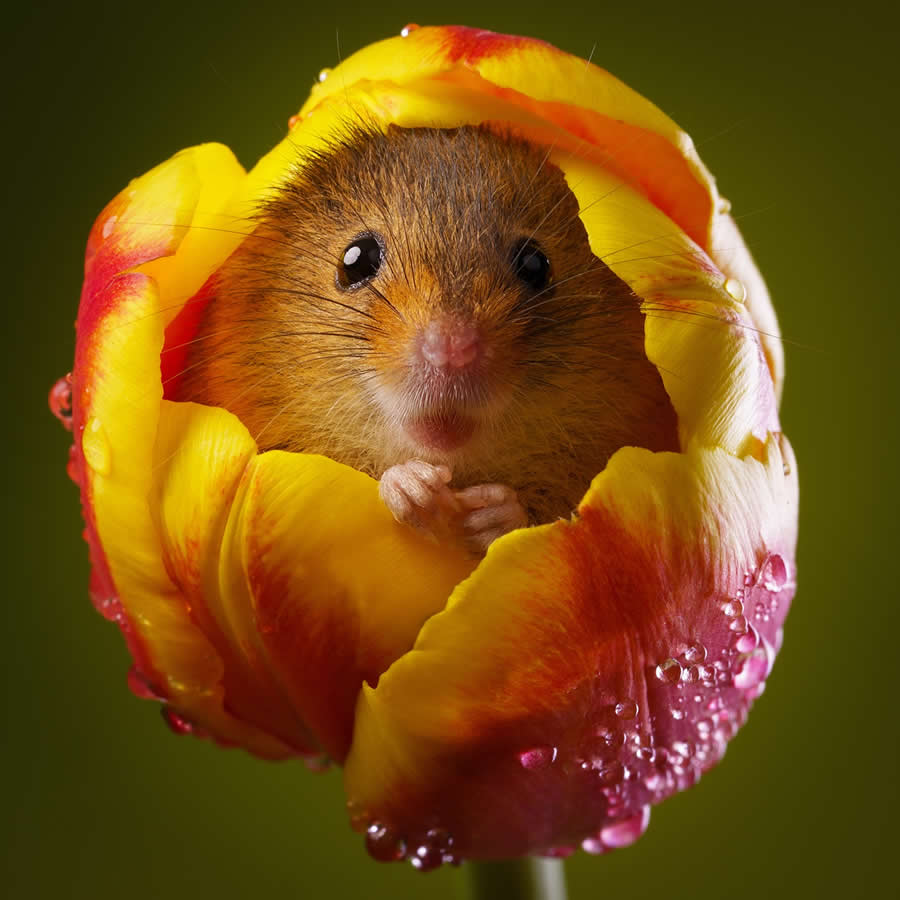
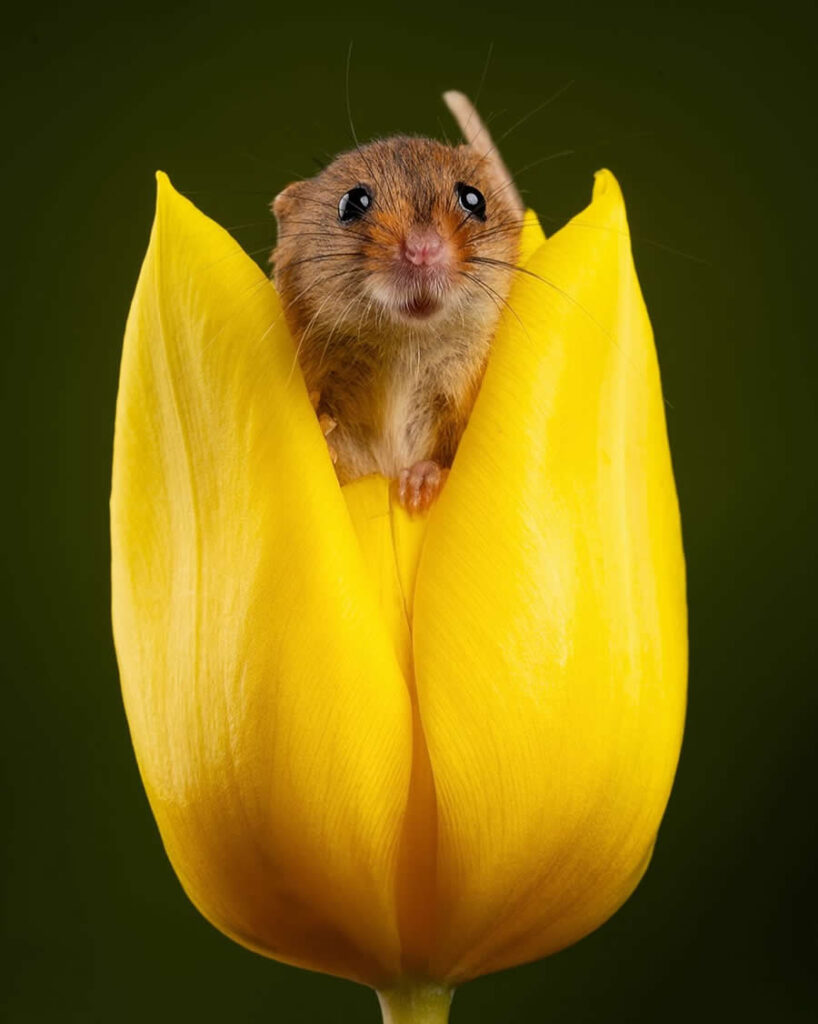
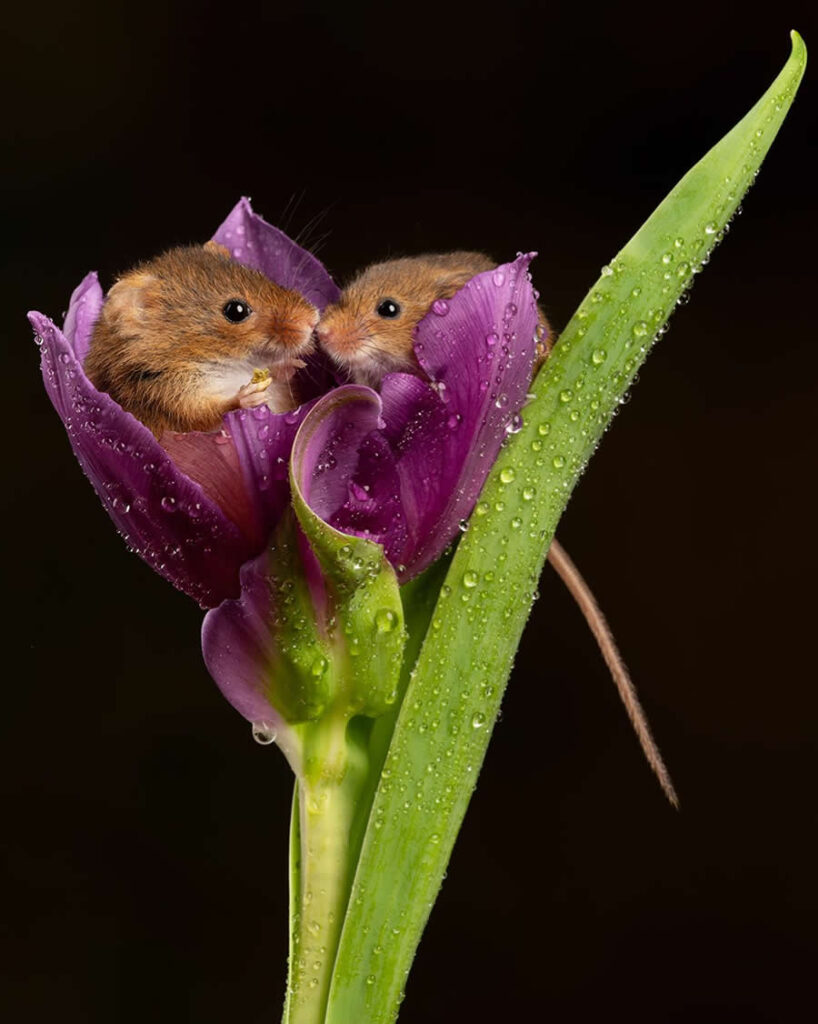
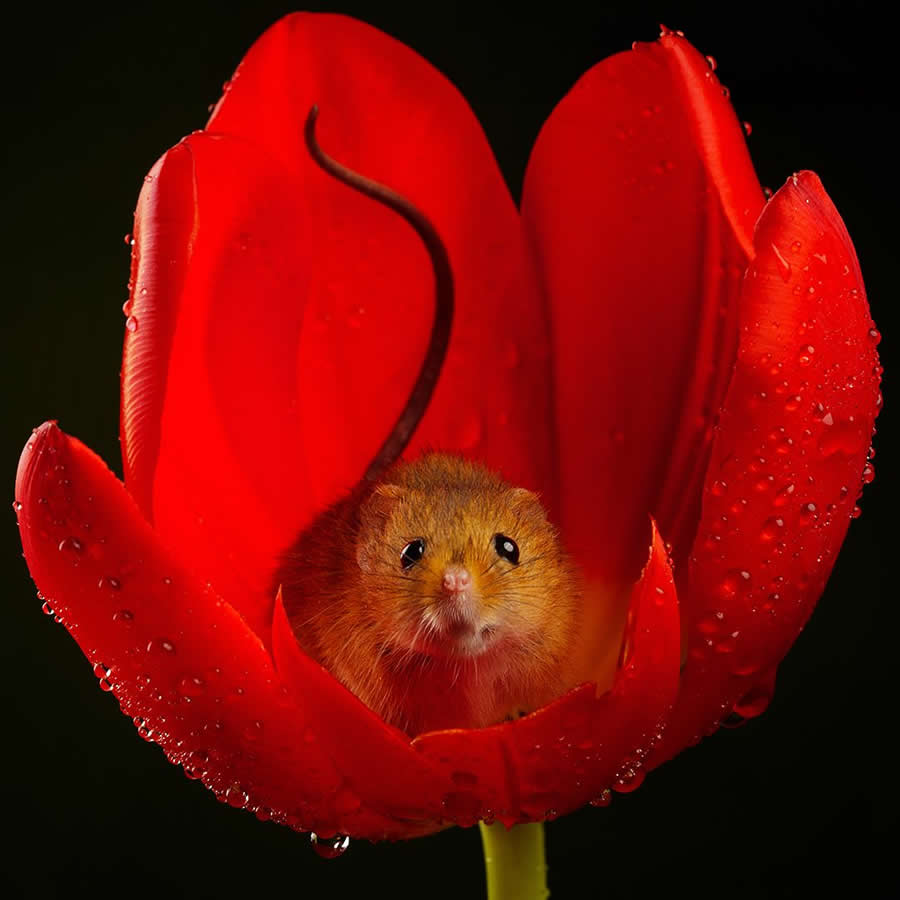
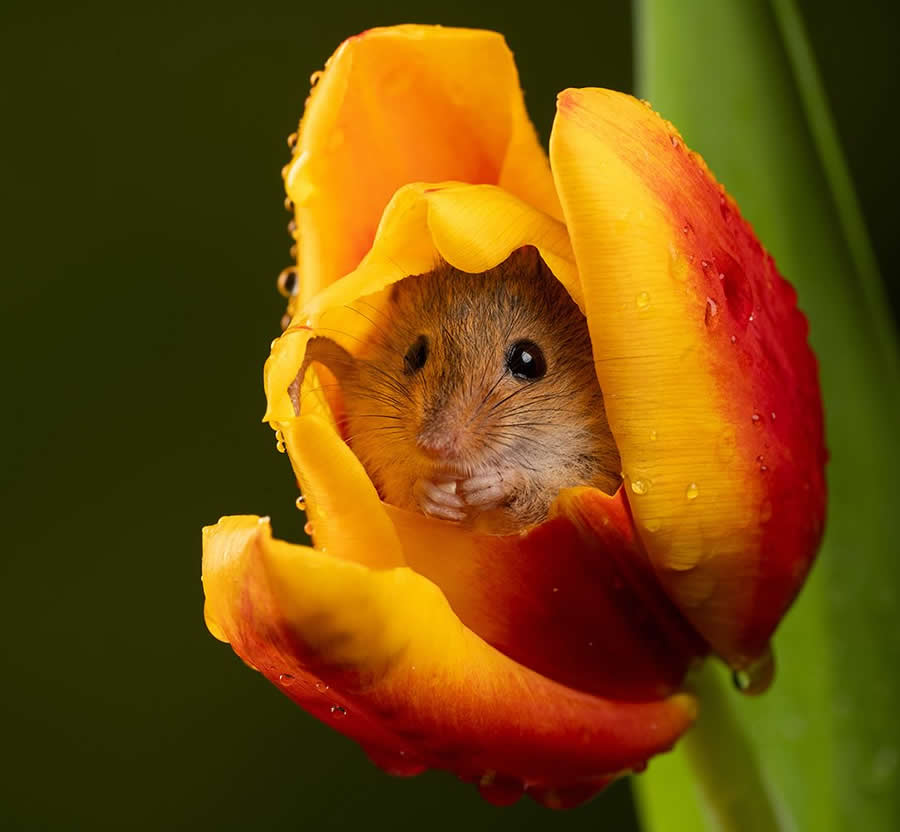
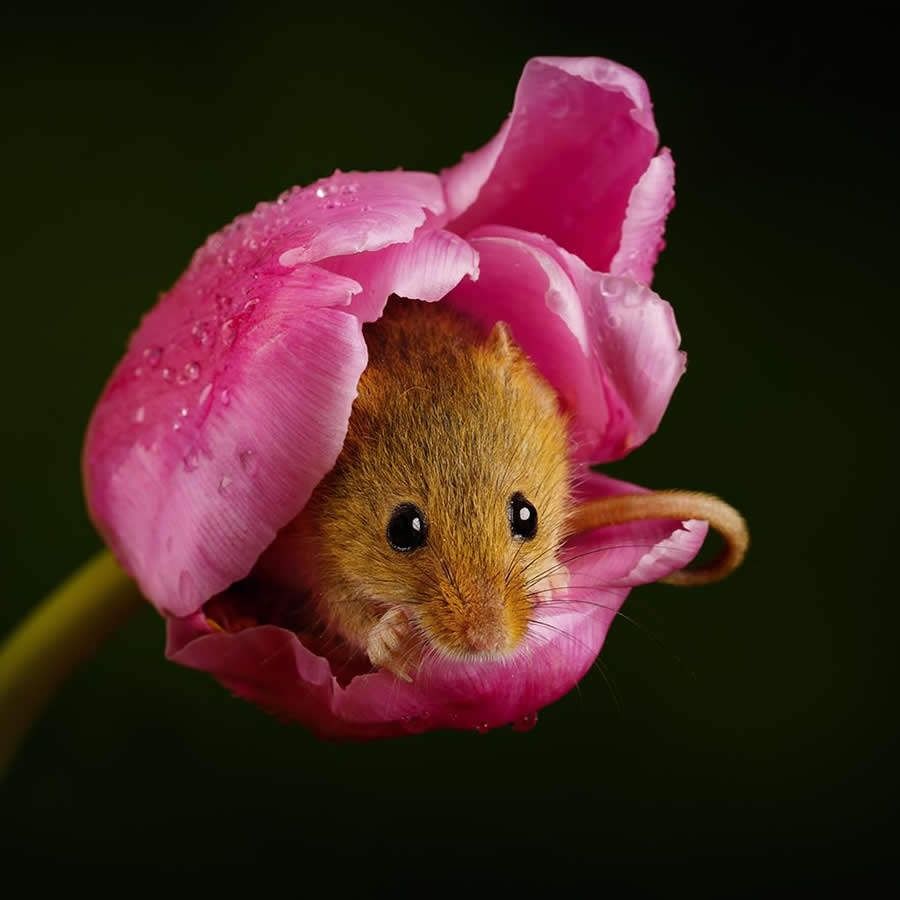
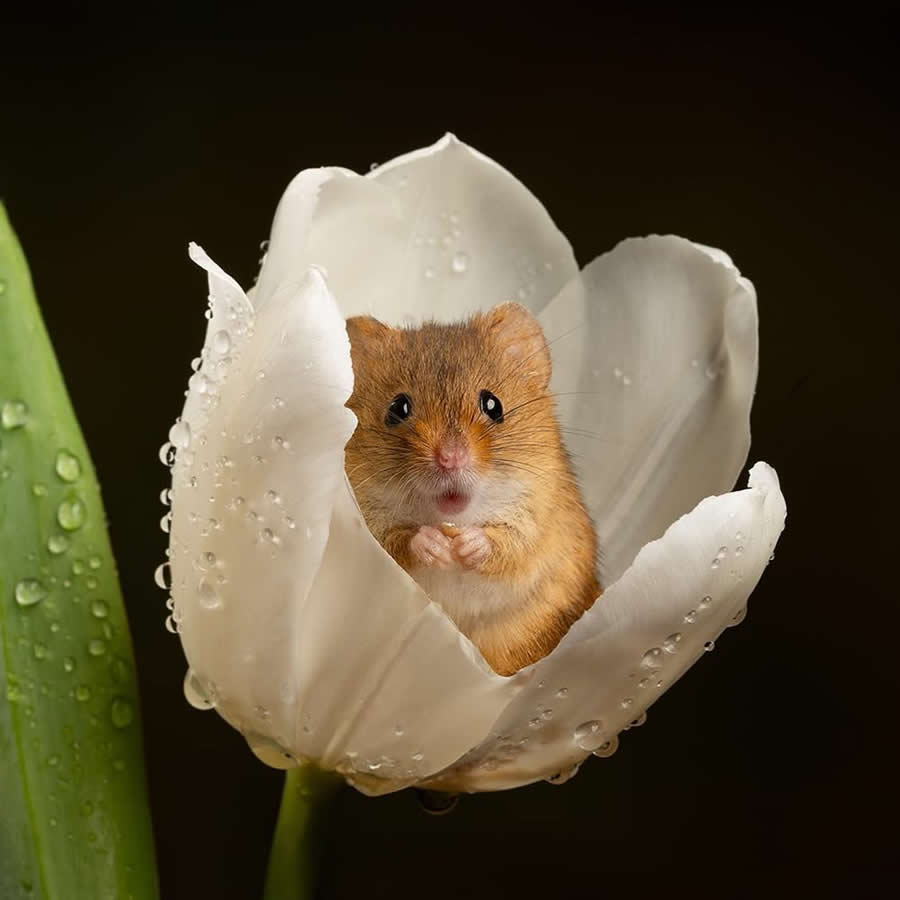
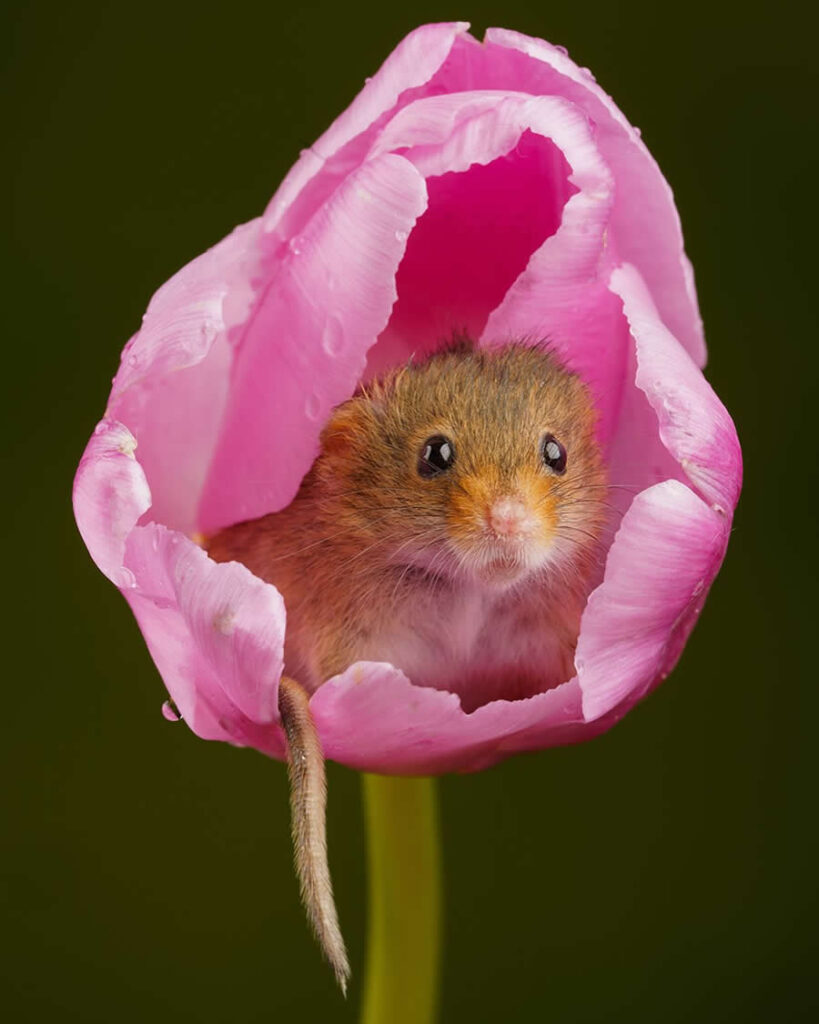
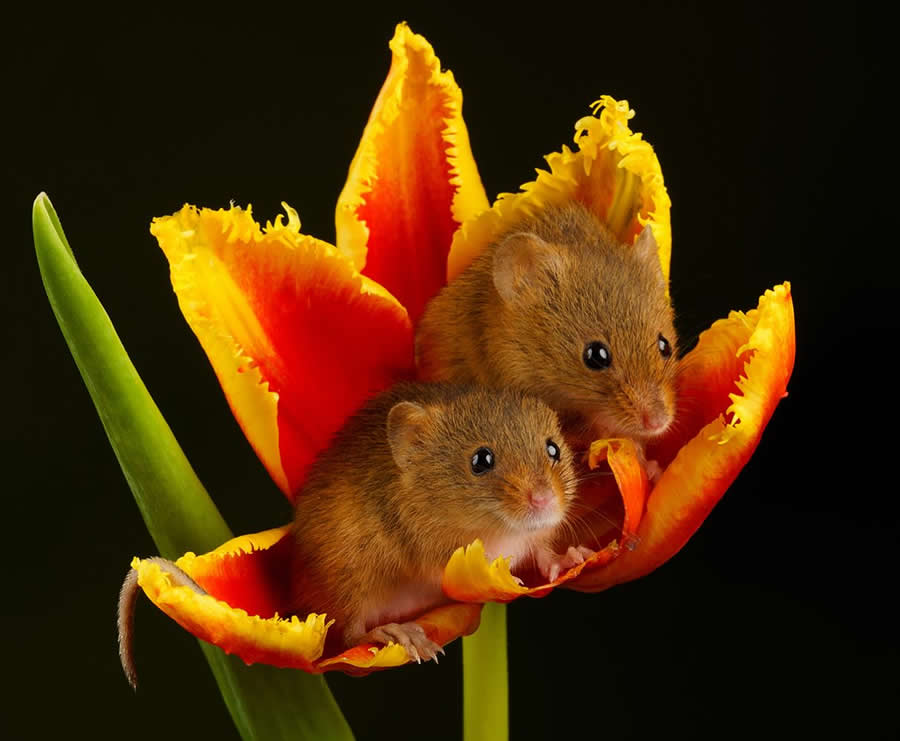
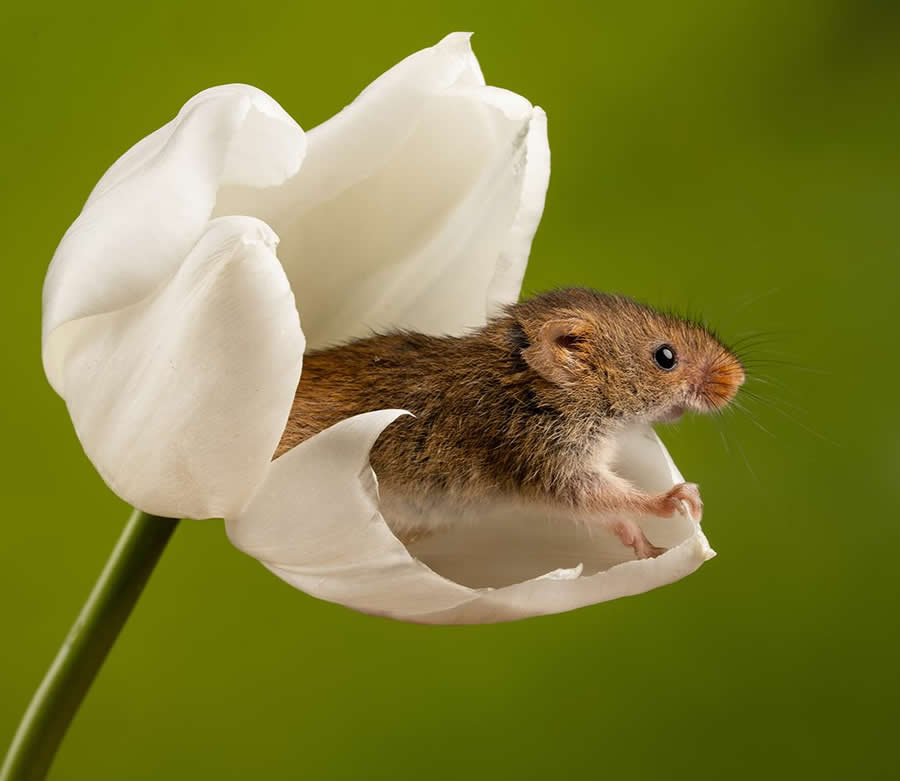
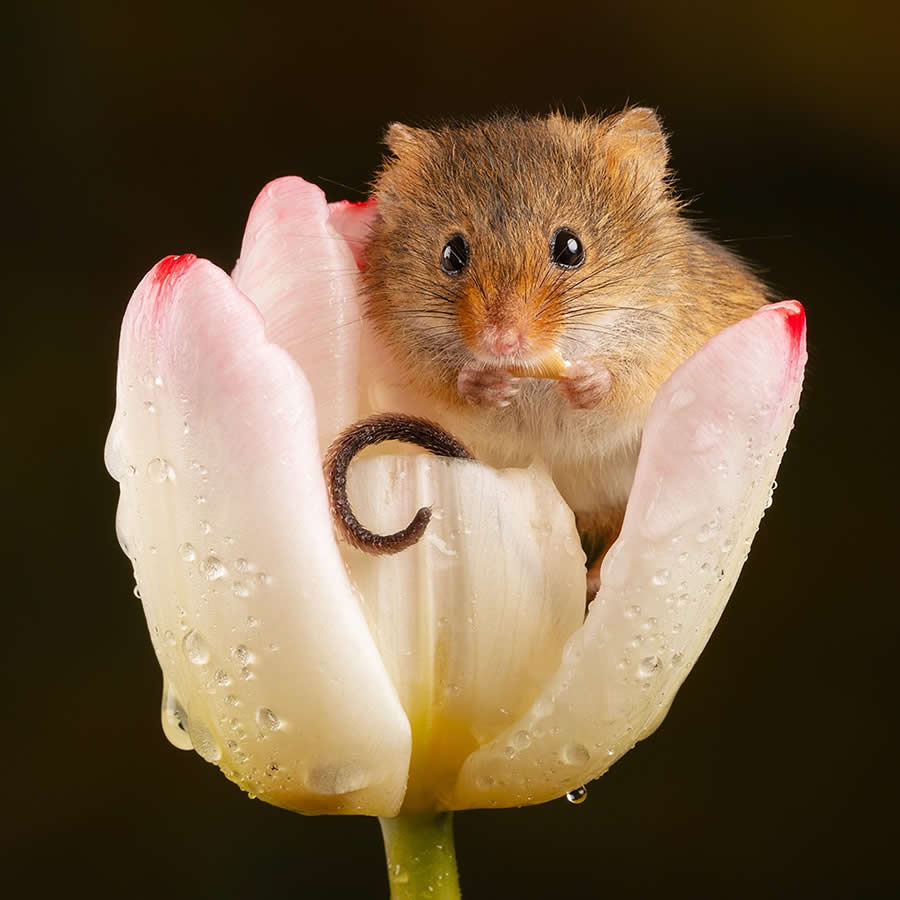
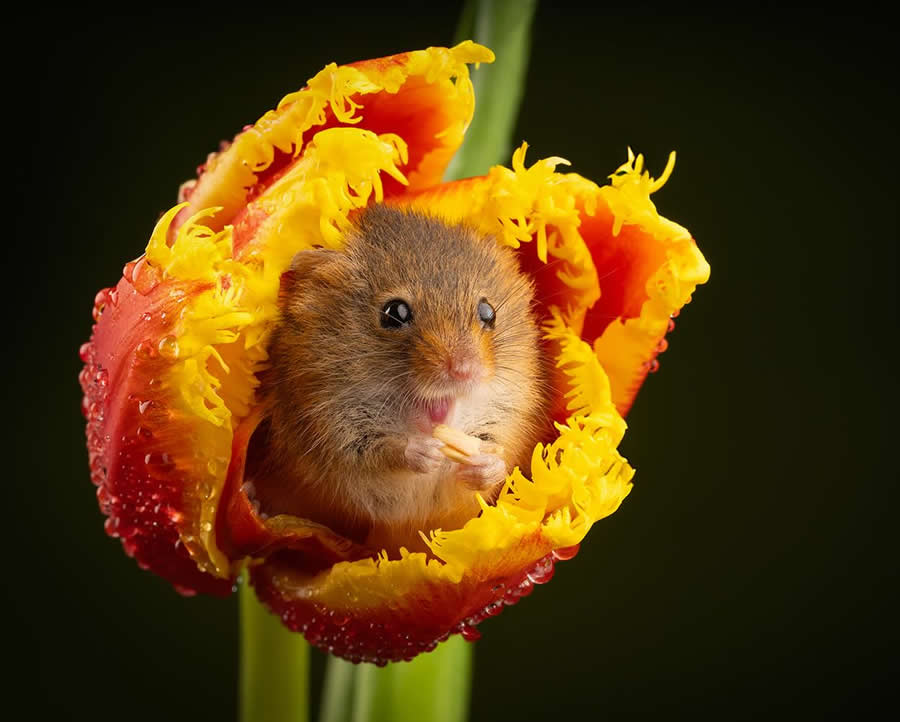
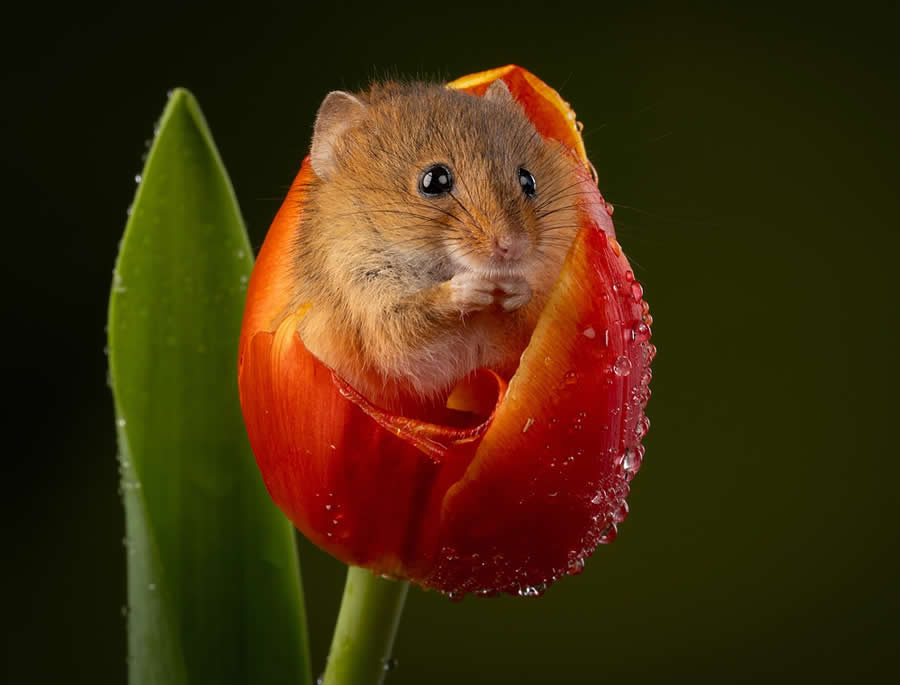
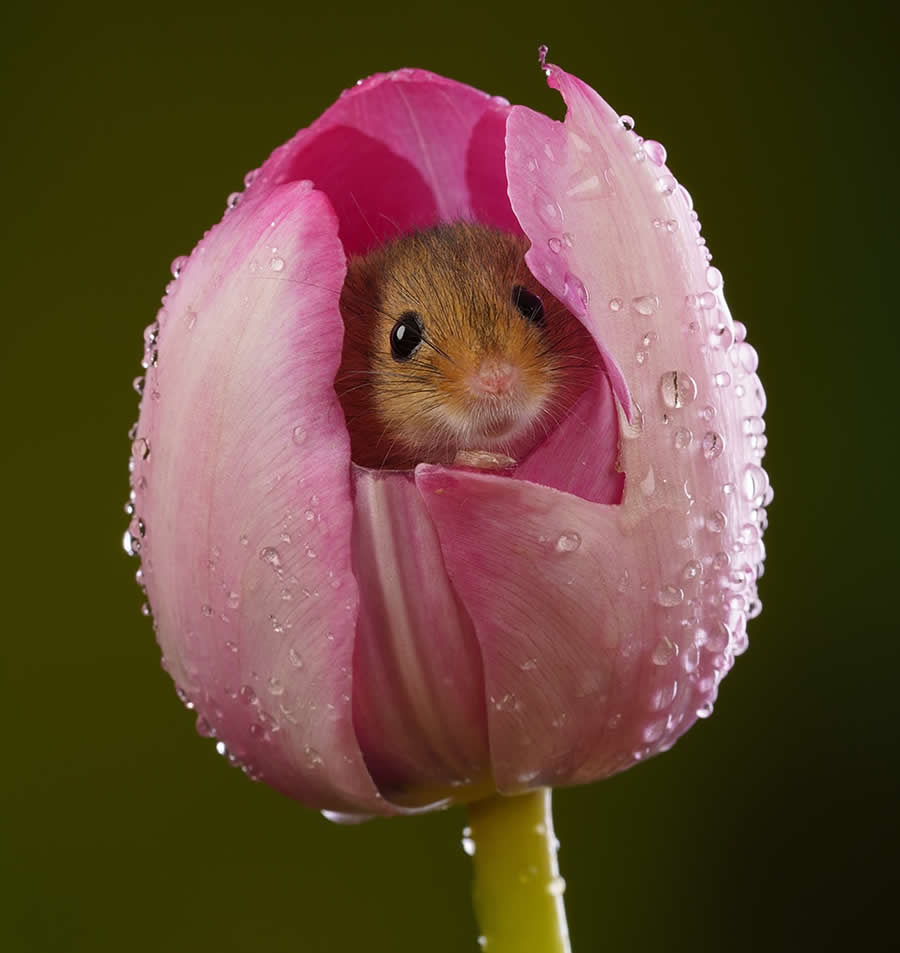
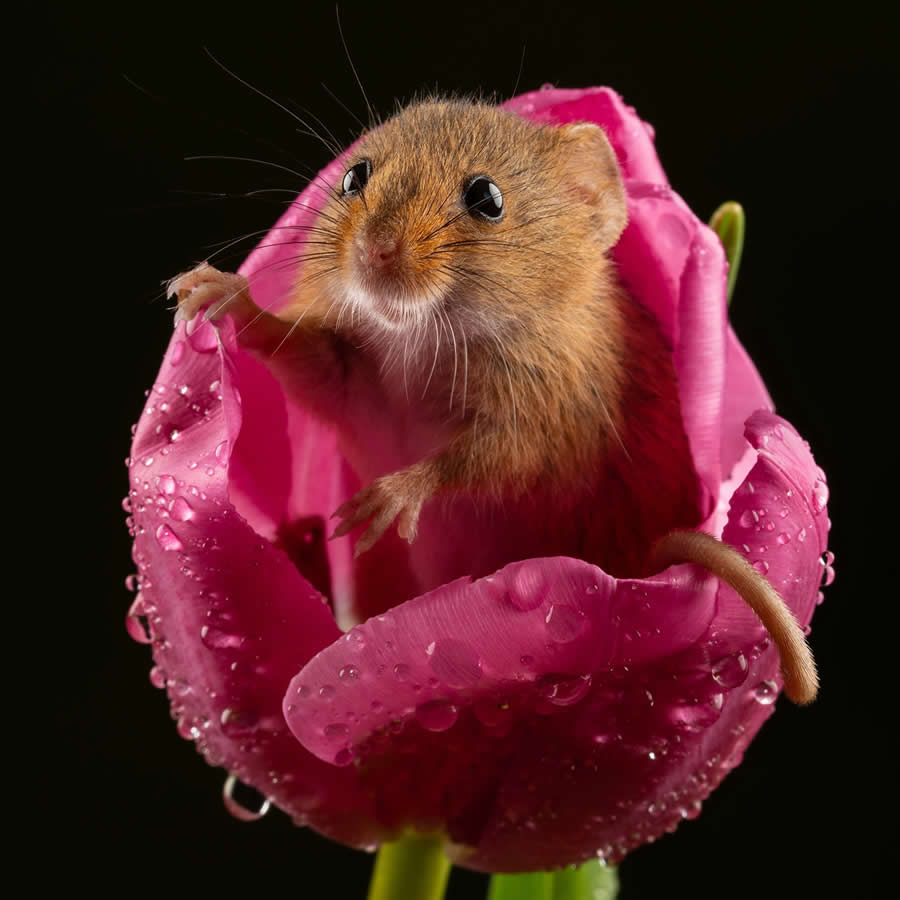
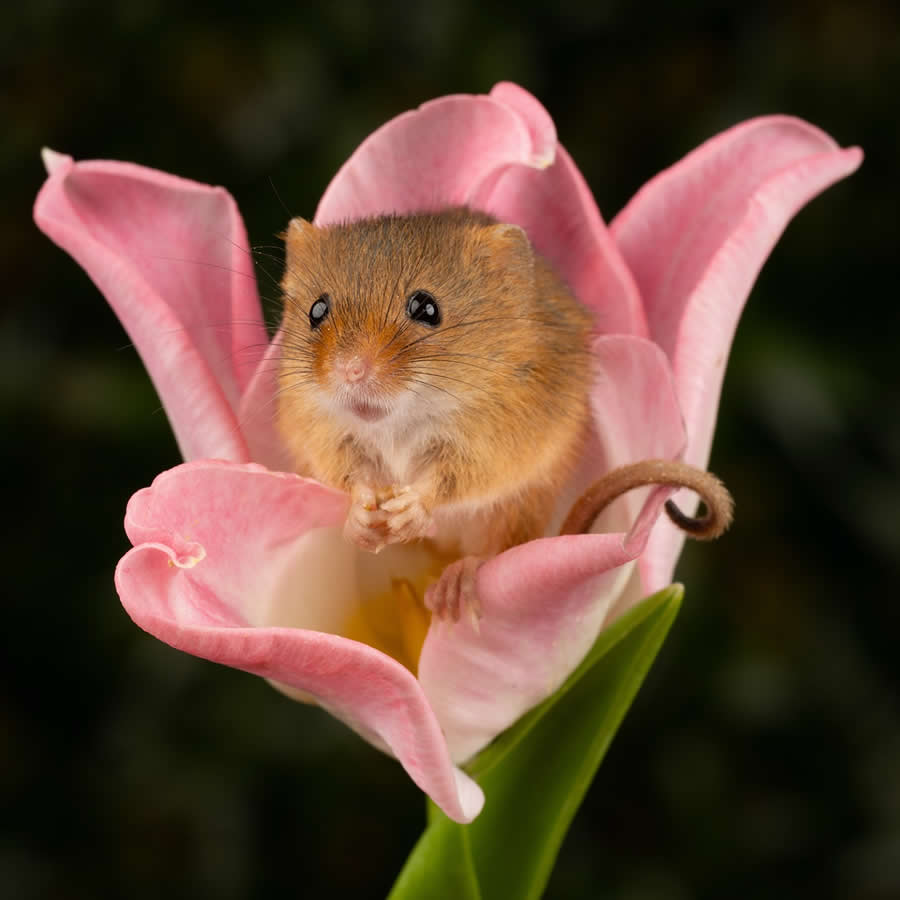
Macro photography usually brings insects to mind — dew on a spider’s web, the compound eye of a fly. British photographer Miles Herbert works in a gentler corner of the same genre: tiny, whiskered harvest mice, caught mid-explore inside the folded petals of tulips.
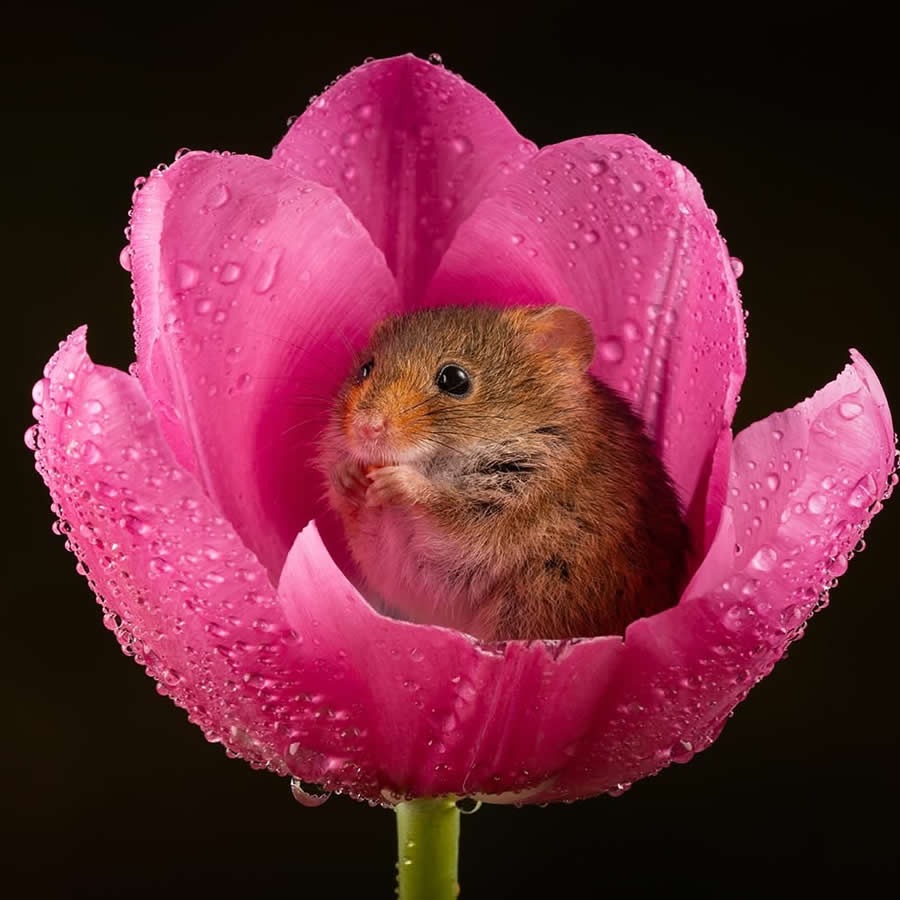
The resulting images have circulated widely since Herbert first shared them years ago, and they keep resurfacing online every spring for good reason — a mouse small enough to sit inside a flower, dusted in pollen, is the kind of image that is hard to scroll past.
Who Is Behind the Camera
Herbert runs Captivelight, a UK-based photography studio built around ethical animal photography. Rather than chasing mice through hedgerows with a long lens, he set up a dedicated indoor studio where lighting, backdrops, and the animals themselves can all be controlled. Captivelight also runs workshops for photographers who want to learn how to shoot birds of prey, reptiles, frogs, and small mammals in similarly controlled conditions.
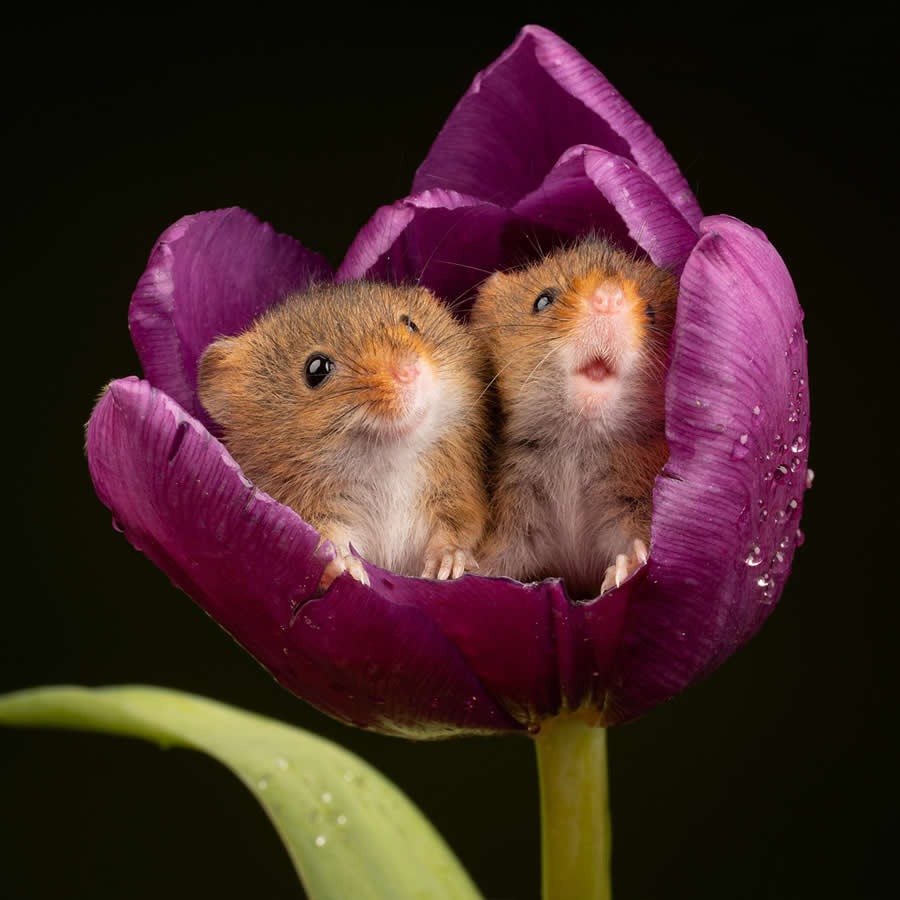
Harvest mice are a fitting subject for this kind of studio work. They’re Britain’s smallest rodent, weighing about as much as a two-pence coin, and their size makes them notoriously difficult to photograph well in the wild — they move fast, hide easily, and rarely sit still in good light.
Captive-Bred, Not Wild-Caught
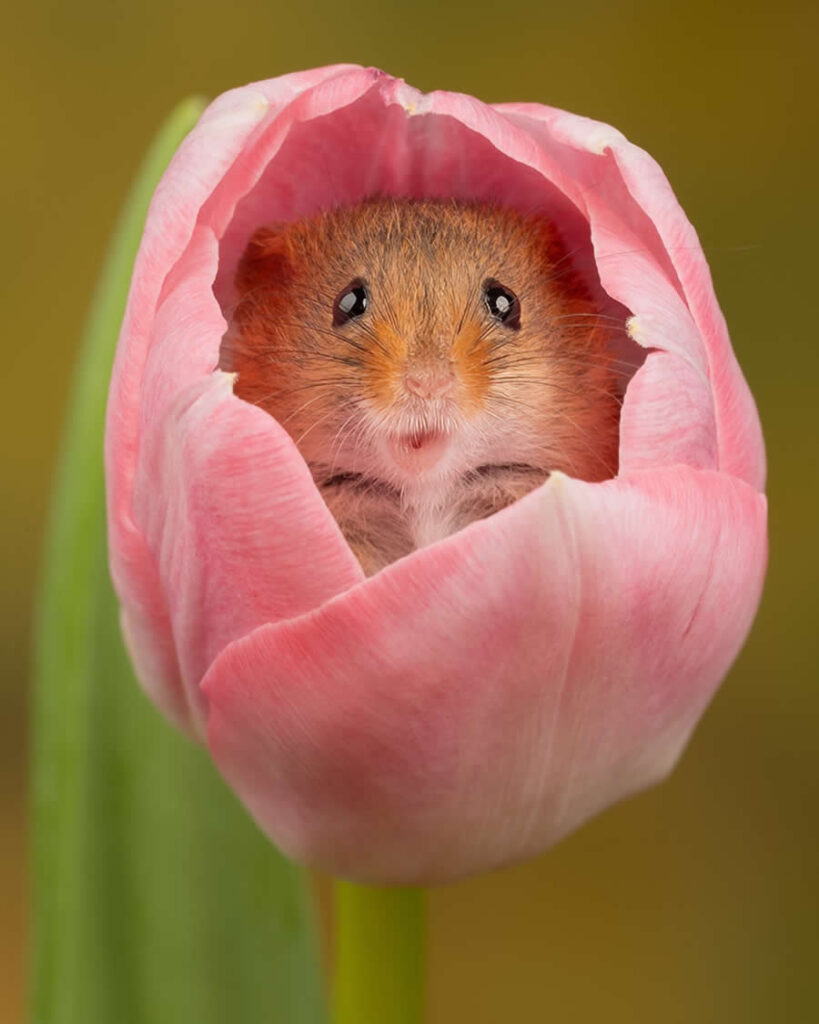
A detail that matters ethically: the mice in these photos aren’t pulled from wild populations. Herbert breeds them specifically for photography sessions, then releases them at a local nature reserve once they’re old enough and strong enough to survive on their own. Working with captive-bred animals means the studio isn’t dependent on weather, daylight hours, or disturbing wild mice in their natural habitat — a distinction Herbert has been clear about in past interviews on his approach to animal photography.
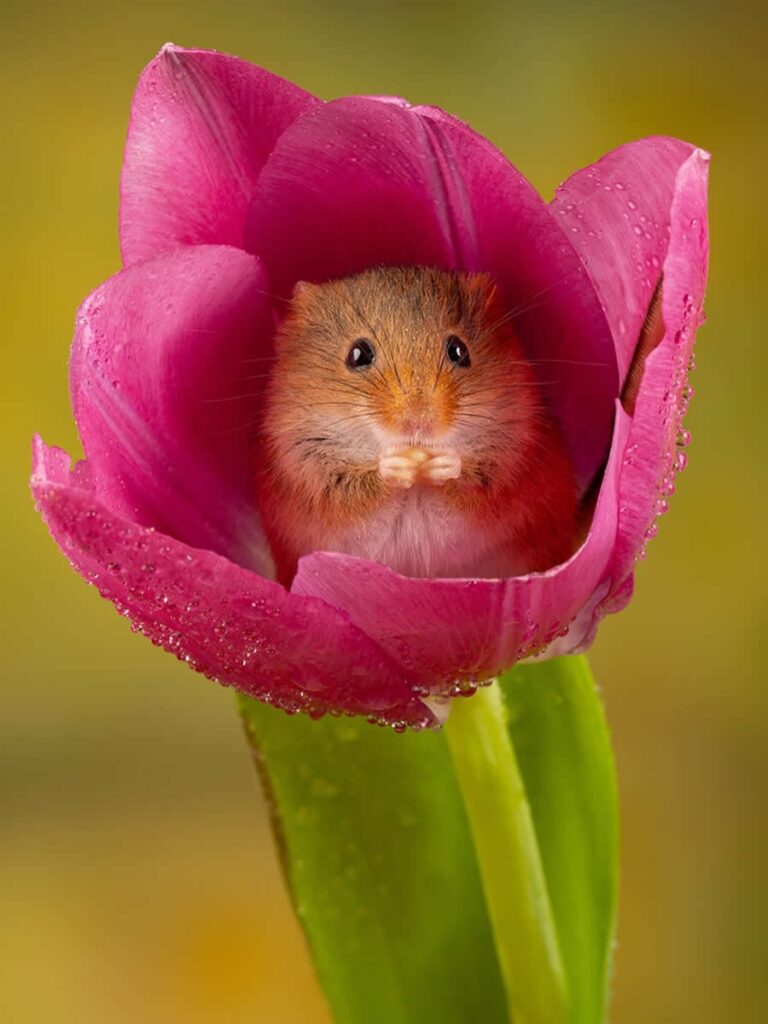
Why Tulips Work So Well as a Backdrop
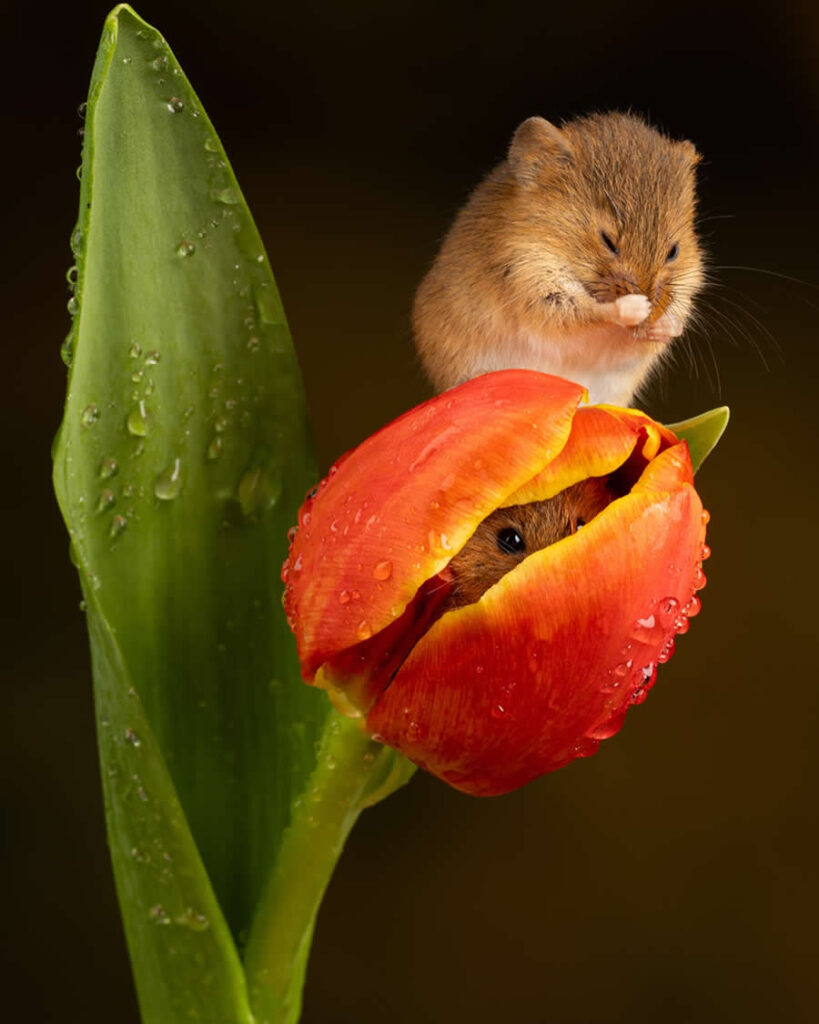
Tulip petals look delicate, but they’re sturdy enough to hold a mouse weighing only a few grams. In the photos, the mice climb the stems using their long, prehensile tails for balance — a feature harvest mice share with very few other European mammals — before settling into the cupped shape of an open bloom.
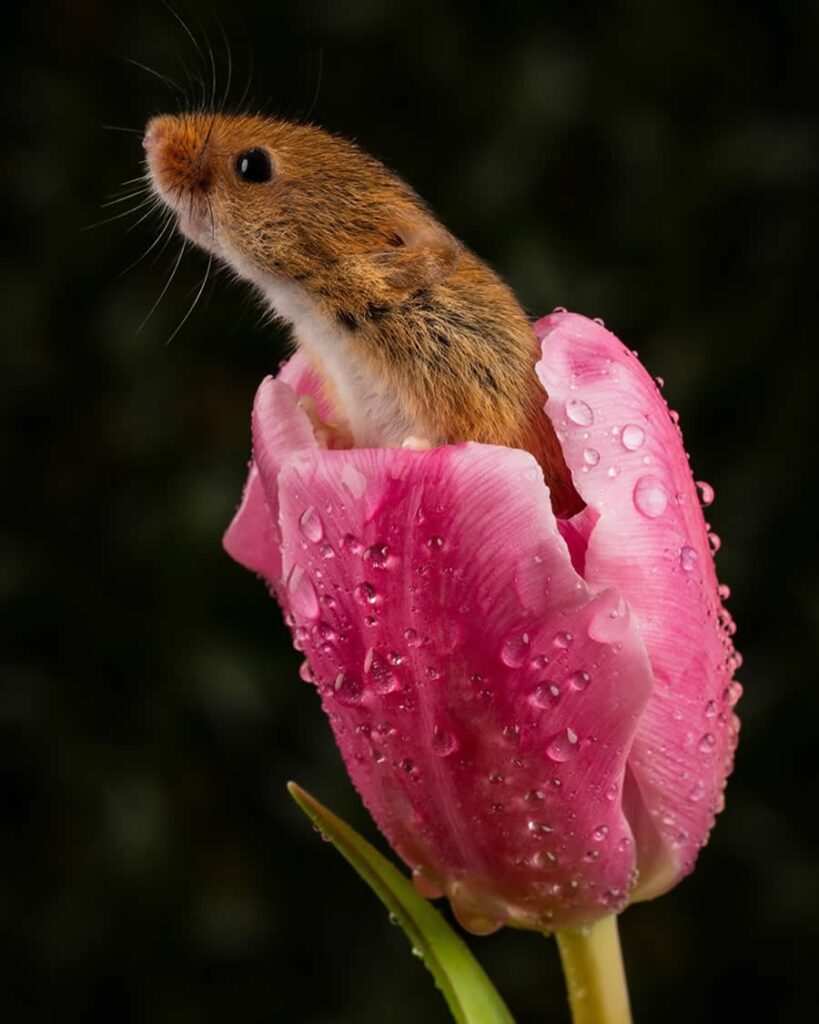
The pairing isn’t purely aesthetic, either. Harvest mice are drawn to the scent of pollen and will climb inside flowers to feed on the stamens, sometimes lingering long enough to doze off inside the petals. That natural behavior is what gives the photos their unposed, almost storybook quality — the mice aren’t being staged so much as photographed doing what they’d do anyway, just in a studio setting instead of a wild meadow.
The Case for Studio Wildlife Photography
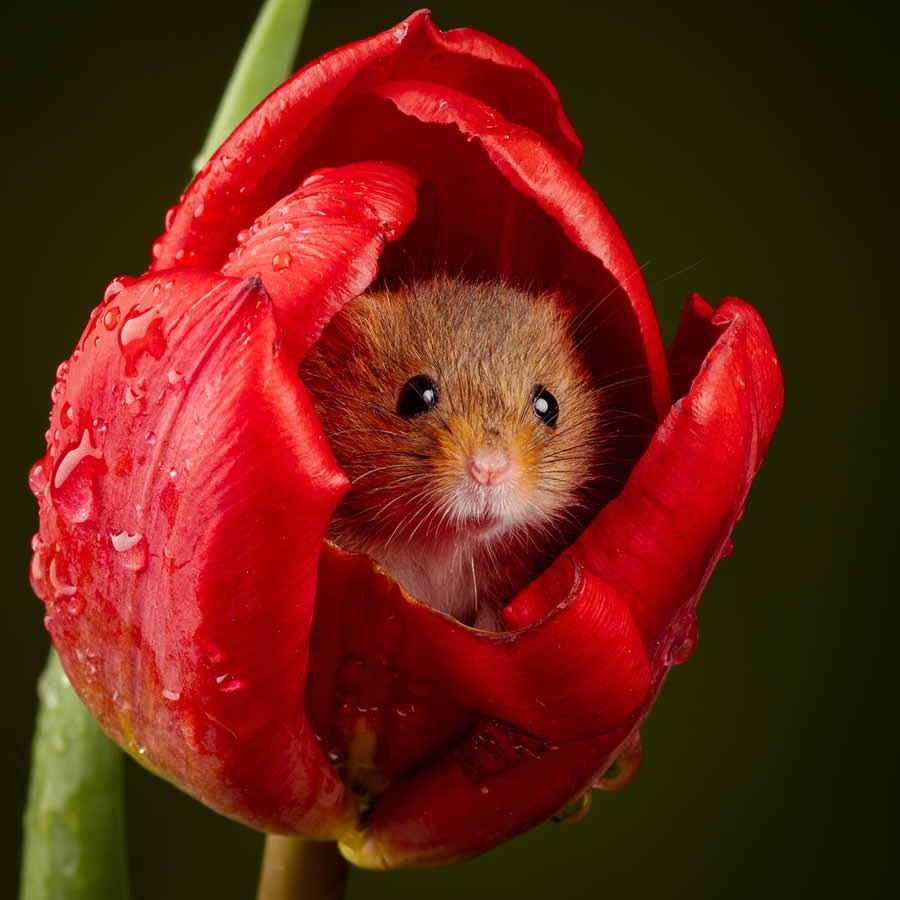
Photographing wild animals in their natural habitat will always have its place, but studio-based sessions like Herbert’s offer something wildlife photography in the field often can’t: consistency, safety for the animal, and the ability to get close enough for genuine macro detail without stress on a wild population.
It’s part of a broader shift in nature photography, where ethical, captive-bred setups are increasingly used for macro and small-mammal work specifically because they reduce disturbance to wild habitats while still producing striking, true-to-life images.
Want to Try It Yourself?
Herbert runs hands-on harvest mouse macro photography workshops at the Captivelight studio in Ringwood, England, where participants can practice these same techniques under guidance. For anyone interested in macro or small-mammal photography, it’s a rare chance to work with a cooperative, well-cared-for subject in a controlled setting rather than waiting hours in a hide for a wild mouse to appear.
Leave a Reply