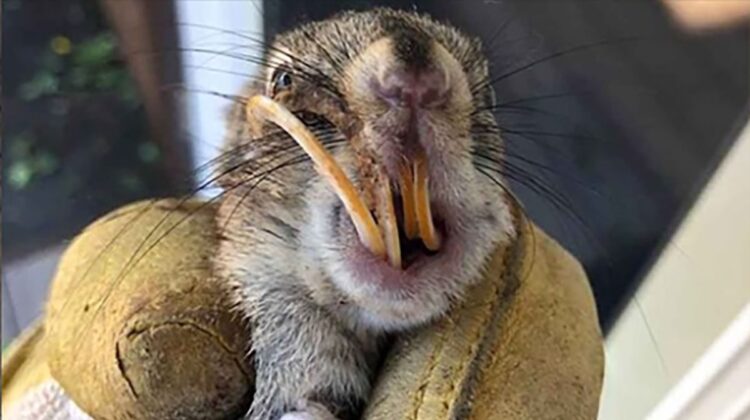
On a ranch in rural Alberta, Jannet Talbott is used to sharing her land with animals of every kind. One day in June 2018, something about a squirrel at her bird feeder stopped her in her tracks.
A Squirrel Who Couldn’t Eat
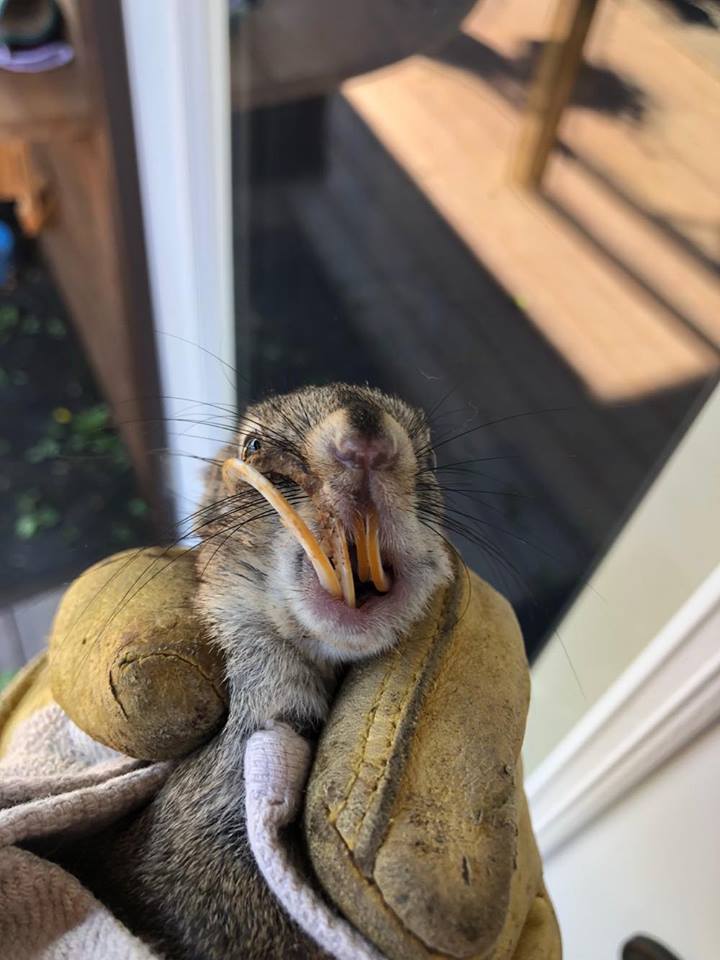
Talbott, who runs the Double J Freedom Ranch near Barrhead, northwest of Edmonton, noticed the squirrel looked thin and that something odd was protruding from the side of his face. Up close, she realized it was an enormously overgrown tooth. She suspected he had been surviving only on the ground-up finch food she puts out, because he could no longer crack nuts or seeds.
She named him Bucky.
Why Squirrel Teeth Can Go So Wrong
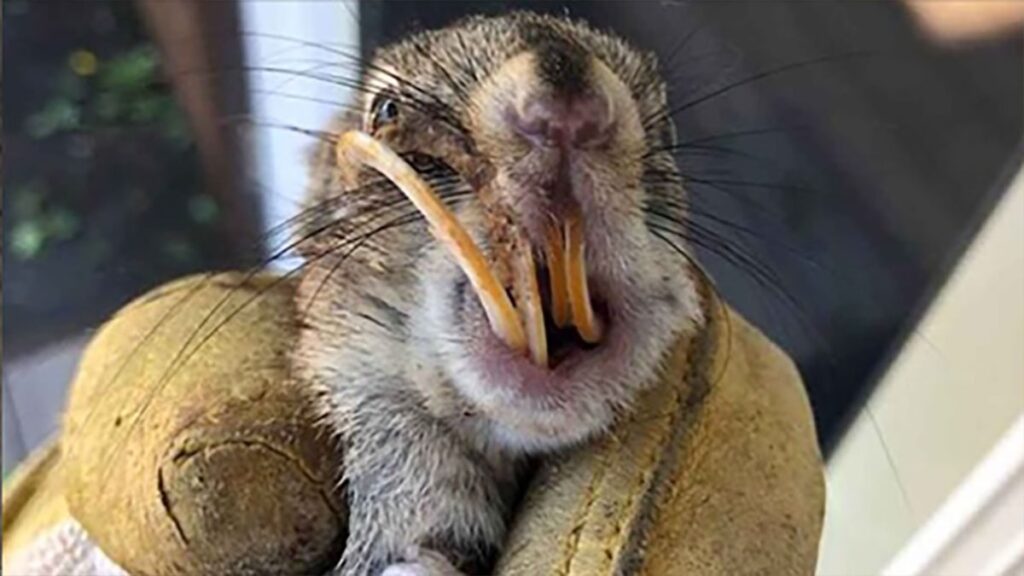
A squirrel’s four front teeth (its incisors) never stop growing. In healthy squirrels, constant gnawing on nuts, bark, and branches wears them down at the same rate they grow. When the teeth don’t meet properly, they can’t wear each other down, and they keep growing, sometimes curling into the mouth or out past the cheek.
In Bucky’s case, several incisors were overgrown, including teeth curling inside his mouth and one growing dangerously close to his eye. He could barely close his mouth, let alone chew.
[IMAGE 2 — close-up of a squirrel’s incisors]
A Quick Grab And A Risky Fix
Talbott spotted her chance when Bucky was sitting in the feeder with his back to her. She was already wearing leather gloves, so she scooped him up and brought him inside, where she swaddled him in a towel and examined his mouth.
Worried that a trip to town might stress him or lead nowhere, she researched basic squirrel dentistry online, watched an instructional video, and trimmed the overgrown teeth herself. Squirrel teeth have no pain nerves, and Bucky stayed calm throughout. The whole job reportedly took about ten minutes.
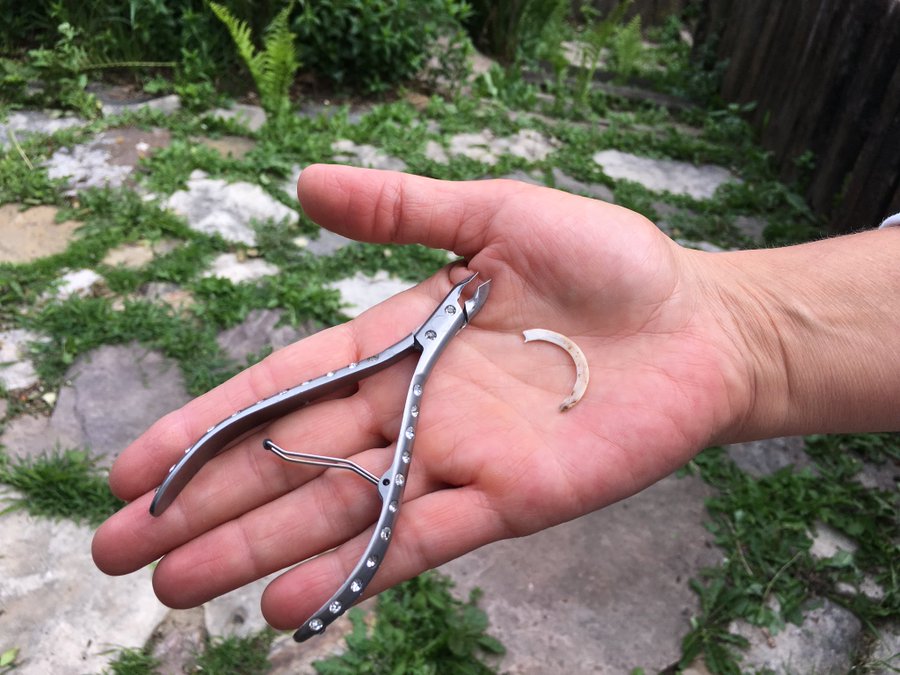
The Moment He Realized It Worked
Back outside, Bucky raced up a tree and rubbed his cheeks against the bark over and over, as if he couldn’t believe his mouth felt normal again. The next day, he was back at the feeder, this time eating actual nuts instead of ground-up finch food.
A Note Before You Try This At Home
Talbott’s story ended well, but wildlife rehabilitators generally advise against DIY dental work. Overgrown incisors can signal an underlying problem. Rehabilitators who care for similar cases, like a Pennsylvania squirrel nicknamed “Toothy,” say one open question is why the teeth overgrow in the first place. If you find a wild animal in trouble, the safest first step is to contact a licensed wildlife rehabilitator or local wildlife agency.
How To Help Wildlife Near Your Home
- Offer natural chewing options: whole nuts in the shell and untreated branches give squirrels something to gnaw on.
- Avoid relying on soft or ground-up food: it doesn’t wear teeth down the way whole foods do.
- Don’t handle wild animals without protection: thick leather gloves and a towel are the bare minimum, and even then a bite is possible.
- Know your local rehabber: save a licensed wildlife rehabilitator’s number before you need it.
Frequently Asked Questions
Why do squirrels’ teeth grow so long?
Squirrel incisors grow continuously throughout their lives. They stay at a healthy length only because the animal gnaws constantly, wearing them down.
Can overgrown teeth kill a squirrel?
Yes. If a squirrel can’t chew properly, it can slowly starve, and overgrown teeth can also injure the mouth, face, or eye.
Do squirrels feel pain when their teeth are trimmed?
Squirrel teeth don’t contain pain nerves, so trimming the overgrown portion isn’t painful, but the handling itself is stressful and best left to professionals.
Should I try to trim a wild animal’s teeth myself?
Experts recommend contacting a licensed wildlife rehabilitator or veterinarian instead, since overgrown teeth can point to an underlying issue and handling wildlife carries risks for both animal and person.
Sources: Canadian Press (via LiveWire Calgary and Lethbridge News Now, June 15, 2018); WFMZ (Pennsylvania wildlife rehabilitation report).
Leave a Reply