• Skip to main content
  • Skip to primary sidebar
  • Skip to footer
  • Home
  • About Us
  • Copyright Report
  • Submit Content
  • Terms
  • Privacy Policy
  • Legal Disclaimer

Hasan Jasim

Hasan Jasim is a place where you may get entertainment, viral videos, trending material, and breaking news. For a social generation, we are the largest community on the planet.

What Millions of Years Look Like in One Photo (Well, Not Exactly)

by Hasan Jasim Editorial Team 10 Comments

ShareTweet

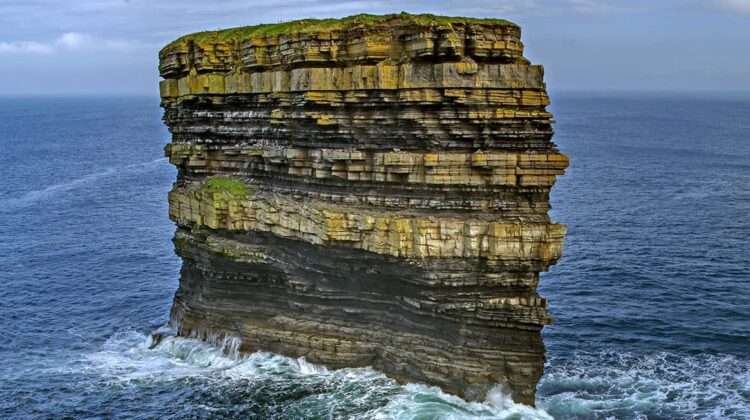
In the rugged landscapes of Ireland’s County Mayo, the striking figure of Dún Briste stands as a monumental testament to the forces of nature and time. This towering sea stack, rising dramatically from the Atlantic, recently captivated viewers worldwide, garnering over 57,000 upvotes on Reddit with a breathtaking image titled “What millions of years look like in one photo.” However, the story behind Dún Briste’s formation is even more fascinating than the viral title suggests.
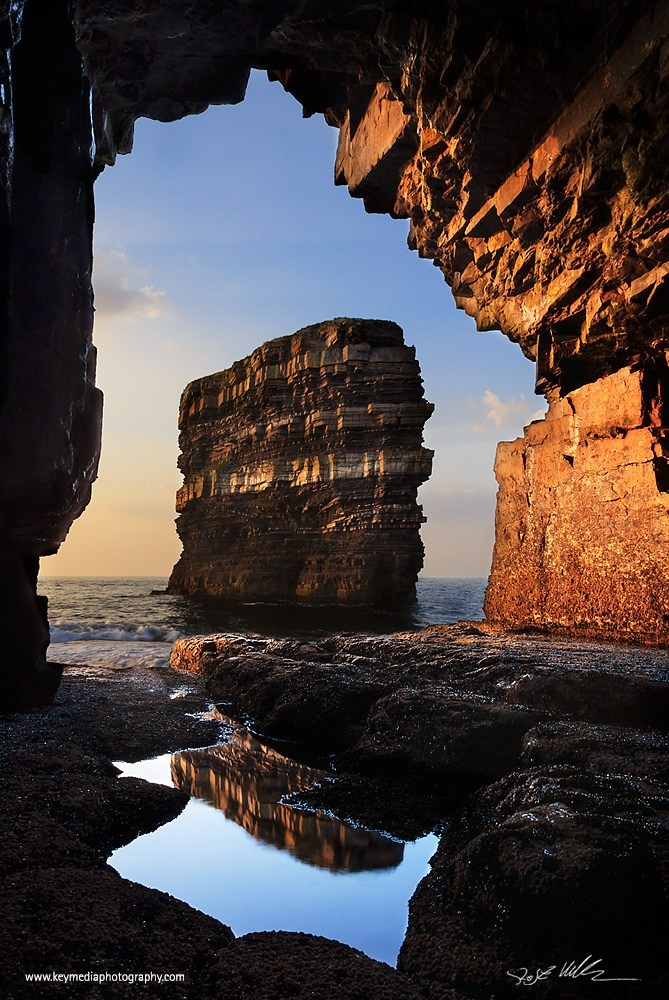
Image Credit:Kerstin Hellmann/Flickr

Geological Misconceptions Corrected

Maria McNamara, a paleobiologist at University College Cork, clarifies a common misconception about Dún Briste. Contrary to the viral post’s implications, Dún Briste likely formed over tens to hundreds of thousands of years—not millions. This revelation does not diminish its splendor but adds a layer of intrigue to its history, deeply rooted in the Carboniferous period, spanning from approximately 359 million to 299 million years ago.
A Canvas of Ancient Life

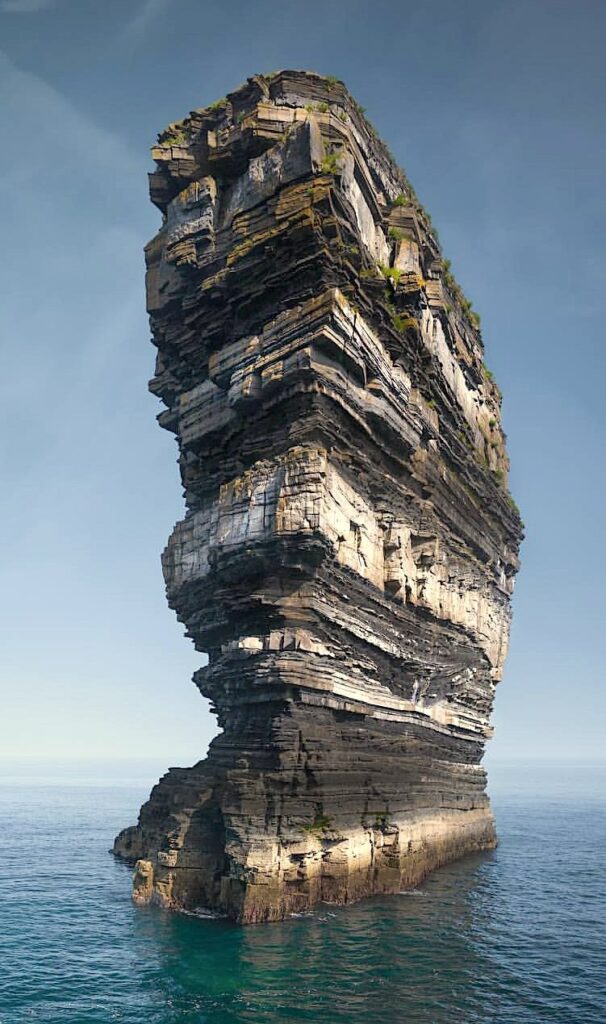
Though primarily composed of sedimentary rock, the possibility of Dún Briste housing fossils from the Carboniferous era remains a topic of interest among geologists and paleontologists. Should fossils be present, they could include remains of ancient corals, brachiopods, and crinoids—marine species that thrived during that distant epoch.
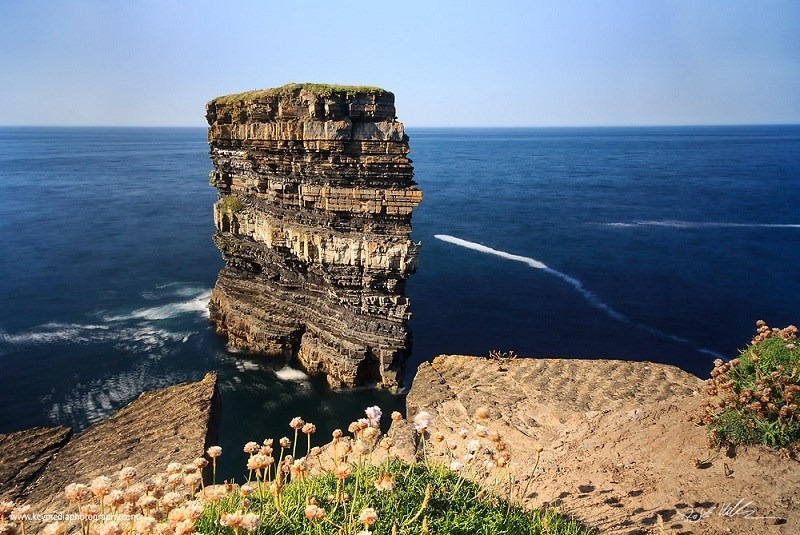
Image Credit:Kerstin Hellmann/Flickr

Cataclysmic Changes and Human Intrigue

The separation of Dún Briste from the mainland tells a dramatic tale of rising sea levels and catastrophic storms. Historical accounts suggest that an arch connecting the stack to the mainland was destroyed by a storm in 1393, giving rise to its name, which translates to “broken fort.” This event underscores the dynamic changes shaping our planet’s surface.
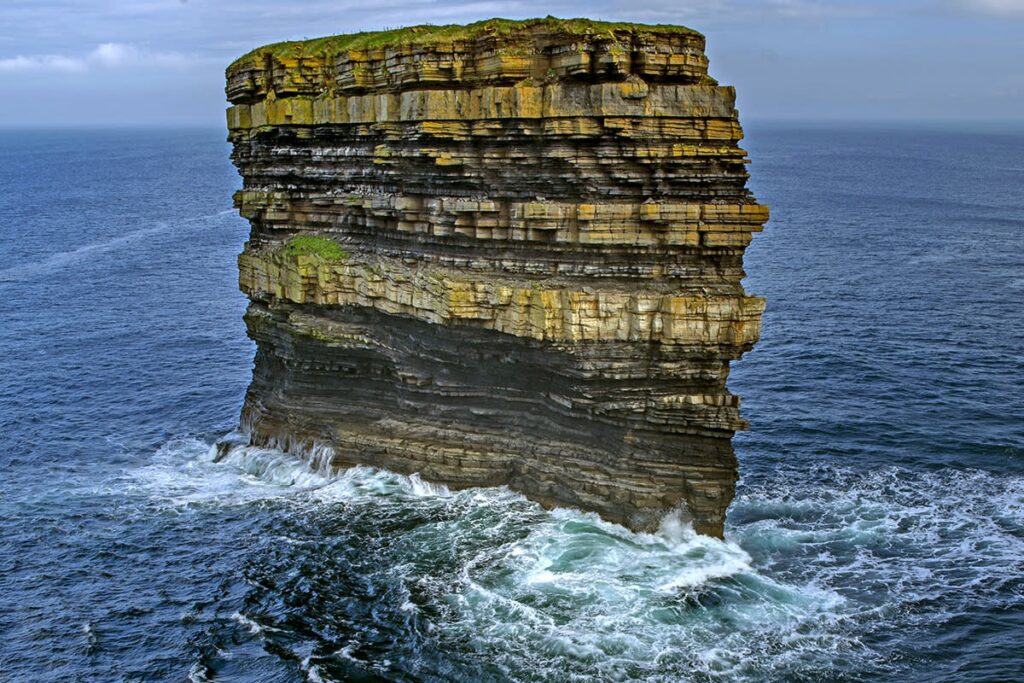
The gorgeous Irish sea-stack known as Dun Briste.

The sea stack’s allure extends beyond its geological significance. In 2016, Iain Miller’s daring climb marked the first human contact with Dún Briste’s summit in over a quarter of a century, echoing the adventurous spirit that the stack inspires. Prior to Miller’s ascent, a 1990 expedition revealed remnants of medieval habitation atop the stack, including a house and a quern stone, hinting at the historical human connection to this imposing natural structure.
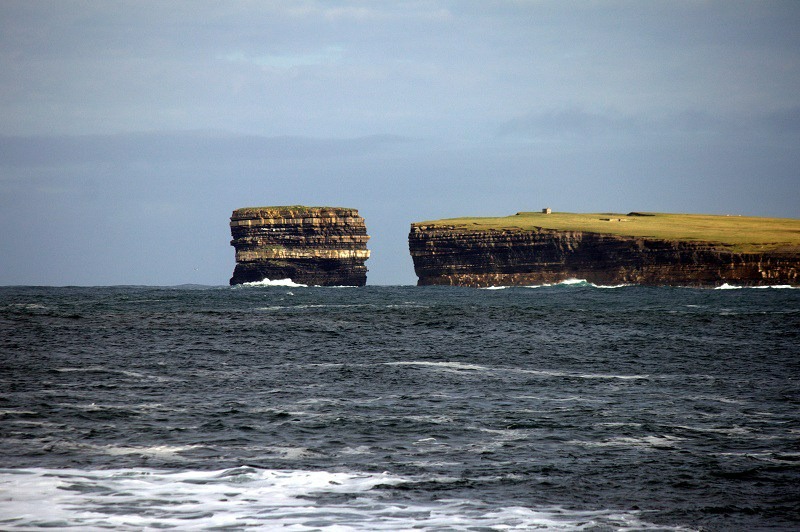
Image Credit: The Merry Monk/Flickr

Visualizing the Past Through Modern Eyes

Today, Dún Briste not only serves as a stunning subject for photographers and nature enthusiasts but also as a beacon for those drawn to the mysteries of the Earth’s geological past. Its layers of sedimentary rock, shaped by ancient seas, tell a story of environmental shifts and the resilience of nature in the face of relentless time.
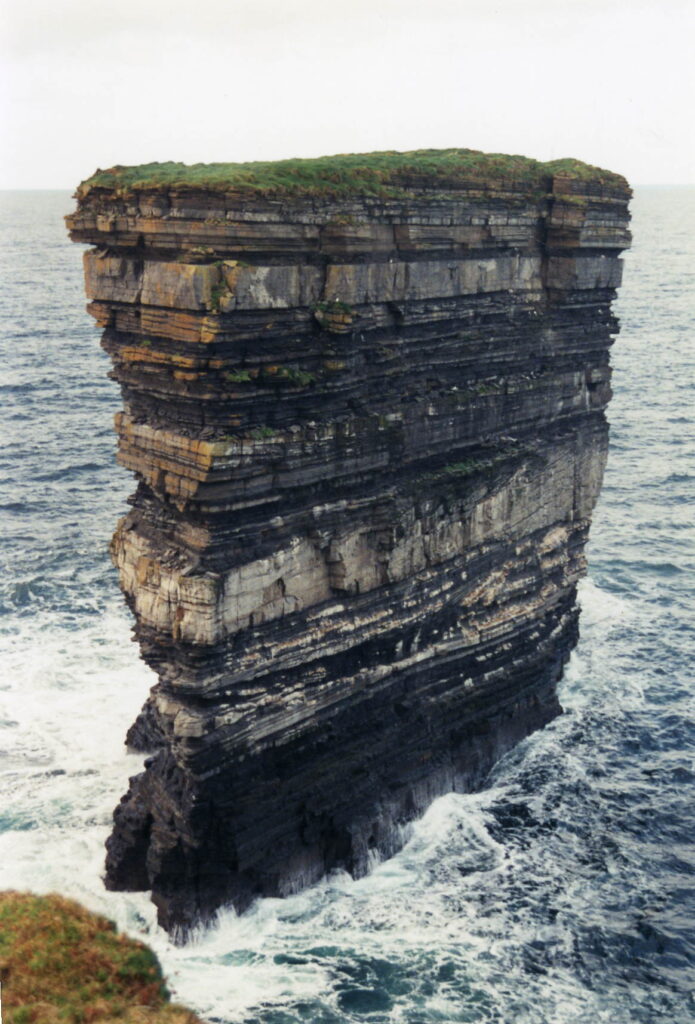
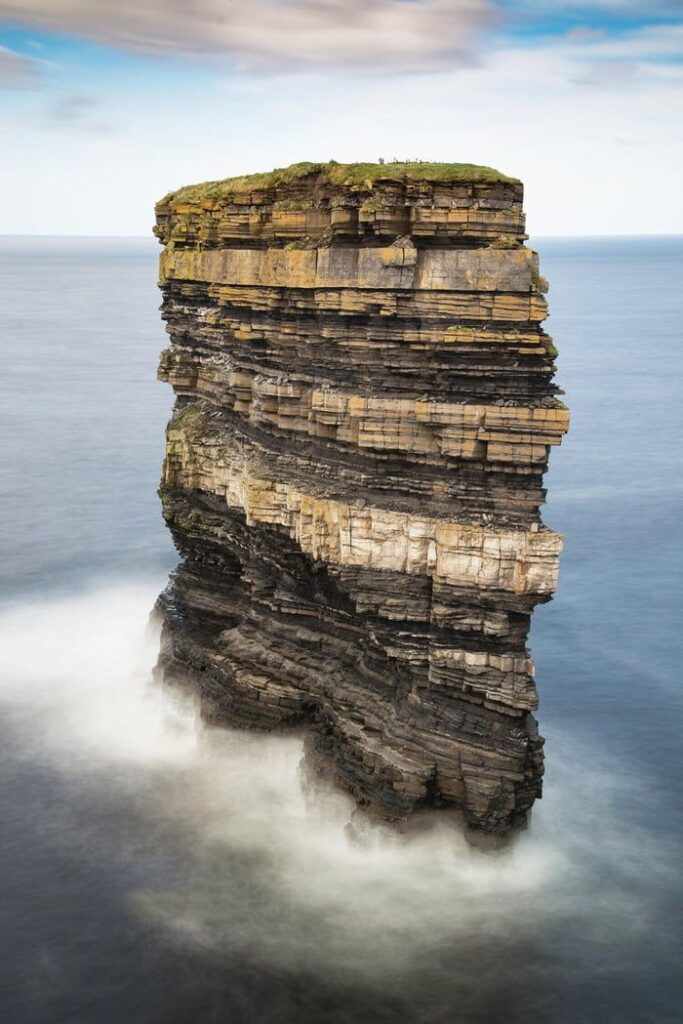
For those planning a visit or simply marveling from afar, Dún Briste offers more than just a visual spectacle—it invites onlookers to contemplate the profound and layered history of our planet, captured in the span of a single, majestic formation.

Filed Under: Trends Worldwide Tagged With: ancient formations, breathtaking views, coastal erosion, Doonbristy Rock, Dún Briste, geological wonder, geology, Historical Landmarks, Ireland Travel, natural beauty, nature photography, ocean forces, outdoor adventure, Scottish Highlands, sea stack, Sea Stacks, tourist destination

Reader Interactions

Comments

  1. Anthony B says

    February 21, 2023 at 6:57 pm

    This is a clear indication that global temperature fluctuation has been going on more than fifty years !!!!!!!!!!!!!!!!! ?

    Reply
    • Mark says

      February 23, 2023 at 2:56 pm

      There has always been fluctuation. The #ClimateCrisis is obvious in the extremes and the averages. If you believe in numbers, objectivity, reality, data, or fact, it can’t be denied.

      Reply
  2. Joseph V Sciamarelli says

    February 21, 2023 at 9:44 pm

    You never gave its size? L x W x H??

    Reply
  3. Marilyn Leland Bennett says

    February 21, 2023 at 10:36 pm

    beautiful

    Reply
  4. Jennifer Shadwick says

    February 22, 2023 at 3:29 am

    Amazing how nature leaves us with reminders.
    Wish that we could get clear up close looks at the different layers.

    Reply
  5. Julia says

    February 22, 2023 at 5:49 am

    Beautiful, I would so love to be put on top of this formation for a day away from everything just to relax and
    hear only the ocean waves . Doesn’t hurt to dream!

    Reply
  6. Maggie Goodwin says

    February 22, 2023 at 9:01 am

    Absolutely stunning. Living history but never alive. Completely fascinating. Thanks so much for your explanation.

    Reply
  7. Bruce Murrie says

    February 22, 2023 at 3:34 pm

    Were all the visible layers laid down roughly 350 M years ago, or over a greater geological time range? Can you give approximate dates for the lowest layer in the stack and for the highest layer?

    Reply
  8. Art Geraghty says

    February 23, 2023 at 1:36 am

    The original name (in Irish language) is “Dún Briste” meaning broken fort.

    Reply
  9. Kathleen Maguire Chamberlain says

    February 25, 2023 at 2:26 am

    Feeling pretty stupid here but wouldn’t the top be the oldest and the bottom wherever that is be the most recent? Wonderful place to visit!

    Reply

Leave a Reply Cancel reply

Your email address will not be published. Required fields are marked *

Primary Sidebar

More to See

A 2-year-old boy in Uganda miraculously survived a hippopotamus attack after the animal ate half of him

By Hasan Jasim Editorial Team

After 20 Years, Rare Turtles Finally Hatch at a US Zoo, and Wow Was The Wait Worthwhile

By Hasan Jasim Editorial Team

It’s not just bird flu. Here’s why eggs have gotten so expensive

By Hasan Jasim Editorial Team

How the Golden Lion Tamarin is Aiding in the Healing of Brazil’s Rainforest

By Hasan Jasim Editorial Team

Giraffe Died At Upstate New York Zoo After Its Neck Became Stuck And Then Broke Inside Enclosure’s Gate

By Hasan Jasim Editorial Team

Nice Whale Hands Back Phone A Woman Was Thrown Into The Sea By Accident

By Hasan Jasim Editorial Team

The Beauty and Scientific Significance of the Fukang Meteorite

By Hasan Jasim Editorial Team

Footer

ABOUT HASANJASIM.ONLINE

Hasanjasim.online is a digital platform dedicated to publishing well-researched articles about the animal kingdom, nature, and the environment. Our editorial team works to source stories from credible outlets, scientific research, and verified reports, aiming to inform as much as we entertain. From wildlife conservation and animal behavior to natural wonders and environmental science, we cover the topics that help readers better understand and appreciate the natural world. Whether you're a lifelong nature lover or simply curious about the planet we share, Hasanjasim.online aims to be a trustworthy destination for stories worth reading — and worth citing.

Recent

  • The Moment an Emu Wrestled a Man to the Ground — Then Turned the Tables
  • Why didn’t anyone tell me there’s an animal that smells exactly like hot, buttered popcorn?
  • I Never Liked the Caribbean—But This Island With Waterfalls, Hot Springs, and Rainforests Won Me Over
  • He Was a Magnificent 17-Point Buck — Now His Life Is Over
  • Man Rescues Lone Wolf Caught In A Trap — And What He Did Next Left The Internet In Awe
  • Why Lotus Seed Pods End Up Looking Like They’re Pulling Faces
  • Drilling Has Begun at Turkey’s ‘Noah’s Ark’ Formation. Here’s What’s Actually Been Found

Search