
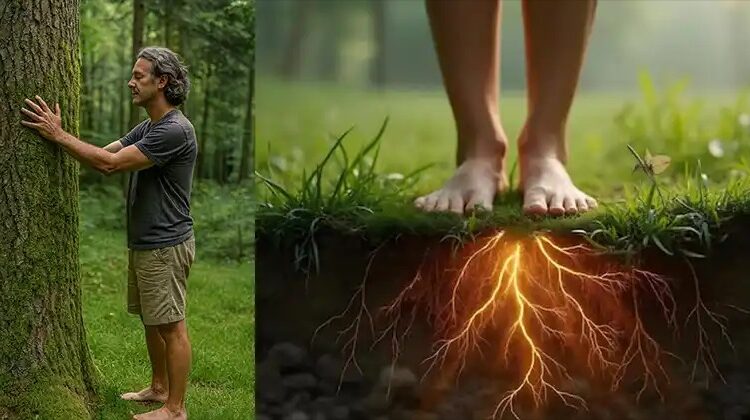
Modern life often disconnects people from the natural rhythms that once shaped human health and emotional stability. Constant noise, screens, and stress can leave the body tense and the mind exhausted. Grounding with trees—also known as barefoot earthing combined with tree contact—is a simple, nature-based practice that helps restore balance by reconnecting the body directly to the earth.
This practice blends physical grounding with the calming presence of trees, creating a gentle but powerful interaction between the nervous system and the natural environment.
How to Practice Tree Grounding (Step by Step)
1. Choose a healthy tree
Look for a mature, well-rooted tree in a quiet natural setting. Oaks, pines, and other long-living trees are often preferred, but the most important factor is that the tree feels calming and welcoming to you.
2. Stand barefoot on natural ground
Remove your shoes and stand directly on soil, grass, or sand near the tree’s roots. Barefoot contact allows your body to reconnect with the earth’s natural electrical charge.
3. Place your hands on the tree
Gently rest your palms against the bark or lightly embrace the trunk. Physical contact enhances the sense of stability and connection.
4. Breathe slowly and deeply
Inhale through your nose, allowing your chest to expand. Exhale tension, mental noise, and physical stress. Let your breathing become steady and relaxed.
5. Visualize the energy exchange
Imagine stress leaving your body through your feet and being absorbed by the earth. Visualize the tree’s steady energy flowing upward through its trunk, into your hands, and back toward your heart.
6. Remain still for 15–30 minutes
Give your nervous system time to settle. Many people report a growing sense of calm, clarity, and physical ease during this period.
Benefits of Grounding with Trees
Grounding on its own offers measurable benefits, but combining it with tree contact deepens the experience by reinforcing a sense of connection and flow.

🌳 Physical Benefits
- Reduces muscle tension and joint stiffness
- Improves circulation through barefoot sensory stimulation
- Supports immune balance, as forest exposure has been linked to increased natural killer cell activity
- Restores energy and reduces fatigue
- Promotes deeper, more restful sleep
🌳 Mental and Emotional Benefits
- Lowers stress and anxiety by calming the nervous system
- Reduces cortisol levels associated with chronic stress
- Improves focus, mental clarity, and creative thinking
- Encourages mindfulness and present-moment awareness
- Supports emotional release and psychological grounding
Why Trees Play a Unique Role in Grounding
Trees are living systems deeply anchored in the earth while extending toward the sky. Their structure reflects balance and continuity:
- Roots provide deep stability and grounding
- Trunks act as channels of strength and resilience
- Branches and leaves connect with light, air, and movement
By standing barefoot while touching a tree, the body mirrors this natural structure—grounded, supported, and gently uplifted.

A Simple Return to Natural Balance
Grounding with trees is not a spiritual belief or a trend; it is a quiet return to a relationship humans once had instinctively with the natural world. Regular practice can reduce stress, improve sleep quality, ease physical tension, and strengthen emotional resilience.
When life feels overwhelming, stepping outside, removing your shoes, and placing your hands on a tree can be a powerful reminder that balance already exists beneath your feet.
Bottom Line: Supporting Long-Term Wellbeing Naturally
Practices like barefoot grounding and forest connection are increasingly recognized for their role in stress management, sleep regulation, mental health support, and immune balance. As interest grows in non-pharmaceutical wellness strategies, nature-based approaches continue to gain attention for their long-term benefits and low risk.
Reconnecting with the earth is not about escaping modern life—but about restoring the stability needed to live it well.
Leave a Reply