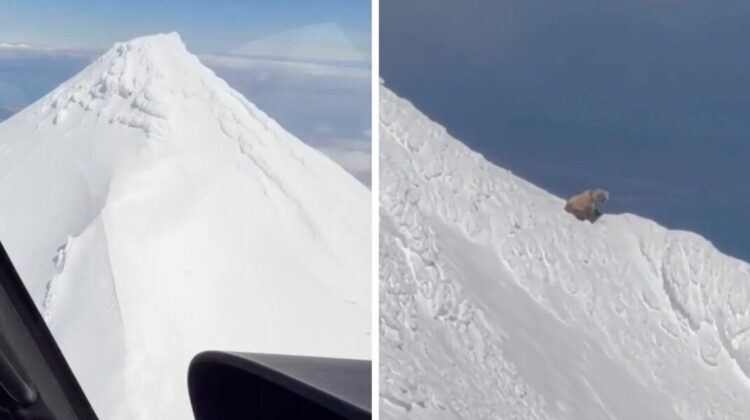
A helicopter flight over one of Alaska’s most remote volcanic landscapes turned into a genuinely rare wildlife encounter when pilot Russ Robinson and his partner, Kiersa Koepnick, spotted something few people will ever see in person: a grizzly bear resting more than 7,000 feet above sea level, on the snow-covered slope of an active volcanic peak.
A Strange Set of Tracks
Robinson and Koepnick were exploring Alaska’s Aleutian Islands by helicopter, flying near Pavlof Volcano, one of the region’s most active peaks, when Robinson noticed something unusual carved into the snow on nearby Pavlof Sister — a smaller stratovolcano that rises to roughly 7,027 feet. From the air, the tracks alone were surprising given how harsh and isolated the terrain is.
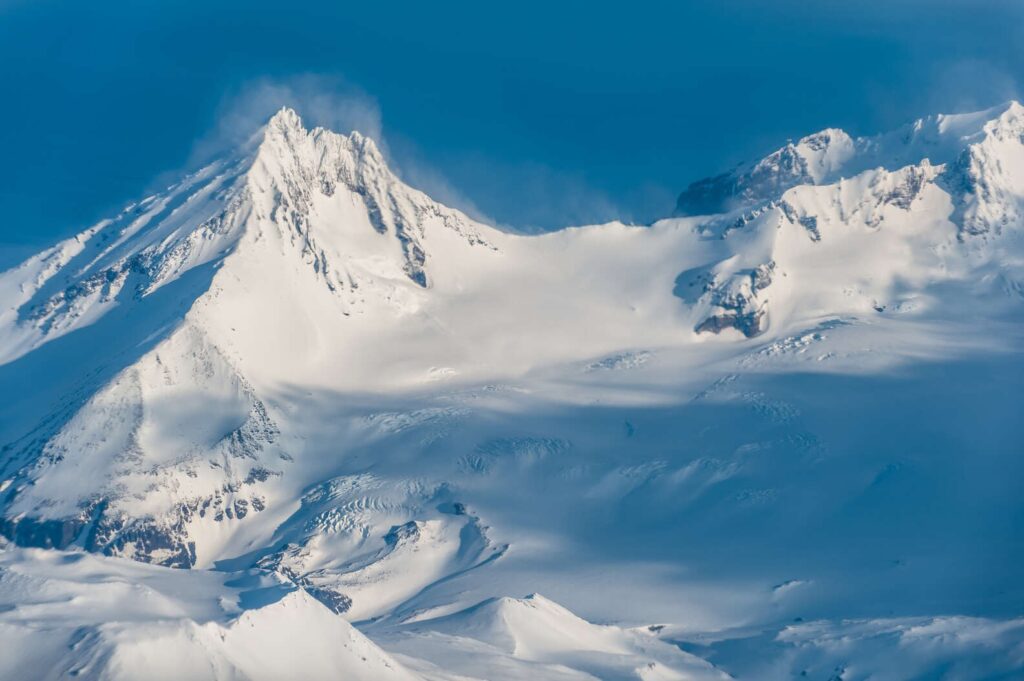
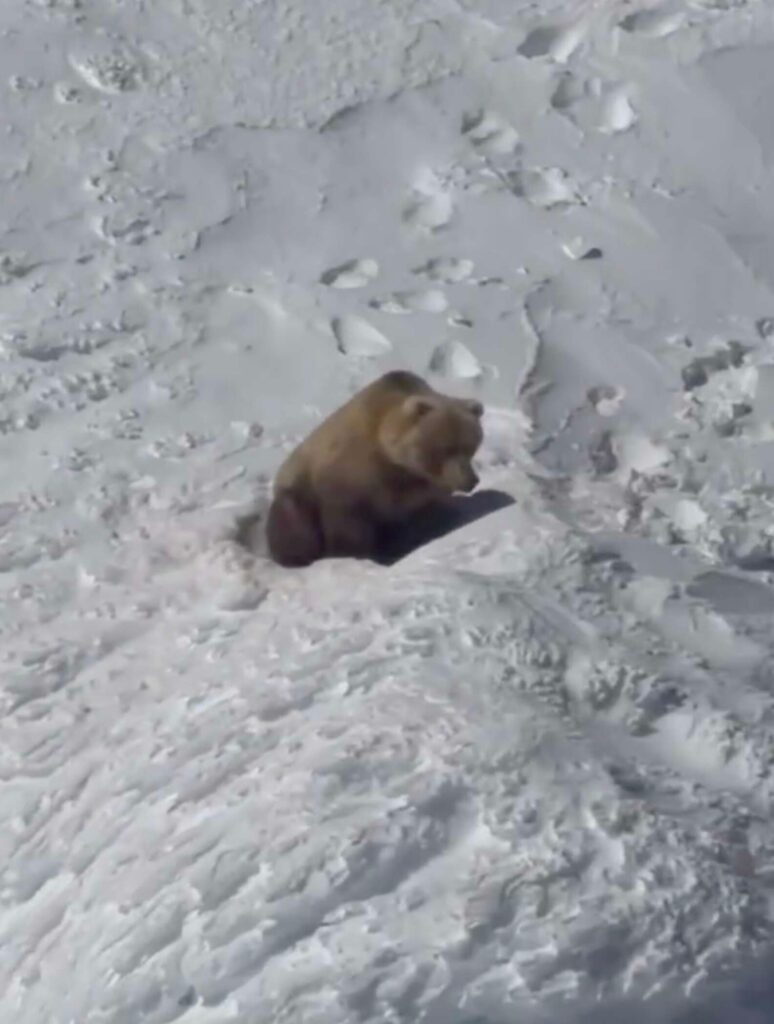
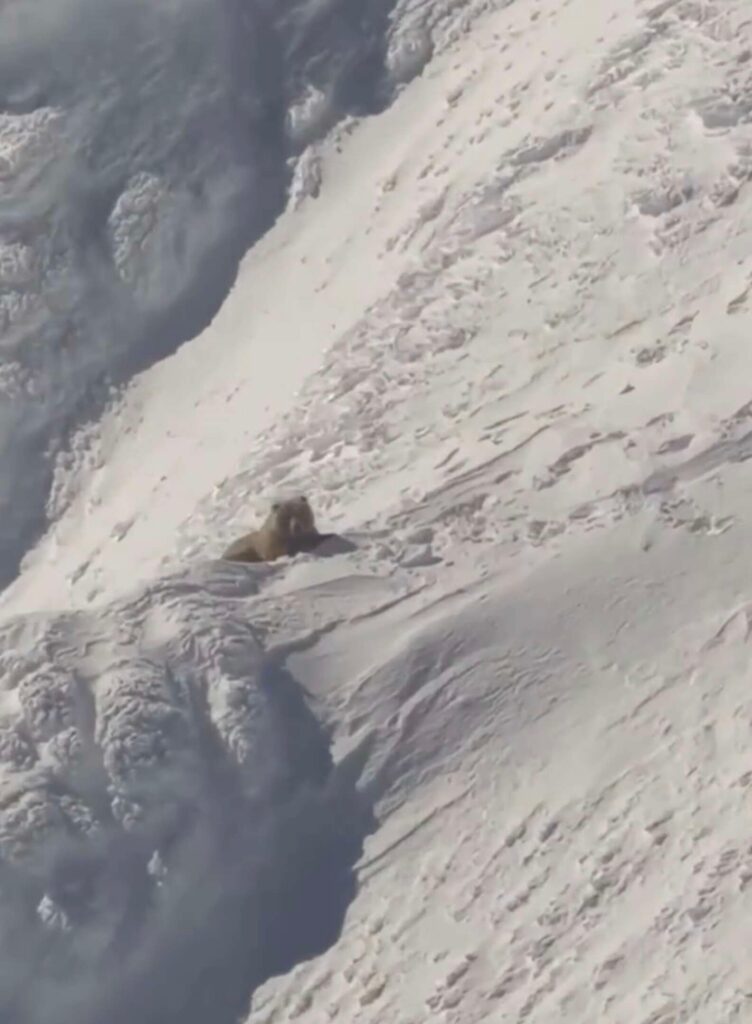
Moving in for a closer look, the pair found the source: a lone grizzly bear, sitting calmly on the steep, snow-covered slope, seemingly unbothered by the extreme elevation or the remoteness of its surroundings.
An Unusual Sight, Even for a Seasoned Pilot
Robinson has logged thousands of hours flying through Alaska’s mountains, and by his own account, this sighting stood out from anything he’d encountered before. The bear appeared relaxed, resting on the volcanic slope after what must have been a demanding climb to get there.
Alaska is home to an estimated 30,000 grizzly bears, and while they’re common across much of the state, they typically stick to mid-elevation habitats near rivers and berry-producing terrain, retreating to alpine dens mainly to hibernate. Wildlife researchers note that bears do occasionally push into extreme elevations — sometimes to avoid danger, scout new territory, or follow scent cues carried on shifting mountain winds — but a sighting this high, on an active volcano, remains genuinely uncommon.
A Respectful Distance
Robinson kept the helicopter at a safe, respectful distance throughout the encounter, prioritizing observation over any close approach that might have disturbed the animal. The footage and photos from the flight have since circulated widely, drawing attention less for spectacle and more for what they capture: a wild animal thriving in one of the most inhospitable landscapes imaginable.
Why Sightings Like This Matter
Rare encounters in extreme environments like this one give researchers small but valuable data points about how wildlife adapts to shifting habitats, food sources, and terrain. As helicopter tourism and wilderness photography continue to grow in Alaska, moments like this also help fuel broader public interest in conservation and in understanding just how resilient animals can be in some of the planet’s harshest conditions.
Frequently Asked Questions
What kind of bear was spotted? A grizzly bear — a subspecies of brown bear common throughout mainland Alaska.
How high up was the bear? Roughly 7,200 feet, on the slope of Pavlof Sister, a stratovolcano near the more active Pavlof Volcano in Alaska’s Aleutian Islands.
Is it normal for bears to climb this high? It’s uncommon but not unheard of. Bears typically favor mid- and low-elevation habitat, but researchers have observed them venturing into high alpine terrain occasionally, likely driven by scent cues, territory scouting, or avoiding other animals.
Is Pavlof Volcano currently active? Pavlof is one of the most consistently active volcanoes in the Aleutian chain, though activity levels change over time; current status can be checked through the Alaska Volcano Observatory.
Sources consulted: Unofficial Networks, InspireMore, and the Alaska Volcano Observatory (AVO/USGS).
Leave a Reply